Protective Relay Training - Basic
Our customized live online or in‑person group training can be delivered to your staff at your location.

- Live Online
- 12 hours Instructor-led
- Group Training Available
Regular Price:
$699
Coupon Price:
$599
The Northwest Territories has opened negotiations to sell hydro power to the Diavik diamond mine, a move northern leaders hope will lead to new mineral development in the central Arctic fuelled by cheap electricity instead of expensive diesel.
"Once there's power there, it becomes basin-opening," said the territory's premier, Joe Handley.
Diavik's energy needs are poised to double as the mine shifts from open-pit to underground operations, said spokesman Tom Hoefer. That means profits could be eroded by the rising price of diesel, used by almost all communities and industrial developments in the North to generate power.
Diavik's move underground also means more fuel will have to be trucked in over an ice road that is already near its capacity - a capacity likely to shrink as climate change reduces the ice-road season. If the road melts before the season's requirements are trucked in, as happened in 2006, fuel will have to be flown in at an even steeper cost.
"Were interested in alternative power if the price is right," Hoefer said.
Enter the Taltson River project.
Located 56 kilometres northeast of Fort Smith, N.W.T., the project would expand an already-existing 20 megawatt generator to about 58 megawatts. The project, which would not require a new dam, would cost between $300 million and $350 million for the generator and would need about 700 kilometres of power lines and the necessary substations - enough to bring it to both Diavik and DeBeers' new Snap Lake diamond mine.
A joint venture between the local Akaitcho and Metis development corporations and the N.W.T. Energy Corporation, the project has the support of area aboriginal groups. Parks Canada has also agreed to allow a power line through land reserved for the future East Arm National Park on Great Slave Lake.
The project, now under regulatory and environmental review, could be generating power by 2011. However, hydro projects usually require decades of power sales to pay back the cost of construction, and the N.W.T.'s diamond mines will be closed up and returned to the tundra long before then.
Hoefer said Diavik is wary of attempts to use high electricity prices to make Taltson profitable within the lifetime of those mines.
"In that case, were not interested," he said.
But Handley says you've got to have faith in the potential of the North, especially the mineral-rich Slave Geological Province of the central barrens.
"We have to assume some risk here and say these are not the last mines in that area. It has to be a public investment."
In fact, Handley is banking on it. He believes the availability of reasonably priced, dependable electricity would lower costs for everyone in the area, leading to longer lives for existing mines and making previously marginal projects more attractive.
Taltson, which is near the Alberta-N.W.T. boundary, could even eventually supply power to the Fort McMurray area, he said.
"There's lots of scenarios that have to be played," said Handley. "It looks like a good economic venture for our power."
Hydro development has been a major theme for Handley, who recently announced he would not stand for re-election in the upcoming territorial elections.
He has proposed as many as seven expansions or new developments, including one for the Great Bear River, near the community of Tulita west of Great Bear Lake. That project could supply power to facilities required by the Mackenzie Valley natural gas pipeline, a $16-billion project currently under environmental review.
Related News

UK Renewable Energy Auction: Boost for Wind and Tidal Power
UK Wind and Tidal Power Auction signals strong CfD support for offshore wind, tidal stream…
View more
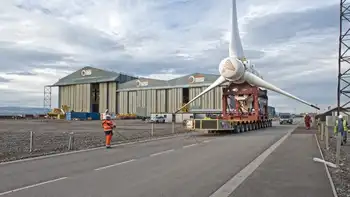
A tidal project in Scottish waters just generated enough electricity to power nearly 4,000 homes
MeyGen Tidal Stream Project delivers record 13.8 GWh to Scotland's grid, showcasing renewable ocean energy.…
View more
Atlantica - Regulatory Reform To Bring Greener Power To Atlantic Canada
Atlantic Canada Energy Regulatory Reform accelerates smart grids, renewables, hydrogen, and small modular reactors to…
View more
Alberta's Path to Clean Electricity
Alberta Clean Electricity Regulations face federal mandates and provincial autonomy, balancing greenhouse gas cuts, net-zero…
View more

Closure of 3 Southern California power plants likely to be postponed
California Gas Plant Extensions keep Ormond Beach, AES Alamitos, and Huntington Beach on standby for…
View more

Rising Electricity Prices: Inflation, Climate Change, and Clean Energy Challenges
Rising Electricity Prices are driven by inflation, climate change, and the clean energy transition, affecting…
View more
Sign Up for Electricity Forum’s Newsletter
Stay informed with our FREE Newsletter — get the latest news, breakthrough technologies, and expert insights, delivered straight to your inbox.
Electricity Today T&D Magazine Subscribe for FREE

Stay informed with the latest T&D policies and technologies.
- Timely insights from industry experts
- Practical solutions T&D engineers
- Free access to every issue
