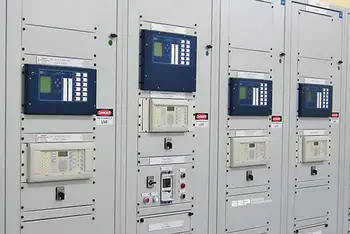
Protective Relay Training - Basic
Our customized live online or in‑person group training can be delivered to your staff at your location.
- Live Online
- 12 hours Instructor-led
- Group Training Available
Regular Price:
$699
Coupon Price:
$599
The so-called "e-bike" is not a new invention to help you better navigate the Web.
But it's now legal on Ontario roads.
In a three-year pilot project announced recently, electric bikes, which range in price from $600 to $2,000, are legal anywhere regular bikes are ridden.
For Transportation Minister Donna Cansfield, on the job five months now and about to modify her government-issue Chrysler 300 so it can run partly on natural gas, it's one of two new electric transportation initiatives she's helped push through.
"They work just like a regular bike," Cansfield said, noting the benefits of free parking, exercise and zero emissions. "We want to help people reduce congestion on our roads."
After unveiling the e-bike project at Queen's Park, the minister said in an interview that provincial park employees can now use low-speed electric golf cart-like cars on the job.
Both measures were recently approved by the McGuinty government.
Cansfield said she's also open to considering whether low-speed electric vehicles, like ones made by Toronto-based Feel Good Cars Inc., could be used in a more urban setting.
"You can't ignore those alternatives," she said. "Fossil fuel is not a recyclable fuel. Necessity will be the mother of invention. You have to keep an open mind to what's out there."
Ministry officials also say they're prepared to open Ontario sidewalks to the much-ballyhooed but now beleaguered Segway.
But the ministry is holding off on regulations governing use of the futuristic, self-balancing scooters while the manufacturer deals with a recall due to a software glitch that can make the Segway's wheels abruptly reverse direction.
One agency eagerly awaiting the Segway is the Windsor Police Service, where Sgt. Bill Hunt believes they will increase police visibility.
And, Hunt adds, the Segway will help foot patrol officers save their breath and energy while rushing to the bar district, which on weekends is glutted with locals and U.S. tourists and, sometimes, bar fights.
"We have somewhere between 25 to 30 bars in a four-block area and because we're a border city, we get around anywhere from 10,000 to 15,000 Americans coming over every Thursday, Friday and Saturday night."
Just how the inebriated and agitated brawlers will react when officers pull up on the two-wheeler remains to be seen, but Hunt believes the public will appreciate, not mock, the Segways.
He also said that, while the department has been working with the ministry to get Segways for the last couple years, he's noticed a new push on the file since Cansfield took the job.
Taken together, the e-bike and electric car initiatives, and strong interest in the Segway, signify an apparent push on the part of the new transportation minister for a more environmentally friendly transportation system.
Cansfield, appointed in May, came to the job from the Ministry of Energy where, before becoming minister, she worked on conservation initiatives.
Some e-bikes — already allowed in most provinces, ministry officials say — were on display yesterday, some with the ability to move the rider without pedalling and others that power up only when the pedals move.
They featured handlebar brakes and gear shifters, and looked like regular bikes. But a key starts the motor, which is powered by a lithium-ion battery.
On some models the motor sat between the two wheels. On others, the motor rested between the spokes of the back wheel.
The battery plugs into a regular socket to recharge, and the bikes on display yesterday typically take 2 1/2 to three hours to charge.
Ontarians aged 16 and up can ride the bikes, which by law cannot have a motor with more than 500 watts of power or generate a maximum speed over 32 km/h. E-bike owners do not have to get a special licence, registration or insurance. Riding an e-bike underage or without a helmet could net fines ranging from $250 to $2,500.
Related News
Putting Africa on the path to universal electricity access
West and Central Africa Electricity Access hinges on utility reform, renewable energy, off-grid solar, mini-grids,…
View more

When will the US get 1 GW of offshore wind on the grid?
U.S. Offshore Wind Capacity is set to exceed 1 GW by 2024, driven by BOEM…
View more
London Gateway Unveils World’s First All-Electric Berth
London Gateway All-Electric Berth enables shore power and cold ironing for container ships, cutting emissions,…
View more

Scottish North Sea wind farm to resume construction after Covid-19 stoppage
NnG Offshore Wind Farm restarts construction off Scotland, backed by EDF Renewables and ESB, CfD…
View more

UK peak power prices rise to second highest level since 2018
UK Peak Power Prices surged as low wind speeds forced National Grid to rely on…
View more

Biggest offshore windfarm to start UK supply this week
Hornsea One Offshore Wind Farm delivers first power to the UK grid, scaling renewable energy…
View more
Sign Up for Electricity Forum’s Newsletter
Stay informed with our FREE Newsletter — get the latest news, breakthrough technologies, and expert insights, delivered straight to your inbox.
Electricity Today T&D Magazine Subscribe for FREE

Stay informed with the latest T&D policies and technologies.
- Timely insights from industry experts
- Practical solutions T&D engineers
- Free access to every issue
