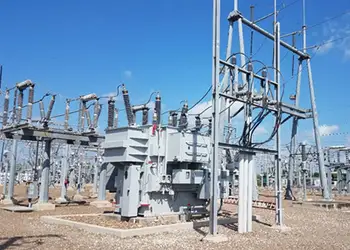
Substation Relay Protection Training
Our customized live online or in‑person group training can be delivered to your staff at your location.
- Live Online
- 12 hours Instructor-led
- Group Training Available
Regular Price:
$699
Coupon Price:
$599
Floridians who sweated for days without electricity after last year's hurricanes repeatedly knocked down their power lines can take some comfort in this: They are the motivating force behind several bills in this year's Legislature.
Legislation that would create a nine-member task force to study how Florida's utility lines and equipment can better withstand hurricane-force winds drew unanimous approval recently from one committee.
Senate Bill 526, sponsored by state Sen. Ron Klein, D-Boca Raton, started as a modest review of whether more power lines should be buried and whether electric companies should replace wooden poles with concrete ones.
But Klein and members of the Senate Communications and Public Utilities Committee expanded the bill to include a comprehensive review of all Florida utilities, including telephone, water, sewer, cable TV and electric.
"We want to learn how to deal with storm recoveries better, to make sure that, when there is a state of emergency, power and all the vital utility services can be restored quickly or never lost in the first place," Klein said.
The task force may be the least controversial of the utilities- related measures to be considered during the 2005 session.
A bigger lobbying fight probably awaits a request from utility companies to pay for millions of dollars in hurricane damage with long-term bonds that require special approval from the state. Utilities say the bonds would allow them to pay off their debts and rebuild their storm reserves at lower interest rates.
Utilities are supposed to recover such costs with two-year surcharges added to customers' monthly bills. But utility companies say that getting more time to pay off those costs and build up their reserves could translate into smaller monthly fees for ratepayers.
The debate over the utilities' bond proposal stalled Monday. Instead, senators moved ahead with the task force, which would present its findings to the 2006 Legislature.
Since last year's onslaught of four major hurricanes in less than seven weeks, Florida residents and dozens of municipalities have been pressuring the state's major utilities to bury more of their power lines.
Klein said the task force will study whether converting existing distribution and transmission systems would be cost effective.
Utility companies have said the cost of underground lines can range from three times to 10 times more than the cost of aboveground power lines. Power poles typically carry phone and cable lines that also would have to be buried.
Also, buried lines are susceptible to flooding, including saltwater contamination that speeds corrosion. And during a hurricane, underground lines can wind up under water, preventing crews from making quick repairs.
Related News

Brand New Renewable Technology Harnesses Electricity From The Cold, Dark Night
Nighttime Thermoelectric Generator converts radiative cooling into renewable energy, leveraging outer space cold; a Stanford-UCLA…
View more
N.L., Ottawa agree to shield ratepayers from Muskrat Falls cost overruns
Muskrat Falls Financing Restructuring redirects megadam benefits to ratepayers, stabilizes electricity rates, and overhauls federal…
View more
Most Energy Will Come From Fossil Fuels, Even In 2040
2040 Energy Outlook projects a shifting energy mix as renewables scale, EV adoption accelerates, and…
View more
Hydro-Québec to Invest $750 Million in Carillon Generating Station
Hydro-Québec Carillon Refurbishment delivers a $750M hydropower modernization, replacing six turbines and upgrading civil works,…
View more

Europe's stunted hydro & nuclear output may hobble recovery drive
Europe 2023 Energy Shortfall underscores how weak hydro and nuclear offset record solar and wind,…
View more

Clorox accelerates goal of achieving 100% renewable electricity in the U.S. and Canada to 2021
Clorox Enel 70 MW VPPA accelerates renewable energy, sourcing Texas solar from the Roadrunner project…
View more
Sign Up for Electricity Forum’s Newsletter
Stay informed with our FREE Newsletter — get the latest news, breakthrough technologies, and expert insights, delivered straight to your inbox.
Electricity Today T&D Magazine Subscribe for FREE

Stay informed with the latest T&D policies and technologies.
- Timely insights from industry experts
- Practical solutions T&D engineers
- Free access to every issue

