Honda introduces zero emissions cars

By Fox News


Substation Relay Protection Training

Our customized live online or in‑person group training can be delivered to your staff at your location.

  • Live Online
  • 12 hours Instructor-led
  • Group Training Available
Regular Price:
$699
Coupon Price:
$599
Reserve Your Seat Today
Honda's new zero-emission, hydrogen fuel cell car rolled off a Japanese production line and is headed to southern California, where Hollywood is already abuzz over the latest splash in green motoring.

The FCX Clarity, which runs on hydrogen and electricity, emits only water and none of the gases believed to induce global warming. It is also two times more energy efficient than a gas-electric hybrid and three times that of a standard gasoline-powered car, the company says.

Honda expects to lease out a "few dozen" units this year and about 200 units within a year. In California, a three-year lease will run $600 a month, which includes maintenance and collision coverage.

Related News
U.S. power demand seen sliding 1% in 2023 on milder weather

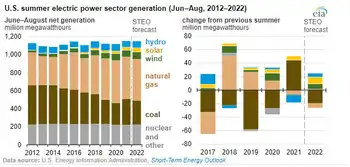
EIA U.S. Power Outlook 2023-2024 forecasts lower electricity demand, softer wholesale prices, and faster renewable growth from solar and wind, with steady natural gas, reduced coal generation, slight nuclear gains, and ERCOT market moderation.


Key Points

An EIA forecast of a 2023 demand dip, 2024 rebound, lower prices, and a higher renewable share in the U.S. power mix.

✅ Demand dips to 4,000 billion kWh in 2023; rebounds in 2024.

✅ ERCOT on-peak prices average about $35/MWh versus $80/MWh in 2022.

✅ Renewables grow to 24% share; coal falls to 17%; nuclear edges up.


U.S. power consumption is expected to slip about 1% in 2023 from the previous year as milder weather slows usage from the record high hit in 2022, consistent with recent U.S. consumption trends observed over the past several years, the U.S. Energy Information Administration (EIA) said in its Short-Term Energy Outlook (STEO).

EIA projected that electricity demand is on track to slide to 4,000 billion kilowatt-hours (kWh) in 2023 from a historic high of 4,048 billion kilowatt-hours (kWh) in 2022, reflecting patterns seen during COVID-19 demand shifts in prior years, before rising to 4,062 billion kWh in 2024 as economic growth ramps up.

Less demand coupled with more electricity generation from cheap renewable power sources and lower natural gas prices is forecast to slash wholesale power prices this year, the EIA said.

The on-peak wholesale price at the North hub in Texas’ ERCOT power market is expected to average about $35 per megawatt-hour (MWh) in 2023 compared with an average of nearly $80/MWh in 2022 after the 2022 price surge in power markets.

As capacity for renewables like solar and wind ramp up and as natural gas prices ease amid the broader energy crisis pressures, the EIA said it expects coal-fired power generation to be 17% less in the spring of 2023 than in the spring of 2022.

Coal will provide an average of 17% of total U.S. generation this year, down from 20% last year, as utilities shift investments toward electricity delivery and away from new power production, the EIA said.

The share of total generation supplied by natural gas is seen remaining at about the same this year at 39%. The nuclear share of generation is seen rising slightly to 20% this year from 19% in 2022. Generation from renewable energy sources grows the most in the forecast, increasing to 24% this year from a share of 22% last year, even as residential electricity bills rose in 2022 across the U.S.


Related News

View more

Ukrainians Find New Energy Solutions to Overcome Winter Blackouts

Ukraine Winter Energy Crisis highlights blackouts, damaged grid, and resilient solutions: solar panels, generators, wood stoves, district heating, batteries, and energy efficiency campaigns backed by EU and US aid to support communities through harsh winters.


Key Points

A wartime surge of blackouts driving resilient, off-grid and efficiency solutions to keep heat and power flowing.

✅ Solar panels, batteries, and generators stabilize essential loads

✅ Wood stoves and district heating maintain winter warmth

✅ Efficiency upgrades and aid bolster grid resilience


As winter sets in across Ukraine, the country faces not only the bitter cold but also the ongoing energy crisis exacerbated by Russia’s invasion. Over the past year, Ukraine has experienced widespread blackouts due to targeted strikes on its power infrastructure. With the harsh winter conditions ahead, Ukrainians are finding innovative ways to adapt to these energy challenges and to keep the lights on this winter despite shortages. From relying on alternative power sources to implementing energy-saving measures, the Ukrainian population is demonstrating resilience in the face of adversity.

The Energy Crisis in Ukraine

Since the onset of the war in February 2022, Ukraine’s energy infrastructure has become a prime target for Russian missile strikes. Power plants, electrical grids, and transmission lines have all been hit, causing significant damage to the nation’s energy systems, as Ukraine fights to keep the lights on amid repeated attacks. As a result, millions of Ukrainians have faced regular power outages, especially in the winter months when energy demand surges due to heating needs.

The situation has been compounded by the difficulty of repairing damaged infrastructure while the war continues. Many areas, particularly in eastern and southern Ukraine, still suffer from limited access to electricity, heating, and water, with strikes in western Ukraine occasionally causing further disruptions. With no end in sight to the conflict, the Ukrainian government and its citizens are being forced to think outside the box to ensure they can survive the harsh winter months.

Alternative Energy Sources: Solar Power and Generators

In response to these energy shortages, many Ukrainians are turning to alternative energy sources, particularly solar power and generators. Solar energy, which has been growing in popularity over the past decade, is seen as a promising solution. Solar panels can be installed on homes, schools, and businesses, providing a renewable source of electricity. During the day, the sun provides much-needed energy to power lights, appliances, and even heating systems in homes. While solar power may not fully replace the energy lost during blackouts, it can significantly reduce dependency on the grid, and recent electricity reserve updates suggest fewer planned outages if attacks abate.

To make solar power more accessible, many local and international organizations are providing solar panels and batteries to Ukrainians. These efforts have been critical, especially in rural areas where access to the national grid may be sporadic or unreliable. Additionally, solar-powered streetlights and community energy hubs are being set up in various cities to provide essential services during prolonged outages.

Generators, too, have become a vital tool for many households. Portable generators allow people to maintain some level of comfort during blackouts, powering essential appliances like refrigerators, stoves, and even small heaters. While generators are not a permanent solution, they offer a crucial lifeline when the grid is down for extended periods.

Wood and Coal Stoves: A Return to the Past

In addition to modern energy solutions, many Ukrainians are returning to more traditional sources of energy, such as wood and coal stoves. These methods of heating, while old-fashioned, are still widely available and effective. With gas shortages affecting the country and electricity supplies often unreliable, wood and coal stoves have become an essential part of daily life for many households.

Firewood is being sourced locally, and many Ukrainians are collecting and stockpiling it in preparation for the colder months. While this reliance on solid fuels presents environmental concerns, it remains one of the most feasible options for families living in rural areas or in homes without access to reliable electricity.

Moreover, some urban areas have seen a revival of district heating systems, where heat is generated centrally and distributed throughout a network of buildings. This system, although not without its challenges, is helping to provide warmth to thousands of people in larger cities like Kyiv and Lviv.

Energy Conservation and Efficiency

Beyond alternative energy sources, many Ukrainians are taking measures to reduce their energy consumption. Energy conservation has become a key strategy in dealing with blackouts, as individuals and families aim to minimize their reliance on the national grid. Simple steps like using energy-efficient appliances, sealing windows and doors to prevent heat loss, and limiting the use of electric heating have all become commonplace.

The Ukrainian government, in collaboration with international partners, has also launched campaigns to encourage energy-saving behaviors. These include public information campaigns on how to reduce energy consumption and initiatives to improve the insulation of homes and buildings. By promoting energy efficiency, Ukraine is not only making the most of its limited resources but also preparing for long-term sustainability.

The Role of the International Community

The international community has played a crucial role in helping Ukraine navigate the energy crisis. Several countries and organizations have provided funding, technology, and expertise to assist Ukraine in repairing its power infrastructure and implementing alternative energy solutions. For example, the United States and the European Union have supplied Ukraine with generators, solar panels, and other renewable energy technologies, though U.S. support for grid restoration has recently ended in some areas of assistance. This support has been vital in ensuring that Ukrainians can meet their energy needs despite the ongoing conflict.

In addition, humanitarian organizations have been working to provide emergency relief, including distributing winter clothing, heaters, and fuel to the most vulnerable populations, and Ukraine helped Spain amid blackouts earlier this year, underscoring reciprocal resilience. The global response has been a testament to the solidarity that exists for Ukraine in its time of need.

As winter arrives, Ukrainians are finding creative and resourceful ways to deal with the ongoing energy crisis caused by the war, reflecting the notion that electricity is civilization on the front lines. While the situation remains difficult, the country's reliance on alternative energy sources, traditional heating methods, and energy conservation measures demonstrates a remarkable level of resilience. With continued support from the international community and a commitment to innovation, Ukraine is determined to overcome the challenges of blackouts and ensure that its people can survive the harsh winter months ahead.


Related News

View more

Electricity prices in Germany nearly doubled in a year

Germany Energy Price Hikes are driving electricity tariffs, gas prices, and heating costs higher as wholesale markets surge after the Ukraine invasion; households face inflationary pressure despite relief measures and a renewables levy cut.


Key Points

Germany Energy Price Hikes reflect surging power and gas tariffs from wholesale spikes, prompting relief measures.

✅ Electricity tariffs to rise 19.5% in Apr-Jun

✅ Gas tariffs up 42.3%; heating and fuel costs soar

✅ Renewables levy ends July; saves €6.6 billion yearly


Record prices for electricity and gas in Germany will continue to rise in the coming months, the dpa agency, citing estimates from the consumer portal Verivox.

According to him, electricity suppliers and local utilities, in whose area of ​​responsibility there are 13 million households, made an announcement of tariff increases in April, May and June by 19.5%. Gas tariffs increased by an average of 42.3%.

According to Verivox, electricity prices in Germany have approximately doubled over the year - a pattern seen as European electricity prices rose more than double the EU average - if previously a household with a consumption of 4,000 kWh paid 1,171 euros a year, now the amount has risen to 1,737 euros. Gas prices have risen even more, though European gas prices later returned to pre-Ukraine war levels: last year, a household with a consumption of 20,000 kWh paid 1,184 euros in annual terms, and now it is 2,787 euros. 

Energy costs for the average German household are 52 percent higher than a year ago, adding to EU inflation pressures, according to energy contract sales website Check24. In a press release, the company said the wholesale electricity price was at €122.93 per megawatt-hour in February 2022, compared to €49 this time last year, while in the United States US electricity prices climbed at the fastest pace in 41 years. In addition, electricity prices on the power exchange haven been rising rapidly since Russian troops invaded Ukraine, comparison portal Strom Report said. Costs for heating rose the most, triggered by the high gas price (105 euros per megawatt-hour on the wholesale market) and around 100 USD per barrel of oil – its highest price since 2014. Driving also became more expensive with costs for petrol up 25 percent and diesel 30 percent, Check24 said.

The German government has decided on relief measures for low-income households, including a 200 billion euro energy shield, in response to high consumer energy costs. In July, it will abolish the renewables levy on the power price, saving consumers around €6.6 billion annually. In a reform proposal released this week, the ministry for economy and climate also detailed how it will legally oblige power suppliers to reduce their power bills when the levy is abolished.


Related News

View more

Ontario Businesses To See Full Impact of 2021 Electricity Rate Reductions

Ontario Comprehensive Electricity Plan delivers Global Adjustment reductions for industrial and commercial non-RPP customers, lowering electricity rates, shifting renewable energy costs, and enhancing competitiveness across Ontario businesses in 2022, with additional 4 percent savings.


Key Points

Ontario's plan lowers Global Adjustment by shifting renewable costs, cutting industrial and commercial bills 15-17%.

✅ Shifts above-market non-hydro renewable costs to the Province

✅ Reduces GA for industrial and commercial non-RPP customers

✅ Additional 4% savings on 2022 bills after GA deferral


As of January 1, 2022, industrial and commercial electricity customers will benefit from the full savings introduced through the Ontario government’s Comprehensive Electricity Plan, which supports stable electricity pricing for industrial and commercial companies, announced in Budget 2020, and first implemented in January 2021. This year customers could see an additional four percent savings compared to their bills last year, bringing the full savings from the Comprehensive Electricity Plan to between 15 and 17 per cent, making Ontario a more competitive place to do business.

“Our Comprehensive Electricity Plan has helped reverse the trend of skyrocketing electricity prices that drove jobs out of Ontario,” said Todd Smith, Minister of Energy. “Over 50,000 customers are benefiting from our government’s plan which has reduced electricity rates on clean and reliable power, allowing them to focus on reinvesting in their operations and creating jobs here at home.”

Starting on January 1, 2021, the Comprehensive Electricity Plan reduced overall Global Adjustment (GA) costs for industrial and commercial customers who do not participate in the Regulated Price Plan (RPP) by shifting the forecast above-market costs of non-hydro renewable energy, such as wind, solar and bioenergy, from the rate base to the Province, alongside energy-efficiency programs that complement demand reduction efforts.

“Since taking office, our government has listened to job creators and worked to lower the costs of doing business in the province. Through these significant reductions in electricity prices through the Comprehensive Electricity Plan, customers all across Ontario will benefit from significant savings in their business operations in 2022,” said Vic Fedeli, Minister of Economic Development, Job Creation and Trade. “By continuing to reduce electricity costs, lowering taxes, and cutting red tape our government has reduced the cost of doing business in Ontario by nearly $7 billion annually to ensure that we remain competitive, innovative and poised for economic recovery.”

As part of its COVID response, including electricity relief for families and small businesses, Ontario had deferred a portion of GA between April and June 2020 for industrial and non-RPP commercial customers, with more than 50,000 customers benefiting. Those same businesses paid back these deferred GA costs over 12 months, between January 2021 and December 2021, while the province prepared to extend disconnect moratoriums for residential customers.

During the pandemic, residential electricity use rose even as overall consumption dropped, underscoring shifts in load patterns.

Now that the GA deferral repayment period is over, industrial and non-RPP commercial customers will benefit from the full cost reductions provided to them by the Comprehensive Electricity Plan, alongside temporary off-peak rate relief that supported families and small businesses. This means that, beginning January 1, 2022, these businesses could see an additional four per cent savings on their bills compared to 2021, as new ultra-low overnight pricing options emerge depending on their location and consumption.


Related News

View more

Pickering nuclear station is closing as planned, despite calls for refurbishment

Ontario Pickering Nuclear Closure will shift supply to natural gas, raising emissions as the electricity grid manages nuclear refurbishment, IESO planning, clean power imports, and new wind, solar, and storage to support electrification.


Key Points

Ontario will close Pickering and rely on natural gas, increasing emissions while other nuclear units are refurbished.

✅ 14% of Ontario electricity supplied by Pickering now

✅ Natural gas use rises; grid emissions projected up 375%

✅ IESO warns gas phaseout by 2030 risks blackouts, costs


The Ontario government will not reconsider plans to close the Pickering nuclear station and instead stop-gap the consequent electricity shortfall with natural gas-generated power in a move that will, as an analysis of Ontario's grid shows, hike the province’s greenhouse gas emissions substantially in the coming years.

In a report released this week, a nuclear advocacy group urged Ontario to refurbish the aging facility east of Toronto, which is set to be shuttered in phases in 2024 and 2025, prompting debate over a clean energy plan after Pickering as the closure nears. The closure of Pickering, which provides 14 per cent of the province’s annual electricity supply, comes at the same time as Ontario’s other two nuclear stations are undergoing refurbishment and operating at reduced capacity.

Canadians for Nuclear Energy, which is largely funded by power workers' unions, argued closing the 50-year-old facility will result in job losses, emissions increases, heightened reliance on imported natural gas and an electricity supply gap across Ontario.

But Palmer Lockridge, spokesperson for the provincial energy minister, said further extending Pickering’s lifespan isn’t on the table.

“As previously announced in 2020, our government is supporting Ontario Power Generation’s plan to safely extend the life of the Pickering Nuclear Generating Station through the end of 2025,” said Lockridge in an emailed response to questions.

“Going forward, we are ensuring a reliable, affordable and clean electricity system for decades to come. That’s why we put a plan in place that ensures we are prepared for the emerging energy needs following the closure of Pickering, and as a result of our government’s success in growing and electrifying the province’s economy.”

The Progressive Conservative government under Premier Doug Ford has invested heavily in electrification, sinking billions into electric vehicle and battery manufacturing and industries like steel-making to retool plants to run on electricity rather than coal, and exploring new large-scale nuclear plants to bolster baseload supply.

Natural gas now provides about seven per cent of the province’s energy, a piece of the pie that will rise significantly as nuclear energy dwindles. Emissions from Ontario’s electricity grid, which is currently one of the world’s cleanest with 94 per cent zero-emission power generation, are projected to rise a whopping 375 per cent as the province turns increasingly to natural gas generation. Those increases will effectively undo a third of the hard-won emissions reductions the province achieved by phasing out coal-fired power generation.

The Independent Electricity System Operator (IESO), which manages Ontario’s grid, studied whether the province could phase out natural gas generation by 2030 and concluded that “would result in blackouts and hinder electrification” and increase average residential electricity costs by $100 per month.

The Ontario Clean Air Alliance, however, obtained draft documents from the electricity operator that showed it had studied, but not released publicly, other scenarios that involved phasing out natural gas without energy shortfalls, price hikes or increases in emissions.

The Ontario government will not reconsider plans to close the Pickering nuclear station and instead stop-gap the consequent electricity shortfall facing Ontario with natural gas-generated power in a move that will hike the province’s greenhouse gas emissions.

One model suggested increasing carbon taxes and imports of clean energy from other provinces could keep blackouts, costs and emissions at bay, while another involved increasing energy efficiency, wind generation and storage.

“By banning gas-fired electricity exports to the U.S., importing all the Quebec water power we can with the existing transmission lines and investing in energy efficiency and wind and solar and storage — do all those things and you can phase out gas-fired power and lower our bills,” said Jack Gibbons, chair of the Ontario Clean Air Alliance.

The IESO has argued in response that the study of those scenarios was not complete and did not include many of the challenges associated with phasing out natural gas plants.

Ontario Energy Minister Todd Smith asked the IESO to develop “an achievable pathway to zero-emissions in the electricity sector and evaluate a moratorium on new-build natural gas generation stations,” said his spokesperson. That report, an early look at halting gas power, is expected in November.


Related News

View more

Canadian Electricity Grids Increasingly Exposed to Harsh Weather

North American Grid Reliability faces extreme weather, climate change, demand spikes, and renewable variability; utilities, AESO, and NERC stress resilience, dispatchable capacity, interconnections, and grid alerts to prevent blackouts during heatwaves and cold snaps.


Key Points

North American grid reliability is the ability to meet demand during extreme weather while maintaining stability.

✅ Extreme heat and cold drive record demand and resource strain.

✅ Balance dispatchable and intermittent generation for resilience.

✅ Expand interconnections, capacity, and demand response to avert outages.


The recent alerts in Alberta's electricity grid during extreme cold have highlighted a broader North American issue, where power systems are more susceptible to being overwhelmed by extreme weather impacts on reliability.

Electricity Canada's chief executive emphasized that no part of the grid is safe from the escalating intensity and frequency of weather extremes linked to climate change across the sector.

“In recent years, during these extreme weather events, we’ve observed record highs in electricity demand,” he stated.

“It’s a nationwide phenomenon. For instance, last summer in Ontario and last winter in Quebec, we experienced unprecedented demand levels. This pattern of extremes is becoming more pronounced across the country.”

The U.S. has also experienced strain on its electricity grids due to extreme weather, with more blackouts than peers documented in studies. Texas faced power outages in 2021 due to winter storms, and California has had to issue several emergency grid alerts during heat waves.

In Canada, Albertans received a government emergency alert two weeks ago, urging an immediate reduction in electricity use to prevent potential rotating blackouts as temperatures neared -40°C. No blackouts occurred, with a notable decrease in electricity use following the alert, according to the Alberta Electric System Operator (AESO).

AESO's data indicates an increase in grid alerts in Alberta for both heatwaves and cold spells, reflecting dangerous vulnerabilities noted nationwide. The period between 2017 and 2020 saw only four alerts, in contrast to 17 since 2021.

Alberta's electricity grid reliability has sparked political debate, including proposals for a western Canadian grid to improve reliability, particularly with the transition from coal-fired plants to increased reliance on intermittent wind and solar power. Despite this debate, the AESO noted that the crisis eased when wind and solar generation resumed, despite challenges with two idled gas plants.

Bradley pointed out that Alberta's grid issues are not isolated. Every Canadian region is experiencing growing electricity demand, partly due to the surge in electric vehicles and clean energy technologies. No province has a complete solution yet.

“Ontario has had to request reduced consumption during heatwaves,” he noted. “Similar concerns about energy mix are present in British Columbia or Manitoba, especially now with drought affecting their hydro-dependent systems.”

The North American Electric Reliability Corporation (NERC) released a report in November warning of elevated risks across North America this winter for insufficient energy supplies, particularly under extreme conditions like prolonged cold snaps.

While the U.S. is generally more susceptible to winter grid disruptions, and summer blackout warnings remain a concern, the report also highlights risks in parts of Canada. Saskatchewan faces a “high” risk due to increased demand, power plant retirements, and maintenance, whereas Quebec and the Maritimes are at “elevated risk.”

Mark Olson, NERC’s manager of reliability assessments, mentioned that Alberta wasn't initially considered at risk, illustrating the challenges in predicting electricity demand amid intensifying extreme weather.

Rob Thornton, president and CEO of the International District Energy Association, acknowledged public concerns about grid alerts but reassured that the risk of a catastrophic grid failure remains very low.

“The North American grid is exceptionally reliable. It’s a remarkably efficient system,” he said.

However, Thornton emphasized the importance of policies for a resilient and reliable electricity system through 2050 and beyond. This involves balancing dispatchable and intermittent electricity sources, investing in extra capacity, enhancing macrogrids and inter-jurisdictional connections, and more.

“These grid alerts raise awareness, if not anxiety, about our energy future,” Thornton concluded.


Related News

View more

Sign Up for Electricity Forum’s Newsletter

Stay informed with our FREE Newsletter — get the latest news, breakthrough technologies, and expert insights, delivered straight to your inbox.

Electricity Today T&D Magazine Subscribe for FREE

Stay informed with the latest T&D policies and technologies.
  • Timely insights from industry experts
  • Practical solutions T&D engineers
  • Free access to every issue

Download the 2025 Electrical Training Catalog

Explore 50+ live, expert-led electrical training courses –

  • Interactive
  • Flexible
  • CEU-cerified