Substation Relay Protection Training
Our customized live online or in‑person group training can be delivered to your staff at your location.
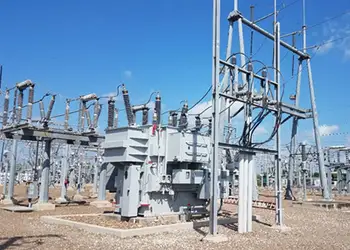
- Live Online
- 12 hours Instructor-led
- Group Training Available
Regular Price:
$699
Coupon Price:
$599
Homeowners tired of paying high electricity bills can now turn the tables by selling excess electricity back to power companies at more lucrative rates.
The hitch? Homeowners need a way to generate power on their own, either by installing solar panels on their roofs or planting wind turbines on their property.
It's called "net metering," and property owners can submit the applications needed to begin earning credits on their electricity bills if they generate more energy than they need on any given day or week.
To sweeten the deal, the state's 2008 Green Communities Act requires utility companies to pay their customers for the excess electricity at a retail rate rather than a lower wholesale rate.
Property owners still would need to be connected to the utilities-owned grid for cloudy days or during the dark, cold winter months when they likely will use more energy from a power company than they would produce on their own.
"Your utility is tracking how much energy you are buying and how much energy you are delivering back," said Ann Berwick, the state's undersecretary for energy. "You'll have meters tracking it in both directions."
The law also allows customers allocate their credits to other customers, allowing those without the ability to generate solar or wind power to take advantage of the change.
The benefits aren't limited just to homeowners. The law lets businesses and even cities and towns sell excess electricity back to utilities. Several municipalities are moving ahead on solar and wind turbine projects.
Before the change, net metering was limited to solar arrays or wind turbines capable of generating just 60 kilowatts or less, and customers were able to sell their power back to the grid only at the wholesale rate.
Under the new law, customers who own wind turbines or solar power installations up to 2 megawatts — even larger for municipal and state installations — can sell excess power back to the grid at the higher retail rate.
The state is working on another plan to bring down the cost of electricity — this time by saving power rather than increasing energy production.
The state Department of Public Utilities is weighing proposals requiring electric and gas utilities to ramp up their energy efficiency efforts.
That includes providing incentives for energy consumers to buy high efficiency lights, appliances, heating and air conditioning, and insulation and air sealing.
The changes also call on the utilities to boost their outreach efforts, especially to minority communities and small businesses.
Like net metering, the focus on energy efficiency is part of the Green Communities Act. The proposed changes are designed to help reverse the state's electricity demand.
Currently that demand increases at a rate of about 1 percent annually. Under the changes — set for final approval by the end of January — that demand would decrease by about 1.4 percent a year.
That's enough of a savings for the state to meet 30 percent of its electricity needs through improved energy efficiency, rather than additional power generation, by 2020, officials said.
A similar set of natural gas efficiency programs are expected to save $1.2 billion in energy costs over the next three years.
Governor Deval Patrick said the changes will save electric and natural gas customers up to $6.5 billion over the next three years while creating new jobs.
Related News

Stop the Shock campaign seeks to bring back Canadian coal power
Alberta Electricity Price Hikes spotlight grid reliability, renewable transition, coal phase-out, and energy poverty, as…
View more
Are major changes coming to your electric bill?
California Income-Based Electricity Rates propose a fixed monthly fee set by income as utilities and…
View more

IEC reaches settlement on Palestinian electricity debt
IEC-PETL Electricity Agreement streamlines grid management, debt settlement, and bank guarantees, shifting power supply, transmission,…
View more

Trump unveils landmark rewrite of NEPA rules
Trump NEPA Overhaul streamlines environmental reviews, tightening 'reasonably foreseeable' effects, curbing cumulative impacts, codifying CEQ…
View more
USA: 3 Ways Fossil Energy Ensures U.S. Energy Security
DOE Office of Fossil Energy safeguards energy security via the Strategic Petroleum Reserve, domestic critical…
View more
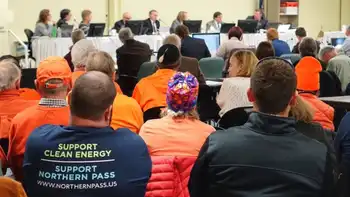
New Hampshire rejects Quebec-Massachusetts transmission proposal
Northern Pass Project faces rejection by New Hampshire regulators, halting Hydro-Quebec clean energy transmission lines…
View more
Sign Up for Electricity Forum’s Newsletter
Stay informed with our FREE Newsletter — get the latest news, breakthrough technologies, and expert insights, delivered straight to your inbox.
Electricity Today T&D Magazine Subscribe for FREE

Stay informed with the latest T&D policies and technologies.
- Timely insights from industry experts
- Practical solutions T&D engineers
- Free access to every issue

