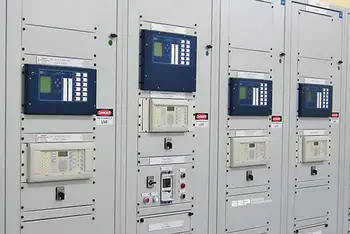
Protective Relay Training - Basic
Our customized live online or in‑person group training can be delivered to your staff at your location.
- Live Online
- 12 hours Instructor-led
- Group Training Available
Regular Price:
$699
Coupon Price:
$599
Hydro One is giving away 30,000 power-use-monitoring devices to customers in northern Ontario as part of a program to encourage electricity conservation.
The utility's decision follows a 500-home pilot project between July 2004 and September 2005, during which most participants using the device reduced their energy use by between 7 per cent and 10 per cent, with some achieving reductions of up to 15 per cent.
A study currently underway with B.C. Hydro customers has had similar preliminary results.
Tom Parkinson, president and chief executive of Hydro One, said the monitors have proven their worth. "We are committed to providing our customers with effective tools to help them better manage their electricity use, and save money on their hydro bill," he said in a statement.
The technology wirelessly transmits data from a residence's outside meter to a portable indoor display, allowing homeowners to directly see how much electricity they're consuming on a "live" basis.
Using the device, homeowners can instantly see the impact of using compact fluorescent light bulbs, more energy-efficient appliances or of making greater effort to turn off lights, television sets and other power-hungry appliances.
"I'm a little frustrated the ministry (of energy) has not been promoting it more to the utilities," said Danny Tuff, chief executive of Blue Line Innovations Inc., the St. John's, Nfld.-based maker of the monitors.
Tuff said the average home is expected to save 1,100 kilowatt-hours of electricity annually. Such savings across 30,000 homes would be the equivalent of taking 35,000 refrigerators off the grid.
Hydro One, which operates the province's electricity transmission network and much of its distribution system, said it is giving out the self-installable devices to homeowners in northern Ontario — mostly around Timmins — on a first-come, first-serve basis, representing about 3 per cent of its customer base.
The cost of the program is $4.8 million over five years, and covers the $150 price tag of each monitor.
Tuff said other utilities around the province have been hesitant to consider the devices because their attentions are focused on smart meters, which enable time-of-day billing and encourage homeowners to shift their power use.
But smart meters don't necessarily encourage conservation, he said.
The province's goal is to have 4.5 million smart meters installed across the province by 2010, with northern Ontario likely the last to get them.
The program's cost is expected to exceed $1 billion.
Related News

France and Germany arm wrestle over EU electricity reform
EU Electricity Market Reform CFDs seek stable prices via contracts for difference, balancing renewables and…
View more
Franklin Energy and Consumers Energy Support Small Businesses During COVID-19 with Virtual Energy Coaching
Consumers Energy Virtual Energy Coaching connects Michigan small businesses with remote efficiency experts to cut…
View more

Europeans push back from Russian oil and gas
EU Renewable Energy Transition is accelerating under REPowerEU, as wind and solar generation hit records,…
View more

BC Hydro cryptic about crypto mining electricity use
BC Hydro Crypto Mining Moratorium pauses high-load connection requests, as BCUC reviews electricity demand, gigawatt-hours…
View more
Ukraine Resumes Electricity Exports
Ukraine Electricity Exports resume as the EU grid links stabilize; ENTSO-E caps, megawatt capacity, renewables,…
View more
Minnesota Power energizes Great Northern Transmission Line
Great Northern Transmission Line delivers 250 MW of carbon-free hydropower from Manitoba Hydro, strengthening Midwest…
View more
Sign Up for Electricity Forum’s Newsletter
Stay informed with our FREE Newsletter — get the latest news, breakthrough technologies, and expert insights, delivered straight to your inbox.
Electricity Today T&D Magazine Subscribe for FREE

Stay informed with the latest T&D policies and technologies.
- Timely insights from industry experts
- Practical solutions T&D engineers
- Free access to every issue
