High Voltage Maintenance Training Online
Our customized live online or in‑person group training can be delivered to your staff at your location.
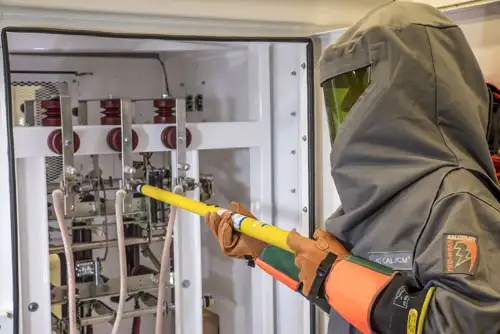
- Live Online
- 12 hours Instructor-led
- Group Training Available
Regular Price:
$599
Coupon Price:
$499
David Peterson used to say "you can't run the country without Ontario and Quebec, it's that simple." And in the years he was premier of Ontario from 1985 to 1990, Peterson went out of his way to nurture a special relationship with Robert Bourassa in Quebec.
The Peterson-Bourassa model remains the standard of excellence by which their successors are measured in managing the partnership between Canada's two largest provinces. Seen in this light, the relationship between Dalton McGuinty and Jean Charest is still very much a work in progress.
Both took office as Liberal premiers in 2003, both inherited a bad set of books with nasty deficits, both have had to deal with an exchange rate-driven predicament that has seen the loss of roughly 200,000 jobs in their provinces' export-reliant manufacturing sectors in the last five years and both are contending with a perfect storm in the forestry sector.
They should have been natural allies in seeking remedies from Ottawa on transfer payments and relief for their beleaguered industries. But until quite recently, they weren't. At times, they were barely on speaking terms.
The low moment came in 2006 when Charest hosted a premiers' meeting in Montreal, nominally to seek a consensus on resolving the fiscal imbalance between Ottawa and the provinces, but equally to shore up his standing with Quebec voters as a leader in the federation in the run-up to his 2007 election.
McGuinty bolted the meeting and issued his own communique dissenting from a consensus that Ottawa should address the fiscal imbalance through equalization to some provinces rather than enhanced transfer payments to all. From McGuinty's perspective, this was perfectly understandable, since Ontario has never been a recipient of equalization.
Charest was livid, and other premiers aghast, at the cavalier manner in which McGuinty wrecked the meeting. McGuinty, for his part, was also annoyed by Charest's privileged access to the Prime Minister during Stephen Harper's first year in office. While Charest had at least half a dozen meetings and several joint announcements with the PM in the run-up to the Quebec election, it was all McGuinty could do to get a cup of coffee in a Toronto hotel room while Harper was on his way to introducing John Tory at an Ontario Conservative fundraiser.
But since the Quebec election last March, the special relationship between Harper and Charest has cooled, and Charest has been cultivating a new alliance with McGuinty, himself coming off a majority victory in October.
The Harper-Charest tandem has been out of sync since Charest's badly judged campaign announcement allocating Quebec's entire $700-million fiscal imbalance payment from Ottawa to a provincial tax cut. Harper, who was completely blindsided, had to deal with the blowback from the rest of Canada: Quebec voters were being bribed with other people's money. Harper also has a second horse in Quebec's minority House, Mario Dumont, a fact that has aroused suspicion and resentment in Charest's circle, and has put a further strain on relations between the PM and Quebec Premier.
Before last Friday's first ministers' dinner at 24 Sussex, there was an Ontario-Quebec meeting to forge a new common front between the two premiers, both annoyed that they weren't consulted on the federal government's recent $1-billion rescue package for small towns reliant on forestry and other depressed industries.
Charest is promoting the idea of a Quebec-Ontario free trade agreement along the lines of the one between British Columbia and Alberta. Charest also wants to build another 8,000 megawatts of electricity capacity for Hydro-Quebec, and power-starved Ontario could be a customer for some of it. And Charest has revived a decades-old notion of a high speed passenger rail service in the Quebec City-Windsor corridor.
All of these things require a new best friend: Dalton McGuinty.
Related News

Beating Covid Is All About Electricity
Hospital Electricity Reliability underpins ICU operations, ventilators, medical devices, and diagnostics, reducing power outages risks…
View more

Recommendations from BC Hydro review to keep electricity affordable
BC Hydro Review Phase 2 Recommendations advance affordable electricity rates, clean energy adoption, electrification, and…
View more
Japan's power demand hit by coronavirus outbreak: industry head
Japan Power Demand Slowdown highlights reduced electricity consumption as industrial activity stalls amid the coronavirus…
View more
EDF and France reach deal on electricity prices-source
EDF Nuclear Power Price Deal sets a 70 euros/MWh reference price, adds consumer protection if…
View more
Understanding the Risks of EV Fires in Helene Flooding
EV Flood Fire Risks highlight climate change impacts, lithium-ion battery hazards, water damage, post-submersion inspection,…
View more

No time to be silent on NZ's electricity future
New Zealand Renewable Energy Strategy examines decarbonisation, GHG emissions, and net energy as electrification accelerates,…
View more
Sign Up for Electricity Forum’s Newsletter
Stay informed with our FREE Newsletter — get the latest news, breakthrough technologies, and expert insights, delivered straight to your inbox.
Electricity Today T&D Magazine Subscribe for FREE

Stay informed with the latest T&D policies and technologies.
- Timely insights from industry experts
- Practical solutions T&D engineers
- Free access to every issue
