High Voltage Maintenance Training Online
Our customized live online or in‑person group training can be delivered to your staff at your location.

- Live Online
- 12 hours Instructor-led
- Group Training Available
Regular Price:
$599
Coupon Price:
$499
Stone Mills, Ontario is far from a household name. But the township of 7,250 people, located outside of Kingston in the eastern part of the province, will soon be home to what is the largest solar farm in North America—for now, anyway. If all goes according to plan, the project in Stone Mills will be the first of many massive solar power plants in Ontario, although each could have cost challenges to overcome.
Toronto-based SkyPower, in partnership with U.S. firm SunEdison, is building the 19 megawatt solar park in Stone Mills, which will sprawl over 300 acres of land and power around 2,000 homes each year. SkyPower founder and CEO Kerry Adler says the first phase of construction, consisting of nine megawatts, will be completed by the end of the year, with the rest to be finished sometime in 2009. The total cost is estimated at around $100 million, financed by SkyPower (which Adler sold to Lehman Brothers last year) and SunEdison.
“There have been announcements for larger projects that are going to get built. It’s like the skyscrapers in Shanghai where one guy says he’s going to build 100 stories, and the next guy is going to build 101,” Adler says. There are at least six other companies with plans to build solar in Ontario, some with multiple projects in the pipeline. OptiSolar Farms Canada, a subsidiary of California-based OptiSolar, is planning an even bigger plant than SkyPower’s. Located in the southwestern Ontario town of Sarnia, OptiSolar’s plant will generate 60 megawatts of electricity, and construction is expected to begin this year.
Why the focus in Ontario? The provincial government set a goal of producing 10% of its electricity needs from renewable sources by 2010, and the Ontario Power Authority will purchase electricity from solar plants at a rate of 42 cents per kilowatt-hour. (The power doesnÂ’t come cheap; coal, for example, costs less than 10 cents per kilowatt-hour to produce.)
But completion of all the projects is far from a done deal. Sure, the province has set a renewable energy goal, but the government is considering further nuclear build-out to meet energy demand, and even Adler says solar power will likely remain a small part of the mix. Solar power plants are more expensive to build than wind turbines, for example, and generally less efficient. Solar produces electricity between 12% and 16% of the time in Ontario, whereas wind averages between 30% and 40%.
For project developers, interest rates are a concern, given that plants are typically financed over a number of years. But Canadian solar power players face another difficulty, as well. Most modules are produced outside of the country and priced in either Euros or U.S. dollars. “If the Canadian dollar gets weaker, that will impair the ability of many of these projects to see the light of day,” Adler says, who laments there are no major Canadian manufacturers of solar panels. (SkyPower gets its modules from SunEdison, based in Maryland.)
Perhaps the most prominent Canadian name in solar right now is ARISE Technologies, based in Waterloo, Ont. The company announced in mid-April its first-ever photovoltaic cell manufacturing facility had begun production. But the plant is located in Germany, not Canada. “If Germany is offering the equivalent of up to 60 cents per kilowatt-hour, and Ontario is offering 42 cents, who are you going to sell to?” says Adler.
Though Canadians face a unique challenge, obtaining solar modules anywhere is difficult. A worldwide silicon shortage and solar power expansion in Europe has pushed up demand, prices and wait times for modules. Adler says even the thin film variety of solar cells, which use less silicon, are difficult to get. SkyPower will be using thin film cells because of the lower cost, although the trade-off is theyÂ’re less efficient than crystalline cells, meaning more of them are required to get the same amount of electricity.
Even so, Adler is optimistic about rolling out more solar power in Ontario, given the company’s financial backing. SkyPower has plans for another seven projects totaling 70 megawatts of electricity in the coming years. The company is also heavily involved in wind power (in fact, that’s where it got its start) and Adler sees the two as complementary. “We have a problem here in Ontario, and the government is looking at all types of solutions,” he says. “You have to do a little bit of everything.”
Related News

Kyiv warns of 'difficult' winter after deadly strikes
Ukraine Winter Energy Attacks strain the power grid as Russian missile strikes hit critical infrastructure,…
View more

Jordan approves MOU to implement Jordan-Saudi Arabia electricity linkage
Jordan-Saudi Electricity Linkage Project connects NEPCO and Saudi National Electricity Company to launch feasibility studies,…
View more
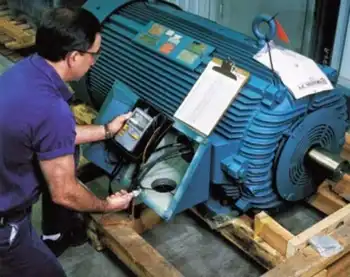
Electric Motor Testing Training
Electric Motor Testing Training covers on-line and off-line diagnostics, predictive maintenance, condition monitoring, failure analysis,…
View more

New Mexico Governor to Sign 100% Clean Electricity Bill ‘As Quickly As Possible’
New Mexico Energy Transition Act advances zero-carbon electricity, mandating public utilities deliver carbon-free electricity by…
View more
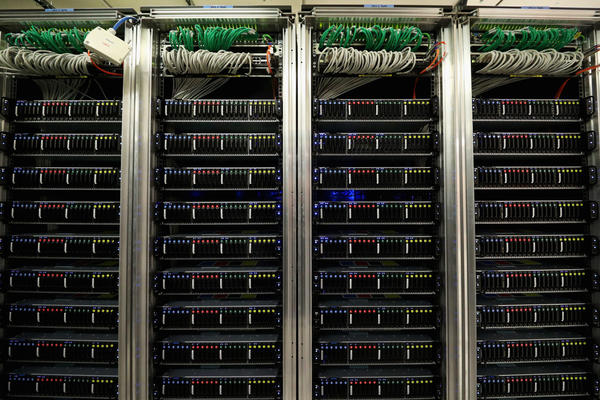
Data Centers May Increase Canadian Electricity Bills
Analysts warn that rising data-center and AI demand threatens to push energy infrastructure costs onto…
View more
Mexican president's contentious electricity overhaul defeated in Congress
Mexico Energy Reform Defeat underscores opposition unity as CFE-first rules, state regulators, and lithium nationalization…
View more
Sign Up for Electricity Forum’s Newsletter
Stay informed with our FREE Newsletter — get the latest news, breakthrough technologies, and expert insights, delivered straight to your inbox.
Electricity Today T&D Magazine Subscribe for FREE

Stay informed with the latest T&D policies and technologies.
- Timely insights from industry experts
- Practical solutions T&D engineers
- Free access to every issue

