NFPA 70E Training
Our customized live online or in‑person group training can be delivered to your staff at your location.

- Live Online
- 6 hours Instructor-led
- Group Training Available
Regular Price:
$199
Coupon Price:
$149
Two Americans and a German won the Nobel Prize in physics for optics research that is improving the accuracy of such precision instruments as GPS locators, atomic clocks and navigation systems.
Americans John Hall and Roy Glauber shared the prize with Theodor Haensch of Germany.
Glauber, 80, of Harvard University took half of the $1.3 million (U.S.) award for showing how the quantum nature of light can affect its behaviour. His insights led to the work of Hall, 71, a professor at the University of Colorado, and Haensch, 63, of the Ludwig-Maximilians-Universität in Munich.
Hall and Haensch will share the other half of the prize.
Glauber thought it was a joke when the phone jolted him awake early yesterday and a man with a Swedish accent told him he had won the Nobel Prize. He recognized the voice as a scientist he knows and thought it was a prank.
"I could scarcely believe him," he said. "But there was something very persuasive about that hour of the morning.''
Until Glauber published his theories in 1963, scientists dismissed the idea that quantum theory, which was developed to describe the behaviour of particles, had any application to light. But Glauber showed that certain types of light — including lasers — could only be fully understood using quantum methods, which treat light as individual packets of energy rather than continuous waves.
"His results are fundamental for our modern understanding of the behaviour of light," said Sune Svanberg, chairman of the Nobel Committee for Physics.
Researchers have used Glauber's insights to create exotic lasers and devices that hold tiny samples in place with the pressure of photons. More recently, the possibility has arisen of building computers that use light, rather than electricity, to do their calculations.
Hall and Haensch built on Glauber's discovery by developing a means of measuring the frequency of a laser beam to a precision of one part in a thousand trillion. With that ability, scientists can build optical clocks that keep time more accurately than existing atomic devices. They can also improve the precision of distance measurements accordingly.
"This, in turn, will allow better GPS systems, better space navigation and improved control of astronomical telescope arrays,'' the Royal Swedish Academy of Sciences noted in awarding the prize. The research could also be useful in creating better digital animation.
"Eventually, we may be able to enjoy three-dimensional holographic movies," Haensch said.
The three laureates work at the Joint Institute for Laboratory Astrophysics, an institute run by the University of Colorado and the National Institute of Standards and Technology.
In the past decade, winning physics discoveries have ranged from explaining the makeup of faraway galaxies to creating high-speed electronics that led to breakthroughs in how information is transmitted worldwide at superfast speeds.
Two Australians won the Nobel Prize in medicine for proving that bacteria, not stress, were the main cause of stomach and intestinal ulcers.
The prizes will be awarded by Sweden's King Carl XVI Gustaf at a ceremony in Stockholm on Dec. 10.
Related News
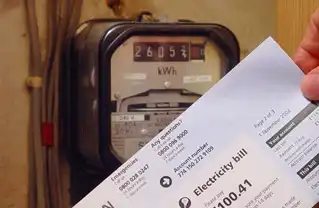
Extreme Heat Boosts U.S. Electricity Bills
Extreme Heat and Rising Electricity Bills amplify energy costs as climate change drives air conditioning…
View more
Garbage Truck Crash Knocks Down Power Poles in Little Haiti
Little Haiti Garbage Truck Power Outage in Miami after mechanical arms snagged power lines, snapping…
View more
Typical Ontario electricity bill set to increase nearly 2% as fixed pricing ends
Ontario Electricity Rates update: OEB sets time-of-use and tiered pricing for residential customers, with kWh…
View more

Senate Committee Advised by WIRES Counsel That Electric Transmission Still Faces Barriers to Development
U.S. Transmission Grid Modernization underscores FERC policy certainty, high-voltage infrastructure upgrades, renewables integration, electrification, and…
View more
Blood Nickel and Canada's Role in Global Mining Sustainability
Blood Nickel spotlights ethical sourcing in the EV supply chain, linking nickel mining to human…
View more

Growing pot sucks up electricity and pumps out an astounding amount of carbon dioxide — it doesn't have to
Sustainable Cannabis Cultivation leverages greenhouse design, renewable energy, automation, and water recapture to cut electricity…
View more
Sign Up for Electricity Forum’s Newsletter
Stay informed with our FREE Newsletter — get the latest news, breakthrough technologies, and expert insights, delivered straight to your inbox.
Electricity Today T&D Magazine Subscribe for FREE

Stay informed with the latest T&D policies and technologies.
- Timely insights from industry experts
- Practical solutions T&D engineers
- Free access to every issue
