CSA Z462 Arc Flash Training – Electrical Safety Compliance Course
Our customized live online or in‑person group training can be delivered to your staff at your location.
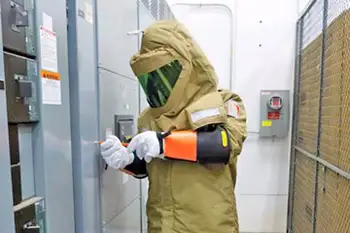
- Live Online
- 6 hours Instructor-led
- Group Training Available
Regular Price:
$249
Coupon Price:
$199
Four giant cooling towers loom over the Three Mile Island nuclear plant, reminders of the fears and hopes surrounding an industry that may help cut U.S. dependence on foreign oil.
Two towers stand quiet, idle since a partial meltdown in a reactor almost 30 years ago in the nation's worst nuclear accident. Two others belch steam from an active reactor, providing cheap electricity to 400,000 homes.
Unlike the Chernobyl disaster in Ukraine - which will mark its 20th anniversary on April 26 - no one died at Three Mile Island. But critics of atomic power raise concerns over potential terrorist threats to plants and say science has yet to provide an adequate solution for highly toxic nuclear waste.
Three Mile Island owner Exelon Corp. now wants to extend its operating license as part of an industry program to keep all 103 U.S. nuclear reactors going beyond their standard 40-year licenses.
New plants are also under consideration as companies hope to cash in on an expected 45 percent surge in electricity demand over the next 25 years and answer U.S. government calls to diversify sources for the world's top energy consumer.
President George W. Bush has said America is "addicted to oil" and called nuclear power a clean, low-cost alternative. Industry groups say its use can reduce emissions of greenhouse gases, caused by burning coal and crude oil, and they point to polls suggesting growing public acceptance. Yet for some people living near Three Mile Island, in the Susquehanna River area near the Pennsylvania state capital of Harrisburg, worries over a possible deadlier accident remain.
"How big is the explosion going to be? How are you going to get out?" Mario Lugo asked from the main street of Middletown, about 5 km (3 miles) north of the plant.
The 42-year-old airport maintenance worker said he has considered moving away because of his fear of an accident.
Nationally, however, industry surveys suggest 70 percent of the public is comfortable with nuclear power, up from around 50 percent in the mid-1980s.
Approval rises to more than 80 percent among those living close to a nuclear plants, which pay high taxes to host cities, according to the Nuclear Energy Institute (NEI) lobbying group.
"The contribution to the tax rates to the city and counties is pretty significant, primarily through property taxes which are the main instrument for funding public schools," said Mitch Singer, an NEI spokesman.
Nuclear power generates 20 percent of U.S. electricity, up from 3 percent in the early 1970s. Supporters point to France, which over the past 30 years has built 58 nuclear plants that provide around 78 percent of electricity, as a model.
Nuclear power is enjoying something of a rebirth - 20 years after the explosion at Chernobyl seemed to herald its decline - in a power-hungry world, worried about rising oil prices.
Last month, Russia and the United States called for the world to embrace nuclear power to guarantee stable supplies of energy and cut emissions of harmful greenhouse gases.
Selling the industry as safe has been tough, however, and companies have had to adapt to shifting concerns.
At Three Mile Island, operators now face rigorous training to prevent a repeat of the 1979 incident. No one was killed or injured during the accident, and subsequent tests show no rise in cancer rates, but confidence in nuclear safety fell.
Plants are pouring money into barriers, checkpoints, bullet-resistant guard towers and surveillance equipment following the September 11 attacks.
A 3-metre-thick (10-foot) concrete wall stretches across Three Mile Island, preventing unauthorized vehicles from getting within about 200 yards of plant buildings.
"Public opinion has turned around," said Michael Gallagher, vice president of license renewal projects for Exelon. "It was dark in the '80s but is now very bright. We have proved that we can operate the plants safely and efficiently."
Even so, spent fuel from U.S. nuclear plants is piling up, with over 50,000 tons (45,500 metric tons) stored at over 100 temporary locations in 39 states.
A government proposal to create a massive storage site at Yucca Mountain in Nevada faces congressional opposition.
"We're leaving a legacy of having to baby-sit this stuff," said Dave Hamilton, director of global warming and energy programs at the Sierra Club, a leading environmental group.
Others are troubled by the possibility that nuclear plants may be targeted by terrorists, or vulnerable to more traditional safety issues after three instances of employees sleeping or resting on the job at Three Mile Island in the last year.
"I don't feel safe - you don't know what's going on," said Rosemary Gutschalli, 53, who has lived in Middletown for 40 years, after the dozing night shift operators were found.
Related News
Manitoba's electrical demand could double in next 20 years: report
Manitoba Hydro Integrated Resource Plan outlines electrification-driven demand growth, clean electricity needs, wind generation, energy…
View more
Atlantic grids, forestry, coastlines need rethink in era of intense storms: experts
Atlantic Canada Hurricane Resilience focuses on climate change adaptation: grid hardening, burying lines, coastline resiliency…
View more
Renewable growth drives common goals for electricity networks across the globe
Energy Transition Grid Reforms address transmission capacity, interconnection, congestion management, and flexibility markets, enabling renewable…
View more
Western Canada drought impacting hydropower production as reservoirs run low
Western Canada Hydropower Drought strains British Columbia and Manitoba as reservoirs hit historic lows, cutting…
View more
5,000 homes would be switched to geothermal energy free of charge
Manitoba NDP Geothermal Conversion Program offers full-cost heat pump installation for 5,000 homes, lowering electricity…
View more
Why the Texas Power Grid Is Facing Another Crisis
Texas Power Grid Reliability faces record peak demand as ERCOT balances renewable energy, wind and…
View more
Sign Up for Electricity Forum’s Newsletter
Stay informed with our FREE Newsletter — get the latest news, breakthrough technologies, and expert insights, delivered straight to your inbox.
Electricity Today T&D Magazine Subscribe for FREE

Stay informed with the latest T&D policies and technologies.
- Timely insights from industry experts
- Practical solutions T&D engineers
- Free access to every issue
