CSA Z462 Arc Flash Training – Electrical Safety Compliance Course
Our customized live online or in‑person group training can be delivered to your staff at your location.

- Live Online
- 6 hours Instructor-led
- Group Training Available
Regular Price:
$249
Coupon Price:
$199
IF it was based in Edinburgh, it would stretch north-west to Dunfermline and up the east coast to Methil. If it was sited in Glasgow, it would go south to East Kilbride and north-east to Falkirk.
Opponents of what would be the world's largest onshore windfarm, on Lewis, tried recently to present the scale of the development with landmarks familiar to urban dwellers in Scotland's central belt.
RSPB Scotland, which opposes the 25-mile long development proposed by Lewis Wind Power, which embraces Amec and British Energy, claims it will have a catastrophic environmental impact, damaging up to 15,500 acres of threatened habitat.
The development would involve 234 turbines, each rising to 462ft. Ministers will have to decide whether it proceeds or not, but Comhairle nan Eilean Siar (Western Isles Council) has already recommended acceptance of a slightly more modest development of 209 turbines.
Representatives of the companies met with Members of Scottish Parliament (MSPs). To coincide with the meeting, RSPB prepared maps to convey the scale of the proposed development.
The diagrams show how the windfarm would stretch north from Edinburgh Zoo to beyond Methil on the other side of the Firth of Forth and west to Dunfermline; if sited in the west it would go from Glasgow Central Station to East Kilbride in the south, and Falkirk to the north-east.
RSPB says that, according to the developer's own environmental assessment, the impact would mean 50 golden eagles lost due to collision with turbines; 50 merlin lost due to collision; 75-150 red- throated divers lost due to collision; a minimum of 314 pairs of dunlin lost to the UK population due to habitat loss and displacement (though RSPB believes 640 a more likely figure); and a minimum of 350 pairs of golden plover (with RSPB's worst-case scenario suggesting 700 pairs).
Because of such disastrous implications for rare birds and wildlife, the RSPB is objecting in the strongest terms possible to the Lewis proposal, although it views climate change as the most serious long-term threat to wildlife in the UK and globally.
It supports the increased use of wind power, but believes windfarms must be sited where they do not significantly harm birds and other wildlife and their habitats.
Stuart Housden, director of RSPB Scotland, said: "By selecting a site protected under EU conservation legislation for this huge windfarm, Amec and British Energy seriously threaten habitats of vital importance for birds and biodiversity. We believe this is the wrong development in the wrong place, and are resolved in our opposition to the scheme. We welcome renewables, but not at the expense of the environment. Alternatives must be explored."
David Hodkinson, Lewis Wind Power director, said yesterday that the scale of the development would be matched by its output and economic benefit.
"As well as providing jobs in manufacturing, construction and operations, and payments to the community, our proposal would facilitate the proposed new interconnector cable. This would open up the Western Isles to the development of commercial and communityscale renewable energy projects in all technologies for generations to come.
"Our environmental work and proposed design have both moved forward considerably since our planning application was submitted in the autumn of 2004. We are now confident that we would be able to minimise the effects of the wind farm on birds through a combination of measures, " he said.
"These would include the removal of some of the proposed turbines and an operating regime that would allow turbines to be switched off and rotated in response to specific bird behaviours. We also now have a much better understanding of how to model the potential effects of the windfarm on the birds, based on the continued survey workwe have undertaken.
Mr Hodkinson added: "We will be bringing our updated proposals, based on scientific research undertaken over four years, forward for evaluation by the Scottish Executive and its advisers in the NewYear.
"We are familiar with the provisions of the Habitats Directive. Possible effects on birds and their habitats have been minimised through the design process. European law dictates that any remaining effects would have to be put right through compensatory measures. We are confident that our proposal has no alternative solutions in the Western Isles or elsewhere."
Related News

Let’s make post-COVID Canada a manufacturing hub again
Canada Manufacturing Policy prioritizes affordable energy, trims carbon taxes, aligns with Buy America, and supports…
View more

Smart grid and system improvements help avoid more than 500,000 outages over the summer
ComEd Smart Grid Reliability drives outage reduction across Illinois, leveraging smart switches, grid modernization, and…
View more
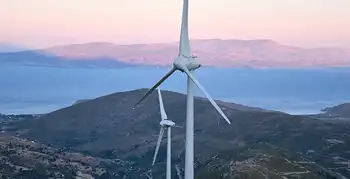
Enel Starts Operations of 450 MW Wind Farm in U.S
High Lonesome Wind Farm powers Texas with 500 MW of renewable energy, backed by a…
View more
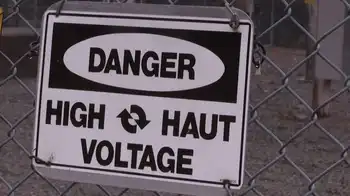
'Unbelievably dangerous': NB Power sounds alarm on copper theft after vandalism, deaths
NB Power copper thefts highlight risks at high-voltage substations, with vandalism, fatalities, infrastructure damage, ratepayer…
View more

Plan to End E-Vehicle Subsidies Sparks Anger in Germany
Germany EV Subsidy Cut triggers budget-crisis fallout in the automotive industry, after a constitutional court…
View more

Cost of US nuclear generation at ten-year low
US Nuclear Generating Costs 2017 show USD33.50/MWh for nuclear energy, the lowest since 2008, as…
View more
Sign Up for Electricity Forum’s Newsletter
Stay informed with our FREE Newsletter — get the latest news, breakthrough technologies, and expert insights, delivered straight to your inbox.
Electricity Today T&D Magazine Subscribe for FREE

Stay informed with the latest T&D policies and technologies.
- Timely insights from industry experts
- Practical solutions T&D engineers
- Free access to every issue

