NFPA 70E Training
Our customized live online or in‑person group training can be delivered to your staff at your location.
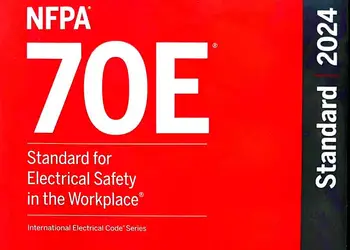
- Live Online
- 6 hours Instructor-led
- Group Training Available
Regular Price:
$199
Coupon Price:
$149
U.S. EV battery grants fund clean-energy vehicles, battery technology, and drive train components, advancing the green economy, energy independence, domestic manufacturing, and jobs through $2.4 billion in funding for plug-in hybrids and electric vehicles nationwide.
Top Insights
Federal $2.4B to scale battery tech, EV components, and testing, advancing clean-energy vehicles, jobs, and independence.
- $2.4B federal investment in EV and battery technology
- 48 projects funded across 25 states, matching funds required
- $1.5B for batteries; $500M motors; $400M vehicle testing
- Major awards: GM, Ford, LG Chem, Johnson Controls, A123
Companies working with Ford Motor Co, Chrysler Group and General Motors Corp received more than $600 million to further development of batteries for hybrids and electric cars.
The awards were part of $2.4 billion in grants being announced by the Obama administration as part of its "green" economy vision and efforts to enhance U.S. energy independence.
The grants represent the nation's largest-ever investment in battery technology for clean-energy cars, Obama said while visiting a plant in Wakarusa, Indiana, owned by Navistar International Corp.
The funding will "develop the next generation of fuel-efficient cars and trucks, powered by the next generation of battery technologies — all made right here in America," said Obama, adding that he wants the United States to become a world leader in clean-energy vehicles.
Almost all battery manufacturing for advanced technology vehicles is currently based in Asia.
"I don't want to just reduce our dependence on foreign oil and then end up being dependent on their foreign innovations," Obama said. "I don't want to have to import a hybrid car. I want to be able to build a hybrid car here."
White House economic and Energy Department officials said 48 projects in 25 states would receive money under a deal that requires winners to match the federal investment as part of the awards.
U.S.-based companies will receive $1.5 billion to produce batteries and components and expand battery recycling capabilities.
An additional $500 million will go to produce electric motors and other drive train components.
The final $400 million will pay for testing plug-in hybrids and all-electric vehicles.
Michigan, hit hard by the dramatic contraction of U.S. auto production, led all states with 11 battery grants awarded. Indiana was second with seven, officials said. Academic interests, utilities and research cooperatives also applied for funding.
Obama said the funds would help create "tens of thousands of jobs," particularly in the depressed manufacturing sector.
Navistar received $39 million to make electric trucks, allowing the company to rehire some laid-off staff in the area, he said.
"The company estimates that this investment will help create or save hundreds of jobs in the area," Obama said.
Compact Power Inc, on behalf of South Korea's LG Chem Ltd, received $151 million to produce battery cells for GM's highly touted Chevrolet Volt plug-in, due out in 2010.
Johnson Controls Inc and France's Saft Groupe SA will supply a complete battery system for Ford's first plug-in hybrid, due in 2012. Johnson Controls received $299 million.
A123 Systems, which is working with Chrysler, received $249 million.
Delphi Automotive Systems will receive $89 million to expand existing electric drive components for passenger and commercial vehicles.
KD Advanced Battery Group, a venture that includes Dow Chemical Co, Kokam America Inc and Townsend Ventures LLC, received $161 million.
GM received an additional $105 million to produce an electric rear-wheel-drive system, and Ford received $62 million for a related transmission project.
The battery grants are separate from federal loans to boost EVs aimed at helping U.S. automakers retool factories for making more fuel-efficient vehicles.
Related News
Related News
Hydro One delivery rates go up
Hydro One Rate Hike reflects Ontario Energy Board approval for higher delivery charges, impacting seasonal…
View more
Hydro One will keep running its U.S. coal plant indefinitely, it tells American regulators
Hydro One-Avista Merger outlines a utility acquisition shaped by Washington regulators, Colstrip coal plant depreciation,…
View more
Growing pot sucks up electricity and pumps out an astounding amount of carbon dioxide — it doesn't have to
Sustainable Cannabis Cultivation leverages greenhouse design, renewable energy, automation, and water recapture to cut electricity…
View more

Russia suspected as hackers breach systems at power plants across US
US Power Grid Cyberattacks target utilities and nuclear plants, probing SCADA, ICS, and business networks…
View more
West Coast consumers won't benefit if Trump privatizes the electrical grid
BPA Privatization would sell the Bonneville Power Administration's transmission lines, raising FERC-regulated grid rates for…
View more
Lump sum credit on electricity bills as soon as July
NL Hydro electricity credit delivers a one-time on-bill rebate from the rate stabilization fund, linked…
View more
Sign Up for Electricity Forum’s Newsletter
Stay informed with our FREE Newsletter — get the latest news, breakthrough technologies, and expert insights, delivered straight to your inbox.
Electricity Today T&D Magazine Subscribe for FREE

Stay informed with the latest T&D policies and technologies.
- Timely insights from industry experts
- Practical solutions T&D engineers
- Free access to every issue

