By -- Source, Canada NewsWire


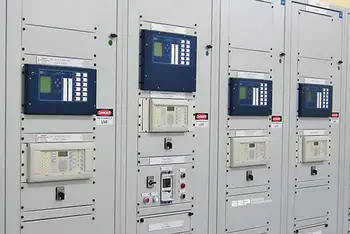
Protective Relay Training - Basic

Our customized live online or in‑person group training can be delivered to your staff at your location.

  • Live Online
  • 12 hours Instructor-led
  • Group Training Available
Regular Price:
$699
Coupon Price:
$599
Reserve Your Seat Today
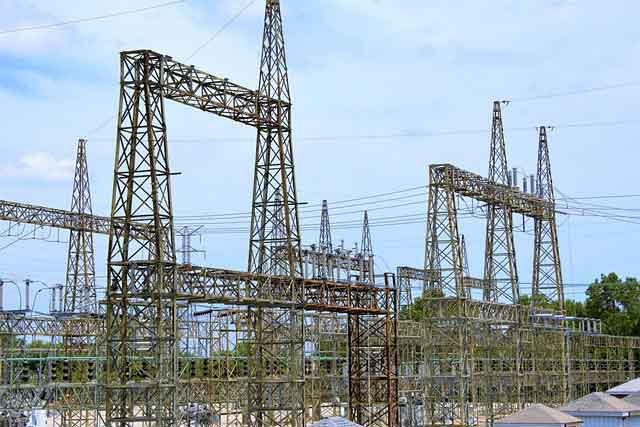
CALGARY -- Fording Inc. (TSE/NYSE:FDG) and Teck Cominco Limited are pleased to announce the formation of a joint venture to examine the feasibility of constructing and operating a power generation facility in the Elk Valley.

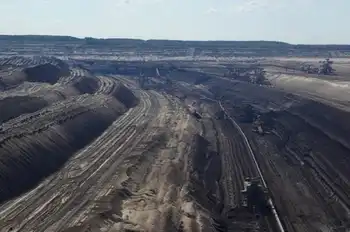
Southeastern British Columbia would benefit from the construction and operation of the power plant through the jobs and economic activity that will be created. The proposed power generation project would be fueled using coal refuse, which would otherwise require permanent containment at both the Fording River and Elkview mine sites.

The viability of the project will be subject to the development of a suitable provincial energy policy and regulatory standards.

The proposed power plant is a continuation of current work by Fording Inc. and prior studies by Teck Cominco Limited to build individual power projects in the Elk Valley. The pre-feasibility level study will address site alternatives, technology, and preliminary permitting issues. Input from the local communities will be sought during the project's initial stages.

Related News

Egypt Plans Power Link to Saudis in $1.6 Billion Project

Egypt-Saudi Electricity Interconnection enables cross-border power trading, 3,000 MW capacity, and peak-demand balancing across the Middle East, boosting grid stability, reliability, and energy security through an advanced electricity network, interconnector infrastructure, and GCC grid integration.


Key Points

A 3,000 MW grid link letting Egypt and Saudi Arabia trade power, balance peak demand, and boost regional reliability.

✅ $1.6B project; Egypt invests ~$600M; 2-year construction timeline

✅ 3,000 MW capacity; peak-load shifting; cross-border reliability

✅ Links GCC grid; complements Jordan and Libya interconnectors


Egypt will connect its electricity network to Saudi Arabia, joining a system in the Middle East that has allowed neighbors to share power, similar to the Scotland-England subsea project that will bring renewable power south.

The link will cost about $1.6 billion, with Egypt paying about $600 million, Egypt’s Electricity Minister Mohamed Shaker said Monday at a conference in Cairo, as the country pursues a smart grid transformation to modernize its network. Contracts to build the network will be signed in March or April, and construction is expected to take about two years, he said. In times of surplus, Egypt can export electricity and then import power during shortages.

"It will enable us to benefit from the difference in peak consumption,” Shaker said. “The reliability of the network will also increase.”

Transmissions of electricity across borders in the Gulf became possible in 2009, when a power grid connected Qatar, Kuwait, Saudi Arabia and Bahrain, a dynamic also seen when Ukraine joined Europe's grid under emergency conditions. The aim of the grid is to ensure that member countries of the Gulf Cooperation Council can import power in an emergency. Egypt, which is not in the GCC, may have been able to avert an electricity shortage it suffered in 2014 if the link with Saudi Arabia existed at the time, Shaker said.

The link with Saudi Arabia should have a capacity of 3,000 megawatts, he said. Egypt has a 450-megawatt link with Jordan and one with Libya at 200 megawatts, the minister said. Egypt will seek to use its strategic location to connect power grids in Asia, where the Philippines power grid efforts are raising standards, and elsewhere in Africa, he said.

In 2009, a power grid linked Qatar, Kuwait, Saudi Arabia and Bahrain, allowing the GCC states to transmit electricity across borders, much like proposals for a western Canadian grid that aim to improve regional reliability. 


Related News

View more

Spain plans switch to 100% renewable electricity by 2050

Spain 2050 Renewable Energy Plan drives decarbonisation with wind and solar, energy efficiency, fossil fuel bans, and Paris Agreement targets, enabling net-zero power, emissions cuts, and just transition measures for workers and coal regions.


Key Points

A roadmap to 100 percent renewable power by 2050, deep emissions cuts, and a just transition aligned with Paris goals.

✅ Adds 3,000 MW of wind and solar each year through 2030

✅ Bans new fossil fuel drilling, hydrocarbon extraction, and fracking

✅ Targets 35% energy efficiency gains and 35% green power by 2030


Spain has launched an ambitious plan to switch its electricity system entirely to renewable sources, similar to California's 100% clean electricity mandate, by 2050 and completely decarbonise its economy soon after.

By mid-century, as EU electricity demand projections suggest increases, greenhouse gas emissions would be slashed by 90% from 1990 levels under Spain’s draft climate change and energy transition law.

To do this, the country’s social democratic government is committing to installing at least 3,000MW of wind and solar power capacity every year in the next 10 years ahead.

New licences for fossil fuel drills, hydrocarbon exploitation and fracking wells, will be banned, and a fifth of the state budget will be reserved for measures that can mitigate climate change. This money will ratchet upwards from 2025.

Christiana Figueres, a former executive secretary of the UN’s framework convention on climate change (UNFCCC), hailed the draft Spanish law as “an excellent example of the Paris agreement”. She added: “It sets a long-term goal, provides incentives on scaling up emissions technologies and cares about a good transition for the workforce.”

Under the plan, “just transition” contracts will be drawn up, similar to the £220m package announced in October, that will shut most Spanish coalmines in return for a suite of early retirement schemes, re-skilling in clean energy jobs, and environmental restoration. These deals will be partly financed by auction returns from the sale of emissions rights.

The government has already scrapped a controversial “sun tax” that halted Spain’s booming renewables sector earlier this decade, even as IEA analysis finds solar the cheapest electricity worldwide, and the new law will also mandate a 35% electricity share for green energy by 2030.

James Watson, chief executive of the SolarPower Europe trade association, said the law was “a wake-up call to the rest of the world” amid debate on the global energy transition today.

Energy efficiency will also be improved by 35% within 11 years, and government and public sector authorities will be able to lease only buildings that have almost zero energy consumption.

Laurence Tubiana, chief executive of the European Climate Foundation, and former French climate envoy who helped draft the Paris accord, described the agreement as groundbreaking and inspirational. “By planning on going carbon neutral, Spain shows that the battle against climate change is deadly serious, that they are ready to step up and plan to reap the rewards of decarbonisation,” she said.

However, the government’s hold on power is fragile. With just a quarter of parliamentary seats it will depend on the more leftwing Podemos and liberal Ciudadanos parties to pass the climate plan.

No dates were included in the legislation for phaseouts of coal or nuclear energy, and, echoing UK net zero policy shifts, a ban on new cars with petrol or diesel engines was delayed until 2040.


Related News

View more

National Grid and SSE to use electrical transformers to heat homes

Grid Transformer Waste Heat Recovery turns substations into neighborhood boilers, supplying district heating via heat networks, helping National Grid and SSE cut emissions, boost energy efficiency, and advance low carbon, net zero decarbonization.


Key Points

Grid Transformer Waste Heat Recovery captures substation heat for district heating, cutting emissions and gas use.

✅ Captures waste heat from National Grid transformers

✅ Feeds SSE district heat networks for nearby homes

✅ Cuts carbon, improves efficiency, aligns with net zero


Thousands of homes could soon be warmed by the heat from giant electricity grid transformers for the first time as part of new plans to harness “waste heat” and cut carbon emissions from home heating.

Trials are due to begin on how to capture the heat generated by transmission network transformers, owned by National Grid, to provide home heating for households connected to district heating networks operated by SSE.

Currently, hot air is vented from the giant substations to help cool the transformers that help to control the electricity running through National Grid’s high-voltage transmission lines.

However, if the trial succeeds, about 1,300 National Grid substations could soon act as neighbourhood “boilers”, piping water heated by the substations into nearby heating networks, and on into the thousands of homes that use SSE’s services.

“Electric power transformers generate huge amounts of heat as a byproduct when electricity flows through them. At the moment, this heat is just vented directly into the atmosphere and wasted,” said Nathan Sanders, the managing director of SSE Energy Solutions.

“This groundbreaking project aims to capture that waste heat and effectively turn transformers into community ‘boilers’ that serve local heat networks with a low- or even zero-carbon alternative to fossil-fuel-powered heat sources such as gas boilers, a shift akin to a gas-for-electricity swap in heating markets,” Sanders added.

Alexander Yanushkevich, National Grid’s innovation manager, said the scheme was “essential to achieve net zero” and a “great example of how, taking a whole-system approach, including power-to-gas in Europe precedents, the UK can lead the way in helping accelerate decarbonisation”.

The energy companies believe the scheme could initially reduce heat network carbon emissions by more than 40% compared with fossil gas systems. Once the UK’s electricity system is zero carbon, and with recent milestones where wind was the main source of UK electricity on the grid, the heating solution could play a big role in helping the UK meet its climate targets.

The first trials have begun at National Grid’s specially designed testing site at Deeside in Wales to establish how the waste heat could be used in district heating networks. Once complete, the intellectual property will be shared with smaller regional electricity network owners, which may choose to roll out schemes in their areas.

Tim O’Reilly, the head of strategy at National Grid, said: “We have 1,300 transmission transformers, but there’s no reason why you couldn’t apply this technology to smaller electricity network transformers, too, echoing moves to use more electricity for heat in colder regions.”

Once the trials are complete, National Grid and SSE will have a better idea of how many homes could be warmed using the heat generated by electricity network substations, O’Reilly said, and how the heat can be used in ways that complement virtual power plants for grid resilience.

“The heavier the [electricity] load, which typically reaches a peak at around teatime, the more heat energy the transformer will be able to produce, aligning with times when wind leads the power mix nationally. So it fits quite nicely to when people require heat in the evenings,” he added.

Other projects designed to capture waste heat to use in district heating schemes include trapping the heat generated on the Northern line of London’s tube network to warm homes in Islington, and harnessing the geothermal heat from disused mines for district heating networks in Durham.

Only between 2% and 3% of the UK is connected to a district heating network, but more networks are expected to emerge in the years ahead as the UK tries to reduce the carbon emissions from homes, alongside its nuclear power plans in the wider energy strategy.


Related News

View more

Disruptions in the U.S. coal, nuclear power industries strain the economy and invite brownouts

Electric power market crisis highlights grid reliability risks as coal and nuclear retire amid subsidies, mandates, and cheap natural gas; intermittent wind and solar raise blackout concerns, resilience costs, and pricing distortions across regulated markets.


Key Points

Reliability and cost risks as coal and nuclear retire; subsidies distort prices; intermittent renewables strain grid.

✅ Coal and nuclear retirements reduce baseload capacity

✅ Subsidies and mandates distort market pricing signals

✅ Intermittent renewables increase blackout and grid risk


Is anyone paying any attention to the crisis that is going on in our electric power markets?

Over the past six months at least four major nuclear power plants have been slated for shutdown, including the last one in operation in California. Meanwhile, dozens of coal plants have been shuttered as well — despite low prices and cleaner coal. Some of our major coal companies may go into bankruptcy.

This is a dangerous game we are playing here with our most valuable resource — outside of clean air and water. Traditionally, we've received almost half our electric power nationwide from coal and nuclear power, and for good reason. They are cheap sources of power and they are highly resilient and reliable.

The disruption to coal and nuclear power wouldn't be disturbing if this were happening as a result of market forces. That's only partially the case.

#google#

The amazing shale oil and gas revolution is providing Americans with cheap gas for home heating and power generation. Hooray. The price of natural gas has fallen by nearly two-thirds over the last decade and this has put enormous price pressure on other forms of power generation.

But this is not a free-market story of Schumpeterian creative destruction. If it were, then wind and solar power would have been shutdown years ago. They can't possibly compete on a level playing field with $3 natural gas.

In most markets solar and wind power survive purely because the states mandate that as much as 30 percent of residential and commercial power come from these sources. The utilities have to buy it regardless of price, even as electricity demand is flat in many regions. What a sweet deal. The California state legislature just mandated that every new home spend $10,000 on solar panels on the roof.

Well over $100 billion of subsidies to big wind and big solar were doled out over the last decade, and even with the avalanche of taxpayer subsidies and bailout funds many of these companies like Solyndra (which received $500 million in handouts) failed, underscoring why a green revolution hasn't materialized as promised.

These industries are not anywhere close to self sufficiency. In 2017 amid utility trends to watch the wind industry admitted that without a continuation of a multi-billion tax credit, the wind turbines would stop turning.

This combines with the left's war on coal through regulations that have destroyed coal plants in many areas. (Thank goodness for the exports of coal or the industry would be in much bigger trouble.)

Bottom line: Our power market is a Soviet central planner's dream come true and it is extinguishing our coal and nuclear industries.


Why should anyone care?

First, because government subsidies, regulations and mandates make electric power more expensive. Natural gas prices have fallen by two-thirds, but electric power costs have still risen in most areas — thanks to the renewable mandates.

More importantly, the electric power market isn't accurately pricing in the value of resilience and reliability. What is the value of making sure the lights don't go off? What is the cost to the economy and human health if we have rolling brownouts and blackouts because the aging U.S. grid doesn't have enough juice during peak demand.

Politicians, utilities and federal regulators are shortsightedly killing our coal and nuclear capacities without considering the risk of future energy shortages and power disruptions. Once a nuclear plant is shutdown, you can't just fire it back up again when you need it.

Wind and solar are notoriously unreliable. Most places where wind power is used, coal plants are needed to back up the system during peak energy use and when the wind isn't blowing.

The first choice to fix energy markets is to finally end the tangled web of layers and layers of taxpayer subsidies and mandates and let the market choose. Alas, that's nearly impossible given the political clout of big wind and solar.

The second best solution is for the regulators and utilities to take into account the grid reliability and safety of our energy. Would people be willing to pay a little more for their power to ensure against brownouts? I sure would. The cost of having too little energy far exceeds the cost of having too much.

A glass of water costs pennies, but if you're in a desert dying of thirst, that water may be worth thousands of dollars.

I'll admit I'm not sure what the best solution is to the power plant closures. But if we have major towns and cities in the country without electric power for stretches of time because of green energy fixation, Americans are going to be mighty angry and our economy will take a major hit.

When our manufacturers, schools, hospitals, the internet and iPhones shut down, we're not going to think wind and solar power are so chic.

If the lights start to go out five or 10 years from now, we will look back at what is happening today and wonder how we could have been so darn stupid.


Related News

View more

ACCIONA Energía Launches 280 MW Wind Farm in Alberta

Forty Mile Wind Farm delivers 280 MW of renewable wind power in Alberta, with 49 Nordex turbines by ACCIONA Energía, supplying clean electricity to the grid, lowering carbon emissions, and enabling future 120 MW expansion.


Key Points

A 280 MW ACCIONA Energía wind farm in Alberta with 49 Nordex turbines, delivering clean power and cutting carbon.

✅ 280 MW via 49 Nordex N155 turbines on 108 m towers

✅ Supplies clean power to 85,000+ homes, reducing emissions

✅ Phase II could add 120 MW, reaching 400 MW capacity


ACCIONA Energía, a global leader in renewable energy, has successfully launched its Forty Mile Wind Farm in southern Alberta, Canada, amid momentum from a new $200 million wind project announced elsewhere in the province. This 280-megawatt (MW) project, powered by 49 Nordex turbines, is now supplying clean electricity to the provincial grid and stands as one of Canada's ten largest wind farms. It also marks the company's largest wind installation in North America to date. 

Strategic Location and Technological Specifications

Situated approximately 50 kilometers southwest of Medicine Hat, the Forty Mile Wind Farm is strategically located in the County of Forty Mile No. 8. Each of the 49 Nordex N155 turbines boasts a 5.7 MW capacity and stands 108 meters tall. The project's design allows for future expansion, with a potential Phase II that could add an additional 120 MW, bringing the total capacity to 400 MW, a scale comparable to Enel's 450 MW U.S. wind farm now in operation. 

Economic and Community Impact

The Forty Mile Wind Farm has significantly contributed to the local economy. During its peak construction phase, the project created approximately 250 jobs, with 25 permanent positions anticipated upon full operation. These outcomes align with an Alberta renewable energy surge projected to power thousands of jobs across the province. Additionally, the project has injected new tax revenues into the local economy and provided direct financial support to local non-profit organizations, including the Forty Mile Family & Community Support Services, the Medicine Hat Women’s Shelter Society, and the Root Cellar Food & Wellness Hub. 

Environmental Benefits

Once fully operational, the Forty Mile Wind Farm is expected to generate enough clean energy to power more than 85,000 homes, supporting wind power's competitiveness in electricity markets today. This substantial contribution to Alberta's energy mix aligns with ACCIONA Energía's commitment to sustainability and its goal of reducing carbon emissions. The project is part of the company's broader strategy to expand its renewable energy footprint in North America and support the transition to a low-carbon economy. 

Future Prospects

Looking ahead, ACCIONA Energía plans to continue its expansion in the renewable energy sector, as peers like TransAlta add 119 MW in the U.S. to their portfolios. The success of the Forty Mile Wind Farm serves as a model for future projects and underscores the company's dedication to delivering sustainable energy solutions, even as Alberta's energy future presents periodic headwinds. With ongoing developments and a focus on innovation, ACCIONA Energía is poised to play a pivotal role in shaping the future of renewable energy in North America.

The Forty Mile Wind Farm exemplifies ACCIONA Energía's commitment to advancing renewable energy, supporting local communities, and contributing to environmental sustainability, and it benefits from evolving demand signals, including a federal green electricity contract initiative in Canada that encourages clean supply. As the project continues to operate and expand, it stands as a testament to the potential of wind energy in Canada's clean energy landscape.


Related News

View more

Saudis set to 'boost wind by over 6GW'

Saudi Arabia Wind Power Market set to lead the Middle East, driven by Vision 2030 renewables goals, REPDO tenders, and PIF backing, adding 6.2GW wind capacity by 2028 alongside solar PV diversification.


Key Points

It is the emerging national segment leading Middle East wind growth, targeting 6.2GW by 2028 under Vision 2030 policies.

✅ Adds 6.2GW, 46% of regional wind capacity by 2028

✅ REPDO tenders and PIF funding underpin pipeline

✅ Targets: 16GW wind, 40GW solar under Vision 2030


Saudi Arabia will become a regional heavyweight in the Middle East's wind power market adding over 6GW in the next 10 years, according to new research by Wood Mackenzie Power & Renewables.

The report – 'Middle East Wind Power Market Outlook, 2019-2028’ – said developers will build 6.2GW of wind capacity in the country or 46% of the region’s total wind capacity additions between 2019 and 2028.

Wood Mackenzie Power & Renewables senior analyst Sohaib Malik said: “The integration of renewables in Vision 2030’s objectives underlines strong political commitment within Saudi Arabia.

“The level of Saudi ambition for wind and solar PV varies significantly, despite the cost parity between both technologies during the first round of tenders in 2018.”

Saudi Arabia has set a 16GW target for wind by 2030 and 40GW for solar, plans to solicit 60 GW of clean energy over the next decade, Wood Mackenzie added.

“Moving forward, the Renewable Energy Project Development Office will award 850MW of wind capacity in 2019, which is expected to be commissioned in 2021-2022, and increase the local content requirement in future tendering rounds,” Malik said.

However, Saudi Arabia will fall short of its current 2030 renewables target, despite growth projections and regional leadership, the report said.

Some 70% of the renewables capacity target is to be supported by the Public Investment Fund (PIF), the Saudi sovereign wealth fund, while the remaining capacity is to be awarded through REPDO.

“A central concern is the PIF’s lack of track record in the renewables sector and its limited in-house sectoral expertise,” said Malik

“REPDO, on the other hand, completed two renewables request for proposals after pre-developing the sites,” he said.

PIF is estimated to have $230bn of assets – targeted to reach $2 trillion under Vision 2030 – driven by investments in a variety of sectors ranging from electric vehicles to public infrastructure, Wood Mackenzie said.

“There is little doubt about the fund’s financial muscle, however, its past investment strategy focused on established firms in traditional industries,” Malik added.

“Aspirations to develop a value chain for wind and PV technologies locally is a different ball game and requires the PIF to acquire new capabilities for effective oversight of these ventures,” he said.

The report noted that regional volatility is expected to remain, with strong positive growth, driven by Jordan and Iran in 2018 expected to reverse in 2019, and policy shifts, as in Canada’s scaled-back projections, can influence outcomes.

Post-2020 Wood Mackenzie Power & Renewables sees regional demand returning to steady growth as global renewables set more records elsewhere.

“In 2018, developers added 185MW and 63MW of wind capacity in Jordan and Iran, respectively, compared to 53MW of capacity across the entire region in 2017, following a record year for renewables in 2016,” said Malik.

“The completion of the 89MW Al Fujeij and the 86MW Al Rajef projects in 2018 indicates that Jordan has 375MW of the region’s operational 675MW wind capacity.

“Iran followed with 278MW of installed capacity at the end of 2018. A slowdown in 2019 is expected, as project development activity softens in Iran.

“Additionally, delays in awarding the 400MW Dumat Al Jandal project in Saudi Arabia will limit annual capacity additions to 184MW.”

He added that a maturing project pipeline in the region supports the 2020-2021 outlook, even as wind power grew despite Covid-19 globally.

“Saudi Arabian demand serves as the foundation for regional demand. Regional demand diversification is also occurring, with Lebanon set to add 200-400MW to its existing permitted capacity pipeline of 202MW in 2019,” he said

“These developments pave the way for the addition of 2GW of wind capacity between 2019 and 2021.”

Wood Mackenzie Power & Renewables added that the outlook for solar in the region is “much more positive” than wind.

“Compared to only 6GW of wind power capacity, developers will add 53GW of PV capacity through 2024,” said Malik.

He added: “Solar PV, supported by trends such as China’s rapid PV growth in 2016, has become a natural choice for many countries in the region, which is endowed with world class solar energy resources.

“The increased focus on solar energy is demonstrated by ambitious PV targets across the region.”


Related News
View more

Sign Up for Electricity Forum’s Newsletter

Stay informed with our FREE Newsletter — get the latest news, breakthrough technologies, and expert insights, delivered straight to your inbox.

Electricity Today T&D Magazine Subscribe for FREE

Stay informed with the latest T&D policies and technologies.
  • Timely insights from industry experts
  • Practical solutions T&D engineers
  • Free access to every issue

Live Online & In-person Group Training

Advantages To Instructor-Led Training – Instructor-Led Course, Customized Training, Multiple Locations, Economical, CEU Credits, Course Discounts.

Request For Quotation

Whether you would prefer Live Online or In-Person instruction, our electrical training courses can be tailored to meet your company's specific requirements and delivered to your employees in one location or at various locations.