ACCIONA Energía Launches 280 MW Wind Farm in Alberta


acciona-energia-launches-280-mw-wind-farm-in-alberta

NFPA 70e Training

Our customized live online or in‑person group training can be delivered to your staff at your location.
  • Live Online
  • 6 hours Instructor-led
  • Group Training Available
Regular Price:
$199
Coupon Price:
$149
Reserve Your Seat Today

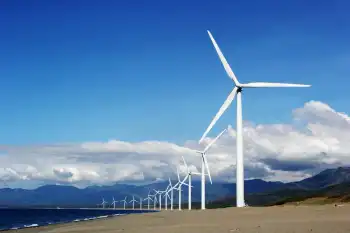
Forty Mile Wind Farm delivers 280 MW of renewable wind power in Alberta, with 49 Nordex turbines by ACCIONA Energía, supplying clean electricity to the grid, lowering carbon emissions, and enabling future 120 MW expansion.


Key Points

A 280 MW ACCIONA Energía wind farm in Alberta with 49 Nordex turbines, delivering clean power and cutting carbon.

✅ 280 MW via 49 Nordex N155 turbines on 108 m towers

✅ Supplies clean power to 85,000+ homes, reducing emissions

✅ Phase II could add 120 MW, reaching 400 MW capacity


ACCIONA Energía, a global leader in renewable energy, has successfully launched its Forty Mile Wind Farm in southern Alberta, Canada, amid momentum from a new $200 million wind project announced elsewhere in the province. This 280-megawatt (MW) project, powered by 49 Nordex turbines, is now supplying clean electricity to the provincial grid and stands as one of Canada's ten largest wind farms. It also marks the company's largest wind installation in North America to date. 

Strategic Location and Technological Specifications

Situated approximately 50 kilometers southwest of Medicine Hat, the Forty Mile Wind Farm is strategically located in the County of Forty Mile No. 8. Each of the 49 Nordex N155 turbines boasts a 5.7 MW capacity and stands 108 meters tall. The project's design allows for future expansion, with a potential Phase II that could add an additional 120 MW, bringing the total capacity to 400 MW, a scale comparable to Enel's 450 MW U.S. wind farm now in operation. 

Economic and Community Impact

The Forty Mile Wind Farm has significantly contributed to the local economy. During its peak construction phase, the project created approximately 250 jobs, with 25 permanent positions anticipated upon full operation. These outcomes align with an Alberta renewable energy surge projected to power thousands of jobs across the province. Additionally, the project has injected new tax revenues into the local economy and provided direct financial support to local non-profit organizations, including the Forty Mile Family & Community Support Services, the Medicine Hat Women’s Shelter Society, and the Root Cellar Food & Wellness Hub. 

Environmental Benefits

Once fully operational, the Forty Mile Wind Farm is expected to generate enough clean energy to power more than 85,000 homes, supporting wind power's competitiveness in electricity markets today. This substantial contribution to Alberta's energy mix aligns with ACCIONA Energía's commitment to sustainability and its goal of reducing carbon emissions. The project is part of the company's broader strategy to expand its renewable energy footprint in North America and support the transition to a low-carbon economy. 

Future Prospects

Looking ahead, ACCIONA Energía plans to continue its expansion in the renewable energy sector, as peers like TransAlta add 119 MW in the U.S. to their portfolios. The success of the Forty Mile Wind Farm serves as a model for future projects and underscores the company's dedication to delivering sustainable energy solutions, even as Alberta's energy future presents periodic headwinds. With ongoing developments and a focus on innovation, ACCIONA Energía is poised to play a pivotal role in shaping the future of renewable energy in North America.

The Forty Mile Wind Farm exemplifies ACCIONA Energía's commitment to advancing renewable energy, supporting local communities, and contributing to environmental sustainability, and it benefits from evolving demand signals, including a federal green electricity contract initiative in Canada that encourages clean supply. As the project continues to operate and expand, it stands as a testament to the potential of wind energy in Canada's clean energy landscape.


Related News

Related News
Turkish powership to generate electricity from LNG in Senegal

Karpowership LNG powership in Senegal will supply 15% of the grid, a 235 MW floating power plant bound for Dakar, enabling fast deployment, base-load electricity, and cleaner natural gas generation for West Africa.


Key Points

A 235 MW floating plant supplying 15% of Senegal's grid with fast, reliable, lower-emission LNG electricity.

✅ 235 MW LNG-ready floating plant meets 15% of Senegal's demand

✅ Rapid deployment: commercial operations expected early October

✅ Cleaner natural gas conversion planned after six months


Turkey's Karpowership company, the designer and builder of the world's first floating power plants and the global brand of Karadeniz Holding, will meet 15% of Senegal's electricity needs from liquefied natural gas (LNG) with the 235-megawatt (MW) powership Ayşegül Sultan, which started its voyage from Turkey to Senegal, where an African Development Bank review of a coal plant is underway, on Sunday.

Karpowership, operating 22 floating power plants in more than 10 countries around the world, where France's first offshore wind turbine is now producing electricity, has invested over $5 billion in this area.

In a statement to members of the press at Karmarine Shipyard, Karpowership Trade Group Chair Zeynep Harezi said they aimed to provide affordable electricity to countries in need of electricity quickly and reliably, as projects like the Egypt-Saudi power link expand regional grids, adding that they could commission energy ships capable of generating the base electric charge of the countries, as tidal power in Nova Scotia begins supplying the grid, in a period of about a month.

Harezi recalled that Karpowership commissioned the first floating energy ship in 2007 in Iraq, followed by Lebanon, Ghana, Indonesia, Mozambique, Zambia, Gambia, Sierra Leone, Sudan, Cuba, Guinea Bissau and Senegal, while Scottish tidal power demonstrates marine potential as well. "We meet the electricity needs of 34 million people in many countries," she stressed. Harezi stated that the energy ships, all designed and produced by Turkish engineers, use liquid fuel, but all ships can covert to the second fuel.

Considering the impact of electricity production on the environment, Harezi noted that they plan to convert the entire fleet from liquid fuel to natural gas, with complementary approaches like power-to-gas in Europe helping integrate renewables. "With a capacity of 480 megawatts each, the world's largest floating energy vessels operate in Indonesia and Ghana. The conversion to gas has been completed in our project in Indonesia. We have also initiated the conversion of the Ghana vessel into gas," she said.

Harezi explained that they would continue to convert their fleets to natural gas in the coming period. "Our 235-MW floating electric vessel, the Ayşegül Sultan, sets sail today to meet 15% of Senegal's electricity needs on its own. After an approximately 20-day cruise, the vessel will reach Dakar, the capital of Senegal, and will begin commercial operation in early October," Harezi continued. "We plan to use liquid fuel as bridging fuel in the first six months. At the end of the first six months, we will start to produce electricity from LNG on our ship. Thus, Ayşegül Sultan will be the first project to generate electricity from LNG in Africa, while the world's most powerful tidal turbine is delivering power to the grid, officials said. Our floating power plant to be sent to Mozambique is designed to generate electricity from LNG. It is also scheduled to start operations in the next year."


Related News

View more

Competition in Electricity Has Been Good for Consumers and Good for the Environment

Electricity Market Competition drives lower wholesale prices, stable retail rates, better grid reliability, and faster emissions cuts as deregulation and renewables adoption pressure utilities, improve efficiency, and enhance consumer choice in power markets.


Key Points

Electricity market competition opens supply to rivals, lowering prices, improving reliability, and reducing emissions.

✅ Wholesale prices fell faster in competitive markets

✅ Retail rates rose less than in monopoly states

✅ Fewer outages, shorter durations, improved reliability


By Bernard L. Weinstein

Electricity used to be boring.  Public utilities that provided power to homes and businesses were regulated monopolies and, by law, guaranteed a fixed rate-of-return on their generation, transmission, and distribution assets. Prices per kilowatt-hour were set by utility commissions after lengthy testimony from power companies, wanting higher rates, and consumer groups, wanting lower rates.

About 25 years ago, the electricity landscape started to change as economists and others argued that competition could lead to lower prices and stronger grid reliability. Opponents of competition argued that consumers weren’t knowledgeable enough about power markets to make intelligent choices in a competitive pricing environment. Nonetheless, today 20 states have total or partial competition for electricity, allowing independent power generators to compete in wholesale markets and retail electric providers (REPs) to compete for end-use customers, a dynamic echoed by the Alberta electricity market across North America. (Transmission, in all states, remains a regulated natural monopoly).

A recent study by the non-partisan Pacific Research Institute (PRI) provides compelling evidence that competition in power markets has been a boon for consumers. Using data from the U.S. Energy Information Administration (EIA), PRI’s researchers found that wholesale electricity prices in competitive markets have been generally declining or flat, prompting discussions of free electricity business models, over the last five years. For example, compared to 2015, wholesale power prices in New England have dropped more than 44 percent, those in most Mid-Atlantic States have fallen nearly 42 percent, and in New York City they’ve declined by nearly 45 percent. Wholesale power costs have also declined in monopoly states, but at a considerably slower rate.

As for end-users, states that have competitive retail electricity markets have seen smaller price increases, as consumers can shop for electricity in Texas more cheaply than in monopoly states. Again, using EIA data, PRI found that in 14 competitive jurisdictions, retail prices essentially remained flat between 2008 and 2020. By contrast, retail prices jumped an average of 21 percent in monopoly states.  The ten states with the largest retail price increases were all monopoly-based frameworks. A 2017 report from the Retail Energy Supply Association found customers in states that still have monopoly utilities saw their average energy prices increase nearly 19 percent from 2008 to 2017 while prices fell 7 percent in competitive markets over the same period.

The PRI study also observed that competition has improved grid reliability, the recent power disruptions in California and Texas, alongside disruptions in coal and nuclear sectors across the U.S., notwithstanding. Looking at two common measures of grid resiliency, PRI’s analysis found that power interruptions were 10.4 percent lower in competitive states while the duration of outages was 6.5 percent lower.

Citing data from the EIA between 2008 and 2018, PRI reports that greenhouse gas emissions in competitive states declined on average 12.1 percent compared to 7.3 percent in monopoly states. This result is not surprising, and debates over whether Israeli power supply competition can bring cheaper electricity mirror these dynamics.  In a competitive wholesale market, independent power producers have an incentive to seek out lower-cost options, including subsidized renewables like wind and solar. By contrast, generators in monopoly markets have no such incentive as they can pass on higher costs to end-users. Perhaps the most telling case is in the monopoly state of Georgia where the cost to build nuclear Plant Vogtle has doubled from its original estimate of $14 billion 12 years ago. Overruns are estimated to cost Georgia ratepayers an average of $854, and there is no definite date for this facility to come on line. This type of mismanagement doesn’t occur in competitive markets.

Unfortunately, some critics are attempting to halt the momentum for electricity competition and have pointed to last winter’s “deep freeze” in Texas that left several million customers without power for up to a week. But this example is misplaced. Power outages in February were the result of unprecedented and severe weather conditions affecting electricity generation and fuel supply, and numerous proposals to improve Texas grid reliability have focused on weatherization and fuel resilience; the state simply did not have enough access to natural gas and wind generation to meet demand. Competitive power markets were not a factor.

The benefits of wholesale and retail competition in power markets are incontrovertible. Evidence shows that households and businesses in competitive states are paying less for electricity while grid reliability has improved. The facts also suggest that wholesale and retail competition can lead to faster reductions in greenhouse gas emissions. In short, competition in power markets is good for consumers and good for the environment.

Bernard L. Weinstein is emeritus professor of applied economics at the University of North Texas, former associate director of the Maguire Energy Institute at Southern Methodist University, and a fellow of Goodenough College, London. He wrote this for InsideSources.com.


Related News

View more

Why the Texas Power Grid Is Facing Another Crisis

Texas Power Grid Reliability faces record peak demand as ERCOT balances renewable energy, wind and solar variability, gas-fired generation, demand response, and transmission limits to prevent blackouts during heat waves and extreme weather.


Key Points

Texas Power Grid Reliability is ERCOT's capacity to meet peak demand with diverse resources while limiting outages.

✅ Record heat drives peak demand across ERCOT.

✅ Variable wind/solar need firm, flexible capacity.

✅ Demand response and reserves reduce blackout risk.


The electric power grid in Texas, which collapsed dramatically during the 2021 winter storm across the state, is being tested again as the state suffers unusually hot summer weather. Demand for electricity has reached new records at a time of rapid change in the mix of power sources as wind and solar ramp up. That’s feeding a debate about the dependability of the state’s power. 

1. Why is the Texas grid under threat again? 

Already the biggest power user in the nation, electricity use in the second most-populous state surged to record levels during heat waves this summer. The jump in demand comes as the state becomes more dependent on intermittent renewable power sources, raising concerns among some critics that more reliance on wind and solar will leave the grid more vulnerable to disruption. Green sources will produce almost 40% of the power in Texas this year, US Energy Information Administration data show. While that trails California’s 52%, Texas is a bigger market. It’s already No. 1 in wind, making it the largest clean energy market in the US. 

2. How is Texas unique? 

The spirit of defiance of the Lone Star State extends to its power grid as well. The Electric Reliability Council of Texas, or Ercot as the grid operator is known, serves about 90% of the state’s electricity needs and has very few high-voltage transmission lines connecting to nearby grids. It’s a deliberate move to avoid federal oversight of the power market. That means Texas has to be mainly self-reliant and cannot depend on neighbors during extreme conditions. That vulnerability is a dramatic twist for a state that’s also the energy capital of the US, thanks to vast oil and natural gas producing fields. Favorable regulations are also driving a wind and solar boom in Texas. 

3. Why the worry? 

The summer of 2023 will mark the first time all of the state’s needs cannot be met by traditional power plants, like nuclear, coal and gas. A sign of potential trouble came on June 20 when state officials urged residents to conserve power because of low supplies from wind farms and unexpected closures of fossil-fuel generators amid supply-chain constraints that limited availability. As of late July, the grid was holding up, thanks to the help of renewable sources. Solar generation has been coming in close to expected summer capacity, or exceeding it on most days. This has helped offset the hours in the middle of the day when wind speeds died down in West Texas. 

4. Why didn’t the grid’s problems get fixed? 

There is no easy fix. The Texas system allows the price of electricity to swing to match supply and demand. That means high prices — and high profits — drive the development of new power plants. At times spot power prices have been as low as $20-$50 a megawatt-hour versus more than $4,000 during periods of stress. The limitation of this pricing structure was laid bare by the 2021 winter blackouts. Since then, state lawmakers have passed market reforms that require weatherization of critical infrastructure and changed rules to put more money in the pockets of the owners of power generation.  

5. What’s the big challenge? 

There’s a real clash going on over what the grid of the future should look like in Texas and across the country, especially as severe heat raises blackout risks nationally. The challenge is to make sure nuclear and fossil fuel plants that are needed right now don’t retire too early and still allow newer, cleaner technologies to flourish. Some conservative Republicans have blamed renewable energy for destabilizing the grid and have pushed for more fossil-fuel powered generators. Lawmakers passed a controversial $10 billion program providing low-interest loans and grants to build new gas-fired plants using taxpayer money, but Texans ultimately have to vote on the subsidy. 


6. Why do improvements take so long? 

Figuring out how to keep the lights on without overburdening consumers is becoming a greater challenge amid more extreme weather fueled by climate change. As such, changing the rules is often a hotly contested process pitting utilities, generators, manufacturers, electricity retailers and other groups against one another. The process became more politicized after the storm in 2021 with Republican Gov. Greg Abbott and lawmakers ordering Ercot to make changes. Building more transmission lines and connecting to other states can help, but such projects are typically tied up for years in red tape.

7. What can be done? 

The price cap for electricity was cut from $9,000/MWh to $5,000 to help avoid the punitive costs seen in the 2021 storm, though prices are allowed to spike more easily. Ercot is also contracting for more reserves to be online to help avoid supply shortfalls and improve reliability for customers, which added $1.7 billion in consumer costs alone last year. Another rule helps some gas generators pay for their fuel costs, while a more recent reform put in price floors when reserves fall to certain levels. Many power experts say that the easiest solution is to pay people to reduce their energy consumption during times of grid stress through so-called demand response programs. Factories, Bitcoin miners and other large users are already compensated to conserve during tight grid conditions.


Related News

View more

The Power Sector’s Most Crucial COVID-19 Mitigation Strategies

ESCC COVID-19 Resource Guide outlines control center continuity, sequestration, social distancing, remote operations, testing priorities, mutual assistance, supply chain risk, and PPE protocols to sustain grid reliability and plant operations during the COVID-19 pandemic.


Key Points

An industry guide to COVID-19 mitigation for the power sector covering control centers, testing, PPE, and mutual aid.

✅ Control center continuity: segregation, remote ops, reserve shifts

✅ Sequestration triggers, testing priorities, and PPE protocols

✅ Mutual assistance, supply chain risk, and workforce planning


The latest version of the Electricity Subsector Coordinating Council’s (ESCC’s) resource guide to assess and mitigate COVID-19 suggests the U.S. power sector continues to grapple with key concerns involving control center continuity, power plant continuity, access to restricted and quarantined areas, mutual assistance, and supply chain challenges, alongside urban demand shifts seen in Ottawa’s electricity demand during closures.

In its fifth and sixth versions of the “ESCC Resource Guide—Assessing and Mitigating the Novel Coronavirus (COVID-19),” released on April 16 and April 20, respectively, the ESCC expanded its guidance as it relates to social distancing and sequestration within tight power sector environments like control centers, crucial mitigation strategies that are designed to avoid attrition of essential workers.

The CEO-led power sector group that serves as a liaison with the federal government during emergencies introduced the guide on March 23, and it provides periodic updates  sourced from “tiger teams,” which are made up of representatives from investor-owned electric companies, public power utilities, electric cooperatives, independent power producers (IPPs), and other stakeholders. Collating regulatory updates and emerging resources, it serves as a general shareable blueprint for generators,  transmission and distribution (T&D) facilities, reliability coordinators, and balancing authorities across the nation on issues the sector is facing as the COVID-19 pandemic endures.

Controlling Spread at Control Centers
While control centers are typically well-isolated, physically secure, and may be conducive to on-site sequestration, the guide is emphatic that staff at these facilities are typically limited and they need long lead times to be trained to properly use the information technology (IT) and operational technology (OT) tools to keep control centers functioning and maintain grid visibility. Control room operators generally include: reliability engineers, dispatchers, area controllers, and their shift supervisors. Staff that directly support these function, also considered critical, consist of employees who maintain and secure the functionality of the IT and OT tools used by the control room operators.

In its latest update, the ESCC notes that many entities took “proactive steps to isolate their control center facilities from external visitors and non-essential employees early in the pandemic, leveraging the presence of back-up control centers, self-quarantining of employees, and multiple shifts to maximize social distancing.” To ensure all levels of logistical and operational challenges posed by the pandemic are addressed, it envisions several scenarios ranging from mild contagion—where a single operator is affected at one of two control center sites to the compromise of both sites.

Previous versions of the guide have set out universal mitigation strategies—such as clear symptom reporting, cleaning, and travel guidance. To ensure continuity even in the most dire of circumstances, for example, it recommends segregating shifts, and even sequestering a “complete healthy shift” as a “reserve” for times when minimum staffing levels cannot be met. It also encourages companies to develop a backup staff of retirees, supervisors, managers, and engineers that could backfill staffing needs.

Meanwhile, though social distancing has always been a universal mitigation strategy, the ESCC last week detailed what social distancing at a control room could look like. It says, for example, that entities should consider if personnel can do their jobs in spaces adjacent to the existing control room; moving workstations to allow at least six feet of space between employees; or designating workstations for individual operators. The guide also suggests remote operations outside of a single control room as an option, and some markets are exploring virtual power plant models in the UK to support flexibility, though it underscores that not all control center operations can be performed remotely, and remote operations increase the potential for security vulnerabilities. “The NERC [North American Electric Reliability Corp.] Reliability Standards address requirements for BES [bulk electric system] control centers and security controls for remote access of systems, applications, or data,” the resource guide notes.

Sequestration—Highly Effective but Difficult
Significantly, the new update also clarifies circumstances that could “trigger” sequestration—or keeping mission-essential workers at facilities. Sequestration, it notes, “is likely to be the most effective means of reducing risk to critical control center employees during a pandemic, but it is also the most resource- and cost-intensive option to implement.”

It is unclear exactly how many power sector workers are currently being sequestered at facilities. According to the  American Public Power Association (APPA), as of last week, the New York Power Authority was sequestering 82 power plant control room and transmission control operator, amid New York City’s shifting electric rhythms during COVID-19; the Sacramento Municipal Utility District (SMUD) in California had begun sequestering critical employees; and the Electric & Gas Utility at the City of Tallahassee had 44 workers being rotated in and out of sequestration. Another 37 workers from the New York ISO were already being sequestered or housed onsite as of April 9. PJM began sequestering a team of operators on April 11, and National Grid was sequestering 200 employees as of April 12. 

Decisions to trigger sequestration at T&D and other grid monitoring facilities are typically driven by entities’ risk assessment, ESCC noted. Considerations may involve: 

The number of people showing symptoms or testing positive as a percentage of the population in a county or municipality where the control center is sited. One organization, for example, is considering a lower threshold of 10% community infection as a trigger of “officer-level decision” to determine whether to sequester. A higher threshold of 20% “mandates a move to sequestration,” ESCC said.
The number of essential workers showing symptoms or having tested positive. “Acceptable risk should be based on the minimum staffing requirements of the control center and should include the availability of a reserve shift for critical position backfills. For example, shift supervisors are commonly certified in all positions in the control center, and the unavailability of more than one-third of a single organization’s shift supervisors could compromise operations,” it said.
The rate of infection spread across a geographic region. In the April 20 version, the guide removes specific mention that cases are doubling “every 3–5 days or more frequently in some areas.” It now says:  “Considering the rapid spread of COVID-19, special care should be taken to identify the point at which control center personnel are more likely than not to come into contact with an infected individual during their off-shift hours.”
Generator Sequestration Measures Vary
Generators, meanwhile, have taken different approaches to sequester generation operators. Some have reacted to statewide outbreaks, others to low reserves, and others still, as with one IPP, to control exposure to smaller staffs, which cannot afford attrition. The IPP, for example, decided sequestration was necessary because it “did not want to wait for confirmed cases in the workforce.” That company sequestered all its control room operators, outside operators, and instrumentation and control technicians.

The ESCC resource guide says workers are being sequestered in several ways. On-site, these could range from housing workers in two separate areas, for example, or in trailers brought in. Off-site, workers may be housed in hotel rooms, which the guide notes, “are plentiful.”

Location makes a difference, it said: “Onsite requires more logistical co-ordination for accommodations, food, room sanitization, linens, and entertainment.”  To accommodate sequestered workers, generators have to consider off-site food and laundry services (left at gates for pick-up)—and even extending Wi-Fi for personal use. Generators are learning from each other about all aspects of sequestration—including how to pay sequestered workers. It suggests sequestered workers should receive pay for all hours inside the plant, including straight time for regularly scheduled hours and time-and-a-half for all other hours. To maintain non-sequestered employees, who are following stay-at-home protocols, pay should remain regularly scheduled, it says.

Testing Remains a Formidable Hurdle
Though decisions to sequester differ among different power entities, they appear commonly complicated by one prominent issue: a dearth of testing.

At the center of a scuffle between the federal and state governments of late, the number of tests has not kept pace with the severity of the pandemic, and while President Trump has for some weeks claimed that “Testing is a local thing,” state officials, business leaders—including from the power sector—and public health experts say that it is far short of the several hundred thousands or perhaps even millions of daily tests it might take to safely restart the economy, even as calls to keep electricity options open grow among policymakers, a three-phase approach for which the Trump administration rolled out this week. While the White House said the approach is “based on the advice of public health experts, the suggestions do not indicate a specific timeframe. Some hard-hit states have committed to keeping current restrictions in place. New York on April 16 said it would maintain a shutdown order through May 15, while California published its own guidelines and states in the Northeast, Midwest, and West Coast entered regional pacts that may involve interstate coordination on COVID-19–related policy going forward.

On Sunday, responding to a call by governors across the political spectrum that insisted the federal government should step up efforts to help states obtain vital supplies for tests, Trump said the federal government will be “using” and “preparing to use” the Defense Production Act to increase swab production.

For the power entities that are part of the ESCC, widespread testing underlies many mitigation strategies. The group’s generation owners and operating companies, which include members from the full power spectrum, have said testing is central to “successful mitigation of risk to control center continuity.”

In the updated guide, the entities recommend requesting that governmental authorities—it is unclear whether the focus should be on the federal or state governments—“direct medical facilities to prioritize testing for asymptomatic generation control room operators, operator technicians, instrument and control technicians, and the operations supervisor (treat comparable to first responders) in advance of sequestered, extended-duration shifts; and obtain state regulatory approval for corporate health services organizations to administer testing for coronavirus to essential employees, if applicable.”

The second priority, as crucial, involves asking the government to direct medical facilities to prioritize testing for control room operators before they are sequestered or go into extended-duration shifts.

Generators also want local, regional, state, and federal governments to ensure operators of generating facilities are allowed to move freely if “populace-wide quarantine/curfew or other travel restrictions” are enacted. Meanwhile,  they have also asked federal agencies and state permitting agencies to allow for non-compliance operations of generating facilities in case enough workers are not available.

Lower on its list, but still “medium priority,” is that the government should obtain authority for priority supply of sanitizing supplies and personal protective equipment (PPE) for generating facilities. They are also asking states to allow power plant employees (as opposed to crucially redirected medical personnel) to administer health questionnaires and temperature checks without Americans with Disabilities Act or other legal constraints. Newly highlighted in the update, meanwhile, is an emphasis on enough fire retardant (FR) vests and hoods and PPE, including masks and face coverings, so technicians don’t have to share them.

The worst-case scenario envisioned for generators involves a 40% workforce attrition, a nine-month pandemic, and no mutual assistance. As the update suggests, along with universal mitigation strategies, some power companies are eliminating non-essential work that would require close contact, altering assignments so work tasks are done by paired teams that do not rotate, and ensuring workers wear masks. The resource guide includes case studies and lessons learned so far, and all suggest pandemic planning was crucial to response. 

Gearing Up for Mutual Assistance—Even for Generation—During COVID-19
Meanwhile, though the guide recognizes that protecting employees is a key priority for many entities, it also lauds the crucial role mutual assistance plays in the sector’s collective response to the pandemic, even as coal and nuclear plant closures test just transition planning across regions. Mutual assistance is a long-standing power sector practice in the U.S. Last week, for example, as severe weather impacted the southern and eastern portions of the U.S., causing power outages for 1.3 million customers at the peak, the sector demonstrated the “versatility of mutual assistance processes,” bringing in additional workers and equipment from nearby utilities and contractors to assist with assessment and repair. “Crews utilized PPE and social distancing per the CDC [Centers for Disease Control and Prevention] and OSHA [Occupational Safety and Health Administration] guidelines to perform their restoration duties,” the Energy Department told POWER.

But as the ESCC’s guide points out, mutual assistance has traditionally been deployed to help restore electric service to customers, typically focused on T&D infrastructure. The COVID-19 pandemic, uniquely, “has motivated generation entities to consider the use of mutual assistance for generation plant operation” it notes. As with the model it proposes to ensure continuity of control centers, mutual aid poses key challenges, such as for task variance, knowledge of operational practice, system customization, and legal indemnification.

Among guidelines ESCC proposes for generators are to use existing employee work stoppage plans as a resource in planning for the use of personnel not currently assigned to plant operation. It urges, for example, that generators keep a list of workers with skills who can be called from corporate/tech support (such as former operators or plant engineers/managers), or retirees and other individuals who could be called upon to help operate the control room first. ESCC also recommends considering the use of third-party contractor operations to supplement plant operations.

Key to these efforts is to “Create a thorough list of experience and qualifications needed to operate a particular unit. Important details include fuel type, OEM [original equipment manufacturer] technology, DCS [distributed control system] type, environmental controls, certifications, etc,” it says. “Consider proactively sharing this information internally within your company first and then with neighboring companies”—and that includes sufficient detail from manufacturers (such as Emerson Ovation, GE Mark VI, ABB, Honeywell)—“without exposing proprietary information.” One way to control this information is to develop a mutual assistance agreement with “strategic” companies within the region or system, it says.

Of specific interest is that the ESCC also recommends that generators consider “leaving units in extended or planned maintenance outage in that state as long as possible.” That’s because, “Operators at these offline sites could be considered available for a site responding to pandemic challenges,” it says.

However, these guidelines differ by resource. Nuclear generators, for example, already have robust emergency plans that include minimum staffing requirements, and owing to regulations, mutual aid is managed by each license holder, it says. However, to provide possible relief for attrition at operating nuclear plants, the Nuclear Regulatory Commission (NRC) on March 28 outlined a streamlined process that could allow nuclear operators to obtain exemptions from work hour rules, while organizations also point to IAEA low-carbon electricity lessons for future planning.

Uncertainty of Supply Chain Endurance
As the guide stresses, operational continuity during the pandemic will require that all power entities maintain supply of inputs and physical equipment. To help entities plan ahead—by determining volumes needed and geographic location of suppliers—it lists the most important materials needed for power delivery and bulk chemicals. “Clearly, the extent and duration of this emergency will influence the importance of one supply chain component compared to another,” it says.

As Massachusetts Institute of Technology supply chain expert David Simchi-Levi noted on April 13, global supply chains have been heavily taxed by the pandemic, and manufacturing activities in the European Union and North America are still going offline. China is showing signs of slow recovery. Even in the best-case scenario, however—even if North America and Europe manage to control and reduce the pandemic—the supply chain will likely experience significant logistical capacity shortages, from transportation to warehousing. Owing to variability in timing, he suggested that companies plan to reconfigure supply chains and reposition inventory in case suppliers go out of business or face quarantine, while some industry groups urge investing in hydropower as part of resilient recovery strategies.

Also in short supply, according to ESCC, is industry-critical PPE. “While our sector recognizes that the priority is to ensure that PPE is available for workers in the healthcare sector and first responders, a reliable energy supply is required for healthcare and other sectors to deliver their critical services,” its resource guide notes. “The sector is not looking for PPE for the entire workforce. Rather, we are working to prioritize supplies for mission-essential workers – a subset of highly skilled energy workers who are unable to work remotely and who are mission-essential during this extraordinary time.”

Among critical industry PPE needs are nitrile gloves, shoe covers, Tyvek suits, goggles/glasses, hand sanitizer, dust masks, N95 respirators, antibacterial soap, and trashbags. While it provides a list of non-governmental PPE vendors and suppliers, the guide also provides several “creative” solutions. These include, for example, formulations for effective hand sanitizer; 3D printer face shield files; methods for decontaminating face piece respirators and other PPE; and instructions for homemade masks with pockets for high-efficiency particulate air (HEPA) filter inserts.


Related News

View more

Hydro One will keep running its U.S. coal plant indefinitely, it tells American regulators

Hydro One-Avista Merger outlines a utility acquisition shaped by Washington regulators, Colstrip coal plant depreciation, and plans for renewables, clean energy, and emissions cuts, while Montana reviews implications for jobs, ratepayers, and a 2027 closure.


Key Points

A utility deal setting Colstrip depreciation and renewables, without committing to an early coal plant closure.

✅ Washington sets 2027 depreciation for Colstrip units

✅ Montana reviews jobs, ratepayer impacts, community fund

✅ Avista seeks renewables; no binding shutdown commitment


The Washington power company Hydro One is buying will be ready to close its huge coal-fired generating station ahead of schedule, thanks to conditions put on the corporate merger by state regulators there.

Not that we actually plan to do that, the company is telling other regulators in Montana, where coal unit retirements are under debate, the huge coal-fired generating station in question employs hundreds of people. We’ll be in the coal business for a good long time yet.

Hydro One, in which the Ontario government now owns a big minority stake, is still working on its purchase of Avista, a private power utility based in Spokane. The $6.7-billion deal, which Hydro One announced in July, includes a 15 per cent share in two of the four generating units in a coal plant in Colstrip, Montana, one of the biggest in the western United States. Avista gets most of its electricity from hydro dams and gas but uses the Colstrip plant when demand for power is high and water levels at its dams are low.

#google#

Colstrip’s a town of fewer than 2,500 people whose industries are the power plant and the open-pit mines that feed it about 10 million tonnes of coal a year. Two of Colstrip’s generators, older ones Avista doesn’t have any stake in, are closing in 2022. The other two will be all that keep the town in business.

In Washington, they don’t like the coal plant and its pollution. In Montana, the future of Colstrip is a much bigger concern. The companies have to satisfy regulators in both places that letting Hydro One buy Avista is in the public interest.

Ontario proudly closed the last of our coal plants in 2014 and outlawed new ones as environmental menaces, and Alberta's coal phase-out is now slated to finish by 2023. When Hydro One said it was buying Avista, which makes about $100 million in profit a year, Premier Kathleen Wynne said she hoped Ontario’s “value system” would spread to Avista’s operations.

The settlement is “an important step towards bringing together two historic companies,” Hydro One’s chief executive Mayo Schmidt said in announcing it.

The deal has approval from the Washington Utilities and Transportation Commission staff but is subject to a vote by the group’s three commissioners. It doesn’t commit Avista to closing anything at Colstrip or selling its share. But Avista and Hydro One will budget as if the Colstrip coal burners will close in 2027, instead of running into the 2040s as their owners had once planned, a timeline that echoes debates over the San Juan Generating Station in New Mexico.

In accounting terms, they’ll depreciate the value of their share of the plant to zero over the next nine years, reflecting what they say is the end of the plant’s “useful life.” Another of Colstrip’s owners, Puget Sound Energy, has previously agreed with Washington regulators that it’ll budget for a Colstrip closure in 2027 as well.

Avista and Hydro One will look for sources of 50 megawatts of renewable electricity, including independent power projects where feasible, in the next four years and another 90 megawatts to supplement Avista’s supply once the Colstrip plant eventually closes, they promise in Washington. They’ll put $3 million into a “community transition fund” for Colstrip.

The money will come from the companies’ profits and cash, the agreement says. “Hydro One will not seek cost recovery for such funds from ratepayers in Ontario,” it says specifically.

“Ontario has always been a global leader in the transition away from dirty coal power and towards clean energy,” said Doug Howell, an anti-coal campaigner with the Sierra Club, which is a party to the agreement. “This settlement continues that tradition, paving the way for the closure of the largest single source of climate pollution in the American West by 2027, if not earlier.”

Montanans aren’t as thrilled. That state has its own public services commission, doing its own examination of the corporate merger, which has asked Hydro One and Avista to explain in detail why they want to write off the value of the Colstrip burners early. The City of Colstrip has filed a petition saying it wants in on Montana hearings because “the potential closure of (Avista’s units) would be devastating to our community.”

Don’t get too worked up, an Avista vice-president urged the Montana commission just before Easter.

“Just because an asset is depreciated does not mean that one would otherwise remove that asset from service if the asset is still performing as intended,” Jason Thackston testified in a session that dealt only with what the deal with Washington state would mean to Colstrip. We’re talking strictly about an accounting manoeuvre, not an operational commitment.

Six joint owners will have to agree to close the Colstrip generators and there’s “no other tacit understanding or unstated agreement” to do that, he said.

Besides Washington and Montana, state regulators in Idaho, including those overseeing the Idaho Power settlement process, Alaska and Oregon and multiple federal authorities have to sign off on the deal before it can happen. Hydro One hopes it’ll be done in the second half of this year.


Related News

View more

"Knowledge Gap" Is Contributing To On-the-job Electrical Injuries

BC Hydro Trades Electrical Safety addresses electric contact incidents among trade workers, emphasizing power line hazards, overhead lines clearance, the 3 m rule, jobsite planning, and safety training to prevent injuries during spring and summer.


Key Points

BC Hydro Trades Electrical Safety is guidance and training to reduce power-line contact risks for trade workers.

✅ Stay at least 3 m from overhead power lines and equipment

✅ Plan worksites and spot hazards before starting tasks

✅ Use BC Hydro electrical awareness training near electricity


A BC Hydro report finds serious electrical contact incidents are more common among trades workers, and research shows this is partly due to a knowledge gap in the electricity sector in Canada.

Trade workers were involved in more than 60 per cent of electric contact incidents that led to serious injuries over the last three years, according to BC Hydro.

One-in-five trade workers have also either made contact or had a close call with electric equipment.

A recent worksite electrocution case underscores the consequences of contact.

“New research finds many have had a close call with electricity on the job or have witnessed unsafe work near overhead lines or electrical equipment,” BC Hydro staff said in the report.

“A gap in electrical safety knowledge is a contributing factor in most of these incidents.”

Most electrical contact incidents take place in the spring and summer, when trade workers are working outdoors and are working in close proximity to power lines.

BC Hydro offered tips for trades workers who may work closely to possible electrical contact points:

  • Look up and down – Observe the site beforehand and plan work so you can avoid contact with power lines
  • Stay back – You and your tools should stay at least 3 m away from an overhead power line
  • Call for help – If you come across a fallen power line, or a tree branch or object contacts a line—stay back 10 metres and call 911. Never try and move it yourself. If you must work closer than 3 m to a power line at your worksite, call BC Hydro before you begin.
  • Learn about the risks – BC Hydro offers in-person and online electrical awareness training, such as arc flash training, for anyone who works near electricity.

The report found that 38 per cent of trades workers who participated in the report said they only feel “somewhat informed” about safety measures around working near electricity and 71 per cent were unable to identify the correct distance they should be away from active power lines or electrical equipment.

BC Hydro said trade workers should participate in its electrical awareness training courses, including arc flash training, to make sure all safety measures are taken.


Related News

View more

Sign Up for Electricity Forum’s Newsletter

Stay informed with our FREE Newsletter — get the latest news, breakthrough technologies, and expert insights, delivered straight to your inbox.

Electricity Today T&D Magazine Subscribe for FREE

Stay informed with the latest T&D policies and technologies.
  • Timely insights from industry experts
  • Practical solutions T&D engineers
  • Free access to every issue

Live Online & In-person Group Training

Advantages To Instructor-Led Training – Instructor-Led Course, Customized Training, Multiple Locations, Economical, CEU Credits, Course Discounts.

Request For Quotation

Whether you would prefer Live Online or In-Person instruction, our electrical training courses can be tailored to meet your company's specific requirements and delivered to your employees in one location or at various locations.