By CONTACT: NHI Publications David Schwartz, 404/607-9500


High Voltage Maintenance Training Online

Our customized live online or in‑person group training can be delivered to your staff at your location.

  • Live Online
  • 12 hours Instructor-led
  • Group Training Available
Regular Price:
$599
Coupon Price:
$499
Reserve Your Seat Today
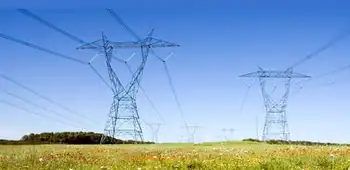
-- It's a not-so-well-kept energy-industry secret: The U.S. electric system is getting old. The aging infrastructure -- generating plants, thousands of miles of high-voltage transmission lines, transmission towers, and distribution facilities -- is starting to raise concern among utility and transmission company executives, who are straining to find a solution that won't break the bank.

The August 2002 issue of Energy Competition Strategy Report, published by Atlanta-based NHI Publications Inc., features an in-depth special report focusing on both the infrastructure challenges, as well as the solutions some energy executives are suggesting.

Underscoring the problem, the Edison Electric Institute, Washington, D.C., states: "Most of today's transmission systems were not designed to deliver large amounts of power over long distances. The grid -- built originally to interconnect neighboring utilities -- now is being used as a 'superhighway' for electric companies. The number of transactions on the grid has increased significantly because of competition. As a result, the transmission system is facing dramatic increases in congestion, which threatens system reliability and increases costs to consumers. It is clear that new and upgraded transmission lines are needed now to meet the demands of a competitive market."

Other industry watchdogs cited in ECSR also report troubling infrastructure-related conditions and statistics.

While there is no magic bullet to fix the enormous infrastructure problems, there are a range of solutions that, taken together, could represent some major steps in the right direction. Some of the solutions identified by experts quoted in the report include policy changes, such as regional transmission planning; advanced engineering technologies, such as infrared devices to enable predictive maintenance; and new computer software, such as EleQuant's AGORA, which provides a different way of calculating electric load flow (ECSR profiles the software in the August issue's "Focus on IT" column).

Other highlights of August's Energy Competition Strategy Report include:

Free three-month trial subscriptions to Energy Competition Strategy Report are available by sending an e-mail with your full physical mailing address to nhi@nhionline.net, calling 800-597-6300 or 404-607-9500, or ordering online at www.nhionline.net.

Related News

Energy storage poised to tackle grid challenges from rising EVs as mobile chargers bring new flexibility

EV Charging Grid Readiness addresses how rising EV adoption, larger batteries, and fast charging affect electric utilities, using vehicle-to-grid, energy storage, mobile and temporary chargers, and smart charging to mitigate distribution stress.


Key Points

Planning and tech to manage EV load growth with V2G, storage and smart charging to avoid overloads on distribution grids.

✅ Lithium-ion costs may drop 60%, enabling new charger models

✅ Mobile and temporary chargers buffer local distribution peaks

✅ Smart charging and V2G defer transformer and feeder upgrades


The impacts of COVID-19 likely mean flat electric vehicle (EV) sales this year, but a trio of new reports say the long-term outlook is for strong growth — which means the electric grid and especially state power grids will need to respond.

As EV adoption grows, newer vehicles will put greater stress on the electric grid due to their larger batteries and capacity for faster charging, according to Rhombus Energy Solutions, while a DOE lab finds US electricity demand could rise 38% as EV adoption scales. A new white paper from the company predicts the cost of lithium-ion batteries will drop by 60% over the next decade, helping enable a new set of charging solutions.

Meanwhile, mobile and temporary EV charging will grow from 0.5% to 2% of the charging market by 2030, according to new Guidehouse research. The overall charging market is expected to reach reach almost $16 billion in revenues in 2020 and more than $60 billion by 2030. ​A third report finds long-range EVs are growing their share of the market as well, and charging them could cause stress to electric distribution systems. 

"One can expect that the number of EVs in fleets will grow very rapidly over the next ten years," according to Rhombus' report. But that means many fleet staging areas will have trouble securing sufficient charging capacity as electric truck fleets scale up.

"Given the amount of time it takes to add new megawatt-level power feeds in most cities (think years), fleet EVs will run into a significant 'power crisis' by 2030," according to Rhombus.

"Grid power availability will become a significant problem for fleets as they increase the number of electric vehicles they operate," Rhombus CEO Rick Sander said in a statement. "Integrating energy storage with vehicle-to-grid capable chargers and smart [energy management system] solutions as seen in California grid stability efforts is a quick and effective mitigation strategy for this issue."

Along with energy storage, Guidehouse says a new, more flexible approach to charger deployment enabled by grid coordination strategies will help meet demand. That means chargers deployed by a van or other mobile stations, and "temporary" chargers that can help fleets expand capacity. 

According to Guidehouse, the temporary units "are well positioned to de-risk large investments in stationary charging infrastructure" while also providing charge point networks and service providers "with new capabilities to flexibly supply predictable changes in EV transportation behaviors and demand surges."

"Mobile charging is a bit of a new area in the EV charging scene. It primarily leverages batteries to make chargers mobile, but it doesn't necessarily have to," Guidehouse Senior Research Analyst Scott Shepard told Utility Dive. 

"The biggest opportunity is with the temporary charging format," said Shepard. "The bigger units are meant to be located at a certain site for a period of time. Those units are interesting because they create a little more scale-ability for sites and a little risk mitigation when it comes to investing in a site."

"Utilities could use temporary chargers as a way to provide more resilient service, using these chargers in line with on-site generation," Shepard said.

Increasing rates of EV adoption, combined with advances in battery size and charging rates, "will impact electric utility distribution infrastructure at a higher rate than previously projected," according to new analysis from FleetCarma.

The charging company conducted a study of over 3,900 EVs, illustrating the rapid change in vehicle capabilities in just the last five years. According to FleetCarma, today's EVs use twice as much energy and draw it at twice the power level. The long-range EV has increased as a proportion of new electric vehicle sales from 14% in 2014 to 66% in 2019 in the United States, it found.

Long-range EVs "are very different from older electric vehicles: they are driven more, they consume more energy, they draw power at a higher level and they are less predictable," according to FleetCarma.

Guidehouse analysts say grid modernization efforts and energy storage can help smooth the impacts of charging larger vehicles. 

Mobile and temporary charging solutions can act as a "buffer" to the distribution grid, according to Guidehouse's report, allowing utilities to avoid or defer some transmission and distribution upgrade costs that could be required due to stress on the grid from newer vehicles.

"At a high level, there's enough power and energy to supply EVs with proper management in place," said Shepard. "And in a lot of different locations, those charging deployments will be built in a way that protects the grid. Public fast charging, large commercial sites, they're going to have the right infrastructure embedded."

"But for certain areas of the grid where there is low visibility, there is the potential for grid disruption and questions about whether the UK grid can cope with EV demand," said Shepard. "This has been on the mind of utilities but never realized: overwhelming residential transformers."

As EVs with higher charging and energy capacities are connected to the grid, Shepard said, "you are going to start to see some of those residential systems come under pressure, and probably see increased incidences of having to upgrade transformers." Some residential upgrades can be deferred through smarter charging programs, he added.


Related News

View more

With New Distributed Energy Rebate, Illinois Could Challenge New York in Utility Innovation

Illinois NextGrid redefines utility, customer, and provider roles with grid modernization, DER valuation, upfront rebates, net metering reform, and non-wires alternatives, leveraging rooftop solar, batteries, and performance signals to enhance reliability and efficiency.


Key Points

Illinois NextGrid is an ICC roadmap to value DER and modernize the grid with rebates and non-wires solutions.

✅ Upfront Value-of-DER rebates reward location, time, and performance.

✅ Locational DER reduce peak demand and defer wires and substations.

✅ Encourages non-wires alternatives and data-driven utility planning.


How does the electric utility fit in to a rapidly-evolving energy system? That’s what the Illinois Commerce Commission is trying to determine with its new effort, "NextGrid". Together, we’re rethinking the roles of the utility, the customer, and energy solution providers in a 21st-century digital grid landscape.

In some ways, NextGrid will follow in the footsteps of New York’s innovative Reforming the Energy Vision process, a multi-year effort to re-examine how electric utilities and customers interact. A new approach is essential to accelerating the adoption of clean energy technologies and building a smarter electricity infrastructure in the state.

Like REV, NextGrid is gaining national attention for stakeholder-driven processes to reveal new ways to value distributed energy resources (DER), like rooftop solar and batteries. New York and Illinois’ efforts also seek alternatives, such as virtual power plants, to simply building more and more wires, poles, and power plants to meet the energy needs of tomorrow.

Yet, Illinois is may go a few steps beyond New York, creating a comprehensive framework for utilities to measure how DER are making the grid smarter and more efficient. Here is what we know will happen so far.

On Wednesday, April 5, at the second annual Grid Modernization Forum in Chicago, I’ll be discussing why these provisions could change the future of our energy system, including insights on grid modernization affordability for stakeholders.


Value of distributed energy

The Illinois Commerce Commission’s NextGrid plans grew out of the recently-passed future energy jobs act, a landmark piece of climate and energy policy that was widely heralded as a bipartisan oddity in the age of Trump. The Future Energy Jobs Act will provide significant new investments in renewables and energy efficiency over the next 13 years, redefine the role and value of rooftop solar and batteries on the grid, and lead to significant greenhouse gas emission reductions.

NextGrid will likely start laying the groundwork for valuing distributed energy resources (DER) as envisioned by the Future Energy Jobs Act, which introduces the concept of a new rebate. Illinois currently has a net metering policy, which lets people with solar panels sell their unused solar energy back to the grid to offset their electric bill. Yet the net metering policy had an arbitrary “cap,” or a certain level after which homes and businesses adding solar panels would no longer be able to benefit from net metering.

Although Illinois is still a few years away from meeting that previous “cap,” when it does hit that level, the new policy will ensure additional DER will still be rewarded. Under the new plan, the Value-of-DER rebate will replace net metering on the distribution portion of a customer’s bill (the charge for delivering electricity from the local substation to your house) with an upfront payment, which credits the customer for the value their solar provides to the local grid over the system’s life. Net metering for the energy supply portion of the bill would remain – i.e. homes and businesses would still be able to offset a significant portion of their electric bills by selling excess energy.

What is unique about Illinois’ approach is that the rebate is an upfront payment, rather than on ongoing tariff or reduced net metering compensation, for example. By allowing customers to get paid for the value solar provides to the system at the time it is installed, in the same way new wires, poles, and transformers would, this upfront payment positions DER investments as equally or more beneficial to customers and the electric grid. This is a huge step not only for regulators, but for utilities as well, as they begin to see distributed energy as an asset to the system.

This is a huge step for utilities, as they begin to see distributed energy as an asset to the system.

The rebate would also factor-in the variables of location, time, and performance of DER in the rebate formula, allowing for a more precise calculation of the value to the grid. Peak electricity demand can stress the local grid, causing wear and tear and failure of the equipment that serve our homes and businesses. Power from DER during peak times and in certain areas can alleviate those stresses, therefore providing a greater value than during times of average demand.

In addition, factoring-in the value of performance will take into account the other functions of distributed energy that help keep the lights on. For example, batteries and advanced inverters can provide support for helping avoid voltage fluctuations that can cause outages and other costs to customers.


Related News

View more

Manchin Calls For Stronger U.S. Canada Energy And Mineral Partnership

U.S.-Canada Energy and Minerals Partnership strengthens energy security, critical minerals supply chains, and climate objectives with clean oil and gas, EV batteries, methane reductions, cross-border grid reliability, and allied trade, countering Russia and China dependencies.


Key Points

A North American alliance to secure energy, refine critical minerals, cut emissions, and fortify supply chains.

✅ Integrates oil, gas, and electricity trade for reliability

✅ Builds EV battery and critical minerals processing capacity

✅ Reduces methane, diversifies away from Russia and China


Today, U.S. Senator Joe Manchin (D-WV), Chairman of the Senate Energy and Natural Resources Committee, delivered the following remarks during a full committee hearing to examine ways to strengthen the energy and mineral partnership between the U.S. and Canada to address energy security and climate objectives.

The hearing also featured testimony from the Honorable Jason Kenney (Premier, Alberta, Canada), the Honorable Nathalie Camden (Associate Deputy Minister of Mines, Ministry of Energy and Natural Resource, Québec, Canada), the Honorable Jonathan Wilkinson (Minister, Natural Resources Canada) and Mr. Francis Bradley (President and CEO, Electricity Canada). Click here to read their testimony.

Chairman Manchin’s remarks can be viewed as prepared here or read below:

Today we’re welcoming our friends from the North, from Canada, to continue this committee’s very important conversation about how we pursue two critical goals – ensuring energy security and addressing climate change.

These two goals aren’t mutually exclusive, and it’s imperative that we address both.

We all agree that Putin has used Russia’s oil and gas resources as a weapon to inflict terrible pain on the Ukrainian people and on Europe.

And other energy-rich autocracies are taking note. We’d be fools to think Xi Jinping won’t consider using a similar playbook, leveraging China’s control over global critical minerals supply chains.

But Putin’s aggression is bringing the free world closer together, setting the stage for a new alliance around energy, minerals, and climate.
Building this alliance should start here in North America. And that’s why I’m excited to hear today about how we can strengthen the energy and minerals partnership between the U.S. and Canada.

I recently had the privilege of being hosted in Alberta by Premier Kenney, where I spent two days getting a better understanding of our energy, minerals, and manufacturing partnership through meetings with representatives from Alberta, Saskatchewan, the Northwest Territories, the federal government, and tribal and industry partners.

Canadians and Americans share a deep history and are natural partners, sharing the longest land border on the planet.

Our people fought side-by-side in two world wars. In fact, some of the uranium used by the Manhattan Project and broader nuclear innovation was mined in Canada’s Northwest Territories and refined in Ontario.

We have cultivated a strong manufacturing partnership, particularly in the automotive industry, with Canada today being our biggest export market for vehicles. Cars assembled in Canada contain, on average, more than 50% of U.S. value and parts.

Today we also trade over 58 terawatt hours of electricity, including green power from Canada across the border, 2.4 billion barrels of petroleum products, and 3.6 trillion cubic feet of natural gas each year.

In fact, energy alone represents $120 billion of the annual trade between our countries. Across all sectors the U.S. and Canada trade more than $2 billion per day.
There is no better symbol of our energy relationship than our interconnected power grid and evolving clean grids that are seamless and integral for the reliable and affordable electricity citizens and industries in both our countries depend on.

And we’re here for each other during times of need. Electricity workers from both the U.S. and Canada regularly cross the border after extreme weather events to help get the power back on.

Canada has ramped up oil exports to the U.S. to offset Russian crude after members of our committee led legislation to cut off the energy purchases fueling Putin’s war machine.

Canada is also a leading supplier of uranium and critical minerals to the U.S., including those used in advanced batteries—such as cobalt, graphite, and nickel.
The U.S-Canada energy partnership is strong, but also not without its challenges, including tariff threats that affect projects on both sides. I’ve not been shy in expressing my frustration that the Biden administration cancelled the Keystone XL pipeline.

In light of Putin’s war in Ukraine and the global energy price surge, I think a lot of us wish that project had moved forward.

But to be clear, I’m not holding this hearing to re-litigate the past. We are here to advance a stronger and cleaner U.S.-Canada energy partnership for the future.
Our allies and trading partners in Europe are begging for North American oil and gas to offset their reliance on Russia.

There is no reason whatsoever we shouldn’t be able to fill that void, and do it cleaner than the alternatives.

That’s because American oil and gas is cleaner than what is produced in Russia – and certainly in Iran and Venezuela. We can do better, and learn from our Canadian neighbors.

On average, Canada produces oil with 37% lower methane emissions than the U.S., and the Canadian federal government has set even more aggressive methane reduction targets.

That’s what I mean by climate and security not being mutually exclusive – replacing Russian product has the added benefit of reducing the emissions profile of the energy Europe needs today.

According to the International Energy Agency, stationary and electric vehicle batteries will account for about half of the mineral demand growth from clean energy technologies over the next twenty years.

Unfortunately, China controls 80% of the world’s battery material processing, 60% of the world’s cathode production, 80% of the world’s anode production, and 75% of the world’s lithium ion battery cell production. They’ve cornered the market.

I also strongly believe we need to be taking national energy security into account as we invest in climate solutions.

It makes no sense whatsoever for us to so heavily invest in electric vehicles as a climate solution when that means increasing our reliance on China, because right now we’re not simultaneously increasing our mining, processing, and recycling capacity at the same rate in the United States.

The Canadians are ahead of us on critical minerals refining and processing, and we have much to learn from them about how they’re able to responsibly permit these activities in timelines that blow ours out of the water.

I’m sure our Canadian friends are happy to export minerals to us, but let me be clear, the United States also needs to contribute our part to a North American minerals alliance.

So I’m interested in discussing how we can create an integrated network for raw minerals to move across our borders for processing and manufacturing in both of our countries, and how B.C. critical minerals decisions may affect that.

I believe there is much we can collaborate on with Canada to create a powerful North American critical minerals supply chain instead of increasing China’s geopolitical leverage.

During this time when the U.S., Canada, and our allies and friends are threatened both by dictators weaponizing energy and by intense politicization over climate issues, we must work together to chart a responsible path forward that will ensure security and unlock prosperity for our nations.

We are the superpower of the world, and blessed with abundant energy and minerals resources. We cannot just sit back and let other countries fill the void and find ourselves in a more dire situation in the years ahead.

We must be leaning into the responsible production of all the energy sources we’re going to need, and strengthening strategic partnerships – building a North American Energy Alliance.


Related News

View more

Saudis set to 'boost wind by over 6GW'

Saudi Arabia Wind Power Market set to lead the Middle East, driven by Vision 2030 renewables goals, REPDO tenders, and PIF backing, adding 6.2GW wind capacity by 2028 alongside solar PV diversification.


Key Points

It is the emerging national segment leading Middle East wind growth, targeting 6.2GW by 2028 under Vision 2030 policies.

✅ Adds 6.2GW, 46% of regional wind capacity by 2028

✅ REPDO tenders and PIF funding underpin pipeline

✅ Targets: 16GW wind, 40GW solar under Vision 2030


Saudi Arabia will become a regional heavyweight in the Middle East's wind power market adding over 6GW in the next 10 years, according to new research by Wood Mackenzie Power & Renewables.

The report – 'Middle East Wind Power Market Outlook, 2019-2028’ – said developers will build 6.2GW of wind capacity in the country or 46% of the region’s total wind capacity additions between 2019 and 2028.

Wood Mackenzie Power & Renewables senior analyst Sohaib Malik said: “The integration of renewables in Vision 2030’s objectives underlines strong political commitment within Saudi Arabia.

“The level of Saudi ambition for wind and solar PV varies significantly, despite the cost parity between both technologies during the first round of tenders in 2018.”

Saudi Arabia has set a 16GW target for wind by 2030 and 40GW for solar, plans to solicit 60 GW of clean energy over the next decade, Wood Mackenzie added.

“Moving forward, the Renewable Energy Project Development Office will award 850MW of wind capacity in 2019, which is expected to be commissioned in 2021-2022, and increase the local content requirement in future tendering rounds,” Malik said.

However, Saudi Arabia will fall short of its current 2030 renewables target, despite growth projections and regional leadership, the report said.

Some 70% of the renewables capacity target is to be supported by the Public Investment Fund (PIF), the Saudi sovereign wealth fund, while the remaining capacity is to be awarded through REPDO.

“A central concern is the PIF’s lack of track record in the renewables sector and its limited in-house sectoral expertise,” said Malik

“REPDO, on the other hand, completed two renewables request for proposals after pre-developing the sites,” he said.

PIF is estimated to have $230bn of assets – targeted to reach $2 trillion under Vision 2030 – driven by investments in a variety of sectors ranging from electric vehicles to public infrastructure, Wood Mackenzie said.

“There is little doubt about the fund’s financial muscle, however, its past investment strategy focused on established firms in traditional industries,” Malik added.

“Aspirations to develop a value chain for wind and PV technologies locally is a different ball game and requires the PIF to acquire new capabilities for effective oversight of these ventures,” he said.

The report noted that regional volatility is expected to remain, with strong positive growth, driven by Jordan and Iran in 2018 expected to reverse in 2019, and policy shifts, as in Canada’s scaled-back projections, can influence outcomes.

Post-2020 Wood Mackenzie Power & Renewables sees regional demand returning to steady growth as global renewables set more records elsewhere.

“In 2018, developers added 185MW and 63MW of wind capacity in Jordan and Iran, respectively, compared to 53MW of capacity across the entire region in 2017, following a record year for renewables in 2016,” said Malik.

“The completion of the 89MW Al Fujeij and the 86MW Al Rajef projects in 2018 indicates that Jordan has 375MW of the region’s operational 675MW wind capacity.

“Iran followed with 278MW of installed capacity at the end of 2018. A slowdown in 2019 is expected, as project development activity softens in Iran.

“Additionally, delays in awarding the 400MW Dumat Al Jandal project in Saudi Arabia will limit annual capacity additions to 184MW.”

He added that a maturing project pipeline in the region supports the 2020-2021 outlook, even as wind power grew despite Covid-19 globally.

“Saudi Arabian demand serves as the foundation for regional demand. Regional demand diversification is also occurring, with Lebanon set to add 200-400MW to its existing permitted capacity pipeline of 202MW in 2019,” he said

“These developments pave the way for the addition of 2GW of wind capacity between 2019 and 2021.”

Wood Mackenzie Power & Renewables added that the outlook for solar in the region is “much more positive” than wind.

“Compared to only 6GW of wind power capacity, developers will add 53GW of PV capacity through 2024,” said Malik.

He added: “Solar PV, supported by trends such as China’s rapid PV growth in 2016, has become a natural choice for many countries in the region, which is endowed with world class solar energy resources.

“The increased focus on solar energy is demonstrated by ambitious PV targets across the region.”


Related News

View more

Transmission constraints impede incremental Quebec-to-US power deliveries

Hydro-Québec Northeast Clean Energy Transmission delivers surplus hydropower via HVDC interconnections to New York and New England, leveraging long-term contracts and projects like CHPE and NECEC to support carbon-free goals, GHG cuts, and grid reliability.


Key Points

An initiative to expand HVDC links for Quebec hydropower exports, aiding New York and New England decarbonization.

✅ 37,000 MW hydro capacity enables firm, low-carbon exports

✅ Targets NY and NE via CHPE, NECEC, and upgraded interfaces

✅ Backed by long-term PPAs to reduce merchant transmission risk


With roughly 37,000 MW of installed hydro power capacity, Quebec has ample spare capacity that it would like to deliver into Northeastern US markets where ambitious clean energy goals have been announced, but expanding transmission infrastructure is challenging.

Register Now New York recently announced a goal of receiving 100% carbon-free energy by 2040 and the New England states all have ambitious greenhouse gas reduction goals, including a Massachusetts law requiring GHG emissions be 80% below 1990 levels by 2050.

The province-owned company, Hydro Quebec, supplies power to the provinces of Quebec, Ontario and New Brunswick in particular, as well as sending electricity directly into New York and New England. The power transmission interconnections between New York and New England have reached capacity and in order to increase export volumes into the US, "we need to build more transmission infrastructure," Gary Sutherland, relationship manager in business development, recently said during a presentation to reporters in Montreal.


TRANSMISSION OPTIONS

Hydro Quebec is working with US transmission developers, electric distribution companies, independent system operators and state government agencies to expand that transmission capacity in order to delivery more power from its hydro system to the US, as the province has closed the door on nuclear power and continues to prioritize hydropower, Sutherland said.

The company is looking to sign long-term power supply contracts that could help alleviate some of the investment risk associated with these large infrastructure projects.

"It`s interesting to recall that in the 1980s, two decade-long contracts paved the way for construction of Phase II of the multi-terminal direct-current system (MTDCS), a cross-border line that delivers up to 2,000 MW from northern Quebec to New England," Hydro Quebec spokeswoman Lynn St-Laurent said in an email.

Long-term prices have been persistently low since 2012, following the shale gas boom and the economic decline in 2008-2009, St-Laurent said. "As such, investment risks are too high for merchant transmission projects," she said.

Northeast power market fundamentals "remain strong for long-term contracts," on transmission projects or equipment upgrades that can deliver clean power from Quebec and "help our neighbors reach their ambitious clean energy goals," St-Laurent said.


NEW ENGLAND

In March 2017 an HQ proposal was selected by Massachusetts regulators to supply 9.45 TWh of firm energy to be delivered for 20 years. HQ`s proposal consisted of hydro power supply and possible transmission scenarios developed in conjunction with US partners.

The two leading options include a route through New Hampshire called Northern Pass and New England Clean Energy Connect through Maine.

The New Hampshire Site Evaluation Committee in March 2018 voted unanimously to deny approval of the $1.6 billion Northern Pass Transmission project, which is a joint venture between HQ and Eversource Energy`s transmission business. Eversource has been fighting the decision, with the New Hampshire Supreme Court accepting the company`s appeal of the NHSEC decision in October.

Briefs are being filed and oral arguments are likely to begin late spring or early summer, spokesman William Hinkle said in an email Tuesday.

After the Northern Pass permitting delay, Massachusetts chose the New England Clean Energy Connect project, which is a projected 1,200 MW transmission line, with 1,090 MW contracted to Massachusetts, leaving 110 MW for use on a merchant basis, according to St-Laurent.

NECEC is a joint venture between HQ and Central Maine Power, which is a subsidiary of Avangrid, a company affiliated with Spain`s Iberdrola. The NECEC project has received opposition from some environmental groups and still needs several state and federal permits.


NEW YORK

"The 5% of New York`s load that we furnish year in and year out ... is mostly going into the north of the state, it`s not coming down here," Sutherland said during a discussion at Pace University in New York City in 2017.

One potential project moving through the permitting phase, is the $2.2 billion, 1,000-MW Champlain Hudson Power Express transmission line being pursued by Transmission Developers -- a Blackstone portfolio company -- that would transport power from Quebec to Queens, New York.

Under New York`s proposed Climate Leadership Act which calls for the 100% carbon-free energy goal, renewable generation eligibility would be determined by the Public Service Commission. The PSC did not respond to a question about whether hydro power from Quebec is being considered as a potential option for meeting the state`s clean energy goal.


Related News

View more

Utilities see benefits in energy storage, even without mandates

Utility Battery Storage Rankings measure grid-connected capacity, not ownership, highlighting MW, MWh, and watts per customer across PJM, MISO, and California IOUs, featuring Duke Energy, IPL, ancillary services, and frequency regulation benefits.


Key Points

Rankings that track energy storage connected to utility grids, comparing MW, MWh, and W/customer rather than ownership.

✅ Ranks by MW, MWh, and watts per customer, not asset ownership

✅ Highlights PJM, MISO cases and California IOUs' deployments

✅ Examples: Duke Energy, IPL, IID; ancillary services, frequency response


The rankings do not tally how much energy storage a utility built or owns, but how much was connected to their system. So while IPL built and owns the storage facility in its territory, Duke does not own the 16 MW of storage that connected to its system in 2016. Similarly, while California’s utilities are permitted to own some energy storage assets, they do not necessarily own all the storage facilities connected to their systems.

Measured by energy (MWh), IPL ranked fourth with 20 MWh, and Duke Energy Ohio ranked eighth with 6.1 MWh.

Ranked by energy storage watts per customer, IPL and Duke actually beat the California utilities, ranking fifth and sixth with 42 W/customer and 23 W/customer, respectively.

Duke ready for next step

Given Duke’s plans, including projects in Florida that are moving ahead, the utility is likely to stay high in the rankings and be more of a driving force in development. “Battery technology has matured, and we are ready to take the next step,” Duke spokesman Randy Wheeless told Utility Dive. “We can go to regulators and say this makes economic sense.”

Duke began exploring energy storage in 2012, and until now most of its energy storage efforts were focused on commercial projects in competitive markets where it was possible to earn revenues. Those included its 36 MW Notrees battery storage project developed in partnership with the Department of Energy in 2012 that provides frequency regulation for the Electric Reliability Council of Texas market and two 2 MW storage projects at its retired W.C. Beckjord plant in New Richmond, Ohio, that sells ancillary services into the PJM Interconnection market.

On the regulated side, most of Duke’s storage projects have had “an R&D slant to them,” Wheeless said, but “we are moving beyond the R&D concept in our regulated territory and are looking at storage more as a regulated asset.”

“We have done the demos, and they have proved out,” Wheeless said. Storage may not be ready for prime time everywhere, he said, but in certain locations, especially where it can it can be used to do more than one thing, it can make sense.

Wheeless said Duke would be making “a number of energy storage announcements in the next few months in our regulated states.” He could not provide details on those projects.

More flexible resources
Location can be a determining factor when building a storage facility. For IPL, serving the wholesale market was a driving factor in the rationale to build its 20 MW, 20 MWh storage facility in Indianapolis.

IPL built the project to address a need for more flexible resources in light of “recent changes in our resource mix,” including decreasing coal-fired generation and increasing renewables and natural gas-fired generation, as other regions plan to rely on battery storage to meet rising demand, Joan Soller, IPL’s director of resource planning, told Utility Dive in an email. The storage facility is used to provide primary frequency response necessary for grid stability.

The Harding Street storage facility in May. It was the first energy storage project in the Midcontinent ISO. But the regulatory path in MISO is not as clear as it is in PJM, whereas initiatives such as Ontario storage framework are clarifying participation. In November, IPL with the Federal Energy Regulatory Commission, asking the regulator to find that MISO’s rules for energy storage are deficient and should be revised.

Soller said IPL has “no imminent plans to install energy storage in the future but will continue to monitor battery costs and capabilities as potential resources in future Integrated Resource Plans.”

California legislative and regulatory push

In California, energy storage did not have to wait for regulations to catch up with technology. With legislative and regulatory mandates, including CEC long-duration storage funding announced recently, as a push, California’s IOUs took high places in SEPA’s rankings.

Southern California Edison and San Diego Gas & Electric were first and fourth (63.2 MW and 17.2 MW), respectively, in terms of capacity. SoCal Ed and SDG&E were first and second (104 MWh and 28.4 MWh), respectively, and Pacific Gas and Electric was fifth (17 MWh) in terms of energy.

But a public power utility, the Imperial Irrigation District (IID), ended up high in the rankings – second in capacity (30 MW) and third  in energy (20 MWh) – even though as a public power entity it is not subject to the state’s energy storage mandates.

But while IID was not under state mandate, it had a compelling regulatory reason to build the storage project. It was part of a settlement reached with FERC over a September 2011 outage, IID spokeswoman Marion Champion said.

IID agreed to a $12 million fine as part of the settlement, of which $9 million was applied to physical improvements of IID’s system.

IID ended up building a 30 MW, 20 MWh lithium-ion battery storage system at its El Centro generating station. The system went into service in October 2016 and in May, IID used the system’s 44 MW combined-cycle natural gas turbine at the generating station.

Passing savings to customers
The cost of the storage system was about $31 million, and based on its experience with the El Centro project, Champion said IID plans to add to the existing batteries. “We are continuing to see real savings and are passing those savings on to our customers,” she said.

Champion said the battery system gives IID the ability to provide ancillary services without having to run its larger generation units, such as El Centro Unit 4, at its minimum output. With gas prices at $3.59 per million British thermal units, it costs about $26,880 a day to run Unit 4, she said.

IID’s territory is in southeastern California, an area with a lot of renewable resources. IID is also not part of the California ISO and acts as its own balancing authority. The battery system gives the utility greater operational flexibility, in addition to the ability to use more of the surrounding renewable resources, Champion said.

In May, IID’s board gave the utility’s staff approval to enter into contract negotiations for a 7 MW, 4 MWh expansion of its El Centro storage facility. The negotiations are ongoing, but approval could come in the next couple months, Champion said.

The heart of the issue, though, is “the ability of the battery system to lower costs for our ratepayers,” Champion said. “Our planning section will continue to utilize the battery, and we are looking forward to its expansion,” she said.” I expect it will play an even more important role as we continue to increase our percentage of renewables.”


Related News

View more

Sign Up for Electricity Forum’s Newsletter

Stay informed with our FREE Newsletter — get the latest news, breakthrough technologies, and expert insights, delivered straight to your inbox.

Electricity Today T&D Magazine Subscribe for FREE

Stay informed with the latest T&D policies and technologies.
  • Timely insights from industry experts
  • Practical solutions T&D engineers
  • Free access to every issue

Download the 2025 Electrical Training Catalog

Explore 50+ live, expert-led electrical training courses –

  • Interactive
  • Flexible
  • CEU-cerified