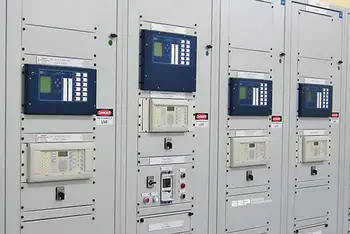
Protective Relay Training - Basic
Our customized live online or in‑person group training can be delivered to your staff at your location.
- Live Online
- 12 hours Instructor-led
- Group Training Available
Regular Price:
$699
Coupon Price:
$599
Enough wind energy to power up to 37,800 homes hit the electrical grid in Montana this year, and production could be double that over the next year if planned expansions and new projects in the pipeline come to fruition in 2009.
The country's credit crunch could slow the planning of brand new wind farms in the new year but it is isn't leading to cancellations of facilities that are further along in the planning process, developers and state regulators said.
"Traditionally, wind energy development has been pretty financially secure," said Chantel McCormick, a senior energy development specialist with the state Department of Commerce's Energy Promotion and Development Division. "So I think we're going to be OK.
"We're just hoping to build what we've already started," she said.
Wind generation still accounts for just a fraction of the state's electricity output, with coal-fired production, mainly the 2,100-megawatt Colstrip power plants, making up 64 percent of production.
Montana ranks 15th in the nation in wind production, despite its No. 5 ranking in potential. Wind generation accounts for 1.5 percent of the nation's total electricity supply.
But 2008 saw 126 megawatts of new wind generation in Big Sky country, bumping its total to 271.5 megawatts.
A single megawatt is enough to power between 250 to 300 homes, according to the American Wind Energy Association. The new wind generation would be sufficient to power all the homes in Great Falls.
In October, NaturEner USA-owned Glacier Wind Farm completed the 106.5-megawatt first phase of the 210-megawatt Glacier Wind Farm in Glacier and Toole counties north of Great Falls, and it began selling the power to a California utility.
Construction of the second phase, which calls for 103.5 megawatts and 71 additional turbines, will begin this spring, said Calvin Olson, San Francisco-based NaturEner USA's director of wind energy development.
"This time next year, we hope to have it up and running," he said.
The 19.5-megawatt Diamond Willow Wind Farm, which is owned by Montana Dakota Utilities, went on line earlier this year as well near eastern Montana's Baker. MDU is planning a 10.5-megawatt expansion in 2009, McCormick said.
Mark Jacobson, the Denver-based director of business development for Invenergy, the owner of the 130-megawatt Judith Gap wind farm, said a 52.5-megawatt expansion is planned if the company can line up a contract to sell the power.
It's selling its existing electricity to NorthWestern Energy, the state's main utility.
"We're going to continue to market it," Jacobson said.
The expansions at the three facilities could lead to the production of an additional 166.5 megawatts of wind power in 2009 but the total could hit 220 megawatts if Texas-based Horizon Energy begins construction on the 50- or 60-megawatt first phase of its 300-megawatt wind plant near Martinsdale, McCormick said.
"That's just sort of the tip of what we're going to see," McCormick said. "There are several other projects that are hoping to get all of their ducks in a row to start production in 2009."
The office is monitoring two possible projects in the Ennis area and one in Stillwater County, she said.
McCormick calls the 2008 growth a "significant milestone," noting wind was producing just 1 megawatt of electricity in 2005.
Construction of a 230-kilovolt transmission line between Great Falls and Lethbridge, Alberta, is expected to begin this spring as well, McCormick said. The primary capacity on the line would carry wind-generated electricity — assuming the wind developers that have secured the bulk of the line carry out their projects. Secondary space could carry power generated at coal-fired plants or other types of facilities.
The Montana Alberta Tie Line could carry 300 megawatts of power both north and south. The project is facing appeals in both Canada and the United States from landowners.
"A project like the MATL line opens up those areas for wind development because it's a significantly sized line," NaturEner's Olson said.
NaturEner is planning another wind farm in Toole and Glacier counties, this one 300 megawatts, if the MATL project is completed, Olson said. The wind farm, which would be the state's largest, is laid out north of Highway 2, also in Toole and Glacier counties, and just north of the existing Glacier Wind Farm.
Invenergy's Jacobson said he's expecting a policy debate at the state and national levels in 2009 concerning transmission.
Traditionally, individual utilities have constructed transmission lines within their service territory, he said. In his view, changes are in order that would make regional transmission projects more affordable, allowing power to be transported from high-wind resource areas such as Montana to high-load areas in other states.
"What we're going to see happening, I would hope, is more emphasis on defining better cost recovery methods and jointly pulling regions together so that cost will be spread out over a larger area," Jacobson said.
NorthWestern Energy's proposed Mountain States Transmission Intertie, or MSTI, is in the permitting stages with the state Department of Environmental Quality. It would run from Townsend to Boise.
With the poor economy making it more difficult to raise capital in all industries, companies planning brand new wind projects could have a tough time getting off the ground in 2009, said Paul Cartwright, a senior energy analyst with the state Department of Environmental Quality.
"You probably won't see new sites laid out for a year or two," he said.
But companies that already ordered wind turbines in advance of the economic downturn should be able to proceed with projects, he said. Development in Montana, he predicted, will be better "than a lot of other states."
Related News
TVA faces federal scrutiny over climate goals, electricity rates
TVA Rates and Renewable Energy Scrutiny spotlights electricity rates, distributed energy resources, solar and wind…
View more
By Land and Sea, Clean Electricity Needs to Lead the Way
Martha's Vineyard 100% Renewable Energy advances electrification across EVs, heat pumps, distributed solar, offshore wind,…
View more
BloombergNEF: World offshore wind costs 'drop 32% per cent'
Global Renewable LCOE Trends reveal offshore wind costs down 32%, with 10MW turbines, lower CAPEX…
View more
Disrupting Electricity? This Startup Is Digitizing Our Very Analog Electrical System
Solid-State AC Switching reimagines electrification with silicon-based, firmware-driven controls, smart outlets, programmable circuit breakers, AC-DC…
View more
Why the Texas Power Grid Is Facing Another Crisis
Texas Power Grid Reliability faces record peak demand as ERCOT balances renewable energy, wind and…
View more

B.C. electricity demand hits an all-time high
BC Hydro Peak Electricity Demand reached a record 10,902 megawatts during a cold snap, driven…
View more
Sign Up for Electricity Forum’s Newsletter
Stay informed with our FREE Newsletter — get the latest news, breakthrough technologies, and expert insights, delivered straight to your inbox.
Electricity Today T&D Magazine Subscribe for FREE

Stay informed with the latest T&D policies and technologies.
- Timely insights from industry experts
- Practical solutions T&D engineers
- Free access to every issue

