Atco approved for new Alberta transmission line

By Canadian Press


Arc Flash Training CSA Z462 - Electrical Safety Essentials

Our customized live online or in‑person group training can be delivered to your staff at your location.

  • Live Online
  • 6 hours Instructor-led
  • Group Training Available
Regular Price:
$249
Coupon Price:
$199
Reserve Your Seat Today
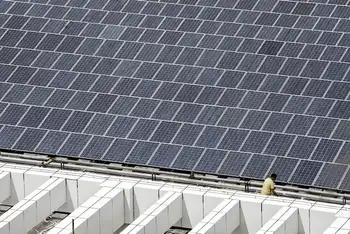
Energy company Atco Ltd. has won final approval from Alberta regulators to build a $95 million power transmission line between Edmonton and Fort McMurray.

The Calgary company said its Atco Electric unit received approval from the Alberta Energy & Utilities Board to build the 350-kilometre transmission line that will expand the power grid between the two Alberta cities.

The 240-kilovolt transmission line will be the third major line between the two cities and will increase transport capacity by about 250 megawatts — from about 350MW to 600MW.

The company said three substations are also included in this project to supply new plants being built in conjunction with expanding oilsands projects.

"Timelines are short, but we are well-prepared to complete this project quickly to enhance system reliability in the province and deliver electricity to areas within Alberta that are in need of more power," said Sett Policicchio, vice-president of ATCO Electric. "Work is already underway with project completion expected in the third quarter of 2004."

Atco Electric delivers power to customers in northern and east-central Alberta. The utility is part of the Atco group, which employs 6,000 people in the utility, power generation, logistics and energy services, technologies and industrial sectors.

Related News
Key Ontario power system staff may end up locked down at work sites due to COVID-19, operator says

Ontario IESO COVID-19 Control Room Measures detail how essential operators safeguard the electricity grid with split shifts, backup control centres, real-time balancing, deep cleaning, social distancing, and shelter-in-place readiness to maintain reliable power.


Key Points

Measures that protect essential grid operators with split shifts, backup sites, and hygiene to keep power reliable.

✅ Split teams across primary and backup control centres

✅ 12-hour shifts with remote handoffs and deep cleaning

✅ Real-time grid modeling to balance demand and supply


A group of personnel key to keeping Ontario's electricity system functioning may end up locked down in their control centres due to the COVID-19 crisis, according to the head of the province's power operator.

But that has so far proven unnecessary with a change-up in routine, Independent Electricity System Operator CEO Peter Gregg said.

While about 90 per cent of staff were sent to work from home on March 13, another 48 control-room operators deemed essential are still going into work, Gregg said in an interview.

"We identified a smaller cohort of critical operations room staff that need to go in to operate the system out of our control centres," Gregg said. "My biggest concern is to maintain their health, their safety as we rely on them to do this critical work."

Some of the operators manage power demand and supply in real time as Ontario electricity demand shifts, by calling for more or less generation and keeping an eye on the distribution grid, which also allows power to flow to and from Ontario's neighbours. Others do scenario planning and modelling to prepare for changes.

The essential operators have been split into eight teams of six each working 12-hour shifts. The day crew works out of a control centre near Toronto and the night shift out of a backup centre in the city's west end, Gregg said.

"That means that we're not having physical hand-off between control room operators on shift change -- we can do it remotely -- and it also allows us to do deep cleansing," Gregg said. "We're fortunate that the way the room is set up allows us to practice good social distancing."

Should it become necessary, he said, bed, food and other on-site arrangements have been made to allow the operators to stay at their workplaces as a similar agency in New York has done.

"If we do need to shelter these critical employees in place, we've got the ability to do so."

IESO is responsible for ensuring a balance between supply and demand for electricity across the province. Because power cannot be stored, the IESO ensures generators produce enough power to meet peak demand while making sure they don't produce too much.

"You're seeing, obviously, commercial demand drop, some industrial demand drop," Gregg said. "But you're also seeing a shift in the demand curve as well, where normally you have people heading off to work and so residential demand would go down. But obviously with them staying home, you're seeing an increase in residential electricity use across the province."

Some utilities have indicated no cuts to peak rates for self-isolating customers, with Hydro One peak pricing remaining in place for now.

IESO also runs and settles the wholesale electricity markets. Market prices are set based on accepted offers to supply electricity, while programs supporting stable electricity pricing for industrial and commercial users can affect costs against forecast demand.

With the pandemic forcing many businesses to close and people to stay home, and provincial electricity relief for families and small businesses in place, typical power needs fallen about seven per cent at a time of year that would normally see demand soften anyway. It remains to be seen whether, and how much, power needs shift further amid stringent isolation measures and the ongoing economic impact of the outbreak.

Gregg said the operator is constantly modeling different possibilities.

"What we do normally is prepare for all of these sort of emergency scenarios, as reflected in the U.S. grid response coverage, and test and drill for these," he said. "What we're experiencing over the last few weeks is that those drills come in handy because they help us prepare for when the real-time situation actually happens."


Related News

View more

Ontario pitches support for electric bills

Ontario CEAP Program provides one-time electricity bill relief for residential consumers via local utilities, supports low-income households, aligns with COVID-19 recovery rates, and complements time-of-use pricing options and the winter disconnection ban.


Key Points

A one-time electricity bill credit for eligible Ontario households affected by COVID-19, available via local utilities.

✅ Apply through your local distribution company or utility

✅ One-time credit for overdue electricity bills from COVID-19

✅ Complements TOU options, OER, and winter disconnection ban


Applications for the CEAP program for Ontario residential consumers has opened. Residential customers across the province can now apply for funding through their local distribution company/utility.

On June 1st, our government announced a suite of initiatives to support Ontario’s electricity consumers amid changes for electricity consumers during the pandemic, including a $9 million investment to support low-income Ontarians through the COVID-19 Energy Assistance Program (CEAP). CEAP will provide a one-time payment to Ontarians who are struggling to pay down overdue electricity bills incurred during the COVID-19 outbreak.

These initiatives include:

  • $9 million for the COVID-19 Energy Assistance Program (CEAP) to support consumers struggling to pay their energy bills during the pandemic. CEAP will provide one-time payments to consumers to help pay down any electricity bill debt incurred over the COVID19 period. Applications will be available through local utilities in the upcoming months;
  • $8 million for the COVID-19 Energy Assistance Program for Small Business (CEAP-SB) to provide support to businesses struggling with bill payments as a result of the outbreak; and
  • An extension of the Ontario Energy Board’s winter disconnection ban until July 31, 2020 to ensure no one is disconnected from their natural gas or electricity service during these uncertain times.


More information about applications for the CEAP for Small Business will be coming later this summer, as electricity rates are about to change across Ontario for many customers.

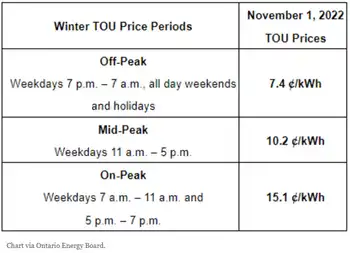
In addition, the government recently announced that it will continue the suspension of time-of-use (TOU) electricity rates and, starting on June 1, 2020, customers will be billed based on a new fixed COVID-19 hydro rate of 12.8 cents per kilowatt hour. The COVID-19 Recovery Rate, which some warned in analysis could lead to higher hydro bills will be in place until October 31, 2020.

Later in the pandemic, Ontario set electricity rates at the off-peak price until February 7 to provide additional relief.

“Starting November 1, 2020, our government has announced Ontario electricity consumers will have the option to choose between time-of-use and tiered electricity pricing plan, following the Ontario Energy Board’s new rate plan prices and support thresholds announcement. We are proud to soon offer Ontarians the ability to choose an electricity plan that best suits for their lifestyle,” said Jim McDonell, MPP for Stormont–Dundas–South Glengarry.

The government will continue to subsidize electricity bills by 31.8 per cent through the Ontario Electricity Rebate.

The government is providing approximately $5.6 billion in 2020-21 as part of its existing electricity cost relief programs and conservation initiatives such as the Peak Perks program to help ensure more affordable electricity bills for eligible residential, farm and small business consumers.


Related News

View more

Philippines wants Canada's help to avoid China, U.S

Philippines-Canada Indo-Pacific Partnership strengthens ASEAN cooperation, maritime security, and South China Sea diplomacy, balancing U.S.-China rivalry through a rules-based order, trade diversification, and middle-power engagement to foster regional stability and sustainable growth.


Key Points

A strategic pact to balance U.S.-China rivalry, back ASEAN, and advance maritime security and a rules-based order

✅ Prioritizes ASEAN-led cooperation and regional diplomacy

✅ Supports maritime security and South China Sea stability

✅ Diversifies trade, infrastructure, energy, and education ties


The Philippines finds itself caught in a geopolitical tug-of-war between the United States and China, two superpowers with competing interests in the Indo-Pacific region. To navigate this complex situation, the Philippines is seeking closer ties with Canada, a middle power with a strong focus on diplomacy and regional cooperation and a deepening U.S.-Canada energy and minerals partnership that reinforces shared strategic interests.

The Philippines, like many Southeast Asian nations, desires peace and stability for continued economic growth. However, the intensifying rivalry between the U.S. and China threatens to disrupt this. Territorial disputes in the South China Sea, where China claims vast swathes of waters contested by the Philippines, are a major point of contention. The Philippines has a long-standing alliance with the U.S., whose current administration is viewed as better for Canada's energy sector by some observers, but it also has growing economic ties with China. This delicate balancing act is becoming increasingly difficult.

This is where Canada enters the picture. The Philippines sees Canada as a potential bridge between the two superpowers. Foreign Affairs Secretary Enrique Manalo emphasizes that the future of the Indo-Pacific shouldn't be dictated by "great power rivalry." Canada, with its emphasis on peaceful solutions and its strong relationships with both the U.S. and China, despite electricity exports at risk from periodic trade tensions, presents a welcome alternative.

There are several reasons why the Philippines views Canada as a natural partner. First, Canada's Indo-Pacific strategy prioritizes the Association of Southeast Asian Nations (ASEAN), a regional bloc that includes the Philippines, and reflects trade policy debates in Ottawa where Canadians support tariffs on energy and minerals. This focus on regional cooperation aligns with the Philippines' desire for a united ASEAN voice.

Second, Canada offers the Philippines opportunities for economic diversification. While China is a significant trading partner, the Philippines wants to lessen its dependence on any single power. Canada's expertise in areas like agriculture, infrastructure, education, and renewable energy aligns with the Philippines' clean energy commitment and development goals.

Third, Canada's experience in peacekeeping and maritime security can be valuable to the Philippines. The Philippines faces challenges in the South China Sea, and Canada's commitment to a rules-based international order resonates with the Philippines' desire for peaceful resolution of territorial disputes.

Canada, for its part, sees the Philippines as a strategically important partner in the Indo-Pacific. A stronger Philippines contributes to a more stable region, which aligns with Canada's own interests. Additionally, closer ties with the Philippines open doors for increased Canadian trade and investment in Southeast Asia, including in critical minerals supply chains and energy projects.

The Philippines' pursuit of a middle ground between the U.S. and China is not without its challenges. Balancing strong relationships with both powers requires careful diplomacy, even as tariff threats boost support for Canadian energy projects domestically. However, Canada's emergence as a potential partner offers the Philippines a much-needed counterweight and a path towards regional stability and economic prosperity.

By working together, Canada and the Philippines can promote peaceful solutions, strengthen regional cooperation, and ensure that the Indo-Pacific remains a place of opportunity for all nations, not just superpowers.


Related News

View more

IEA: Electricity investment surpasses oil and gas for the first time

Electricity Investment Surpasses Oil and Gas 2016, driven by renewable energy, power grids, and energy efficiency, as IEA reports lower oil and gas spending, rising solar and wind capacity, and declining coal power plant approvals.


Key Points

A 2016 milestone where electricity topped global energy investment, led by renewables, grids, and efficiency, per the IEA.

✅ IEA: electricity investment hit $718b; oil and gas fell to $650b.

✅ Renewables led with $297b; solar and wind unit costs declined.

✅ Coal plant approvals plunged; networks and storage spending rose.


Investments in electricity surpassed those in oil and gas for the first time ever in 2016 on a spending splurge on renewable energy and power grids as the fall in crude prices led to deep cuts, the International Energy Agency (IEA) said.

Total energy investment fell for the second straight year by 12 per cent to US$1.7 trillion compared with 2015, the IEA said. Oil and gas investments plunged 26 per cent to US$650 billion, down by over a quarter in 2016, and electricity generation slipped 5 per cent.

"This decline (in energy investment) is attributed to two reasons," IEA chief economist Laszlo Varro told journalists.

"The reaction of the oil and gas industry to the prolonged period of low oil prices which was a period of harsh investment cuts; and technological progress which is reducing investment costs in both renewable power and in oil and gas," he said.

Oil and gas investment is expected to rebound modestly by 3 per cent in 2017, driven by a 53 per cent upswing in U.S. shale, and spending in Russia and the Middle East, the IEA said in a report.

"The rapid ramp up of U.S. shale activities has triggered an increase of U.S. shale costs of 16 per cent in 2017 after having almost halved from 2014-16," the report said.

The global electricity sector, however, was the largest recipient of energy investment in 2016 for the first time ever, overtaking oil, gas and coal combined, the report said.

"Robust investments in renewable energy and increased spending in electricity networks, which supports the outlook that low-emissions sources will cover most demand growth, made electricity the biggest area of capital investments," Varro said.

Electricity investment worldwide was US$718 billion, lifted by higher spending in power grids which offset the fall in power generation investments.

"Investment in new renewables-based power capacity, at US$297 billion, remained the largest area of electricity spending, despite falling back by 3 per cent as clean energy investment in developing nations slipped, the report said."

Although renewables investments was 3 per cent lower than five years ago, capacity additions were 50 per cent higher and expected output from this capacity about 35 per cent higher, thanks to the fall in unit costs and technology improvements in solar PV and wind generation, the IEA said.


COAL INVESTMENT IS COMING TO AN END

Investments in coal-fired electricity plants fell sharply. Sanctioning of new coal power plants fell to the lowest level in nearly 15 years, reflecting concerns about local air pollution, and emergence of overcapacity and competition from renewables, with renewables poised to eclipse coal in global power generation, notably in China. Coal investments, however, grew in India.

"Coal investment is coming to an end. At the very least, it is coming to a pause," Varro said.

The IEA report said energy efficiency investments continued to expand in 2016, reaching US$231 billion, with most of it going to the building sector globally.

Electric vehicles sales rose 38 per cent in 2016 to 750,000 vehicles at $6 billion, and represented 10 per cent of all transport efficiency spending. Some US$6 billion was spent globally on electronic vehicle charging stations, the IEA said.

Spending on electricity networks and storage continued the steady rise of the past five years, as surging electricity demand puts power systems under strain, reaching an all-time high of US$277 billion in 2016, with 30 per cent of the expansion driven by China’s spending in its distribution system, the report said.

China led the world in energy investments with 21 per cent of global total share, the report said, driven by low-carbon electricity supply and networks projects.

Although oil and gas investments fell in the United States in 2016, its total energy investments rose 16 per cent, even as Americans use less electricity in recent years, on the back of spending in renewables projects, the IEA report said.


Related News

View more

IAEA Warns of Nuclear Risks from Russian Attacks on Ukraine Power Grids

Ukraine nuclear safety risks escalate as IAEA warns of power grid attacks threatening reactor cooling, diesel generators, and Zaporizhzhia oversight, prompting UN calls for demilitarized zones to prevent radioactive releases and accidents.


Key Points

Escalating threats from grid attacks and outages that jeopardize reactor cooling, IAEA oversight, and public safety.

✅ Power grid strikes threaten reactor cooling systems.

✅ Emergency diesel generators are last defense lines.

✅ Calls grow for demilitarized zones around plants.


In early February 2025, Rafael Grossi, Director General of the International Atomic Energy Agency (IAEA), expressed grave concerns regarding the safety of Ukraine's nuclear facilities amid ongoing Russian attacks on the country's power grids, as Kyiv warned of a difficult winter without power after deadly strikes on energy infrastructure. Grossi's warnings highlight the escalating risks to nuclear safety and the potential for catastrophic accidents.

The Threat to Nuclear Safety

Ukraine's nuclear infrastructure, including the Zaporizhzhia Nuclear Power Plant—the largest in Europe—relies heavily on a stable power supply to maintain critical cooling systems and other safety measures. Russian military operations targeting Ukraine's energy infrastructure have led to power outages, and created hazards akin to those highlighted in downed power line safety guidance during emergency repairs, jeopardizing the safe operation of these facilities. Grossi emphasized that such disruptions could result in severe nuclear accidents if cooling systems fail.

IAEA's Response and Actions

In response to these threats, the IAEA has been actively involved in monitoring and assessing the situation. Grossi visited Kyiv to inspect electrical substations and discuss safety measures with Ukrainian officials. He underscored the necessity of ensuring uninterrupted power to nuclear plants and the critical role of emergency diesel generators as a last line of defense, and noted that maintaining staffing continuity, including measures such as staff living on site at critical facilities, may be necessary. The IAEA has also postponed the rotation of its mission at the Zaporizhzhia plant due to security concerns, as reported by Reuters.

International Concerns and Diplomatic Efforts

The international community has expressed deep concern over the potential for nuclear accidents in Ukraine, echoing earlier grid overseer warnings about systemic risks in other crises that stress energy systems. The United Nations and various countries have called for the establishment of a demilitarized zone around nuclear facilities to prevent military activities that could compromise their safety. Diplomatic efforts are ongoing to facilitate dialogue between Russia and Ukraine, aiming to ensure the protection of nuclear sites and the safety of surrounding populations.

The Zaporizhzhia Nuclear Power Plant

The Zaporizhzhia Nuclear Power Plant, located in southeastern Ukraine, has been under Russian control since early in the conflict, with Rosatom cooperation agreements reflecting broader nuclear policy priorities that frame Moscow's approach to the sector. The plant consists of six reactors and has been a focal point of international concern due to its size and the potential consequences of any incident. The IAEA has been working to maintain oversight and ensure the plant's safety amid the ongoing conflict.

Potential Consequences of Nuclear Accidents

A nuclear accident at any of Ukraine's nuclear facilities could have catastrophic consequences, including the release of radioactive materials, displacement of populations, and long-term environmental damage, with communities potentially facing weeks without electricity and basic services in the aftermath. The proximity of these plants to densely populated areas further amplifies the risks. The international community continues to monitor the situation closely, emphasizing the need for immediate action to safeguard nuclear facilities.

The ongoing conflict in Ukraine has introduced unprecedented challenges to nuclear safety. The IAEA's warnings and actions underscore the critical need for international cooperation to protect nuclear facilities from the dangers posed by military activities. Ensuring the safety of these sites is paramount to prevent potential disasters that could have far-reaching humanitarian and environmental impacts, and sustained attention to nuclear workers' safety concerns helps maintain operational readiness under strain.


Related News

View more

Texas produces and consumes the most electricity in the US

Texas ERCOT Power Grid leads U.S. wind generation yet faces isolated interconnection, FERC exemption, and high industrial energy use, with distinct electricity and natural gas prices managed by a single balancing authority.


Key Points

The state-run interconnection that balances Texas electricity, isolated from FERC oversight and other U.S. grids.

✅ Largest U.S. wind power producer, high industrial demand

✅ Operates one balancing authority, independent interconnection

✅ Pays lower electricity, higher natural gas vs national average


For nearly two decades, the Lone Star State has generated more wind-sourced electricity than any other state in the U.S., according to the Energy Information Administration, or EIA.

In 2022, EIA reported Texas produced more electricity than any other state and generated twice as much as second-place Florida.

However, Texas also leads the country in another category. According to EIA, Texas is the largest energy-consuming state in the nation across all sectors with more than half of the state’s energy being used by the industrial sector.

As of May 2023, Texas residents paid 43% more for natural gas and around 10% less for electricity compared to the national average, according to EIA, and in competitive areas shopping for electricity is getting cheaper as well. Commercial and industrial sectors on average for the same month paid 25% less for electricity compared to the national average.


U.S. electric system compared to Texas
The U.S. electric system is essentially split into three regions called interconnections and are managed by a total of 74 entities called balancing authorities that ensure that power supply and demand are balanced throughout the region to prevent the possibility of blackouts, according to EIA.

The three regions (Interconnections):

Eastern Interconnection: Covers all U.S. states east of the Rocky Mountains, a portion of northern Texas, and consists of 36 balancing authorities.
Western Interconnection: Covers all U.S. states west of the Rockies and consists of 37 balancing authorities.
ERCOT: Covers the majority of Texas and consists of one balancing authority (itself).

During the 2021 winter storm, Texas electric cooperatives were credited with helping maintain service in many communities.

“ERCOT is unique in that the balancing authority, interconnection, and the regional transmission organization are all the same entity and physical system,” according to EIA, a structure often discussed in analyses of Texas power grid challenges today.

With this being the case, Texas is the only state in the U.S. that balances itself, the only state that is not subject to the jurisdiction of the Federal Energy Regulatory Commission, or FERC, and the only state that is not synchronously interconnected to the grid in the rest of the United States in the event of tight grid conditions, highlighting ongoing discussions about improving Texas grid reliability before peak seasons, according to EIA.

Every other state in the U.S. is connected to a web of multiple balancing authorities that contribute to ensuring power supply and demand are met.

California, for example, was the fourth largest electricity producer and the third largest electricity consumer in the nation in 2022, according to EIA, and California imports the most electricity from other states while Pennsylvania exports the most.

Although California produces significantly less electricity than Texas, it has the ability to connect with more than 10 neighboring balancing authorities within the Western Interconnection to interchange electricity, a dynamic that can see clean states importing dirty electricity under certain market conditions. ERCOT being independent only has electricity interchange with two balancing authorities, one of which is in Mexico.

Regardless of Texas’ unique power structure compared to the rest of the nation, the vast majority of the U.S. risked electricity supplies during this summer’s high heat, as outlined in severe heat blackout risks reports, according to EIA.


Related News

View more

Sign Up for Electricity Forum’s Newsletter

Stay informed with our FREE Newsletter — get the latest news, breakthrough technologies, and expert insights, delivered straight to your inbox.

Electricity Today T&D Magazine Subscribe for FREE

Stay informed with the latest T&D policies and technologies.
  • Timely insights from industry experts
  • Practical solutions T&D engineers
  • Free access to every issue

Live Online & In-person Group Training

Advantages To Instructor-Led Training – Instructor-Led Course, Customized Training, Multiple Locations, Economical, CEU Credits, Course Discounts.

Request For Quotation

Whether you would prefer Live Online or In-Person instruction, our electrical training courses can be tailored to meet your company's specific requirements and delivered to your employees in one location or at various locations.