Supreme Court Favors Utilities Over Cable

By CEA


Substation Relay Protection Training

Our customized live online or in‑person group training can be delivered to your staff at your location.

  • Live Online
  • 12 hours Instructor-led
  • Group Training Available
Regular Price:
$699
Coupon Price:
$599
Reserve Your Seat Today
The Canadian Electricity Association (CEA) welcomes the Supreme Court of Canada decision announced to uphold the Federal Court of Appeal decision in the matter of Canadian Cable Television Association (CCTA) v. Barrie Public Utilities et al.

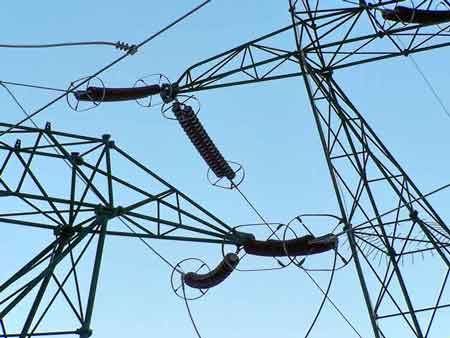
CEA and its member companies, supported by several provincial attorneys general, saw their position confirmed that the management of power poles, including the price and conditions of proposed attachments, should be regulated solely as part of the electricity regulatory process.

According to CEA President Hans Konow, “Canadian electric utility companies and cable and telecommunications companies can now get back to work negotiating on a bi-lateral basis and focus on renewing the cooperative relationship they have enjoyed in the past.”

This case involved the interpretation of federal law governing access to support structures (including poles) and whether federal law can constitutionally extend to the power poles of local electricity distribution companies. There are critical issues in this case, touching on federal/provincial jurisdiction, a virtual subsidy of cable rates by electric utility customers, and ensuring safety.

Aside from concerns about the CRTC attempting to regulate in an area of provincial jurisdiction, as well as concerns about whether electricity customers are in effect subsidizing cable companies, CEA believes the most important issues are those of reliability and safety.

The decision released today by the Supreme Court re-affirms the electric utility industryÂ’s ability to meet CanadiansÂ’ requirement for a reliable and safe system, the electric utility industryÂ’s primary concern. CEA believes electricity distribution companies are best suited to develop and oversee standards for utility pole attachments, expertise that does not exist within a body such as the CRTC. The Supreme Court of Canada ruled that the CRTC is not the appropriate body to have the final say on this issue.

Canadian electric utilities follow standards to ensure that all attachments to power poles are made in a manner that does not compromise the integrity of the electricity system The requirement for a safely designed and constructed support structure is vital not only to utility line personnel but also to the public.

In addition to concerns that the CRTC attempted to assert jurisdiction over matters of provincial authority, the industry also took exception with the rate mandated by the CRTC which electric utilities contend is below the cable companies' fair share of the costs of power poles. In other words, the CRTC had ordered power utilities to subsidize the provision of cable television services at the expense of all electricity ratepayers.

Founded in 1891, CEA is the national forum and voice of the evolving electricity industry in Canada. The AssociationÂ’s members produce 95% of CanadaÂ’s electricity, manage assets of more than $150 billion, and employ 85,000 Canadians.

Related News
NEW Hydro One shares down after Ontario government says CEO, board out

Hydro One Leadership Shakeup unsettles investors as Ontario government ousts CEO and board, pressuring shares; analysts cite political and regulatory risk, stock volatility, trimmed price targets, and dividend stability at the regulated utility.


Key Points

An abrupt CEO exit and board overhaul at Hydro One, driving share declines and raising political and regulatory risk.

✅ Shares fall as CEO retires and board resigns under provincial pressure.

✅ Analysts cut price targets; warn of political, regulatory risks.

✅ New board to pick CEO; province consults on compensation.


Hydro One Ltd. shares slid Thursday with some analysts sounding warnings of greater uncertainty after the new Ontario government announced the retirement of the electrical utility's chief executive and the replacement of its board of directors.

 After sagging by almost eight per cent in early trading on the Toronto Stock Exchange, following news that Q2 profit plunged 23% amid weaker electricity revenue, shares of the company were later down four per cent, or 81 cents, at $19.36 as of 11:42 a.m. ET.

On Wednesday, after stock markets had closed for the day, Ontario Premier Doug Ford announced the immediate retirement of Hydro One CEO Mayo Schmidt. He leaves with a $400,000 payout in lieu of post-retirement benefits and allowances, Hydro One said.

Doug Ford's government forces out Hydro One '$6-million man'

During the recent provincial election campaign, Ford vowed to fire Schmidt, who earned $6.2 million last year and whose salary wouldn't be reduced despite calls to cut electricity costs.

Paul Dobson, Hydro One's chief financial officer, will serve as acting CEO until a new top executive is selected.

Ford also said the entire board of directors of the utility would resign. Hydro One said a new board — four members of which will be nominated by the province — will select the company's next CEO, and the province will be consulted on the next leader's compensation.

A new board is expected to be formed by mid-August.

The provincial government is the largest single investor in Hydro One, holding a 47 per cent stake. The company was partly privatized by the former Liberal government in 2015, while the NDP has proposed to make hydro public again in Ontario to change course.


Doug Ford promises to keep Pickering nuclear plant open until 2024

In response to the government's move to supplant the utility's board and CEO, some analysts cautioned investors about too many unknowns in the near-term outlook, citing raised political or regulatory risks.

Analyst Jeremy Rosenfield of iA Securities cut his rating on Hydro One shares to hold from buy, and reduced his 12-month price target for the stock to $24 from $26.

Rosenfield said the stock is still a defensive investment supported by stable earnings and cash flows, good earnings growth and healthy dividend.

However, he said in a research note that "the heightened potential for further political interference in the province's electricity market and regulated utility framework represent key risk factors that are likely to outweigh Hydro One's fundamentals over the near term."


Potential challenge to find new CEO

Laurentian Bank Securities analyst Mona Nazir said in a research note that the magnitude of change all at once was "surprising but not shocking."

She said the agreement that will see Hydro One consult with the provincial government on matters involving executive pay could have an impact on the hiring of a new CEO for the utility.

"Given the government's open and public criticism of the company and a potential ceiling on compensation, it may be challenging to attract top talent to the position," she wrote.

Laurentian cut its rating on the Hydro One to hold and reduced its price target to $21 from $24.

Analysts at CIBC World Markets said investors face an uncertain future, noting parallels with debates at Manitoba Hydro over political direction.

"In particular, we are are concerned about the government meddling in with [power] rates," wrote Robert Catellier and Archit Kshetrapal in a research note, adding they believe the new provincial government is aiming for a 12 per cent reduction in customers' power bills.

CIBC reduced its price target on Hydro One's shares to $20.50 from its previous target of $24.


Related News

View more

Global CO2 emissions 'flatlined' in 2019, says IEA

2019 Global CO2 Emissions stayed flat, IEA reports, as renewable energy growth, wind and solar deployment, nuclear output, and coal-to-gas switching in advanced economies offset increases elsewhere, supporting climate goals and clean energy transitions.


Key Points

33 gigatonnes, unchanged YoY, as advanced economies cut power emissions via renewables, gas, and nuclear.

✅ IEA reports emissions flat at 33 Gt despite 2.9% GDP growth

✅ Advanced economies cut power-sector CO2 via wind, solar, gas

✅ Nuclear restarts and mild weather aided reductions


Despite widespread expectations of another increase, global energy-related CO2 emissions stopped growing in 2019, according to International Energy Agency (IEA) data released today. After two years of growth, global emissions were unchanged at 33 gigatonnes in 2019, a notable marker in the global energy transition narrative even as the world economy expanded by 2.9%.

This was primarily due to declining emissions from electricity generation in advanced economies, thanks to the expanding role of renewable sources (mainly wind and solar across many markets), fuel switching from coal to natural gas, and higher nuclear power generation, the Paris-based organisation says in the report.

"We now need to work hard to make sure that 2019 is remembered as a definitive peak in global emissions, not just another pause in growth," said Fatih Birol, the IEA's executive director. "We have the energy technologies to do this, and we have to make use of them all."

Higher nuclear power generation in advanced economies, particularly in Japan and South Korea, avoided over 50 Mt of CO2 emissions. Other factors included milder weather in several countries, and slower economic growth in some emerging markets. In China, emissions rose but were tempered by slower economic growth and higher output from low-carbon sources of electricity. Renewables continued to expand in China, and 2019 was also the first full year of operation for seven large-scale nuclear reactors in the country.

A significant decrease in emissions in advanced economies in 2019 offset continued growth elsewhere. The USA recorded the largest emissions decline on a country basis, with a fall of 140 million tonnes, or 2.9%. US emissions are now down by almost 1 gigatonne from their peak in 2000. Emissions in the European Union fell by 160 million tonnes, or 5%, in 2019 driven by reductions in the power sector as electricity producers move away from coal in the generation mix. Japan’s emissions fell by 45 million tonnes, or around 4%, the fastest pace of decline since 2009, as output from recently restarted nuclear reactors increased.

Emissions in the rest of the world grew by close to 400 million tonnes in 2019, with almost 80% of the increase coming from countries in Asia where coal-fired power generation continued to rise, and in Australia emissions rose 2% due to electricity and transport. Coal-fired power generation in advanced economies declined by nearly 15%, reflecting a sharp fall in coal-fired electricity across multiple markets, as a result of growth in renewables, coal-to-gas switching, a rise in nuclear power and weaker electricity demand.

The IEA will publish a World Energy Outlook Special Report in June that will map out how to cut global energy-related carbon emissions by one-third by 2030 and put the world on track for longer-term climate goals, a pathway that, in Canada, will require more electricity to hit net-zero. It will also hold an IEA Clean Energy Transitions Summit in Paris on 9 July, bringing together key government ministers, CEOs, investors and other major stakeholders.

Birol will discuss the results published today tomorrow at an IEA Speaker Series event at its headquarters with energy and climate ministers from Poland, which hosted COP24 in Katowice; Spain, which hosted COP25 in Madrid; and the UK, which will host COP26 in Glasgow this year, as greenhouse gas concentrations continue to break records worldwide.


Related News

View more

The Phillipines wants nuclear power to be included in the country's energy mix as the demand for electricity is expected to rise.

Philippines Nuclear Energy Policy aims to add nuclear power to the energy mix via executive order, meeting rising electricity demand with 24/7 baseload while balancing safety, renewables, and imported fuel dependence in the Philippines.


Key Points

A government plan to include nuclear power in the energy mix to meet demand, ensure baseload, and uphold safety.

✅ Executive order proposed by Energy Secretary Alfonso Cusi

✅ Targets 24/7 baseload, rising electricity demand

✅ Balances safety, renewables, and energy security


Phillipines Presidential spokesman Salvador Panelo said Energy Secretary Alfonso Cusi made the proposal during last Monday's Cabinet meeting in Malacaaang. "Secretary Cusi likewise sought the approval of the issuance of a proposed executive order for the inclusion of nuclear power, including next-gen nuclear options in the country's energy mix as the Philippines is expected to the rapid growth in electricity and electricity demand, in which, 24/7 power is essential and necessary," Panelo said in a statement.

Panelo said Duterte would study the energy chief's proposal, as China's nuclear development underscores regional momentum. In the 1960s until the mid 80s, the late president Ferdinand Marcos adopted a nuclear energy program and built the Bataan Nuclear Plant.

The nuclear plant was mothballed after Corazon Aquino became president in 1986. There have been calls to revive the nuclear plant, saying it would help address the Philippines' energy supply issues. Some groups, however, said such move would be expensive and would endanger the lives of people living near the facility, citing Three Mile Island as a cautionary example.

Panelo said proposals to revive the Bataan Nuclear Plant were not discussed during the Cabinet meeting, even as debates like California's renewable classification continue to shape perceptions. Indigenous energy sources natural gas, hydro, coal, oil, geothermal, wind, solar, biomassand ethanol constitute more than half or 59.6%of the Philippines' energy mix.

Imported oil make up 31.7% while imported coal, reflecting the country's coal dependency, contribute about 8.7%.

Imported ethanol make up 0.1% of the energy mix, even as interest in atomic energy rises globally.

In 2018, Duterte said safety should be the priority when deciding whether to tap nuclear energy for the country's power needs, as countries like India's nuclear restart proceed with their own safeguards.


Related News

View more

E.ON to Commission 2500 Digital Transformer Stations

E.ON Digital Transformer Stations modernize distribution grids with smart grid monitoring, voltage control, and remote switching, enabling bidirectional power flow, renewables integration, and rapid fault isolation from centralized grid control centres.


Key Points

Remotely monitored grid nodes enhancing smart grid stability and speedier fault response.

✅ Real-time voltage and current data along feeders and laterals

✅ Remote switching cuts outage duration and truck rolls

✅ Supports renewables and bidirectional power flows


E.ON plans to commission 2500 digital transformer stations in the service areas of its four German distribution grid operators - Avacon, Bayernwerk, E.DIS and Hansewerk - by the end of 2019. Starting this year, E.ON will solely install digital transformer stations in Germany, aligning with 2019 grid edge trends seen across the sector. This way, the digital grid is quite naturally being integrated into E.ON's distribution grids.

With these transformer stations as the centrepiece of the smart grid, it is possible to monitor and control using synchrophasors in the power grid from the grid control centre. This helps to maintain a more balanced utilisation of the grid and, with increasing complexity, ensures continued security of supply.

Until now, the current and voltage parameters required for safe grid operation could usually only be determined at the beginning of a power line, where there is usually a grid substation in place. Controlling current flow and voltage in the downstream system was physically impossible.

In the future, grids will have to function in both directions: they will bring electricity to the customer while at the same time collecting and transmitting more and more green electricity via HVDC technology where appropriate. This requires physical data to be made available along the entire route. To ensure security of supply, voltage fluctuations must be kept within narrowly defined limits and the current flow must not exceed the specified value, while reducing line losses with superconducting cables remains an important consideration. To manage this challenge, it is necessary to install digital technology.

The possibility of remotely controlling grids also reduces downtimes in the event of faults and supports a smarter electricity infrastructure approach. With the new technology, our grid operators can quickly and easily access the stations of the affected line. The grid control centres can thus limit and eliminate faults on individual line sections within a very short space of time.


Related News

View more

Duke Energy will spend US$25bn to modernise its US grid

Duke Energy Clean Energy Strategy targets smart grid upgrades, wind and solar expansion, efficient gas, and high-reliability nuclear, cutting CO2, boosting decarbonization, and advancing energy efficiency and reliability for the Carolinas.


Key Points

A plan investing in smart grids, renewables, gas, and nuclear to cut CO2 and enhance reliability and efficiency by 2030.

✅ US$25bn smart grid upgrades; US$11bn renewables and gas

✅ 40% CO2 reduction and >80% low-/zero-carbon generation by 2030

✅ 2017 nuclear fleet 95.64% capacity factor; ~90 TWh carbon-free


The US power group Duke Energy plans to invest US$25bn on grid modernization over the 2017-2026 period, including the implementation of smart grid technologies to cope with the development of renewable energies, along with US$11bn on the expansion of renewable (wind and solar) and gas-fired power generation capacities.

The company will modernize its fleet and expects more than 80% of its power generation mix to come from zero and lower CO2 emitting sources, aligning with nuclear and net-zero goals, by 2030. Its current strategy focuses on cutting down CO2 emissions by 40% by 2030. Duke Energy will also promote energy efficiency and expects cumulative energy savings - based on the expansion of existing programmes - to grow to 22 TWh by 2030, i.e. the equivalent to the annual usage of 1.8 million households.

#google#

Duke Energy’s 11 nuclear generating units posted strong operating performance in 2017, as U.S. nuclear costs hit a ten-year low, providing the Carolinas with nearly 90 billion kilowatt-hours of carbon-free electricity – enough to power more than 7 million homes.

Globally, China's nuclear program remains on a steady development track, underscoring broader industry momentum.

“Much of our 2017 success is due to our focus on safety and work efficiencies identified by our nuclear employees, along with ongoing emphasis on planning and executing refueling outages to increase our fleet’s availability for producing electricity,” said Preston Gillespie, Duke Energy chief nuclear officer.

Some of the nuclear fleet’s 2017 accomplishments include, as a new U.S. reactor comes online nationally:

  • The 11 units achieved a combined capacity factor of 95.64 percent, second only to the fleet’s 2016 record of 95.72 percent, marking the 19th consecutive year of attaining a 90-plus percent capacity factor (a measure of reliability).
  • The two units at Catawba Nuclear Station produced more than 19 billion kilowatt-hours of electricity, and the single unit at Harris Nuclear Plant generated more than 8 billion kilowatt-hours, both setting 12-month records.
  • Brunswick Nuclear Plant unit 2 achieved a record operating run.
  • Both McGuire Nuclear Station units completed their shortest refueling outages ever and unit 1 recorded its longest operating run.
  • Oconee Nuclear Station unit 2 achieved a fleet record operating run.

The Robinson Nuclear Plant team completed the station’s 30th refueling outage, which included a main generator stator replacement and other life-extension activities, well ahead of schedule.

“Our nuclear employees are committed to providing reliable, clean electricity every day for our Carolinas customers,” added Gillespie. “We are very proud of our team’s 2017 accomplishments and continue to look for additional opportunities to further enhance operations.”


Related News

View more

UK Lockdown knocks daily electricity demand by 10 per cent

Britain Electricity Demand During Lockdown is around 10 percent lower, as industrial consumers scale back. National Grid reports later morning peaks and continues balancing system frequency and voltage to maintain grid stability.


Key Points

Measured drop in UK power use, later morning peaks, and grid actions to keep frequency and voltage within safe limits.

✅ Daily demand about 10 percent lower since lockdown.

✅ Morning peak down nearly 18 percent and occurs later.

✅ National Grid balances frequency and voltage using flexible resources.


Daily electricity demand in Britain is around 10% lower than before the country went into lockdown last week due to the coronavirus outbreak, data from grid operator National Grid showed on Tuesday.

The fall is largely due to big industrial consumers using less power across sectors, the operator said.

Last week, Prime Minister Boris Johnson ordered Britons to stay at home to halt the spread of the virus, imposing curbs on everyday life without precedent in peacetime.

Morning peak demand has fallen by nearly 18% compared to before the lockdown was introduced and the normal morning peak is later than usual because the times people are getting up are later and more spread out with fewer travelling to work and school, a pattern also seen in Ottawa during closures, National Grid said.

Even though less power is needed overall, the operator still has to manage lower demand for electricity, as well as peaks, amid occasional short supply warnings from National Grid, and keep the frequency and voltage of the system at safe levels.

Last August, a blackout cut power to one million customers and caused transport chaos as almost simultaneous loss of output from two generators caused by a lightning strike caused the frequency of the system to drop below normal levels, highlighting concerns after the emergency energy plan stalled.

National Grid said it can use a number of tools to manage the frequency, such as working with flexible generators to reduce output or draw on storage providers to increase demand, and market conditions mean peak power prices have spiked at times.


Related News

View more

Sign Up for Electricity Forum’s Newsletter

Stay informed with our FREE Newsletter — get the latest news, breakthrough technologies, and expert insights, delivered straight to your inbox.

Electricity Today T&D Magazine Subscribe for FREE

Stay informed with the latest T&D policies and technologies.
  • Timely insights from industry experts
  • Practical solutions T&D engineers
  • Free access to every issue

Live Online & In-person Group Training

Advantages To Instructor-Led Training – Instructor-Led Course, Customized Training, Multiple Locations, Economical, CEU Credits, Course Discounts.

Request For Quotation

Whether you would prefer Live Online or In-Person instruction, our electrical training courses can be tailored to meet your company's specific requirements and delivered to your employees in one location or at various locations.