By Reuters


Arc Flash Training CSA Z462 - Electrical Safety Essentials

Our customized live online or in‑person group training can be delivered to your staff at your location.

  • Live Online
  • 6 hours Instructor-led
  • Group Training Available
Regular Price:
$249
Coupon Price:
$199
Reserve Your Seat Today
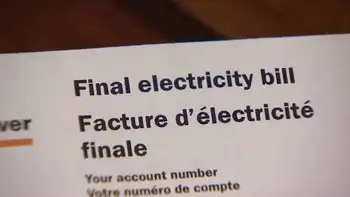
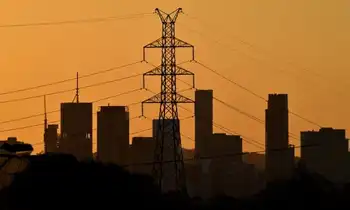
A key committee has postponed a vote on a bill designed to reverse California's disastrous experiment with electricity deregulation.

Sarah Reyes, chair of the California Assembly's Utilities and Commerce committee, opted to delay a vote on Senate Bill 888 until Thursday, saying members and legislative staff need more time to analyze the latest amendments to the measure. She told committee members a freshly amended version of the bill had been provided to her earlier in the day. Details of the amendments were not immediately available. The bill was authored by state Senator Joe Dunn who has said his goal is to end, not mend, energy deregulation in the state. Dunn led an investigation into price gouging during California's 2000-01 energy crisis. California in 1996 became one of the first states to pass legislation allowing residents to choose their power supplier in a bid to open the market to competition after decades of strict regulation. The measure backfired in 2000-2001, with electricity rates rising, the state suffering rolling blackouts and its largest utility filing for bankruptcy protection. Most of the state's residents can no longer choose their electricity provider although a few large industrial and commercial customers still receive power from independent suppliers rather than their local utility. Dunn's bill has proved controversial with the influential business lobby wanting to retain customer choice, at least for big commercial and industrial consumers. The bill has already cleared by the state Senate.

She told committee members a freshly amended version of the bill had been provided to her earlier in the day. Details of the amendments were not immediately available.

The bill was authored by state Senator Joe Dunn who has said his goal is to end, not mend, energy deregulation in the state. Dunn led an investigation into price gouging during California's 2000-01 energy crisis.

California in 1996 became one of the first states to pass legislation allowing residents to choose their power supplier in a bid to open the market to competition after decades of strict regulation.

The measure backfired in 2000-2001, with electricity rates rising, the state suffering rolling blackouts and its largest utility filing for bankruptcy protection.

Most of the state's residents can no longer choose their electricity provider although a few large industrial and commercial customers still receive power from independent suppliers rather than their local utility.

Dunn's bill has proved controversial with the influential business lobby wanting to retain customer choice, at least for big commercial and industrial consumers.

The bill has already cleared by the state Senate.

Related News
The gloves are off - Alberta suspends electricity purchase talks with B.C.

Alberta-BC Pipeline Dispute centers on Trans Mountain expansion, diluted bitumen shipments, federal approval, spill response capacity, and electricity trade, as Alberta suspends power talks and Ottawa insists the Kinder Morgan project proceeds in national interest.


Key Points

Dispute over Trans Mountain expansion, bitumen limits, and jurisdiction between Alberta, B.C., and Canada.

✅ Alberta suspends BC electricity talks as leverage

✅ Ottawa affirms federal approval and spill response

✅ BC plans advisory panel on diluted bitumen risks


Alberta Premier Rachel Notley says her government is suspending talks with British Columbia on the purchase of electricity from the western province.

It’s the first step in Alberta’s fight against the B.C. government’s proposal to obstruct the Kinder Morgan oil pipeline expansion project by banning increased shipments of diluted bitumen to the province’s coast.

Up to $500 million annually for B.C.’s coffers from electricity exports hangs in the balance, Notley said.

“We’re prepared to do what it takes to get this pipeline built — whatever it takes,” she told a news conference Thursday after speaking with Prime Minister Justin Trudeau on the phone.

Notley said she told Trudeau, who’s in Edmonton for a town-hall meeting, that the federal government needs to act decisively to end the dispute.

Speaking on Edmonton talk radio station CHED earlier in the day, Trudeau said the pipeline expansion is in the national interest and will go ahead, even as the federal government undertakes a study on electrification across sectors.

“That pipeline is going to get built,” Trudeau said. “We will stand by our decision. We will ensure that the Kinder Morgan pipeline gets built.”

B.C.’s environment minister has said his minority government plans to ban increased shipments until it can determine that shippers are prepared and able to properly clean up a spill, and, separately, has implemented an electricity rate freeze affecting consumers. He said he will establish an independent scientific advisory panel to study the issue.

The move infuriated Notley, who has accused B.C. of trying to change the rules after the federal government gave the project the green light. B.C. has the right to regulate how any spills would be cleaned up, but can’t dictate what flows through pipelines, she said.

Trudeau said Canada needs to get Alberta’s oil safely to markets other than the U.S. energy market today. He said the federal government did the research and has spent billions on spill response.

“The Kinder Morgan pipeline is not a danger to the B.C. coast,” he said.

Notley said she thanked Trudeau for his assurance that the project will go ahead, but the federal government has to do more to ensure the pipeline’s expansion.

“This is not an Alberta-B.C. issue. This is a Canada-B.C. issue,” she said. “This kind of uncertainty is bad for investment and bad for working people

“Enough is enough. We need to get these things built.”

B.C. Premier John Horgan said his government consulted Alberta and Ottawa about his province’s intentions, noting that Columbia River Treaty talks also shape regional electricity policy.

“I don’t see what the problem is,” Horgan said Thursday at a school opening north of Kelowna, B.C. “It’s within our jurisdiction to put in place regulations to protect the public interest.

“That’s what we are doing.”

He downplayed any possibility of court action or sanctions by Alberta.

“There’s nothing to take to court,” Horgan said. “We are consulting with the people of B.C. It’s way too premature to talk about those sorts of issues.

“Sabre-rattling doesn’t get you very far.”

Speaking in Ottawa, Natural Resources Minister Jim Carr wouldn’t say what Canada might do if British Columbia implements its regulation.

“That’s speculative,” said Carr.

He noted at this point, B.C. has just pledged to consult. He said the federal government heard from thousands of people before the pipeline was approved.

“That’s what they have announced — an intention to consult. We have already consulted.”

B.C.’s proposal creates more uncertainty for Kinder Morgan’s already-delayed Trans Mountain expansion project that would nearly triple the capacity of its pipeline system to 890,000 barrels a day.


Related News

View more

Old meters giving away free electricity to thousands of N.B. households

NB Power Smart Meters will replace aging analog meters, boosting billing accuracy, reducing leakage, and modernizing distribution as the EUB considers a $92 million rollout of 360,000 advanced meters for residential and commercial customers.


Key Points

NB Power Smart Meters replace analog meters, improving billing accuracy and reducing leakage in the electricity network.

✅ EUB reviewing $92M plan for 360,000 advanced meters

✅ Replaces 98,000 analog units; curbs unbilled kWh

✅ Improves billing accuracy and reduces system leakage


Home and business owners with old power meters in New Brunswick have been getting the equivalent of up to 10 days worth of electricity a year or more for free, a multi million dollar perk that will end quickly if the Energy and Utilities Board approves the adoption of smart meters, a move that in other provinces has prompted refusal fees for some holdouts.

Last week the EUB began deliberations over whether to allow NB Power to purchase and install 360,000 new generation smart meters for its residential and commercial customers as part of a $92 million upgrade of its distribution system, even as regulators elsewhere approve major rate changes that affect customer bills.

If approved, that will spell the end to about 98,000 aging electromagnetic or analog meters still used by about one quarter of NB Power customers.  Those are the kind with a horizontal spinning silver disc and clock-face style dials that record consumption 

NB Power lawyer John Furey told the energy and utilities board last week that the utility suspects it loses several million dollars a year to electricity consumed by customers that is not properly recorded by their old meters. It was a central issue in Furey's argument for smart meters amid broader debates over industrial subsidies and debt. (Roger Cosman/CBC)
The analog units, some more than 50 years old and installed back when the late Louis Robichaud and Richard Hatfield were premiers in the 1960's and 1970's - are suspected of doling out millions of kilowatt hours of free power to customers by failing to register all of the current that moves through them.   

"Over time, analog meters slow down and they register lower consumption of electricity than is actually occurring," said NB Power lawyer John Furey last week about the widespread freeloading of power in New Brunswick caused by the old meters.

3 per cent missed
A 2010 report by the independent non-profit Electric Power Research Institute in Palo Alto, California and entered into evidence during NB Power's smart meter hearing said old spinning disc meters generally degrade over time and after 20 years typically fail to register nearly 3 per cent of the power that flows through them.

The average age of analog meters in New Brunswick is much older than that - 31 years - and more than 11,000 of the units are over the age of 40.

"Worn gears, corrosion, moisture, dust, and insects can all cause drag and result in an electromagnetic meter that does not capture the full consumption of the premises," said the report.

The sudden correction to full accounting and billing could naturally surprise these homeowners and even trigger consumer backlash in some cases

- Electric Power Research Institute report
About 94,000 NB residential customers and 3,900 commercial customers have an old meter, according to NB Power records. The group would receive about 40 million kilowatt hours of electricity for free this year  ($5.1 million worth including HST)  if the average unit failed to register 2 percent of the electricity flowing through it, while elsewhere some customers are receiving lump-sum credits on electricity bills.  

That is about $41 in free power for the average residential customer and $322 for the average business.

But, according to the research, there would also be hundreds of customers with meters that have slowed considerably more than the average with 0.3 percent - or close to 300 in NB Power's case -  not counting between 10 and 20 percent of the electricity customers are using. 

NB Power senior Vice President Lori Clark told the EUB stopping the freeloading of power in New Brunswick caused by older meters is in everyone's interest. (Roger Cosman/CBC)
That's potentially $400 in free electricity in a year for a residential customer with average consumption.

"While the average meter might be only slightly slow a few could be significantly so," said the report.

"The sudden correction to full accounting and billing could naturally surprise these homeowners and result in questioning of a new meter, as seen in a shocking $666 bill reported by a Nova Scotia senior." 

The report made the point analog meters can also run fast but called that "less common" meaning that if the EUB approves smart meters, tens of thousands of customers who lose an old meter to a new accurate model will experience higher bills.

'Leakage' reduction
NB Power acknowledges it does not know precisely how much power its older meters give away but said whether it is a little or a lot, ending the freebies is to everyone's benefit. 

"It reduces our inefficiencies, reduces our leakage that we have in the system, so that we are  picking up those unbilled kilowatt hours," said NB Power senior vice president Lori Clark about ending the free power many customers unknowingly enjoy.

Smart meter critics change tone on NB Power's new business case
NB Power's smart meter plan gets major boost with critical endorsements
"Customers benefit from reduced inefficiencies in our system. They benefit from reduced leakage in our system and the fact that those kilowatt hours are being properly billed to the customers that have consumed the kilowatt hours."   

NB Power hopes to win approval of its plan to acquire smart meters by this spring to allow installation beginning in mid 2021, even as some utilities elsewhere have backed away from smart home network projects.


Related News

View more

Can Europe's atomic reactors bridge the gap to an emissions-free future?

EU Nuclear Reactor Life Extension focuses on energy security, carbon-free electricity, and safety as ageing reactors face gas shortages, high power prices, and regulatory approvals across the UK and EU amid winter supply risks.


Key Points

EU Nuclear Reactor Life Extension is the policy to keep ageing reactors safely generating affordable, low-carbon power.

✅ Extends reactor operation via inspections and component upgrades

✅ Addresses gas shortages, price volatility, and winter supply risks

✅ Requires national regulator approval and cost-benefit analysis


Shaken by the loss of Russian natural gas since the invasion of Ukraine, European countries are questioning whether they can extend the lives of their ageing nuclear reactors to maintain the supply of affordable, carbon-free electricity needed for net-zero across the bloc — but national regulators, companies and governments disagree on how long the atomic plants can be safely kept running.

Europe avoided large-scale blackouts last winter despite losing its largest supplier of natural gas, and as Germany temporarily extended nuclear operations to bolster stability, but industry is still grappling with high electricity prices and concerns about supply.

Given warnings from the International Energy Agency that the coming winters will be particularly at risk from a global gas shortage, governments have turned their attention to another major energy source — even as some officials argue nuclear would do little to solve the gas issue in the near term — that would exacerbate the problem if it too is disrupted: Europe’s ageing fleet of nuclear power plants.

Nuclear accounts for nearly 10% of energy consumed in the European Union, with transport, industry, heating and cooling traditionally relying on coal, oil and natural gas.

Historically nuclear has provided about a quarter of EU electricity and 15% of British power, even as Germany shut down its last three nuclear plants recently, underscoring diverging national paths.

Taken together, the UK and EU have 109 nuclear reactors running, even as Europe is losing nuclear power in several markets, most of which were built in the 1970s and 1980s and were commissioned to last about 30 years.

That means 95 of those reactors — nearly 90% of the fleet — have passed or are nearing the end of their original lifespan, igniting debates over how long they can safely continue to be granted operating extensions, with some arguing it remains a needed nuclear option for climate goals despite age-related concerns.

Regulations differ across borders, with some countries such as Germany turning its back on nuclear despite an ongoing energy crisis, but life extension discussions are usually a once-a-decade affair involving physical inspections, cost/benefit estimates for replacing major worn-out parts, legislative amendments, and approval from the national nuclear safety authority.


Related News

View more

Tens of Thousands Left Without Power as 'Bomb Cyclone' Strikes B.C. Coast

British Columbia Bomb Cyclone disrupts coastal travel with severe wind gusts, heavy rainfall, widespread power outages, ferry cancellations, flooding, and landslides across Vancouver Island, straining emergency services and transport networks during the early holiday season.


Key Points

A rapidly intensifying storm hitting B.C.'s coast, causing damaging winds, heavy rain, power outages, and ferry delays.

✅ Wind gusts over 100 km/h and well above normal rainfall

✅ Power outages, flooded roads, and downed trees across the coast

✅ Ferry cancellations isolating communities and delaying supplies


A powerful storm, dubbed a "bomb cyclone," recently struck the British Columbia coast, wreaking havoc across the region. This intense weather system led to widespread disruptions, including power outages affecting tens of thousands of residents and the cancellation of ferry services, crucial for travel between coastal communities. The bomb cyclone is characterized by a rapid drop in pressure, resulting in extremely strong winds and heavy rainfall. These conditions caused significant damage, particularly along the coast and on Vancouver Island, where flooding and landslides led to fallen trees blocking roads, further complicating recovery efforts.

The storm's ferocity was especially felt in coastal areas, where wind gusts reached over 100 km/h, and rainfall totals were well above normal. The Vancouver region, already susceptible to storms during the winter months, faced dangerous conditions as power lines were downed, and transportation networks struggled to stay operational. Emergency services were stretched thin, responding to multiple weather-related incidents, including fallen trees, damaged infrastructure, and local flooding.

The ferry cancellations further isolated communities, especially those dependent on these services for essential supplies and travel. With many ferry routes out of service, residents had to rely on alternative transportation methods, which were often limited. The storm's timing, close to the start of the holiday season, also created additional challenges for those trying to make travel arrangements for family visits and other festive activities.

As cleanup efforts got underway, authorities warned that recovery would take time, particularly due to the volume of downed trees and debris. Crews worked to restore power and clear roads, while local governments urged people to stay indoors and avoid unnecessary travel, and BC Hydro's winter payment plan provided billing relief during outages. For those without power, the storm brought cold temperatures, and record electricity demand in 2021 showed how cold snaps strain the grid, making it crucial for families to find warmth and supplies.

In the aftermath of the bomb cyclone, experts highlighted the increasing frequency of such extreme weather events, driven in part by climate change and prolonged drought across the province. With the potential for more intense storms in the future, the region must be better prepared for these rapid weather shifts. Authorities are now focused on bolstering infrastructure to withstand such events, as all-time high demand has strained the grid recently, and improving early warning systems to give communities more time to prepare.

In the coming weeks, as British Columbia continues to recover, lessons learned from this storm will inform future responses to similar weather systems. For now, residents are advised to remain vigilant and prepared for any additional weather challenges, with recent blizzard and extreme cold in Alberta illustrating how conditions can deteriorate quickly.


Related News

View more

Invest in Hydropower to Tackle Coronavirus and Climate Crisis Impacts

Hydropower Covid-19 Resilience highlights clean, reliable energy and flexible grid services, with pumped storage, automation, and affordability supporting climate action, decarbonization, and recovery through sustainable infrastructure, policy incentives, and capacity upgrades.


Key Points

Hydropower Covid-19 Resilience is the sector's ability to ensure clean, reliable, flexible power during crises.

✅ Record 4,306 TWh in 2019, avoiding 80-100 Mt CO2e emissions.

✅ 1,308 GW installed; 15.6 GW added; flexibility and storage in demand.

✅ Policy, tax incentives, and fast-track approvals to spur projects.


The Covid-19 pandemic has underlined hydropower's resilience and critical role in delivering clean, reliable and affordable energy, especially in times of crisis, as highlighted by IAEA lessons for low-carbon electricity. This is the conclusion of two new reports published by the International Hydropower Association (IHA).

The 2020 Hydropower Status Report presents latest worldwide installed capacity and generation data, showcasing the sector's contribution to global carbon reduction efforts, with low-emissions sources projected to cover almost all demand increases in the next three years. It is published alongside a Covid-19 policy paper featuring recommendations for governments, financial institutions and industry to respond to the current health and economic crisis.

"Preventing an emergency is far better than responding to one," says Roger Gill, President of IHA, highlighting the need to incentivise investments in renewable infrastructure, a view echoed by Fatih Birol during the crisis. "The events of the past few months must be a catalyst for stronger climate action, including greater development of sustainable hydropower."

Now in its seventh edition, the Hydropower Status Report shows electricity generation hit a record 4,306 terawatt hours (TWh) in 2019, the single greatest contribution from a renewable energy source in history, aligning with the outlook that renewables to surpass coal by 2025.

The annual rise of 2.5 per cent (106 TWh) in hydroelectric generation - equivalent to the entire electricity consumption of Pakistan - helped to avoid an estimated additional 80-100 million metric tonnes of greenhouse gases being emitted last year.

The report also highlights:

* Global hydropower installed capacity reached 1,308 gigawatts (GW) in 2019, as 50 countries completed greenfield and upgrade projects, including pumped storage and repowering old dams in some regions.

* A total of 15.6 GW in installed capacity was added in 2019, down on the 21.8 GW recorded in 2018. This represents a rise of 1.2 per cent, which is below the estimated 2.0 per cent growth rate required for the world to meet Paris Agreement carbon reduction targets.

* India has overtaken Japan as the fifth largest world hydropower producer with its total installed capacity now standing at over 50 GW. The countries with the highest increases in were Brazil (4.92 GW), China (4.17 GW) and Laos (1.89 GW).

* Hydropower's flexibility services have been in high demand during the Covid-19 crisis, even as global demand dipped 15% globally, while plant operations have been less affected due to the degree of automation in modern facilities.

* Hydropower developments have not been immune to economic impacts however, with the industry facing widespread uncertainty and liquidity shortages which have put financing and refinancing of some projects at risk.

In a companion policy paper, IHA sets out the immediate impacts of the crisis on the sector, noting how European responses to Covid-19 have accelerated the electricity system transition, as well as recommendations to assist governments and financial institutions and enhance hydropower's contribution to the recovery.

The recommendations include:

  • Increasing the ambition of renewable energy and climate change targets which incorporate the role of sustainable hydropower development.
  • Supporting sustainable hydropower through introducing appropriate financial measures such as tax incentives to ensure viable and shovel-ready projects can commence.
  • Fast-tracking planning approvals to ensure the development and modernisation of hydropower projects can commence as soon as possible, in line with internationally recognised sustainability guidelines.
  • Safeguarding investment by extending deadlines for concession agreements and other awarded projects.
  • Given the increasing need for long-duration energy storage such as pumped storage, working with regulators and system operators to develop appropriate compensation mechanisms for hydropower's flexibility services.


Related News

View more

Global Energy War Escalates: Price Hikes and Instability

Russia-Ukraine Energy War disrupts infrastructure, oil, gas, and electricity, triggering supply shocks, price spikes, and inflation. Global markets face volatility, import risks, and cybersecurity threats, underscoring energy security, grid resilience, and diversified supply.


Key Points

It is Russia's strategic targeting of Ukraine's energy system to disrupt supplies, raise prices, and hit global markets.

✅ Attacks weaponize energy to strain Ukraine and allies

✅ Supply shocks risk oil, gas, and electricity price spikes

✅ Urgent need for cybersecurity, grid resilience, diversification


Russia's targeting of Ukraine's energy infrastructure has unleashed an "energy war" that could lead to widespread price increases, supply disruptions, and ripple effects throughout the global energy market, felt across the continent, with warnings of Europe's energy nightmare taking shape.

This highlights the unprecedented scale and severity of the attacks on Ukrainian energy infrastructure. These attacks have disrupted power supplies, prompting increased electricity imports to keep the lights on, hindered oil and gas production, and damaged refineries, impacting Ukraine and the broader global energy system.


Energy as a Weapon

Experts claim that Russia's deliberate attacks on Ukraine's energy infrastructure represent a strategic escalation, amid energy ceasefire violations alleged by both sides, demonstrating the Kremlin's willingness to weaponize energy as part of its war effort. By crippling Ukraine's energy system, Russia aims to destabilize the country, inflict suffering on civilians, and undermine Western support for Ukraine.


Impacts on Global Oil and Gas Markets

The ongoing attacks on Ukraine's energy infrastructure could significantly impact global oil and gas markets, leading to supply shortages and dramatic price increases, even as European gas prices briefly returned to pre-war levels earlier this year, underscoring extreme volatility. Ukraine's oil and gas production, while not massive in global terms, is still significant, and its disruption feeds into existing anxieties about global energy supplies already affected by the war.


Ripple Effects Beyond Ukraine

The impacts of the "energy war" won't be limited to Ukraine or its immediate neighbours. Price increases for oil, gas, and electricity are expected worldwide, further fueling inflation and exacerbating the global cost of living crisis.  Additionally, supply disruptions could disproportionately affect developing nations and regions heavily dependent on energy imports, making targeted energy security support to Ukraine and other vulnerable importers vital.


Vulnerability of Energy Infrastructure

The attacks on Ukraine highlight the vulnerability of critical energy infrastructure worldwide, as the country prepares for winter under persistent threats. The potential for other state or non-state actors to use similar tactics raises concerns about security and long-term stability in the global energy sector.


Strengthening Resilience

Experts emphasize the urgent need for global cooperation in strengthening the resilience of energy infrastructure. Investments in cybersecurity, diverse energy sources, and decentralized grids are crucial for mitigating the risks of future attacks, with some arguing that stepping away from fossil fuels would improve US energy security over time. International cooperation will be key in identifying vulnerable areas and providing aid to nations whose infrastructure is under threat.


The Unpredictable Future of Energy

The "energy war" unleashed by Russia has injected a new level of uncertainty into the global energy market. In addition to short-term price fluctuations and supply issues, the conflict could accelerate the long-term transition towards renewable energy sources and reshape how nations approach energy security.


Related News

View more

Sign Up for Electricity Forum’s Newsletter

Stay informed with our FREE Newsletter — get the latest news, breakthrough technologies, and expert insights, delivered straight to your inbox.

Electricity Today T&D Magazine Subscribe for FREE

Stay informed with the latest T&D policies and technologies.
  • Timely insights from industry experts
  • Practical solutions T&D engineers
  • Free access to every issue

Download the 2025 Electrical Training Catalog

Explore 50+ live, expert-led electrical training courses –

  • Interactive
  • Flexible
  • CEU-cerified