Calpine sees power market upturn in 2005

By


Arc Flash Training CSA Z462 - Electrical Safety Essentials

Our customized live online or in‑person group training can be delivered to your staff at your location.

  • Live Online
  • 6 hours Instructor-led
  • Group Training Available
Regular Price:
$249
Coupon Price:
$199
Reserve Your Seat Today
Merchant power generator Calpine Corp. predicted recentley that U.S. prices for electricity would probably remain low this year and next but could rise in 2005 and beyond.

"We are seeing a tremendous shift in the marketplace of people asking for long-term contracts and bi-lateral contracts...and it's all across the country," chief financial officer Bob Kelly said, noting buyers were interested in securing power for 2005 and beyond.

Kelly told a Deutsche Bank Securities Inc. Electric Power Conference in New York that 2003 and 2004 would going to be "tough spark spread years" but the market should turn pretty quickly in 2005 and 2006.

Calpine generates power mainly through a fleet of gas-fired power plants. The spark spread is the key measure of the profitability of converting gas into electricity.

"I don't know why people want that volume on long-term contracts if they see the trough continuing for a longer period of time," Kelly said in a webcast monitored here.

"I think it (the power market) might turn a lot quicker than what you have heard over the last couple of days (at the conference)...I think the prices might come up pretty quickly," Kelly added.

Calpine, like many other power producers, has faced major financing challenges during the last couple of years, hurt by a recession-linked drop in electricity prices and demand. It has been forced to slash capital expenditure and seek additional financing to ease liquidity concerns.

Kelly detailed plans to restructure the company's finances, including last week's announcement that it would issue $800 million in notes to be secured by cash flow from two power contracts.

"I'm feeling real bullish on the liquidity events," Kelly told attendees.

Calpine's stock has more than doubled in price since mid-March, partly boosted by diminished concerns about the company's liquidity.

Related News
Nova Scotia Premier calls on regulators to reject 14% electricity rate hike agreement

Nova Scotia Power Rate Increase Settlement faces UARB scrutiny as regulators weigh electricity rates, fuel costs, storm rider provisions, Bill 212 limits, and Muskrat Falls impacts on ratepayers and affordability for residential and industrial customers.


Key Points

A deal proposing 13.8% electricity hikes for 2023-2024, before the UARB, covering fuel costs, a storm rider, and Bill 212.

✅ UARB review may set different rates than the settlement

✅ Fuel cost prepayment and hedging incentives questioned

✅ Storm rider shifts climate risk onto ratepayers


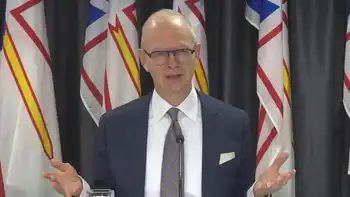
Nova Scotia Premier Tim Houston is calling on provincial regulators to reject a settlement agreement between Nova Scotia Power and customer groups that would see electricity rates rise by nearly 14% electricity rate hike over the next two years.

"It is our shared responsibility to protect ratepayers and I can't state strongly enough how concerned I am that the agreement before you does not do that," Houston wrote in a letter to the Nova Scotia Utility and Review Board late Monday.

Houston urged the three-member panel to "set the agreement aside and reach its own conclusion on the aforementioned application."

"I do not believe, based on what I know, that the proposed agreement is in the best interest of ratepayers," he said.

The letter does not spell out what his Progressive Conservative government would do if the board accepts the settlement reached last week between Nova Scotia Power and lawyers representing residential, small business and large industrial customer classes.

Other groups also endorsed the deal, although Nova Scotia Power's biggest customer — Port Hawkesbury Paper — did not sign on.

'We're protecting the ratepayers'
Natural Resources Minister Tory Rushton said the province was not part of the negotiations leading up to the settlement.

"As a government or department we had no intel on those conversations that were taking place," he said Tuesday. "So, we saw the information the same as the public did late last week, and right now we're protecting the ratepayers of Nova Scotia, even though the province cannot order Nova Scotia Power to lower rates under current law. We want to make sure that that voice is still heard at the UARB level."

Rushton said he didn't want to presuppose what the UARB will say.

"But I think the premier's been very loud and clear and I believe I have been, too. The ratepayers are at the top of our mind. We have different tools at our [disposal] and we'll certainly do what we can and need to [do] to protect those ratepayers."


The settlement agreement
If approved by regulators, rates would rise by 6.9 per cent in 2023 and 6.9 per cent in 2024 — almost the same amount on the table when hearings before the review board ended in September.

The Houston government later intervened with legislation, known as Bill 212, that capped rates to cover non-fuel costs by 1.8 per cent. It did not cap rates to cover fuel costs or energy efficiency programs.

In a statement announcing the agreement, Nova Scotia Power president Peter Gregg claimed the settlement adhered "to the direction provided by the provincial government through Bill 212."

Consumer advocate Bill Mahody, representing residential customers, told CBC News the proposed 13.8 per cent increase was "a reasonable rate increase given the revenue requirement that was testified to at the hearing."

Settlement 'remarkably' similar to NSP application
The premier disagrees, noting that the settlement and rate application that triggered the rate cap are "remarkably consistent."

He objects to the increased amount of fuel costs rolled into rates next year before the annual true up of actual fuel costs, which are automatically passed on to ratepayers.

"If Nova Scotia Power is effectively paid in advance, what motive do they have to hedge and mitigate the adjustment eventually required," Houston asked in his letter.

He also objected to the inclusion of a storm rider in rates to cover extreme weather, which he said pushed the risk of climate change on to ratepayers.

Premier second-guesses Muskrat Falls approval
Houston also second-guessed the board for approving Nova Scotia Power's participation in the Muskrat Falls hydro project in Labrador.

"The fact that Nova Scotians have paid over $500 million for this project with minimal benefit, and no one has been held accountable, is wrong," he said. "It was this board of the day that approved the contracts and entered the final project into rates."

Ratepayers are committed to paying $1.7 billion for the Maritime Link to bring the green source of electricity into the province, while rate mitigation talks in Newfoundland lack public details for their customers.

Although the Maritime Link was built on time and on budget by an affiliated company, only a fraction of Muskrat Falls hydro has been delivered because of ongoing problems in Newfoundland, including an 18% electricity rate hike deemed unacceptable by the province's consumer advocate.

"I find it remarkable that those contracts did not include different risk sharing mechanisms; they should have had provisions for issues in oversight of project management. Nevertheless, it was approved, and is causing significant harm to ratepayers in the form of increased rates."

Houston notes that because of non-delivery from Muskrat Falls, Nova Scotia Power has been forced to buy much more expensive coal to burn to generate electricity.


Opposition reaction
Opposition parties in Nova Scotia reacted to Houston's letter.

NDP Leader Claudia Chender dismissed it as bluster.

"It exposes his Bill 212 as not really helping Nova Scotians in the way that he said it would," she said. "Nothing in the settlement agreement contravenes that bill. But it seems that he's upset that he's been found out. And so here we are with another intervention in an independent regulatory body."

Liberal Leader Zach Churchill said the government should intervene to help ratepayers directly.

"We just think that it makes more sense to do that directly by supporting ratepayers through heating assistance, lump-sum electricity credits, rebate programs and expanding the eligibility for that or to provide funding directly to ratepayers instead of intervening in the energy market in this way," he said.

The premier's office said that no one was available when asked about an interview on Tuesday.

"The letter speaks for itself," the office responded.

Nova Scotia Power issued a statement Tuesday. It did not directly address Houston's claims.

"The settlement agreement is now with the NS Utility and Review Board," the utility said.

"The UARB process is designed to ensure customers are represented with strong advocates and independent oversight. The UARB will determine whether the settlement results in just and reasonable rates and is in the public interest."


Related News

View more

There's a Russia-Sized Mystery in China's Electricity Sector

China Power Demand-Emissions Gap highlights surging grid demand outpacing renewables, with coal filling shortages despite record solar, wind, EV charging, and hydrogen growth, threatening decarbonization targets and net-zero pathways through 2030.


Key Points

China's power demand outpaces renewables, keeping coal dominant and raising emissions risk through the 2020s.

✅ Record solar and wind still lag fast grid demand growth

✅ Coal fills gaps as EV charging and hydrogen loads rise

✅ Forecasts diverge: CEC bullish vs IEA, BNEF conservative


Here’s a new obstacle that could prevent the world finally turning the corner on climate change: Imagine that over the coming decade a whole new economy the size of Russia were to pop up out of nowhere. With the world’s fourth-largest electricity sector and largest burden of power plant emissions after China, the U.S. and India, this new economy on its own would be enough to throw out efforts to halt global warming — especially if it keeps on growing through the 2030s.

That’s the risk inherent in China’s seemingly insatiable appetite for grid power, as surging electricity demand is putting systems under strain worldwide.

From the cracking pace of renewable build-out last year, you might think the country had broken the back of its carbon addiction. A record 55 gigawatts of solar power and 48 gigawatts of wind were connected — comparable to installing the generation capacity of Mexico in less than 12 months. This year will see an even faster pace, with 93 GW of solar and 50 GW of wind added, according to a report last week from the China Electricity Council, an industry association.

That progress could in theory see the country’s power sector emissions peak within months, rather than the late-2020s date the government has hinted at. Combined with a smaller quantity of hydro and nuclear, low-emissions sources will probably add about 310 terawatt-hours to zero-carbon generation this year. That 3.8% increase would be sufficient to power the U.K.

Countries that have reached China’s levels of per-capita electricity consumption (already on a par with most of Europe) typically see growth rates at less than half that level, even as global power demand has surged past pre-pandemic levels in recent years. Grid supply could grow at a faster pace than Brazil, Iran, South Korea or Thailand managed over the past decade without adding a ton of additional carbon to the atmosphere.

There’s a problem with that picture, however. If electricity demand grows at an even more headlong pace, there simply won’t be enough renewables to supply the grid. Fossil fuels, overwhelmingly coal, will fill the gap, a reminder of the iron law of climate dynamics in energy transitions.

Such an outcome looks distinctly possible. Electricity consumption in 2021 grew at an extraordinary rate of 10%, and will increase again by between 5% and 6% this year, according to the CEC. That suggests the country is on pace to match the CEC’s forecasts of bullish grid demand over the coming decade, with generation hitting 11,300 terawatt-hours in 2030. External analysts, such as the International Energy Agency and BloombergNEF, envisage a more modest growth to around 10,000 TWh. 

The difference between those two outlooks is vast — equivalent to all the electricity produced by Russia or Japan. If the CEC is right and the IEA and BloombergNEF are wrong, even the furious rate of renewable installations we’re seeing now won’t be enough to rein in China’s power-sector emissions.

Who’s correct? On one hand, it’s fair to say that power planners usually err on the side of overestimation. If your forecast for electricity demand is too high, state-owned generators will be less profitable than they otherwise would have been — but if it’s too low, you’ll see power cuts and shutdowns like China witnessed last autumn, with resulting power woes affecting supply chains beyond its borders.

On the other hand, the decarbonization of China’s economy itself should drive electricity demand well above what we’ve seen in the past, with some projections such as electricity meeting 60% of energy use by 2060 pointing to a profound shift. Some 3.3 million electric vehicles were sold in 2021 and BloombergNEF estimates a further 5.7 million will be bought in 2022. Every million EVs will likely add in the region of 2 TWh of load to the grid. Those sums quickly mounts up in a country where electric drivetrains are taking over a market that shifts more than 25 million new cars a year.

Decarbonizing industry, a key element on China’s road to zero emissions, could also change the picture. The IEA sees the country building 25 GW of electolysers to produce hydrogen by 2030, enough to consume some 200 TWh on their own if run close to full-time.

That’s still not enough to justify the scale of demand being forecast, though. China is already one of the least efficient countries in the world when it comes to translating energy into economic growth, and despite official pressure on the most wasteful, so called “dual-high” industries such as steel, oil refining, glass and cement, its targets for more thrifty energy usage remain pedestrian.

The countries that have decarbonized fastest are those, such as Germany, the U.K and the U.S., where Americans are using less electricity, that have seen power demand plateau or even decline, giving new renewable power a chance to swap out fossil-fired generators without chasing an ever-increasing burden on the grid. China’s inability to do this as its population peaks and energy consumption hits developed-country levels isn’t a sign of strength.

Instead, it’s a sign of a country that’s chronically unable to make the transition away from polluting heavy industry and toward the common prosperity and ecological civilization that its president keeps promising. Until China reins in that credit-fueled development model, the risks to its economy and the global climate will only increase.


Related News

View more

Ireland: We are the global leaders in taking renewables onto the grid

Ireland 65% Renewable Grid Capability showcases world leading integration of intermittent wind and solar, smart grid flexibility, EU-SysFlex learnings, and the Celtic Interconnector to enhance stability, exports, and energy security across the European grid.


Key Points

Ireland can run its isolated power system with 65% variable wind and solar, informing EU grid integration and scaling.

✅ 65% system non-synchronous penetration on an isolated grid

✅ EU-SysFlex roadmap supports large-scale renewables integration

✅ Celtic Interconnector adds 700MW capacity and stability


Ireland is now able to cope with 65% of its electricity coming from intermittent electricity sources like wind and solar, as highlighted by Ireland's green electricity outlook today – an expertise Energy Minister Denish Naugthen believes can be replicated on a larger scale as Europe moves towards 50% renewable power by 2030.

Denis Naughten is an Irish politician who serves as Minister for Communications, Climate Action and Environment since May 2016.

Naughten spoke to editor Frédéric Simon on the sidelines of a EURACTIV event in the European  Parliament to mark the launch of EU-SysFlex, an EU-funded project, which aims to create a long-term roadmap for the large-scale integration of renewable energy on electricity grids.

What is the reason for your presence in Brussels today and the main message that you came to deliver?

The reason that I’m here today is that we’re going to share the knowledge what we have developed in Ireland, right across Europe. We are now the global leaders in taking variable renewable electricity like wind and solar onto our grid.

We can take a 65% loading on to the grid today – there is no other isolated grid in the world that can do that. We’re going to get up to 75% by 2020. This is a huge technical challenge for any electricity grid and it’s going to be a problem that is going to grow and grow across Europe, even as Europe's electricity demand rises in the coming years, as we move to 50% renewables onto our grid by 2030.

And our knowledge and understanding can be used to help solve the problems right across Europe. And the sharing of technology can mean that we can make our own grid in Ireland far more robust.

What is the contribution of Ireland when it comes to the debate which is currently taking place in Europe about raising the ambition on renewable energy and make the grid fit for that? What are the main milestones that you see looking ahead for Europe and Ireland?

It is a challenge for Europe to do this, but we’ve done it Ireland. We have been able to take a 65% loading of wind power on our grid, with Irish wind generation hitting records recently, so we can replicate that across Europe.

Yes it is about a much larger scale and yes, we need to work collaboratively together, reflecting common goals for electricity networks worldwide – not just in dealing with the technical solutions that we have in Ireland at the fore of this technology, but also replicating them on a larger scale across Europe.

And I believe we can do that, I believe we can use the learnings that we have developed in Ireland and amplify those to deal with far bigger challenges that we have on the European electricity grid.

Trialogue talks have started at European level about the reform of the electricity market. There is talk about decentralised energy generation coming from small-scale producers. Do you see support from all the member states in doing that? And how do you see the challenges ahead on a political level to get everyone on board on such a vision?

I don’t believe there is a political problem here in relation to this. I think there is unanimity across Europe that we need to support consumers in producing electricity for self-consumption and to be able to either store or put that back into the grid.

The issues here are more technical in nature. And how you support a grid to do that. And who actually pays for that. Ireland is very much a microcosm of the pan-European grid and how we can deal with those challenges.

What we’re doing at the moment in Ireland is looking at a pilot scheme to support consumers to generate their own electricity to meet their own needs and to be able to store that on site.

I think in the years to come a lot of that will be actually done with more battery storage in the form of electric vehicles and people would be able to transport that energy from one location to another as and when it’s needed. In the short term, we’re looking at some novel solutions to support consumers producing their own electricity and meeting their own needs.

So I think this is complex from a technical point of view at the moment, I don’t think there is an unwillingness from a political perspective to do it, and I think working with this particular initiative and other initiatives across Europe, we can crack those technical challenges.

To conclude, last year, the European Commission allocated €4 million to a project to link up the Irish electricity grid to France. How is that going to benefit Ireland? And is that related to worries that you may have over Brexit?

The plan, which is called the Celtic Interconnector, is to link France with the Irish electricity grid. It’s going to have a capacity of about 700MW. It allows us to provide additional stability on our grid and enables us to take more renewables onto the grid. It also allows us to export renewable electricity onto the main European grid as well, and provide stability to the French network.

So it’s a benefit to both individual networks as well as allowing far more renewables onto the grid. We’ve been working quite closely with RTE in France and with both regulators. We’re hoping to get the support of the European Commission to move it now from the design stage onto the construction stage. And I understand discussions are ongoing with the Commission at present with regard to that.

And that is going to diversify potential sources of electricity coming in for Ireland in a situation which is pretty uncertain because of Brexit, correct?

Well, I don’t think there is uncertainty because of Brexit in that we have agreements with the United Kingdom, we’re still going to be part of the broader energy family in relation to back-and-forth supply across the Irish Sea, with grid reinforcements in Scotland underscoring reliability needs.  But I think it is important in terms of meeting the 15% interconnectivity that the EU has set in relation to electricity.

And also in relation of providing us with an alternative support in relation to electricity supply outside of Britain. Because Britain is now leaving the European Union and I think this is important from a political point of view, and from a broader energy security point of view. But we don’t see it in the short term as causing threats in relation to security of supply.


Related News

View more

Ontario prepares to extend disconnect moratoriums for residential electricity customers

Ontario Electricity Relief outlines an extended disconnect moratorium, potential time-of-use price changes, and Ontario Energy Board oversight to support residential customers facing COVID-19 hardship and bill payment challenges during the emergency in Ontario.


Key Points

Plan to extend disconnect moratorium and weigh time-of-use price relief for residential customers during COVID-19.

✅ Extends winter disconnect ban by 3 months

✅ Considers time-of-use price adjustments

✅ Requires Ontario Energy Board approval


The Ontario government is preparing to announce electricity relief for residential electricity users struggling because of the COVID-19 emergency, according to sources.

Sources close to those discussions say a decision has been made to lengthen the existing five-month disconnect moratorium by an additional three months.

Separately, Hydro One's relief fund has offered support to its customers during the pandemic.

News releases about the moratorium extension are currently being drafted and are expected to be released shortly, as the pandemic has reduced electricity usage across Ontario.

Electricity utilities in Ontario are currently prohibited from disconnecting residential customers for non-payment during the winter ban period from November 15 to April 30.

The province is also looking at providing further relief by adjusting time-of-use prices, such as off-peak electricity rates, which are designed to encourage shifting of energy use away from periods of high total consumption to periods of low demand.

For businesses, the province has provided stable electricity pricing to support industrial and commercial operations.

But that would require Ontario Energy Board approval and no decision has been finalized, our sources advise.


Related News

View more

Europe's Renewables Are Crowding Out Gas as Coal Phase-Out Slows

EU Renewable Energy Shift is cutting gas dependence as wind and solar expand, reshaping Europe's power mix, curbing emissions, and pressuring coal use amid a supply crisis and rising natural gas prices.


Key Points

An EU trend where wind and solar growth reduce gas reliance, curb coal, and lower power-sector emissions.

✅ Wind and solar displace gas in EU power mix

✅ Coal use rises as gas prices surge

✅ Emissions fall, but not fast enough for 1.5 C target


The European Union’s renewable energy sources are helping reduce its dependence on natural gas, under the current European electricity pricing framework, that’s still costing the region dearly.

Renewables growth has helped reduce the EU’s dependence on gas, as wind and solar outpaced gas across the bloc last year, which has soared in price since the middle of last year as the region grapples with a supply crisis that’s dealt blows to industries as well as ordinary consumers’ pockets. More than half of new renewable generation since 2019 has replaced gas power, according to a study by London-based climate think tank Ember, with the rest replacing mainly nuclear and coal sources.

“These are moments and paradigm shifts when governments and businesses start taking this much more seriously,” said Charles Moore, the lead author on the study, amid Covid-19 responses accelerating the transition across Europe. “The alternatives are available, they are cheaper, and they are likely to get even cheaper and more competitive. Renewables are now an opportunity, not a cost.”

The high price of gas relative to coal has meant utilities are leaning more on coal as a back-up for renewable generation, as stunted hydro and nuclear output has constrained low-carbon alternatives in parts of Europe, which risks the trajectory of Europe’s phase-out of the dirtiest fossil fuel. Last year, the EU’s coal use jumped disproportionately high relative to the rise in power generation as high gas prices boosted the relative profitability of burning coal instead.


Europe Coal Use Jumps as Costly Gas Turns Firms to Dirty Fuel
EU power generation from renewables reached a record high in 2021 of 547 terawatt-hours last year, accounting for an 11% increase compared to two years before, according to Ember’s Europe Electricity Review. It’s more than doubled in a decade, representing a 157% increase since 2011. 

Gas use declined last year for the second year in a row, as Europe explores storing electricity in gas pipelines to leverage existing infrastructure, reaching a level 8.1% lower than 2019. By contrast, coal use fell just 3.3% in the same period. Put simply, wind and solar did a great job of replacing coal during 2011-2019 but since then renewables have mostly been nudging out gas-fired power stations.

Ember’s Moore warned that the slowing phase-out of coal might require legislation to accelerate. The International Energy Agency recommends OECD countries cease using coal by the end of the decade to ensure alignment with the Paris Agreement target of keeping the world’s temperature increase below 1.5 Celsius, with renewables poised to eclipse coal globally by the mid-2020s lending momentum. 

“Europe can accelerate the phasing out of coal by building more renewable energy and faster,” said Felicia Aminoff,  an energy-transition analyst at BloombergNEF. “Wind and solar have no fuel costs, so as soon as you have made the initial investments to build wind and solar capacity it will start replacing generation that uses any kind of fuel, whether it is coal or gas.”

Overall, EU power sector emissions fell at less than half the rate required to hit that target, Ember’s report said. Spain produced the largest emissions reduction in the last two years, with renewables adding about 25 TWh and gas falling 15 TWh, and in Germany renewables topped coal and nuclear for the first time to support the shift. In contrast, heavy use of coal dragged down the bloc’s climate progress in Poland, where coal use rose about 8 TWh and renewables gained only 4 TWh.


Related News

View more

Canadian Solar and Tesla contribute to resilient electricity system for Puerto Rico school

SunCrate Solar Microgrid delivers resilient, plug-and-play renewable power to Puerto Rico schools, combining Canadian Solar PV, Tesla Powerwall battery storage, and Black & Veatch engineering to ensure off-grid continuity during outages and disasters.


Key Points

A compact PV-and-battery system for resilient, diesel-free power and microgrid backup at schools and clinics.

✅ Plug-and-play, modular PV, inverter, and battery architecture

✅ Tesla Powerwall storage; Canadian Solar 325 W panels

✅ Scales via daisy-chain for higher loads and microgrids


Eleven months since their three-building school was first plunged into darkness by Hurricane Maria, 140 students in Puerto Rico’s picturesque Yabucoa district have reliable power. Resilient electricity service was provided Saturday to the SU Manuel Ortiz school through an innovative scalable, plug-and-play solar system pioneered by SunCrate Energy with Black & Veatch support. Known as a “SunCrate,” the unit is an effective mitigation measure to back up the traditional power supply from the grid. The SunCrate can also provide sustainable power in the face of ongoing system outages and future natural disasters without requiring diesel fuel.

The humanitarian effort to return sustainable electricity to the K-8 school, found along the island’s hard-hit southeastern coast, drew donated equipment and expertise from a collection of North American companies. Additional support for the Yabucoa project came from Tesla, Canadian Solar and Lloyd Electric, reflecting broader efforts to build a solar-powered grid in Puerto Rico after Hurricane Maria.

“We are grateful for this initiative, which will equip this school with the technology needed to become a resilient campus and not dependent on the status of the power grid. This means that if we are hit with future harmful weather events, the school will be able to open more quickly and continue providing services to students,” Puerto Rico Secretary of Education Julia Keleher said.

The SunCrate harnesses a scalable rapid-response design developed by Black & Veatch and manufactured by SunCrate Energy. Electricity will be generated by an array of 325-W CS6U-Poly modules from Canadian Solar. California-based Tesla contributed advanced battery energy storage through various Powerwall units capable of storing excess solar power and delivering it outside peak generation periods, with related experience from a virtual power plant in Texas informing deployment.  Lloyd Electric Co. of Wichita Falls, Texas, partnered to support delivery and installation of the SunCrate.

“As families in the region begin to prepare for the school year, this community is still impacted by the longest U.S. power outage in history,” said Dolf Ivener, a Midwestern entrepreneur who owns King of Trails Construction and SunCrate Energy, which is donating the SunCrate. “SunCrate, with its rapid deployment and use of renewable energy, should give this school peace of mind and hopefully returns a touch of long-overdue normalcy to students and their parents. When it comes to consistent power, SunCrate is on duty.”

The SunCrate is a portable renewable energy system conceived by Ivener and designed and tested by Black & Veatch. Its modular design uses solar PV panels, inverters and batteries to store and provide electric power in support of critical services such as police, fire, schools, clinics and other community level facilities.

A SunCrate can generate 23 to 156 kWh per day, and store 10 kWh to 135 kWh depending on configuration. A SunCrate’s power generation and storage capacity can be easily scaled through daisy-chained configurations to accommodate larger buildings and loads. Leveraging resources from Tesla, Canadian Solar, Lloyd Electric and Lord Electric, the unit in Yabucoa will provide an estimated 52 kWh of storable power without requiring use of costlier diesel-powered generators and cutting greenhouse gas emissions. Its capabilities allow the school to strengthen its function as a designated Community Emergency Response Center in the event of future natural disasters.

“Canadian Solar has a long history of using solar power to support humanitarian efforts aiding victims of social injustice and natural disasters, including previous donations to Puerto Rico after Hurricane Maria,” said Dr. Shawn Qu, Chairman and Chief Executive Officer of Canadian Solar. “We are pleased to make the difference for these schoolchildren in Yabucoa who have been without reliable power for too long.”

The SunCrate will also substantially lower the school’s ongoing electricity costs by providing a reliable source of renewable energy on site, as falling costs of solar batteries improve project economics overall.

“Through our experience providing engineering services in Puerto Rico for nearly 50 years, including dozens of specialized projects for local government and industrial clients, we see great potential for SunCrate as a source of resilient power for the Commonwealth’s remote schools and communities at large, underscoring the importance of electricity resilience across critical infrastructure,” said Charles Moseley, a Program Director in Black & Veatch’s water business. “We hope that the deployment of the SunCrate in Yabucoa sets a precedent for facility and municipal level migro-grid efforts on the island and beyond.”

SunCrate also has broad potential applications in conflict/post-conflict environments and in rural electrification efforts in the developing world, serving as a resilient source of electricity within hours of its arrival on site and could enable peer-to-peer energy within communities. Of particular benefit, the system’s flexibility cuts fuel costs to a fraction of a generator’s typical consumption when they are used around the clock with maintenance requirements.


Related News

View more

Sign Up for Electricity Forum’s Newsletter

Stay informed with our FREE Newsletter — get the latest news, breakthrough technologies, and expert insights, delivered straight to your inbox.

Electricity Today T&D Magazine Subscribe for FREE

Stay informed with the latest T&D policies and technologies.
  • Timely insights from industry experts
  • Practical solutions T&D engineers
  • Free access to every issue

Live Online & In-person Group Training

Advantages To Instructor-Led Training – Instructor-Led Course, Customized Training, Multiple Locations, Economical, CEU Credits, Course Discounts.

Request For Quotation

Whether you would prefer Live Online or In-Person instruction, our electrical training courses can be tailored to meet your company's specific requirements and delivered to your employees in one location or at various locations.