CSA Z462 Arc Flash Training - Electrical Safety Compliance
Our customized live online or in‑person group training can be delivered to your staff at your location.

- Live Online
- 6 hours Instructor-led
- Group Training Available
Regular Price:
$249
Coupon Price:
$199
Cape Wind DOE Loan Guarantee faces delay as federal loan program nears September expiration, shifting remaining funding to advanced applications; offshore wind financing, renewable energy costs, National Grid contract, and Nantucket Sound impacts remain central.
The Main Points
A DOE loan guarantee for Cape Wind, on hold as funds wane, affecting financing and rates for offshore wind project.
- DOE loan program nears September expiry; funds shift to advanced bids.
- Cape Wind's application on hold; review may resume if funds return.
- Barclays advising financing; National Grid PPA at 18.7c/kWh, +3.5%/yr.
- AG: 5% DOE loan could cut start price to ~17.3c/kWh.
- Critics cite cost and Nantucket Sound; backers tout jobs, renewables.
Cape Wind's attempt to win a Department of Energy loan guarantee has been placed "on hold" in a setback to efforts by the nation's first offshore wind farm to secure financing.
In a recent letter, the department said with the multi-billion dollar loan program's September expiration date approaching and a decision on the Cape Cod wind project due soon, remaining funds would be used on projects whose applications were further along.
"This is not a statement about the quality of your project, but simply about its readiness to proceed at this time," read the letter, sent to Cape Wind and other applicants whose projects were placed on hold.
The letter said if the federal loan guarantee program received more funding, the department could resume working on Cape Wind's application. But Jonathan Silver, director of the loan program, made no promises.
"We must caution you, however, that there is no assurance that we will ever be in a position to continue our evaluation of your project," his letter read.
Company spokesman Mark Rodgers declined comment on how big a piece the possible loan guarantee was projected to be in the overall financing of the 130-turbine project, estimated to cost $2.6 billion.
He said Cape Wind was pursuing all financing options, with Barclays Bank as its adviser. The company has "a long and successful history" of winning financing for energy development projects, Rodgers said in an email.
The state's political leaders had pushed hard for the loan guarantee, underscoring the political impact of the wind energy decision, with Sen. John Kerry writing a February letter to Energy Secretary Steven Chu, signed by all 10 Massachusetts members of the U.S. House that asked Chu to speed up Cape Wind's loan guarantee application.
He said a timely approval would "help this first U.S. offshore wind project secure financing in this challenging financial market."
Cape Wind said it would still seek the loan guarantee, because it would reduce costs for state electricity customers. The company has a 15-year deal to sell the utility National Grid half its power, after National Grid purchase of Cape Wind was approved, starting in 2013 at 18.7 cents per kilowatt hour, with the cost increasing 3.5 percent annually. But the state attorney general has estimated that a Department of Energy loan at 5 percent interest would drop the starting price for Cape Wind's power to about 17.3 cents per kilowatt hour.
Cape Wind, planned for Nantucket Sound, has been ceaselessly opposed by critics, even after a court rejected a challenge from opponents, who say it threatens the local environment and maritime industry, and it's power is too expensive. Onshore wind in Massachusetts, by comparison, costs around 9 to 10 cents per kilowatt hour.
Audra Parker of the Alliance to Protect Nantucket Sound, the project's chief opponent, called the Department of Energy decision's "a major setback for Cape Wind" adding it "clearly shows the project is not a done deal."
Project advocates say Cape Wind is a good value for its many benefits, including creating hundreds of jobs, providing a large source of renewable energy just off a heavily populated coast and, as the offshore wind project moves ahead toward construction, kick starting a new renewable energy industry in the United States.
A decade after the project was proposed, Cape Wind last month received federal approval of its construction and operations plan. That cleared the way for work to begin as early as this fall.
Cape Wind plans to be producing power by early 2013. Asked if the start date might be delayed by the Department of Energy's decision, Rodgers said, "We are working hard to prevent any delay which would make the United States fall further behind Europe and China in the critical field of offshore wind power development."
Related News
Related News

Duke Energy installing high-tech meters for customers
Duke Energy Smart Meters enable remote meter reading, daily energy usage data, and two-way outage…
View more

Pandemic has already cost Hydro-Québec $130 million, CEO says
Hydro-Que9bec 2020 Profit Outlook faces COVID-19 headwinds as revenue drops, U.S. Northeast export demand weakens,…
View more
Trump's Proposal on Ukraine's Nuclear Plants Sparks Controversy
Ukraine Nuclear Plant Ownership Proposal outlines U.S. management of Ukrainian reactors amid the Russia-Ukraine war,…
View more

Christmas electricity spike equivalent to roasting 1.5 million turkeys: BC Hydro
BC Hydro Holiday Energy Saving Tips highlight electricity usage trends and power conservation during Christmas…
View more
The Power Sector’s Most Crucial COVID-19 Mitigation Strategies
ESCC COVID-19 Resource Guide outlines control center continuity, sequestration, social distancing, remote operations, testing priorities,…
View more
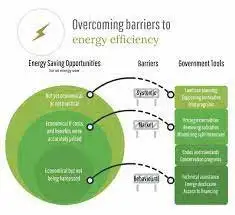
Ontario to Provide New and Expanded Energy-Efficiency Programs
Ontario CDM Programs expand energy efficiency, demand response, and DER incentives via IESO's Save on…
View more
Sign Up for Electricity Forum’s Newsletter
Stay informed with our FREE Newsletter — get the latest news, breakthrough technologies, and expert insights, delivered straight to your inbox.
Electricity Today T&D Magazine Subscribe for FREE

Stay informed with the latest T&D policies and technologies.
- Timely insights from industry experts
- Practical solutions T&D engineers
- Free access to every issue

