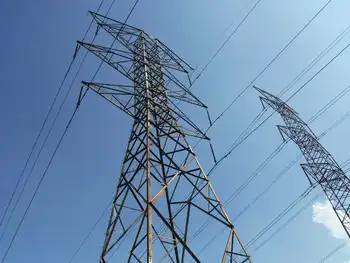
CEA Encouraged by US Energy Report

By Founded in 1891, CEA represents CanadaÂ’s electricity industry. Its members produce 95% of CanadaÂ’s electricity, ensure electricity service to Canadians from coast to coast, and export surplus electricity to t


Protective Relay Training - Basic

Our customized live online or in‑person group training can be delivered to your staff at your location.

  • Live Online
  • 12 hours Instructor-led
  • Group Training Available
Regular Price:
$699
Coupon Price:
$599
Reserve Your Seat Today

Ottawa, ON. -- The Canadian Electricity Association (CEA) is encouraged by the direction of the energy report released today by US President Bush.

CEA President Hans Konow noted in particular the prominence given to electricity and electricity transmission issues. "We support the need for increasing electricity generation capacity, as well as the need to improve transmission on a continental scale. At the same time we need to pursue all practical avenues to enhance energy efficiency "

Mr. Konow noted that "CEA takes the view that further integration of North American electricity systems will benefit consumers both in Canada, and in the United States through enhanced availability of power and improved reliability of the system."

The Canadian electricity industry has been developing its views with respect to a North American Energy approach and has made them known to both the Canadian and U.S. governments. CEA plans to release its formal submission later this month.

Related News

N.S. joins Western Climate Initiative for tech support for emissions plan

Nova Scotia Cap-and-Trade Program joins Western Climate Initiative to leverage emissions trading IT systems, track allowances, and manage compliance, while setting in-province caps, carbon pricing signals, and third-party verified reporting for industrial and fuel suppliers.


Key Points

A provincial emissions trading system using WCI services to cap GHGs, track allowances, and enforce verified compliance.

✅ Uses WCI IT system to manage allowances and registry

✅ Initial trading limited to in-province participants

✅ Third-party verification and annual reporting deadlines


Nova Scotia is yet to set targets for its new cap and trade regime to reduce greenhouse gases, but the province announced Monday that it has joined the Western Climate Initiative Inc. -- a non-profit corporation formed to provide administrative and technical services to states and provinces with emissions trading programs.

Environment Minister Iain Rankin said joining the initiative would allow the province to use its IT system to manage and track its new cap and trade program.

Rankin said the province can join without trading greenhouse gas emission allowances with other jurisdictions -- California, Quebec, and Ontario are currently linked through the program, with Hydro-Québec's U.S. sales highlighting cross-border dynamics. Nova Scotia currently has no plans to trade outside the province as it works on emissions caps Rankin said will be ready sometime in June.

#google#

Nova Scotia is yet to set targets for its new cap and trade regime to reduce greenhouse gases, but the province announced Monday that it has joined the Western Climate Initiative Inc. -- a non-profit corporation formed to provide administrative and technical services to states and provinces with emissions trading programs.

Environment Minister Iain Rankin said joining the initiative would allow the province to use its IT system to manage and track its new cap and trade program.

Rankin said the province can join without trading greenhouse gas emission allowances with other jurisdictions -- California, Quebec, and Ontario are currently linked through the program. Nova Scotia currently has no plans to trade outside the province as it works on emissions caps Rankin said will be ready sometime in June.

"By keeping our system internal it ensures that our greenhouse gas reductions are happening within our province," said Rankin. "But we do have that opportunity (to join) and if there are new entrants or we need more access to credits then that may shift our strategy."

The use of the system will cost Nova Scotia about US$314,000 for 2018-19, with an annual cost in subsequent years of about US$228,000 or more, if the province requests modifications.

"If we were to do something like that internally we would have to build a full database and hire more people, so this was an obvious choice for us," said Rankin.

Nova Scotia has already met the national reduction target of 30 per cent below 2005 levels and says it's on track to have 40 per cent of electricity generation from renewables by 2020, underscoring how cleaning up Canada's electricity supports climate pledges.

Stephen Thomas, energy campaign coordinator for the Ecology Action Centre, called the province's move an "important small step," stressing the importance of using the same administrative rules as the other jurisdictions involved.

But Thomas said Nova Scotia should go further and trade emissions with California, Quebec, and Ontario, and also put a price on carbon by auctioning credits as they do.

Thomas said Nova Scotia's system stands to be volatile because of the smaller number of participants -- about 20 including Nova Scotia Power, Northern Pulp, Lafarge, and large oil and gasoline companies such as ExxonMobil, Imperial and Irving.

"It's very likely to favour Nova Scotia Power as the largest single emitter with the most credits to sell here, and that would change if we had a linked system, at a time when Canada will need more electricity to hit net-zero according to the IEA," Thomas said.

He said it's important to have a linked system and a regional approach in Atlantic Canada, which has more emissions per person and more emissions per GDP than places like Ontario, Quebec and California, and where policies like Newfoundland's rate reduction plan can influence electricity strategy.

"Reducing emissions, because we are so emissions-intensive here, is a little bit cheaper," said Thomas. "So it's possible that Ontario, Quebec and California could pay Nova Scotia to reduce its emissions."

Under its program, Nova Scotia requires industrial facilities generating 50,000 tonnes or more of greenhouse gas emissions per year to report emissions.

Regulations also cover petroleum product suppliers that import or produce 200 litres of fuel or more per year for consumption and natural gas distributors whose products produce at least 10,000 tonnes of greenhouse gas emissions a year.

Companies were to have reported to the Environment Department by May 1 but Rankin said the deadline has been pushed back to June 1, a deadline that was to be followed in subsequent years in any event. Reports must be verified by a third party by Sept. 1 every year.

The Liberal government passed enabling legislation for cap and trade last fall.

As for the upcoming emissions caps, Rankin isn't tipping the province's hand yet, even as B.C.'s 2050 targets face a shortfall in some forecasts.

"Those caps will recognize the investments that have already been made and therefore will be the most cost-effective program that we can put together to meet the federal requirement," he said.


Related News

View more

EV Fires Raise Health Concerns for Firefighters

EV Firefighter Cancer Risks: lithium-ion battery fires, toxic metals like nickel and chromium, hazardous smoke plumes, and prolonged exposure threaten first responders; SCBA use, decontamination, and evidence-based protocols help reduce occupational health impacts.


Key Points

Health hazards from EV battery fires exposing responders to toxic metals and smoke, elevating long-term cancer risk.

✅ Nickel and chromium in EV smoke linked to lung and sinus cancers

✅ Use SCBA, on-scene decon, and post-incident cleaning to cut exposure

✅ Adopt EV fire SOPs: cooling, monitoring, isolation, air monitoring


As electric vehicles (EVs) become more popular, the EV fire risks to firefighters are becoming an increasing concern. These fires, fueled by the high-capacity lithium-ion batteries in EVs, produce dangerous chemical exposures that could have serious long-term health implications for first responders.

Claudine Buzzo, a firefighter and cancer survivor, knows firsthand the dangers that come with the profession. She’s faced personal health battles, including rare pancreatic cancer and breast cancer, both of which she attributes to the hazards of firefighting. Now, as EV adoption increases and some research links adoption to fewer asthma-related ER visits in local communities, Buzzo and her colleagues are concerned about how EV fires might add to their already heavy exposure to harmful chemicals.

The fire risks associated with EVs are different from those of traditional gasoline-powered vehicles. Dr. Alberto Caban-Martinez, who is leading a study at the Sylvester Comprehensive Cancer Center, explains that the high concentrations of metals released in the smoke from an EV fire are linked to various cancers. For instance, nickel, a key component in EV batteries, is associated with lung, nasal, and laryngeal cancers, while chromium, another metal found in some EV batteries, is linked to lung and sinus cancers.

Research from the Firefighter Cancer Initiative indicates that the plume of smoke from an EV fire contains significantly higher concentrations of these metals than fires from traditional vehicles. This raises the risk of long-term health problems for firefighters who respond to such incidents.

While the Electric Vehicle Association acknowledges the risks associated with various types of vehicle fires, they maintain that the lithium-ion batteries in EVs may not present a significantly higher risk than other common fire hazards, even as broader assessments suggest EVs are not a silver bullet for climate goals. Nonetheless, the growing body of research is causing concern among health experts, urging for further studies into how these new types of fires could affect firefighter health and how upstream electricity generation, where 18% of electricity in 2019 came from fossil fuels in Canada, factors into overall risk perceptions.

Fire departments and health researchers are working to understand the full scope of these risks and are emphasizing the importance of protective gear, such as self-contained breathing apparatuses, to minimize exposure during EV fire responses, while also considering questions like grid impacts during charging operations and EV sustainability improvements in different regions.


Related News

View more

The Impact of AI on Corporate Electricity Bills

AI Energy Consumption strains corporate electricity bills as data centers and HPC workloads run nonstop, driving carbon emissions. Efficiency upgrades, renewable energy, and algorithm optimization help control costs and enhance sustainability across industries.


Key Points

AI Energy Consumption is the power used by AI compute and data centers, impacting costs and sustainability.

✅ Optimize cooling, hardware, and workloads to cut kWh per inference

✅ Integrate on-site solar, wind, or PPAs to offset data center power

✅ Tune models and algorithms to reduce compute and latency


Artificial Intelligence (AI) is revolutionizing industries with its promise of increased efficiency and productivity. However, as businesses integrate AI technologies into their operations, there's a significant and often overlooked impact: the strain on corporate electricity bills.

AI's Growing Energy Demand

The adoption of AI entails the deployment of high-performance computing systems, data centers, and sophisticated algorithms that require substantial energy consumption. These systems operate around the clock, processing massive amounts of data and performing complex computations, and, much like the impact on utilities seen with major EV rollouts, contributing to a notable increase in electricity usage for businesses.

Industries Affected

Various sectors, including finance, healthcare, manufacturing, and technology, rely on AI-driven applications for tasks ranging from data analysis and predictive modeling to customer service automation and supply chain optimization, while manufacturing is influenced by ongoing electric motor market growth that increases electrified processes.

Cost Implications

The rise in electricity consumption due to AI deployments translates into higher operational costs for businesses. Corporate entities must budget accordingly for increased electricity bills, which can impact profit margins and financial planning, especially in regions experiencing electricity price volatility in Europe amid market reforms. Managing these costs effectively becomes crucial to maintaining competitiveness and sustainability in the marketplace.

Sustainability Challenges

The environmental impact of heightened electricity consumption cannot be overlooked. Increased energy demand from AI technologies contributes to carbon emissions and environmental footprints, alongside rising e-mobility demand forecasts that pressure grids, posing challenges for businesses striving to meet sustainability goals and regulatory requirements.

Mitigation Strategies

To address the escalating electricity bills associated with AI, businesses are exploring various mitigation strategies:

  1. Energy Efficiency Measures: Implementing energy-efficient practices, such as optimizing data center cooling systems, upgrading to energy-efficient hardware, and adopting smart energy management solutions, can help reduce electricity consumption.

  2. Renewable Energy Integration: Investing in renewable energy sources like solar or wind power and energy storage solutions to enhance flexibility can offset electricity costs and align with corporate sustainability initiatives.

  3. Algorithm Optimization: Fine-tuning AI algorithms to improve computational efficiency and reduce processing times can lower energy demands without compromising performance.

  4. Cost-Benefit Analysis: Conducting thorough cost-benefit analyses of AI deployments to assess energy consumption against operational benefits and potential rate impacts, informed by cases where EV adoption can benefit customers in broader electricity markets, helps businesses make informed decisions and prioritize energy-saving initiatives.

Future Outlook

As AI continues to evolve and permeate more aspects of business operations, the demand for electricity will likely intensify and may coincide with broader EV demand projections that increase grid loads. Balancing the benefits of AI-driven innovation with the challenges of increased energy consumption requires proactive energy management strategies and investments in sustainable technologies.

Conclusion

The integration of AI technologies presents significant opportunities for businesses to enhance productivity and competitiveness. However, the corresponding surge in electricity bills underscores the importance of proactive energy management and sustainability practices. By adopting energy-efficient measures, leveraging renewable energy sources, and optimizing AI deployments, businesses can mitigate cost impacts, reduce environmental footprints, and foster long-term operational resilience in an increasingly AI-driven economy.


Related News

View more

Why California's Climate Policies Are Causing Electricity Blackouts

California Rolling Blackouts expose grid reliability risks amid a heatwave, as CAISO curtails power while solar output fades at sunset, wind stalls, and scarce natural gas and nuclear capacity plus PG&E issues strain imports.


Key Points

Grid outages during heatwaves from low reserves, fading solar, weak wind, and limited firm capacity.

✅ Heatwave demand rose as solar output dropped at sunset

✅ Limited imports and gas, nuclear shortfalls cut reserves

✅ Policy, pricing, and maintenance gaps increased outage risk


Millions of Californians were denied electrical power and thus air conditioning during a heatwave, raising the risk of heatstroke and death, particularly among the elderly and sick. 

The blackouts come at a time when people, particularly the elderly, are forced to remain indoors due to Covid-19, and as later heat waves would test the grid again statewide.

At first, the state’s electrical grid operator last night asked customers to voluntarily reduce electricity use. But after lapses in power supply pushed reserves to dangerous levels it declared a “Stage 3 emergency” cutting off power to people across the state at 6:30 pm.

The immediate reason for the black-outs was the failure of a 500-megawatt power plant and an out-of-service 750-megawatt unit not being available. “There is nothing nefarious going on here,” said a spokeswoman for California Independent System Operator (CAISO). “We are just trying to run the grid.”

But the underlying reasons that California is experiencing rolling black-outs for the second time in less than a year stem from the state’s climate policies, which California policymakers have justified as necessary to prevent deaths from heatwaves, and which it is increasingly exporting to Western states as a model.

In October, Pacific Gas and Electric cut off power to homes across California to avoid starting forest fires after reports that its power lines may have started fires in recent seasons. The utility and California’s leaders had over the previous decade diverted billions meant for grid maintenance to renewables. 

And yesterday, California had to impose rolling blackouts because it had failed to maintain sufficient reliable power from natural gas and nuclear plants, or pay in advance for enough guaranteed electricity imports from other states.

It may be that California’s utilities and their regulator, the California Public Utilities Commission, which is also controlled by Gov. Newsom, didn’t want to spend the extra money to guarantee the additional electricity out of fears of raising California’s electricity prices even more than they had already raised them.

California saw its electricity prices rise six times more than the rest of the United States from 2011 to 2019, helping explain why electricity prices are soaring across the state, due to its huge expansion of renewables. Republicans in the U.S. Congress point to that massive increase to challenge justifications by Democrats to spend $2 trillion on renewables in the name of climate change.

Even though the cost of solar panels declined dramatically between 2011 and 2019, their unreliable and weather-dependent nature meant that they imposed large new costs in the form of storage and transmission to keep electricity as reliable. California’s solar panels and farms were all turning off as the blackouts began, with no help available from the states to the East already in nightfall.

Electricity from solar goes away at the very moment when the demand for electricity rises. “The peak demand was steady in late hours,” said the spokesperson for CAISO, which is controlled by Gov. Gavin Newsom, “and we had thousands of megawatts of solar reducing their output as the sunset.”

The two blackouts in less than a year are strong evidence that the tens of billions that Californians have spent on renewables come with high human, economic, and environmental costs.

Last December, a report by done for PG&E concluded that the utility’s customers could see blackouts double over the next 15 years and quadruple over the next 30.

California’s anti-nuclear policies also contributed to the blackouts. In 2013, Gov. Jerry Brown forced a nuclear power plant, San Onofre, in southern California to close.

Had San Onofre still been operating, there almost certainly would not have been blackouts on Friday as the reserve margin would have been significantly larger. The capacity of San Onofre was double that of the lost generation capacity that triggered the blackout.

California's current and former large nuclear plants are located on the coast, which allows for their electricity to travel shorter distances, and through less-constrained transmission lines than the state’s industrial solar farms, to get to the coastal cities where electricity is in highest demand.

There has been very little electricity from wind during the summer heatwave in California and the broader western U.S., further driving up demand. In fact, the same weather pattern, a stable high-pressure bubble, is the cause of heatwaves, since it brought very low wind for days on end along with very high temperatures.

Things won’t be any better, and may be worse, in the winter, with a looming shortage as it produces far less solar electricity than the summer. Solar plus storage, an expensive attempt to fix problems like what led to this blackout, cannot help through long winters of low output.

California’s electricity prices will continue to rise if it continues to add more renewables to its grid, and goes forward with plans to shut down its last nuclear plant, Diablo Canyon, in 2025.

Had California spent an estimated $100 billion on nuclear instead of on wind and solar, it would have had enough energy to replace all fossil fuels in its in-state electricity mix.

To manage the increasingly unreliable grid, California will either need to keep its nuclear plant operating, build more natural gas plants, underscoring its reliance on fossil fuels for reliability, or pay ever more money annually to reserve emergency electricity supplies from its neighbors.

After the blackouts last October, Gov. Newsom attacked PG&E Corp. for “greed and mismanagement” and named a top aide, Ana Matosantos, to be his “energy czar.” 

“This is not the new normal, and this does not take 10 years to solve,” Newsom said. “The entire system needs to be reimagined.”


Related News

View more

Hydro One reports $1.1B Q2 profit boosted by one-time gain due to court ruling

Hydro One Q2 Earnings surge on a one-time gain from a court ruling on a deferred tax asset, lifting profit, revenue, and adjusted EPS at Ontario's largest utility regulated by the Ontario Energy Board.


Key Points

Hydro One Q2 earnings jumped on an $867M court gain, with revenue at $1.67B and adjusted EPS improving to $0.39.

✅ One-time gain: $867M from tax appeal ruling.

✅ Revenue: $1.67B vs $1.41B last year.

✅ Adjusted EPS: $0.39 vs $0.26.


Hydro One Ltd., following the Peterborough Distribution sale transaction closing, reported a second-quarter profit of $1.1 billion, boosted by a one-time gain related to a court decision.

The power utility says it saw a one-time gain of $867 million in the quarter due to an Ontario court ruling on a deferred tax asset appeal that set aside an Ontario Energy Board decision earlier.

Hydro One says the profit amounted to $1.84 per share for the quarter ended June 30, amid investor concerns about uncertainties, up from $155 million or 26 cents per share a year earlier.

Shares also moved lower after the Ontario government announced leadership changes, as seen when Hydro One shares fell on the news in prior trading.

On an adjusted basis, it says it earned 39 cents per share for the quarter, despite earlier profit plunge headlines, up from an adjusted profit of 26 cents per share in the same quarter last year.

Revenue totalled $1.67 billion, up from $1.41 billion in the second quarter of 2019, while other Canadian utilities like Manitoba Hydro face heavy debt burdens.

Hydro One is Ontario’s largest electricity transmission and distribution provider, and its CEO compensation has drawn scrutiny in the province.


Related News

View more

Electric shock: China power demand drops as coronavirus shutters plants

China Industrial Power Demand 2020 highlights COVID-19 disruption to electricity consumption as factory output stalls; IHS Markit estimates losses equal to Chile's usage, impacting thermal coal, LNG, and Hubei's industrial load.


Key Points

An analysis of COVID-19's hit to China's electricity use, cutting industry demand and fuel needs for coal and LNG.

✅ 73 billion kWh loss equals Chile's annual power use

✅ Cuts translate to 30m tonnes coal or 9m tonnes LNG

✅ Hubei peak load 21 percent below plan amid shutdowns


China’s industrial power demand in 2020 may decline by as much as 73 billion kilowatt hours (kWh), according to IHS Markit, as the outbreak of the coronavirus has curtailed factory output and prevented some workers from returning to their jobs.

FILE PHOTO: Smoke is seen from a cooling tower of a China Energy ultra-low emission coal-fired power plant during a media tour, in Sanhe, Hebei province, China July 18, 2019. REUTERS/Shivani Singh
The cut represents about 1.5% of industrial power consumption in China. But, as the country is the world’s biggest electricity consumer and analyses of China's electricity appetite routinely underscore its scale, the loss is equal to the power used in the whole of Chile and it illustrates the scope of the disruption caused by the outbreak.

The reduction is the energy equivalent of about 30 million tonnes of thermal coal, at a time when China aims to reduce coal power production, or about 9 million tonnes of liquefied natural gas (LNG), IHS said. The coal figure is more than China’s average monthly imports last year while the LNG figure is a little more than one month of imports, based on customs data.

China has tried to curtail the spread of the coronavirus that has killed more than 1,400 and infected over 60,000 by extending the Lunar New Year holiday for an extra week and encouraging people to work from home, measures that contributed to a global dip in electricity demand as well.

Last year, industrial users consumed 4.85 trillion kWh electricity, accounting for 67% of the country’s total, even as India's electricity demand showed sharp declines in the region.

Xizhou Zhou, the global head of power and Renewables at IHS Markit, said that in a severe case where the epidemic goes on past March, China’s economic growth will be only 4.2% during 2020, down from an initial forecast of 5.8%, while power consumption will climb by only 3.1%, down from 4.1% initially, even as power cuts and blackouts raise concerns.

“The main uncertainty is still how fast the virus will be brought under control,” said Zhou, adding that the impact on the power sector will be relatively modest from a full-year picture in 2020, even though China's electric power woes are already clouding solar markets.

In Hubei province, the epicenter of the virus outbreak, the peak power load at the end of January was 21% less than planned, mirroring how Japan's power demand was hit during the outbreak, data from Wood Mackenzie showed.

Industrial operating rates point to a firm reduction in power consumption in China.

Utilization rates at plastic processors are between 30% and 60% and the low levels are expected to last for another two week, according to ICIS China.

Weaving machines at textile plants are operating at below 10% of capacity, the lowest in five years, ICIS data showed. China is the world’s biggest textile and garment exporter.


Related News

View more

Sign Up for Electricity Forum’s Newsletter

Stay informed with our FREE Newsletter — get the latest news, breakthrough technologies, and expert insights, delivered straight to your inbox.

Electricity Today T&D Magazine Subscribe for FREE

Stay informed with the latest T&D policies and technologies.
  • Timely insights from industry experts
  • Practical solutions T&D engineers
  • Free access to every issue

Live Online & In-person Group Training

Advantages To Instructor-Led Training – Instructor-Led Course, Customized Training, Multiple Locations, Economical, CEU Credits, Course Discounts.

Request For Quotation

Whether you would prefer Live Online or In-Person instruction, our electrical training courses can be tailored to meet your company's specific requirements and delivered to your employees in one location or at various locations.