Protective Relay Training - Basic
Our customized live online or in‑person group training can be delivered to your staff at your location.
- Live Online
- 12 hours Instructor-led
- Group Training Available
Regular Price:
$699
Coupon Price:
$599
BEIJING
—
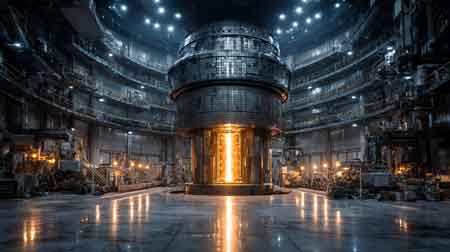
China's Experimental Advanced Superconducting Tokamak (EAST) is on track to achieve plasma ignition by 2027 — a milestone that would make it the first fusion reactor in the world to sustain plasma without external heating. If successful, the achievement would represent a decisive step toward commercial nuclear fusion and could shift the balance in the long-running competition between China and the United States for clean energy leadership.
Nuclear fusion replicates the process that powers the sun and is far more energy-dense than conventional nuclear fission. Unlike fission, it produces no long-lived radioactive waste — making it a highly attractive long-term solution to rising global electricity demand, particularly as AI-driven data center load continues to grow across North America and beyond.
Achieving ignition — the point at which a reactor sustains a fusion reaction without continuous external energy input — is technically demanding. Plasma must be superheated to approximately 150 million degrees Celsius, far exceeding the temperature at the sun's core. While the U.S. National Ignition Facility in Livermore, California, achieved ignition in a research context, EAST would be the first tokamak-style reactor to reach this threshold, bringing the technology closer to actual power generation.
The U.S. National Ignition Facility achievement marked a landmark moment for the field, but as our overview of why nuclear fusion is still the holy grail of clean energy makes clear, sustaining net energy gain in a tokamak designed for power generation remains a fundamentally different engineering challenge.
EAST is not China's only active fusion program. The country's Burning Plasma Experimental Superconducting Tokamak (BEST), under development at China's leading plasma-physics lab, is projected to go further — potentially becoming the first reactor in history to generate electricity from nuclear fusion.
Beijing has formally designated fusion one of eight priority "frontier technologies" in its current five-year plan, backing it with substantial government funding and streamlined regulatory oversight. The United States, by contrast, is pursuing a private-sector model, with Commonwealth Fusion Systems among the leading contenders — also targeting net energy production by 2027.
The EAST reactor is the same platform that has been central to international fusion research for years — for a deeper look at how tokamak magnetic confinement works and what ITER's 500 MW target means for the broader race, see our report on the science behind ITER nuclear fusion.
Experts note that significant engineering and supply chain challenges remain before commercial fusion becomes a reality for either nation. But the strategic stakes are considerable: the country that commercializes fusion power first will hold a significant advantage in global energy markets and geopolitical influence for decades to come.
While fusion timelines extend into the next decade, the near-term nuclear buildout is already under way through a parallel track — compact fission designs like the MARVEL microreactor at Idaho National Laboratory point to where next-generation nuclear power is heading in the interim.
Related News
Why Is Georgia Importing So Much Electricity?
Georgia Electricity Imports October 2017 surged as hydropower output fell and thermal power plants underperformed;…
View more
Despite delays, BC Hydro says crews responded well to 'atypical' storm
BC Hydro Ice Storm Response to Fraser Valley power outages highlights freezing rain impacts, round…
View more

Maine Governor calls for 100% renewable electricity
Maine Climate Council Act targets 80% renewable power by 2030 and 100% by 2050, slashing…
View more
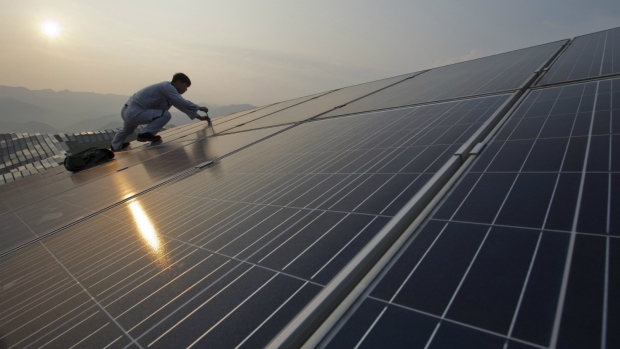
Scatec Plans EGP 5 Billion Grid Investment to Evacuate Egypt Solar Power
Scatec Egypt grid investment will fund a 500-kV transformer station and 70-km transmission line to…
View more
Power Outage Affects 13,000 in North Seattle
North Seattle Power Outage disrupts 13,000 in Ballard, Northgate, and Lake City as Seattle City…
View more
Windstorm Causes Significant Power Outages
Vancouver October 2024 Windstorm brought extreme weather to British Columbia, causing power outages, storm damage,…
View more
Sign Up for Electricity Forum’s Newsletter
Stay informed with our FREE Newsletter — get the latest news, breakthrough technologies, and expert insights, delivered straight to your inbox.
Electricity Today T&D Magazine Subscribe for FREE

Stay informed with the latest T&D policies and technologies.
- Timely insights from industry experts
- Practical solutions T&D engineers
- Free access to every issue
