Will Hydrogen Clear the Air? Maybe Not, Say Some

By New York Times


NFPA 70b Training - Electrical Maintenance

Our customized live online or in‑person group training can be delivered to your staff at your location.

  • Live Online
  • 12 hours Instructor-led
  • Group Training Available
Regular Price:
$699
Coupon Price:
$599
Reserve Your Seat Today
Widespread hydrogen use has been enthusiastically embraced by major corporations and environmentalists alike as a panacea for global warming and the depletion of fossil fuels, and is a particular favorite of the Bush administration. But skeptics, and even some hydrogen advocates, say that use of hydrogen could instead make the air dirtier and the globe warmer.

The Bush administration is convening a meeting of the energy ministers of 15 countries to Washington for a four-day meeting with the theme of an "International Partnership for the Hydrogen Economy." President Bush himself pledged in the State of the Union address in January that "the first car driven by a child born today could be powered by hydrogen, and pollution-free."

Use of hydrogen fuel cells could certainly help eliminate tailpipe pollution and dependence on foreign oil. But hydrogen is only a way to store energy. Where the energy comes from in the first place is where the problems start.

The most ambitious use of hydrogen is in a car powered by a fuel cell - a batterylike device that turns hydrogen into electricity while emitting only heat and water vapor.

Hydrogen can also be burned directly in engines much like those that run on gasoline, but the Energy Department goal is fuel cells because they get twice as much work out of a pound of hydrogen.

Intense research is now going on at major companies and universities in North America on the development of a practical fuel cell. Success could have a profound effect on the 200 million motor vehicles in use in the United States, making the streets cleaner and quieter, with hydrogen-powered electric motors. The transition to hydrogen could also wean the country away from gasoline and diesel fuel.

The main source for hydrogen today is natural gas, which is in short supply, is cumbersome to convert, and may have better uses. Waiting in the wings is coal, burned in old power plants around the country that are already the focus of a national dispute over their emissions. Coal is cheap and abundant, and produced by major companies that are eager to continue mining and using it. But it is a leading source of carbon dioxide, an important global warming gas, and pollutants that cause more immediate problems, like smog and acid rain.

"Even though fuel cells are great devices, you can still do unwise things with them," Patrick B. Davis, a team leader in the Energy Department's fuel cell program, told a recent meeting of experts at the University of South Carolina examining the engineering challenges.

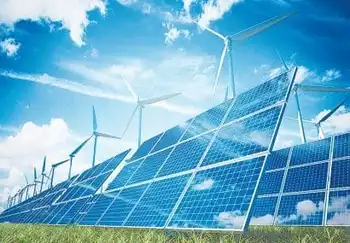
The long-term hope is to make hydrogen from emission-free "renewable" technologies, like windmills or solar cells. In fact, hydrogen may be an essential step to translate the energy of wind or sunlight into power to turn a car's wheels, experts say. But electricity from renewable technologies is so costly that even companies based on these technologies see problems.

At Sharp Solar, which says it is the world's largest manufacturer of solar cells, Ronald Kenedi, the general manager, said that it was entirely possible that the energy source to produce hydrogen for vehicles would initially turn out to be coal, rather than the sun or wind. "That is the danger," he said in a telephone interview. "It seems like hydrogen is the buzz word right now, with the president talking about it, and maybe putting some money towards it," he said. "But the first stop on the hydrogen trail will be coal."

For now the government is mostly glossing over the problem. A strategy document published by the Energy Department in November, 2002, the "National Hydrogen Energy Roadmap," suggests marketing the idea of hydrogen to the public as the "freedom fuel." Another suggested theme was "Hydrogen is everywhere - it's right in our backyard."

"Hydrogen," the department said, "is the 'man on the moon' equivalent for this generation." In fact, the latter analogy might prove apt, with hydrogen fuel cells resembling the Apollo rockets, as an impressive technology that was made workable and repeatedly demonstrated, but not capable of making major inroads into general use.

For now, fuel cells are about 100 times as expensive, per unit of power, as internal combustion engines.

Related News
Electricity is civilization": Winter looms over Ukraine battlefront

Ukraine Power Grid Restoration accelerates across liberated Kharkiv, restoring electricity, heat, and water amid missile and drone strikes, demining operations, blackouts, and winterization efforts, showcasing resilience, emergency repairs, and critical infrastructure recovery.


Key Points

Ukraine's rapid push to repair war-damaged grids, restore heat and water, and stabilize key services before winter.

✅ Priority repairs restore electricity and water in liberated Kharkiv.

✅ Crews de-mine lines and work under shelling, drones, and missiles.

✅ Winterization adds generators, mobile stoves, and large firewood supplies.


On the freshly liberated battlefields of northeast Ukraine, a pile of smashed glass windows outside one Soviet-era block of apartments attests to the violence of six months of Russian occupation, and of Ukraine’s sweeping recent military advances.

Indoors, in cramped apartments, residents lived in the dark for weeks on end.

Now, with a hard winter looming, they marvel at the speed and urgency with which Ukrainian officials have restored another key ingredient to their survival: electric power, a critical effort to keep the lights on this winter across communities.

Among those things governments strive to provide are security, opportunity, and minimal comfort. With winter approaching, and Russia targeting Ukraine’s infrastructure, add to that list heat and light, even as Russia hammers power plants nationwide. It’s requiring a concerted effort.

“Thank God it works! Electricity is civilization – it is everything,” says Antonina Krasnokutska, a retired medical worker, looking affectionately at the lightbulb that came on the day before, and now burns again in her tiny spotless kitchen.

“Without electricity there is no TV, no news, no clothes washing, no charging the phone,” says Ms. Krasnokutska, her gray hair pulled back and a small crucifix around her neck.

“Before, it was like living in the Stone Age,” says her grown son, Serhii Krasnokutskyi, who is more than a head taller. “As soon as it got dark, everyone would go to sleep.”

He shows a picture on his phone from a few days earlier, of a tangle of phone and computer charging cables – including his – plugged in at a local shop with a generator.

“We are very grateful for the people who repaired this electricity, even with shelling continuing,” he says. “They have a very complicated job.”

Indeed, although a lack of power might have been a novel inconvenience during the warm summer season, it increasingly has become a matter of great urgency for Ukrainian citizens and officials.

Coping through Ukraine’s winter with dignity and any degree of security will require courage and perseverance, as the severity and suffering that the season can bring here are being weaponized by Russia, as it seeks to compensate for a string of battlefield losses.

In recent days, Russian attacks have specifically targeted Ukraine’s electrical and other civilian infrastructure – all with the apparent aim of making this winter as hard as possible for Ukrainians, even as Moscow employs other measures to spread the hardship across Europe, while Ukraine helps Spain amid blackouts through grid support.

Ukrainian President Volodymyr Zelenskyy said Monday that Russian barrages across the country with missiles and Iran-supplied kamikaze drones had destroyed 30% of Ukraine’s power stations in the previous eight days, including strikes on western Ukraine that caused outages. Thousands of towns have been left without electricity.

Kharkiv’s challenges
Emblematic of the national challenge is the one facing officials in the northeast Kharkiv region, where Ukraine recaptured more than 3,000 square miles in a September counteroffensive. Ukrainian forces are still making gains on that front, as well as in the south toward Kherson, where Wednesday Russia started evacuating civilians from the first major city it occupied, after launching its three-pronged invasion last February.

Across the Kharkiv region, Ukrainians are stockpiling as much wood, fuel, and food as possible while they still can, and adopting new energy solutions as they prepare, from sources as diverse as the floorboards of destroyed schools and the pine forests in Izium, which are pockmarked with abandoned Russian trenches adjacent to a mass burial site.

“Of course, we have this race against time,” says Serhii Mahdysyuk, the Kharkiv regional director in charge of housing, services, fuel, and energy. “Unfortunately, we probably stand in front of the biggest challenge in Ukraine.”

That is not only because of the scale of liberated territory, he says, but also because the Kharkiv region shares a long border with Russia, as well as with the Russian-controlled areas of the eastern Donbas.

“It’s a great mixture of all threats, and we are sure that shelling and bombings will continue, but we are ready for this,” says Mr. Mahdysyuk. “We know our weak spots that Russia can destroy, but we are prepared for what to do in these situations.”

Ukraine’s battlefield gains have meant a surging need to pick up the pieces after Russian occupation, even as electricity reserves are holding if no new strikes occur, to ensure habitable conditions as more and more surviving residents require services, and as others return to scenes of devastation.

Restoring electricity is the top priority, amid shifting international assistance such as the end of U.S. grid support, because that often restarts running water, too, says Mr. Mahdysyuk. But before that, the area beneath broken power lines must be de-mined.

Indeed, members of an electricity team reconnecting cables on the outskirts of Balakliia – one of the first towns to see power restored, at the end of September – say they lost two fellow workers in the previous two weeks. One died after stepping on an anti-personnel mine, another when his vehicle hit an anti-tank device.

Ukrainian electricity workers restore power lines damaged during six months of Russian military occupation in Balakliia, Ukraine, Sept. 29, 2022. Ukrainians in liberated territory say the restoration of the electrical grid, and with it often the water supply, is a return to civilization.
“For now, our biggest problem is mines,” says the team leader, who gave the name Andrii. “It’s fine within the cities, but in the fields it’s a disaster because it’s very difficult to see them. There is a lot of [them] around here – it will take years and years to get rid of.”

Yet officials only have a few weeks to execute plans to provide for hundreds of thousands of residents in this region, in their various states of need and distress. Some 50 field kitchens capable of feeding 200 to 300 people each have been ordered. Another 1,000 mobile stoves are on their way.

And authorities will provide nearly 200,000 cubic yards of firewood for those who have no access to it, and may have no other means of keeping warm – or where shelling continues to disrupt repairs, says Mr. Mahdysyuk.

“The level of opportunity and resources we have is not the same as the level of destruction,” he says. People in districts and buildings too destroyed to have services restored soon, such as in Saltivka in Kharkiv city, may be moved.


Related News

View more

UCP scraps electricity price cap, some will see $7 bill increase this month

Edmonton Electricity Rate Increase signals Alberta RRO changes as the UCP ends the NDP price cap; kilowatt-hour rises to 7.5 cents, raising energy bills for typical households by 3.9 percent in December.


Key Points

The end of Alberta’s RRO cap lifts kWh to 7.5 cents, raising an average Edmonton home’s bill about 3.9% in December.

✅ RRO price cap scrapped; kWh set at 7.5 cents in December.

✅ Average 600 kWh home pays about $7.37 more vs November.

✅ UCP ends NDP-era cap after stakeholder and consumer feedback.


Electricity will be more expensive for some Edmontonians in December after the UCP government scrapped a program that capped rates amid prices spiking in Alberta this year.

Effective Nov. 30, the province got rid of the consumer price cap program for Regulated Rate Option customers.

In 2017, the NDP government capped the kilowatt per hour price at 6.8 cents under a consumer price cap policy, meaning Edmontonians would pay the market rate and not more than the capped price.

In December, kWh will cost 7.5 cents amid expert warnings to lock in rates across Alberta. Typical Edmonton homes use an average of 600 kWh, increasing bills by $7.37, or 3.9 per cent, compared to November.

In Calgary, electricity bills have been rising as well, reflecting similar market pressures.

The NDP created the capacity system to bring price stability to Albertans, though a Calgary retailer urged scrapping the market overhaul at the time.

Energy Minister Sonya Savage said the UCP decided to scrap it after "overwhelming" feedback from consumers and industry stakeholders, as the province introduced new electricity rules earlier this year. 


Related News

View more

B.C.'s Green Energy Ambitions Face Power Supply Challenges

British Columbia Green Grid Constraints underscore BC Hydro's rising imports, peak demand, electrification, hydroelectric variability, and transmission bottlenecks, challenging renewable energy expansion, energy security, and CleanBC targets across industry and zero-emission transportation.


Key Points

They are capacity and supply limits straining B.C.'s clean electrification, driving imports and risking reliability.

✅ Record 25% imports in FY2024 raise emissions and costs

✅ Peak demand and transmission limits delay new connections

✅ Drought reduces hydro output; diversified generation needed


British Columbia's ambitious green energy initiatives are encountering significant hurdles due to a strained electrical grid and increasing demand, with a EV demand bottleneck adding pressure. The province's commitment to reducing carbon emissions and transitioning to renewable energy sources is being tested by the limitations of its current power infrastructure.

Rising Demand and Dwindling Supply

In recent years, B.C. has experienced a surge in electricity demand, driven by factors such as population growth, increased use of electric vehicles, and the electrification of industrial processes. However, the province's power supply has struggled to keep pace, and one study projects B.C. would need to at least double its power output to electrify all road vehicles. In fiscal year 2024, BC Hydro imported a record 13,600 gigawatt hours of electricity, accounting for 25% of the province's total consumption. This reliance on external sources, particularly from fossil-fuel-generated power in the U.S. and Alberta, raises concerns about energy security and sustainability.

Infrastructure Limitations

The current electrical grid is facing capacity constraints, especially during peak demand periods, and regional interties such as a proposed Yukon connection are being discussed to improve reliability. A report from the North American Electric Reliability Corporation highlighted that B.C. could be classified as an "at-risk" area for power generation as early as 2026. This assessment underscores the urgency of addressing infrastructure deficiencies to ensure a reliable and resilient energy supply.

Government Initiatives and Investments

In response to these challenges, the provincial government has outlined plans to expand the electrical system. Premier David Eby announced a 10-year, $36-billion investment to enhance the grid's capacity, including grid development and job creation measures to support local economies. The initiative focuses on increasing electrification, upgrading high-voltage transmission lines, refurbishing existing generating facilities, and expanding substations. These efforts aim to meet the growing demand and support the transition to clean energy sources.

The Role of Renewable Energy

Renewable energy sources, particularly hydroelectric power, play a central role in B.C.'s energy strategy. However, the province's reliance on hydroelectricity has its challenges. Drought conditions in recent years have led to reduced water levels in reservoirs, impacting the generation capacity of hydroelectric plants. This variability underscores the need for a diversified energy mix, with options like a hydrogen project complementing hydro, to ensure a stable and reliable power supply.

Balancing Environmental Goals and Energy Needs

B.C.'s commitment to environmental sustainability is evident in its policies, such as the CleanBC initiative, which aims to phase out natural gas heating in new homes by 2030 and achieve 100% zero-emission vehicle sales by 2035, supported by networks like B.C.'s Electric Highway that expand charging access. While these goals are commendable, they place additional pressure on the electrical grid. The increased demand from electric vehicles and electrified heating systems necessitates a corresponding expansion in power generation and distribution infrastructure.

British Columbia's green energy ambitions are commendable and align with global efforts to combat climate change. However, achieving these goals requires a robust and resilient electrical grid capable of meeting the increasing demand for power. The province's reliance on external power sources and the challenges posed by climate variability highlight the need for strategic investments in infrastructure and a diversified energy portfolio, guided by BC Hydro review recommendations to keep electricity affordable. By addressing these challenges proactively, B.C. can pave the way for a sustainable and secure energy future.


Related News

View more

British Columbians can access more in EV charger rebates

B.C. EV Charging Rebates boost CleanBC incentives as NRCan and ZEVIP funding covers up to 75% of Level 2 and DC fast-charger purchase and installation costs for homes, workplaces, condos, apartments, and fleet operators.


Key Points

Incentives in B.C. cover up to 75% of Level 2 and DC fast charger costs for homes, workplaces, and fleets.

✅ Up to 75% back; Level 2 max $5,000; DC fast max $75,000 for fleets.

✅ Eligible sites: homes, workplaces, condos, apartments, fleet depots.

✅ Funded by CleanBC with NRCan ZEVIP; time-limited top-up.


The Province and Natural Resources Canada (NRCan) are making it more affordable for people to install electric vehicle (EV) charging stations in their homes, businesses and communities, as EV demand ramps up across the province.

B.C. residents, businesses and municipalities can receive higher rebates for EV charging stations through the CleanBC Go Electric EV Charger Rebate and Fleets programs. For a limited time, funding will cover as much as 75% of eligible purchase and installation costs for EV charging stations, which is an increase from the previous 50% coverage.

“With electric vehicles representing 13% of all new light-duty vehicles sold in B.C. last year, our province has the strongest adoption rate of electric vehicles in Canada. We’re positioning ourselves to become leaders in the EV industry,” said Bruce Ralston, B.C.’s Minister of Energy, Mines and Low Carbon Innovation. “We’re working with our federal partners to increase rebates for home, workplace and fleet charging, and making it easier and more affordable for people to make the switch to electric vehicles.”

With a $2-million investment through NRCan’s Zero-Emission Vehicle Infrastructure Program (ZEVIP) to top up the Province’s EV Charger Rebate program, workplaces, condominiums and apartments can get a rebate for a Level 2 charging station for as much as 75% of purchase and installation costs to a maximum of $5,000. As many as 360 EV chargers will be installed through the program.

“We’re making electric vehicles more affordable and charging more accessible where Canadians live, work and play,” said Jonathan Wilkinson, federal Minister of Natural Resources. “Investing in more EV chargers, like the ones announced today in British Columbia, will put more Canadians in the driver’s seat on the road to a net-zero future and help achieve our climate goals.”

Through the CleanBC Go Electric Fleets program and in support of B.C. businesses that own and operate fleet vehicles, NRCan has invested $1.54 million through ZEVIP to top up rebates. Fleet operators can get combined rebates from NRCan and the Province for a Level 2 charging station as much as 75% to a maximum of $5,000 of purchase and installation costs, and 75% to a maximum of $75,000 for a direct-current, fast-charging station. As many as 450 EV chargers will be installed through the program.

CleanBC is a pathway to a more prosperous, balanced and sustainable future. It supports government’s commitment to climate action to meet B.C.’s emission targets and build a cleaner, stronger economy.

Quick Facts:

  • A direct-current fast charger on the BC Electric Highway allows an EV to get 100-300 kilometres of range from 30 minutes of charging.
  • Faster chargers, which give more range in less time, are coming out every year.
  • A Level 2 charger allows an EV to get approximately 30 kilometres of range per hour of charging.
  • It uses approximately the same voltage as a clothes dryer and is usually installed in homes, workplaces or for fleets to get a faster charge than a regular outlet, or in public places where people might park for a longer time.
  • A key CleanBC action is to strengthen the Zero-Emission Vehicles Act to require light-duty vehicle sales to be 26% zero-emission vehicles (ZEVs) by 2026, 90% by 2030 and 100% by 2035, five years ahead of the original target.
  • At the end of 2021, B.C. had more than 3,000 public EV charging stations and almost 80,000 registered ZEVs.

Learn More:

To learn more about home and workplace EV charging-station rebates, eligibility and application processes, visit: https://goelectricbc.gov.bc.ca/   

To learn more about the Fleets program, visit: https://pluginbc.ca/go-electric-fleets/    

To learn more about Natural Resources Canada’s Zero-Emission Vehicle Infrastructure Program, visit:
https://www.nrcan.gc.ca/energy-efficiency/transportation-alternative-fuels/zero-emission-vehicle-infrastructure-program/21876


Related News

View more

Iran to Become Regional Hub for Renewable Energies

Iran Renewable Energy Strategy targets productivity first, then wind power expansion, investment, and exports, overcoming US sanctions, banking and forex limits, via private sector partnerships, precise wind maps, and regional grid interconnections.


Key Points

A policy prioritizing efficiency, wind deployment, and investor access while navigating US sanctions and currency limits.

✅ Prioritize efficiency, then scale wind generation capacity

✅ Leverage private sector, rial contracts, attract foreign capital

✅ Map high-wind corridors: Zabol, Khaf, Doroud; target exports


Deputy Energy Minister on Renewable Energies Affairs says the U.S. sanctions have currently affected the economic, banking and forex sectors of the country as the country‘s medicine is under sanctions and it means renewable energies are also under sanctions, and, globally, pandemic disruptions have compounded pressures on supply chains.

Speaking in a press conference yesterday, Mohammad Satkin said leading countries first focus on productivity then they turn to electricity production and the ministry in the first step has focused on productivity then on renewables, noting that renewables are now the cheapest new power in many regions, reiterating that the ministry will use all existing potentials in this regard especially in utilizing wind.

He added that the ministry is doing its best that the country would become the hub in the region for rush of investors and those who want take advantage of Iran’s experience in renewables, as markets like the U.S. scale renewables to a quarter of generation in coming years.

Satkin added that in the eastern part, the country has the biggest windy fields with capacity over 40mw. So the ministry is doing its best with full support of the private sector in equipping and investing in this field to carry out new policies.

He noted that in the past 12 years, wind potentials of the country have been under study, noting that country has three special channels in the east as one of them is north of Zabol which is very valuable in terms of energy and it has capability for construction of 2 to 3mw power station.

Satkin further said Khaf channel is the other one which has one of the most unique winds in the world, while Saudi wind expansion underscores regional momentum, and it can be developed for over 1000mw station. The windy region of Doroud is the third channel where the 50mw project has been kicked off there and it has capability for construction of some thousand-megawatt wind power station.

He added that Iran has prepared one of the most precise maps and it has even identified the border regions like with Afghanistan and perhaps in the future, Iran and Afghanistan may launch a joint project as Iran has enough expertise to offer its neighboring countries and as IRENA's decarbonisation roadmap highlights wider socio-economic benefits.

On signing agreement with foreign companies, Satkin said the ministry pays the sum of all contracts with domestic companies is paid in national currency rial as it is unable to pay in dollar or other currencies but Iranian companies may enjoy having foreign backings, including initiatives like ADFD-IRENA funding that support developing markets, and the ministry tries to attract foreign capital.

He also pointed to exports of renewables, adding that the government has authorized export of renewable energy but it needs proper planning to be assured of electricity production in order to export it to the neighboring states whenever they need, especially as Ireland targets over one-third green power within a few years.


Related News

View more

Ontario, Quebec to swap energy in new deal to help with electricity demands

Ontario-Quebec Energy Swap streamlines electricity exchange, balancing peak demand across clean grids with hydroelectric and nuclear power, enhancing reliability, capacity banking, and interprovincial load management for industry growth, EV adoption, and seasonal heating-cooling needs.


Key Points

10-year, no-cash power swap aligning peaks; hydro and nuclear enhance reliability and let Ontario bank capacity.

✅ Up to 600 MW exchanged yearly; reviews adjust volumes

✅ Peaks differ: summer A/C in Ontario, winter heating in Quebec

✅ Capacity banking enables future-year withdrawals


Ontario and Quebec have agreed to swap energy to build on an electricity deal to help each other out when electricity demands peak.

The provinces' electricity operators, the Independent Electricity System Operator holds capacity auctions and Hydro-Quebec, will trade up to 600 megawatts of energy each year, said Ontario Energy Minister Todd Smith.

“The deal just makes a lot of sense from both sides,” Smith said in an interview.

“The beauty as well is that Quebec and Ontario are amongst the cleanest grids around.”

The majority of Ontario's power comes from nuclear energy while the majority of Quebec's energy comes from hydroelectric power, including Labrador power in regional transmission networks.

The deal works because Ontario and Quebec's energy peaks come at different times, Smith said.

Ontario's energy demands spike in the summer, largely driven by air conditioning on hot days, and the province has occasionally set off-peak electricity prices to provide temporary relief, he said.

Quebec's energy needs peak in the winter, mostly due to electric heating on cold days.

The deal will last 10 years, with reviews along the way to adjust energy amounts based on usage.

“With the increase in energy demand, we must adopt more energy efficiency programs like Peak Perks and intelligent measures in order to better manage peak electricity consumption,” Quebec's Energy Minister Pierre Fitzgibbon wrote in a statement.

Smith said the energy deal is a straight swap, with no payments on either side, and won't reduce hydro bills as the transfer could begin as early as this winter.

Ontario will also be able to bank unused energy to save capacity until it is needed in future years, Smith said.

Both provinces are preparing for future energy needs, as electricity demands are expected to grow dramatically in the coming years with increased demand from industry and the rise of electric vehicles, and Ontario has tabled legislation to lower electricity rates to support consumers.


Related News

View more

Sign Up for Electricity Forum’s Newsletter

Stay informed with our FREE Newsletter — get the latest news, breakthrough technologies, and expert insights, delivered straight to your inbox.

Electricity Today T&D Magazine Subscribe for FREE

Stay informed with the latest T&D policies and technologies.
  • Timely insights from industry experts
  • Practical solutions T&D engineers
  • Free access to every issue

Download the 2025 Electrical Training Catalog

Explore 50+ live, expert-led electrical training courses –

  • Interactive
  • Flexible
  • CEU-cerified