U.S. Consumer Satisfaction Dips

By United Press International


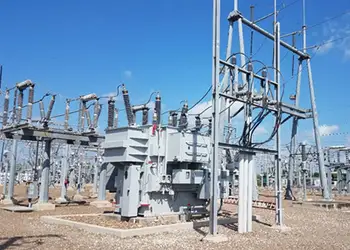
High Voltage Maintenance Training Online

Our customized live online or in‑person group training can be delivered to your staff at your location.
  • Live Online
  • 12 hours Instructor-led
  • Group Training Available
Regular Price:
$599
Coupon Price:
$499
Reserve Your Seat Today

MILWAUKEE, WI -- Soaring utility prices and corporate cutbacks took their toll on consumer satisfaction in the first quarter of 2001, and the American Customer Satisfaction Index fell 0.6 percent.

It's the second straight dip in the index, which measures customer sentiment, complied four times a year by the University of Michigan Business School. At the end of April, the measure of consumer satisfaction stood at 72.2 out of a possible 100.

The index had steadily improved since hitting a low of 70.7 four years ago.

Consumer satisfaction declined 8 percent for energy utilities with The Southern Co. receiving the highest score of 80 and bankrupt Pacific Gas & Electric getting 49 percent, the lowest score ever expect for the Internal Revenue Service.

"There is no mystery in explaining ACSI scores for a utility," said Claes Fornell, director of the university's National Quality Research Center. "Reliability supply and delivery, good customer service and reasonable prices lead to high customer satisfaction."

PG&E's rating fell 33 percent since last year because of the electricity shortage and rolling blackouts affecting California.

"Many energy utility customers, especially those in California, are clearly reacting negatively to energy supply and price problems," said Andrew Morrison, a utilities industry expert for Market Strategies.

Among other industries, customers were 4 percent less satisfied with parcel delivery/express mail; postal service and airlines; telecommunications and television broadcasting each dropped about 3 percent, and hotels and hospitals slumped more than 1 percent.

Southwest led airlines with 70 percent satisfaction and Continental was second with 67, an 8 percent improvement. Bell South was the top rated telecommunications company with a 74 and Qwest (US West) was worst scoring with just 61.

Marriott led hotels with a score of 77, up 4 percent from last year.

Consumers had no change in opinion of newspapers, but satisfaction with the motion picture industry rose more than 4 percent.

"It's interesting a few companies -- Marriott, Continental and Southwest Airlines, for example -- are finding ways to buck the trend by increasing customer satisfaction at a time of general declines," said Jack West, past-president of the American Society for Quality.

"When price goes up without a commensurate increase in value, there's only one way for the ACSI scores to go, and that's down," he said.

Related News
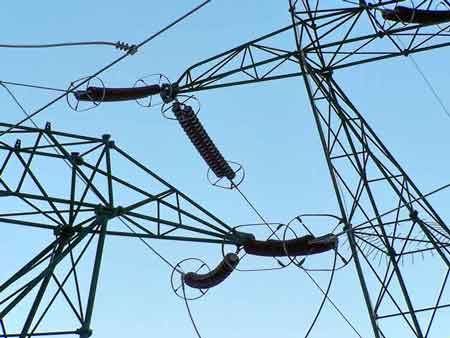
Aging U.S. power grid threatens progress on renewables, EVs

U.S. Grid Modernization is critical for renewable energy integration, EV adoption, climate resilience, and reliability, requiring transmission upgrades, inter-regional links, hardened substations, and smart grid investments to handle extreme weather and decarbonization targets.


Key Points

U.S. Grid Modernization upgrades power networks to improve reliability, integrate renewables, and support EV demand.

✅ $2T+ investment needed for transmission upgrades

✅ Extreme weather doubling outages since 2017

✅ Regulatory fragmentation slows inter-regional lines


After decades of struggle, the U.S. clean-energy business is booming, with soaring electric-car sales and fast growth in wind and solar power. That’s raising hopes for the fight against climate change.

All this progress, however, could be derailed, as the green revolution stalls without a massive overhaul of America’s antiquated electric infrastructure – a task some industry experts say requires more than $2 trillion. The current network of transmission wires, substations and transformers is decaying with age and underinvestment, a condition highlighted by catastrophic failures during increasingly frequent and severe weather events.

Power outages over the last six years have more than doubled in number compared to the previous six years, according to a Reuters examination of federal data. In the past two years, power systems have collapsed in Gulf Coast hurricanes, West Coast wildfires, Midwest heat waves and a Texas deep freeze and recurring Texas grid crisis risks, causing long and sometimes deadly outages.

Compounding the problem, the seven regional grid operators in the United States are underestimating the growing threat of severe weather caused by climate change, Reuters found in a review of more than 10,000 pages of regulatory documents and operators’ public disclosures. Their risk models, used to guide transmission-network investments, consider historical weather patterns extending as far back as the 1970s. None account for scientific research documenting today’s more extreme weather and how it can disrupt grid generation, transmission and fuel supplies simultaneously.

The decrepit power infrastructure of the world’s largest economy is among the biggest obstacles to expanding clean energy and combating climate change on the ambitious schedule laid out by U.S. President Joe Biden. His administration promises to eliminate or offset carbon emissions from the power sector by 2035 and from the entire U.S. economy by 2050. Such rapid clean-energy growth would pressure the nation’s grid in two ways: Widespread EV adoption will spark a huge surge in power demand; and increasing dependence on renewable power creates reliability problems on days with less sun or wind, as seen in Texas, where experts have outlined reliability improvements that address these challenges.

The U.S. transmission network has seen outages double in recent years amid more frequent and severe weather events, driven by climate change and a utility supply-chain crunch that slows critical repairs. The system needs a massive upgrade to handle expected growth in clean energy and electric cars. 

“Competition from renewables is being strangled without adequate and necessary upgrades to the transmission network,” said Simon Mahan, executive director of the Southern Renewable Energy Association, which represents solar and wind companies.

The federal government, however, lacks the authority to push through the massive grid expansion and modernization needed to withstand wilder weather and accommodate EVs and renewable power. Under the current regulatory regime, and amid contentious electricity pricing proposals in recent years, the needed infrastructure investments are instead controlled by a Byzantine web of local, state and regional regulators who have strong political incentives to hold down spending, according to Reuters interviews with grid operators, federal and state regulators, and executives from utilities and construction firms.

“Competition from renewables is being strangled without adequate and necessary upgrades to the transmission network.”

Paying for major grid upgrades would require these regulators to sign off on rate increases likely to spark strong opposition from consumers and local and state politicians, who are keen to keep utility bills low. In addition, utility companies often fight investments in transmission-network improvements because they can result in new connections to other regional grids that could allow rival companies to compete on their turf, even as coal and nuclear disruptions raise brownout risks in some regions. With the advance of green energy, those inter-regional connections will become ever more essential to move power from far-flung solar and wind installations to population centers.

The power-sharing among states and regions with often conflicting interests makes it extremely challenging to coordinate any national strategy to modernize the grid, said Alison Silverstein, an independent industry consultant and former senior adviser to the U.S. Federal Energy Regulatory Commission (FERC).

“The politics are a freakin’ nightmare,” she said.

The FERC declined to comment for this story. FERC Commissioner Mark Christie, a Republican, acknowledged the limitations of the agency’s power over the U.S. grid in an April 21 agency meeting involving transmission planning and costs.

“We can’t force states to do anything,” Christie said.

The White House and Energy Department did not comment in response to detailed questions from Reuters on the Biden administration’s plans to tackle U.S. grid problems and their impact on green-energy expansion.

The administration said in an April news release that it plans to offer $2.5 billion in grants for grid-modernization projects as part of Biden’s $1 trillion infrastructure package, complementing a proposed clean electricity standard to accelerate decarbonization over the next decade. A modernized grid, the release said, is the “linchpin” of Biden’s clean-energy agenda.


Related News

View more

CT leads New England charge to overhaul electricity market structure

New England Grid Reform Initiative aligns governors with ISO New England to reshape market design, boost grid reliability, accelerate renewable energy and offshore wind, explore carbon pricing and forward clean energy markets, and bolster accountability.


Key Points

Five states aim to reform ISO New England markets, prioritize renewables and reliability, and test carbon pricing.

✅ Governors seek market design aligned with clean energy mandates

✅ ISO-NE accountability and stakeholder engagement prioritized

✅ Explore carbon pricing and forward clean energy market options


Weeks after initiating a broad overhaul of utility regulation within its borders, Connecticut has recruited four New England states, as Maine debates a 145-mile transmission line project to rework the regional grid that is overseen by ISO New England, the independent system operator charged with ensuring a reliable supply of electricity from power plants.

In a written statement Thursday morning, Gov. Ned Lamont said the current structure “has actively hindered” states’ efforts to phase out polluting power plants in favor of renewable sources like wind turbines and solar panels, while increasing costs “to fix market design failures” in his words. Lamont’s energy policy chief Katie Dykes has emerged as a vocal critic of ISO New England’s structure and priorities, in her role as commissioner of the Connecticut Department of Energy and Environmental Protection.

“When Connecticut opted to deregulate our electricity market, we wanted the benefits of competition — to achieve lower-cost energy, compatible with meeting our clean-energy goals,” Dykes said in a telephone interview Thursday afternoon. “We have a partner [in] ISO New England, to manage this grid and design a market that is not thwarting our clean-energy goals, but achieving them; and not ignoring consumers’ concerns. ... That’s really what we are looking to do — reclaim the benefits of competition and regional cooperation.”

Lamont and his counterparts in Massachusetts, Rhode Island, Vermont and Maine plan to release a “vision document” in their words on Friday through the New England States Committee on Electricity, after New Hampshire rejected a Quebec-Massachusetts transmission proposal that sought to import Canadian hydropower.

The initial documents made no mention of New Hampshire, which likewise obtains electricity through the wholesale markets managed by ISO New England and has seen clashes over the Northern Pass hydropower project in recent years; and whose Seabrook Station is one two nuclear power plants in New England alongside Dominion Energy’s Millstone Power Station in Waterford. Gov. Chris Sununu’s office did not respond immediately to a query on why New Hampshire is not participating.

Connecticut and the four other states outlined a few broad goals that they will hone over the coming months. Those include creating a better market structure and planning process supporting the conversion to renewables; improving grid reliability, with measures such as an emergency fuel stock program considered; and increasing the accountability of ISO New England to the states and by extension their ratepayer households and businesses.

ISO New England spokesperson Matt Kakley indicated the Holyoke, Mass.-based nonprofit will “engage with the states and our stakeholders” on the governors’ proposal, in an email response to a query. He did not elaborate on any immediate opportunities or challenges inherent in the governors’ proposal.

“Maintaining reliable, competitively-priced electricity through the clean energy transition will require broad collaboration,” Kakley stated. “The common vision of the New England governors will play an important role in the discussions currently underway on the future of the grid.”


Renewable revolution
ISO New England launched operations in 1999, running auctions through which power plant operators bid to supply electricity, including against long-term projections for future needs that can only be met through the construction or installation of new generation capacity.

ISO New England falls under the jurisdiction of the Federal Energy Regulatory Commission rather than the states whose electricity supplies it is tasked with ensuring. That has led to pointed criticism from Dykes and Connecticut legislators that ISO New England is out of touch with the state’s push to switch to renewable sources of electricity.

Entering October, ISO New England published an updated outlook that revealed 60 percent of proposed power generators in the region’s future “queue” are wind farms, primarily offshore installations like the proposed Park City Wind project of Avangrid and Revolution Wind from Eversource. But Dykes recently criticized as unnecessary an NTE Energy plant approved already by ISO New England for eastern Connecticut, which will be fueled by natural gas if all other regulatory approvals are granted.

The six New England states participate in the Regional Greenhouse Gas Initiative that caps carbon emissions by individual power plants, while allowing them to purchase unused allowances from each other with that revenue funneled to the states to support renewable energy and conservation programs. FERC is now considering the concept of carbon pricing, which would levy a tax on power plants based on their emissions, and it also faces pressure to act on aggregated DERs from lawmakers.

ISO New England is investigating the concepts of net carbon pricing and a “forward clean energy market” that would borrow elements of the existing forward capacity market, but designed to meet individual state objectives for the percentage of renewable power they want generated while ensuring adequate electricity is in place when weather does not cooperate.

The Connecticut Public Utilities Regulatory Authority is collecting on its own initiative industry input on modernization proposals, as New York regulators open a formal review of retail energy markets for comparison, that would add up to hundreds of millions of dollars, including utility-scale batteries to store power generated by offshore wind farms and solar arrays; and “smart” meters in homes and businesses to help electricity customers better manage their power use.

The New England Power Pool serves as a central forum for plant operators, commercial users and others like the Connecticut Office of Consumer Counsel, amid Massachusetts solar demand charge debates that affect distributed generation policy, with NEPOOL’s chair stating Thursday morning the group was still reviewing the governors’ announcement.

“NEPOOL has been engaged this year in meetings ... exploring the transition to a future grid in New England and potential pathways forward to support that transition,” stated Nancy Chafetz, chair of NEPOOL, in an email.

Connecticut’s issues with ISO New England boiled over this summer on the heels of a power-purchase agreement between Millstone owner Dominion and transmission grid operators Eversource and United Illuminating, which contributed to a sharp increase in customer bills.

A few weeks ago, Lamont signed into law a “Take Back the Grid” act that allows the Connecticut Public Utilities Regulatory Authority to factor in Eversource’s and Avangrid subsidiary United Illuminating’s past performance in maintaining electric reliability, in addition to any future needs for revenue based on needed upgrades. The law included an element for Connecticut to initiate a study of ISO New England’s role.

Eversource and Avangrid have voiced support for the switch to “performance-based” regulation in Connecticut. Eversource spokesperson Mitch Gross on Thursday cited the company’s view that any changes to the operation of New England’s wholesale power markets should occur within the existing ISO New England structure.

“We also recommend any examination of potential alternatives includes a thorough evaluation that ensures unfair costs would not be imposed on customers,” Gross stated in an email.

In a statement forwarded by Avangrid spokesperson Ed Crowder, the United Illuminating parent indicated it intends to have “a voice in this process” with the goal of continued grid reliability amid increased adoption of clean energy sources.


Related News

View more

B.C. residents and businesses get break on electricity bills for three months

BC Hydro COVID-19 Bill Relief offers pandemic support with bill credits, rate cuts, and deferred payments for residential, small business, and industrial customers across B.C., easing utilities costs during COVID-19 economic hardship.


Key Points

COVID-19 bill credits, a rate cut, and deferred payments for eligible B.C. homes, small businesses, and industrial customers.

✅ Non-repayable credits equal to 3 months of average bills.

✅ Small businesses closed can skip bills for three months.

✅ Large industry may defer 50% of electricity costs.


B.C. residents who have lost their jobs or had their wages cut will get a three-month break on BC Hydro bills, while small businesses, amid commercial consumption plummets during COVID-19, are also eligible to apply for similar relief.

Premier John Horgan said Wednesday the credit for residential customers will be three times a household’s average monthly bill over the past year and does not have to be repaid as part of the government’s support package during the COVID-19 pandemic, as BC Hydro demand down 10% highlights the wider market pressures.

He said small businesses that are closed will not have to pay their power bills for three months, and in Ontario an Ontario COVID-19 hydro rebate complemented similar relief, and large industrial customers, including those operating mines and pulp mills, can opt to have 50 per cent of their electricity costs deferred, though a deferred costs report warned of long-term liabilities.

BC Hydro rates will be cut for all customers by one per cent as of April 1, a move similar to Ontario 2021 rate reductions that manufacturers supported lower rates at the time, after the B.C. Utilities Commission provided interim approval of an application the utility submitted last August.

Eligible residential customers can apply for bill relief starting next week and small business applications will be accepted as of April 14, while staying alert to BC Hydro scam attempts during this period, with the deadline for both categories set at June 30.


Related News

View more

Hydro One reports $1.1B Q2 profit boosted by one-time gain due to court ruling

Hydro One Q2 Earnings surge on a one-time gain from a court ruling on a deferred tax asset, lifting profit, revenue, and adjusted EPS at Ontario's largest utility regulated by the Ontario Energy Board.


Key Points

Hydro One Q2 earnings jumped on an $867M court gain, with revenue at $1.67B and adjusted EPS improving to $0.39.

✅ One-time gain: $867M from tax appeal ruling.

✅ Revenue: $1.67B vs $1.41B last year.

✅ Adjusted EPS: $0.39 vs $0.26.


Hydro One Ltd., following the Peterborough Distribution sale transaction closing, reported a second-quarter profit of $1.1 billion, boosted by a one-time gain related to a court decision.

The power utility says it saw a one-time gain of $867 million in the quarter due to an Ontario court ruling on a deferred tax asset appeal that set aside an Ontario Energy Board decision earlier.

Hydro One says the profit amounted to $1.84 per share for the quarter ended June 30, amid investor concerns about uncertainties, up from $155 million or 26 cents per share a year earlier.

Shares also moved lower after the Ontario government announced leadership changes, as seen when Hydro One shares fell on the news in prior trading.

On an adjusted basis, it says it earned 39 cents per share for the quarter, despite earlier profit plunge headlines, up from an adjusted profit of 26 cents per share in the same quarter last year.

Revenue totalled $1.67 billion, up from $1.41 billion in the second quarter of 2019, while other Canadian utilities like Manitoba Hydro face heavy debt burdens.

Hydro One is Ontario’s largest electricity transmission and distribution provider, and its CEO compensation has drawn scrutiny in the province.


Related News

View more

How utilities are using AI to adapt to electricity demands

AI Load Forecasting for Utilities leverages machine learning, smart meters, and predictive analytics to balance energy demand during COVID-19 disruptions, optimize grid reliability, support demand response, and stabilize rates for residential and commercial customers.


Key Points

AI predicts utility demand with ML and smart meters to improve reliability and reduce costs.

✅ Adapts to rapid demand shifts with accurate short term forecasts

✅ Optimizes demand response and distributed energy resources

✅ Reduces outages risk while lowering procurement and operating costs


The spread of the novel coronavirus that causes COVID-19 has prompted state and local governments around the U.S. to institute shelter-in-place orders and business closures. As millions suddenly find themselves confined to their homes, the shift has strained not only internet service providers, streaming platforms, and online retailers, but the utilities supplying power to the nation’s electrical grid, which face longer, more frequent outages as well.

U.S. electricity use on March 27, 2020 was 3% lower than it was on March 27, 2019, a loss of about three years of sales growth. Peter Fox-Penner, director of the Boston University Institute for Sustainable Energy, asserted in a recent op-ed that utility revenues will suffer because providers are halting shutoffs and deferring rate increases. Moreover, according to research firm Wood Mackenzie, the rise in household electricity demand won’t offset reduced business electricity demand, mainly because residential demand makes up just 40% of the total demand across North America.

Some utilities are employing AI and machine learning for the energy transition to address the windfalls and fluctuations in energy usage resulting from COVID-19. Precise load forecasting could ensure that operations aren’t interrupted in the coming months, thereby preventing blackouts and brownouts. And they might also bolster the efficiency of utilities’ internal processes, leading to reduced prices and improved service long after the pandemic ends.

Innowatts
Innowatts, a startup developing an automated toolkit for energy monitoring and management, counts several major U.S. utility companies among its customers, including Portland General Electric, Gexa Energy, Avangrid, Arizona Public Service Electric, WGL, and Mega Energy. Its eUtility platform ingests data from over 34 million smart energy meters across 21 million customers in more than 13 regional energy markets, while its machine learning algorithms analyze the data to forecast short- and long-term loads, variances, weather sensitivity, and more.

Beyond these table-stakes predictions, Innowatts helps evaluate the effects of different rate configurations by mapping utilities’ rate structures against disaggregated cost models. It also produces cost curves for each customer that reveal the margin impacts on the wider business, and it validates the yield of products and cost of customer acquisition with models that learn the relationships between marketing efforts and customer behaviors (like real-time load).

Innowwatts told VentureBeat that it observed “dramatic” shifts in energy usage between the first and fourth weeks of March. In the Northeast, “non-essential” retailers like salons, clothing shops, and dry cleaners were using only 35% as much energy toward the end of the month (after shelter-in-place orders were enacted) versus the beginning of the month, while restaurants (excepting pizza chains) were using only 28%. In Texas, conversely, storage facilities were using 142% as much energy in the fourth week compared with the first.

Innowatts says that throughout these usage surges and declines, its clients took advantage of AI-based load forecasting to learn from short-term shocks and make timely adjustments. Within three days of shelter-in-place orders, the company said, its forecasting models were able to learn new consumption patterns and produce accurate forecasts, accounting for real-time changes.

Innowatts CEO Sid Sachdeva believes that if utility companies had not leveraged machine learning models, demand forecasts in mid-March would have seen variances of 10-20%, significantly impacting operations.

“During these turbulent times, AI-based load forecasting gives energy providers the ability to … develop informed, data-driven strategies for future success,” Sachdeva told VentureBeat. “With utilities and energy retailers seeing a once-in-a-lifetime 30%-plus drop in commercial energy consumption, accurate forecasting has never been more important. Without AI tools, utilities would see their forecasts swing wildly, leading to inaccuracies of 20% or more, placing an enormous strain on their operations and ultimately driving up costs for businesses and consumers.”

Autogrid
Autogrid works with over 50 customers in 10 countries — including Energy Australia, Florida Power & Light, and Southern California Edison — to deliver AI-informed power usage insights. Its platform makes 10 million predictions every 10 minutes and optimizes over 50 megawatts of power, which is enough to supply the average suburb.

Flex, the company’s flagship product, predicts and controls tens of thousands of energy resources from millions of customers by ingesting, storing, and managing petabytes of data from trillions of endpoints. Using a combination of data science, machine learning, and network optimization algorithms, Flex models both physics and customer behavior, automatically anticipating and adjusting for supply and demand patterns through virtual power plants that coordinate distributed assets.

Autogrid also offers a fully managed solution for integrating and utilizing end-customer installations of grid batteries and microgrids. Like Flex, it automatically aggregates, forecasts, and optimizes capacity from assets at sub-stations and transformers, reacting to distribution management needs while providing capacity to avoid capital investments in system upgrades.

Autogrid CEO Dr. Amit Narayan told VentureBeat that the COVID-19 crisis has heavily shifted daily power distribution in California, where it’s having a “significant” downward impact on hourly prices in the energy market. He says that Autogrid has also heard from customers about transformer failures in some regions due to overloaded circuits, which he expects will become a problem in heavily residential and saturated load areas during the summer months (as utilities prepare for blackouts across the U.S. when air conditioning usage goes up).

“In California, [as you’ll recall], more than a million residents faced wildfire prevention-related outages in PG&E territory in 2019,” Narayan said, referring to the controversial planned outages orchestrated by Pacific Gas & Electric last summer. “The demand continues to be high in 2020 in spite of the COVID-19 crisis, as residents prepare to keep the lights on and brace for a similar situation this summer. If a 2019 repeat happens again, it will be even more devastating, given the health crisis and difficulty in buying groceries.”

AI making a difference
AI and machine learning isn’t a silver bullet for the power grid — even with predictive tools at their disposal, utilities are beholden to a tumultuous demand curve and to mounting climate risks across the grid. But providers say they see evidence the tools are already helping to prevent the worst of the pandemic’s effects — chiefly by enabling them to better adjust to shifted daily and weekly power load profiles.

“The societal impact [of the pandemic] will continue to be felt — people may continue working remotely instead of going into the office, they may alter their commute times to avoid rush hour crowds, or may look to alternative modes of transportation,” Schneider Electric chief innovation officer Emmanuel Lagarrigue told VentureBeat. “All of this will impact the daily load curve, and that is where AI and automation can help us with maintenance, performance, and diagnostics within our homes, buildings, and in the grid.”


Related News

View more

Electric Cooperatives, The Lone Shining Utility Star Of The Texas 2021 Winter Storm

Texas Electric Cooperatives outperformed during Winter Storm Uri, with higher customer satisfaction, equitable rolling blackouts, and stronger grid reliability compared to deregulated markets, according to ERCOT-area survey data of regulated utilities and commercial providers.


Key Points

Member-owned utilities in Texas delivering power, noted for reliability and fair outages during Winter Storm Uri.

✅ Member-owned, regulated utilities serving local communities

✅ Rated higher for blackout management and communication

✅ Operate outside deregulated markets; align incentives with users


Winter Storm Uri began to hit parts of Texas on February 13, 2021 and its onslaught left close to 4.5 million Texas homes and businesses without power, and many faced power and water disruptions at its peak. By some accounts, the preliminary number of deaths attributed to the storm is nearly 200, and the economic toll for the Lone Star State is estimated to be as high as $295 billion. 

The more than two-thirds of Texans who lost power during this devastating storm were notably more negative than positive in their evaluation of the performance of their local electric utility, mirrored by a rise in electricity complaints statewide, with one exception. That exception are the members of the more than 60 electric cooperatives operating within the Texas Interconnection electrical grid, which, in sharp contrast to the customers of the commercial utilities that provide power to the majority of Texans, gave their local utility a positive evaluation related to its performance during the storm.

In order to study Winter Storm Uri’s impact on Texas, the Hobby School of Public Affairs at the University of Houston conducted an online survey during the first half of March of residents 18 and older who live in the 213 counties (91.5% of the state population) served by the Texas power grid, which is managed by the Electric Reliability Council of Texas (ERCOT). 

Three-quarters of the survey population (75%) live in areas with a deregulated utility market, where a specified transmission and delivery utility by region is responsible for delivering the electricity (purchased from one of a myriad of private companies by the consumer) to homes and businesses. The four main utility providers are Oncor, CenterPoint CNP -2.2%, American Electric Power (AEP) North, and American Electric Power (AEP) Central. 

The other 25% of the survey population live in areas with regulated markets, where a single company is responsible for both delivering the electricity to homes and businesses and serves as the only source from which electricity is purchased. Municipal-owned and operated utilities (e.g., Austin Energy, Bryan Texas Utilities, Burnet Electric Department, Denton Municipal Electric, New Braunfels Utilities, San Antonio’s CPS Energy CMS -2.1%) serve 73% of the regulated market. Electric cooperatives (e.g., Bluebonnet Electric Cooperative, Central Texas Electric Cooperative, Guadalupe Valley Cooperative, Lamb County Electric Cooperative, Pedernales Electricity Cooperative, Wood County Electric Cooperative) serve one-fifth of this market (21%), with private companies accounting for 6% of the regulated market.

The overall distribution of the survey population by electric utility providers is: Oncor (38%), CenterPoint (21%), municipal-owned utilities (18%), AEP Central & AEP North combined (12%), electric cooperatives (6%), other providers in the deregulated market (4%) and other providers in the regulated market (1%). 

There were no noteworthy differences among the 31% of Texans who did not lose power during the winter storm in regard to their evaluations of their local electricity provider or their belief that the power cuts in their locale were carried out in an equitable manner.  

However, among the 69% of Texans who lost power, those served by electric cooperatives in the regulated market and those served by private electric utilities in the deregulated market differed notably regarding their evaluation of the performance of their local electric utility, both in regard to their management of the rolling blackouts, amid debates over market reforms to avoid blackouts, and to their overall performance during the winter storm. Those Texans who lost power and are served by electric cooperatives in a regulated market had a significantly more positive evaluation of the performance of their local electric utility than did those Texans who lost power and are served by a private company in a deregulated electricity market. 

For example, only 24% of Texans served by electric cooperatives had a negative evaluation of their local electric utility’s overall performance during the winter storm, compared to 55%, 56% and 61% of those served by AEP, Oncor and CenterPoint respectively. A slightly smaller proportion of Texans served by electric cooperatives (22%) had a negative evaluation of their local electric utility’s performance managing the rolling blackouts during the winter storm, compared to 58%, 61% and 71% of Texans served by Oncor, AEP and CenterPoint, respectively.

Texans served by electric cooperatives in regulated markets were more likely to agree that the power cuts in their local area were carried out in an equitable manner compared to Texans served by commercial electricity utilities in deregulated markets. More than half (52%) of those served by an electric cooperative agreed that power cuts during the winter storm in their area were carried out in an equitable manner, compared to only 26%, 23% and 23% of those served by Oncor, AEP and CenterPoint respectively

The survey data did not allow us to provide a conclusive explanation as to why the performance during the winter storm by electric cooperatives (and to a much lesser extent municipal utilities) in the regulated markets was viewed more favorably by their customers than was the performance of the private companies in the deregulated markets viewed by their customers. Yet here are three, far from exhaustive, possible explanations.

First, electric cooperatives might have performed better (based on objective empirical metrics) during the winter storm, perhaps because they are more committed to their customers, who are effectively their bosses. .  

Second, members of electric cooperatives may believe their electric utility prioritizes their interests more than do customers of commercial electric utilities and therefore, even if equal empirical performance were the case, are more likely to rate their electric utility in a positive manner than are customers of commercial utilities.  

Third, regulated electric utilities where a single entity is responsible for the commercialization, transmission and distribution of electricity might be better able to respond to the type of challenges presented by the February 2021 winter storm than are deregulated electric utilities where one entity is responsible for commercialization and another is responsible for transmission and distribution, aligning with calls to improve electricity reliability across Texas.

Other explanations for these findings may exist, which in addition to the three posited above, await future empirical verification via new and more comprehensive studies designed specifically to study electric cooperatives, large commercial utilities, and the incentives that these entities face under the regulatory system governing production, commercialization and distribution of electricity, including rulings that some plants are exempt from providing electricity in emergencies under state law. 

Still, opinion about electricity providers during Winter Storm Uri is clear: Texans served by regulated electricity markets, especially by electric cooperatives, were much more satisfied with their providers’ performance than were those in deregulated markets. Throughout its history, Texas has staunchly supported the free market. Could Winter Storm Uri change this propensity, or will attempts to regulate electricity lessen as the memories of the storm’s havoc fades? With a hotter summer predicted to be on the horizon in 2021 and growing awareness of severe heat blackout risks, we may soon get an answer.   


Related News

View more

Sign Up for Electricity Forum’s Newsletter

Stay informed with our FREE Newsletter — get the latest news, breakthrough technologies, and expert insights, delivered straight to your inbox.

Electricity Today T&D Magazine Subscribe for FREE

Stay informed with the latest T&D policies and technologies.
  • Timely insights from industry experts
  • Practical solutions T&D engineers
  • Free access to every issue

Download the 2025 Electrical Training Catalog

Explore 50+ live, expert-led electrical training courses –

  • Interactive
  • Flexible
  • CEU-cerified