CSA Z462 Arc Flash Training - Electrical Safety Compliance
Our customized live online or in‑person group training can be delivered to your staff at your location.

- Live Online
- 6 hours Instructor-led
- Group Training Available
Regular Price:
$249
Coupon Price:
$199
-- A day after Prime Minister Jean Chretien said he warned
U.S. President George W. Bush to allow trade to flow as freely on lumber as
it does on fuel, a White House spokesman said energy wasn't raised during
the leaders' conversation.
Ari Fleischer, Bush's press secretary, said the president spoke to Chretien Monday aboard Air Force One while en route to Milwaukee. Fleischer said he did not listen in on that conversation, or an earlier discussion between Bush and Mexican President Vicente Fox.
"I've been briefed on them and nobody brought anything to my attention about any energy discussions on these two phone calls," Fleischer said Wednesday, from Bush's ranch in Crawford, Tex.
Chretien said Tuesday he gave Bush "hell" during a lecture on unfettered trade, telling the U.S. president he couldn't portray himself as a worldwide defender of liberalized trade looking for all the energy Canada can provide while erecting tariff walls against Canadian lumber. "You want gas, you want oil and you don't want wood?" Chretien said he told Bush.
"It's too bad, but if you have free trade, you have free trade. And I explained it very clearly."
Bush has built an energy program around the need for increased oil and gas exploration. His administration sees Canada as a reliable and secure source of fuel in an increasingly unstable world and he has asked Ottawa to provide all the energy it can to its southern neighbour.
Chretien insisted he was not linking the softwood dispute to access to Canadian energy. His version of their conversation represented Canada's toughest response since the U.S. government slapped a 19.3 per cent tariff on Canada's $7-billion-a-year softwood lumber exports.
The prime minister said the U.S. president told him to tell Canadians he "gave him hell."
Fleischer did say softwood lumber was the subject of the discussion between Bush and Chretien, but he painted the talk in bland terms.
"The president spoke with the prime minister about the need to resolve this difficult issue between our two countries," Fleischer said during his daily press briefing.
"This is an issue that has come up many times before."
The U.S. penalty represents a staggering blow to the Canadian lumber industry and threatens the livelihood of 300,000 people connected with trade in forest products.
The tariffs could be worth up to $2-billion annually. In British Columbia, which exports half of its softwood production to the United States, lumber companies warned that thousands of workers would be laid off if the penalties, which began being assessed this week, are not abolished.
The Bush administration did hint that it hoped for a negotiated end to the decades-old lumber dispute between the two countries.
"The president and the prime minister discussed the need to resolve it and Ambassador (Robert) Zoellick, the United States Trade Representative, is working on that now," Fleischer said.
A State Department spokesman in Washington told reporters that "we're interested in a long-term solution to this trade issue in terms of subsidies on Canadian lumber."
But he went on to suggest Chretien might be exaggerating the importance of the dispute.
"To put your questions in context, our economic relationship with Canada is vital and strong," said Philip Reeker.
"Softwood lumber represents only seven billion out of $450 billion in total trade between our two countries."
The United States contends Canadian softwood is unfairly subsidized by the provinces.
Canada has rejected the accusation and has asked the World Trade Organization to rule on the dispute.
The lumber dispute has been roiling Canada-U.S. relations for almost a century. Three separate international panels have ruled in Canada's favour over the years.
The United States was forced to repay as much as $800-million in duties and tariffs imposed on Canadian lumber exporters after the last dispute.
Related News

Ontario tables legislation to lower electricity rates
Ontario Clean Energy Adjustment lowers hydro bills by shifting global adjustment costs, cutting time-of-use rates,…
View more
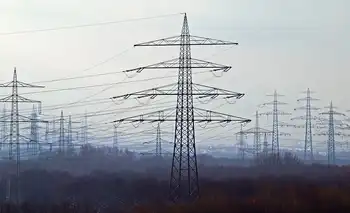
Surging electricity demand is putting power systems under strain around the world
Global Electricity Demand Surge strains power markets, fuels price volatility, and boosts coal and gas…
View more

BC Hydro Rates to Rise by 3.75% Over Two Years
British Columbia electricity rate increase will raise BC Hydro bills 3.75% over 2025-2026 to fund…
View more
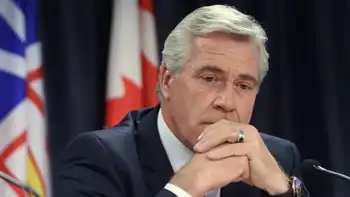
N.L. premier says Muskrat Falls costs are too great for optimism about benefits
Muskrat Falls financial impact highlights a hydro megaproject's cost overruns, rate mitigation challenges, and inquiry…
View more

Westinghouse AP1000 Nuclear Plant Breaks A First Refueling Outage Record
AP1000 Refueling Outage Record showcases Westinghouse nuclear power excellence as Sanmen Unit 2 completes its…
View more
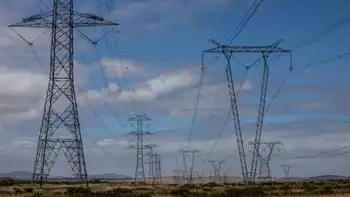
Millions at Risk of Electricity Shut-Offs Amid Summer Heat
Summer Heatwave Electricity Shut-offs strain power grids as peak demand surges, prompting load shedding, customer…
View more
Sign Up for Electricity Forum’s Newsletter
Stay informed with our FREE Newsletter — get the latest news, breakthrough technologies, and expert insights, delivered straight to your inbox.
Electricity Today T&D Magazine Subscribe for FREE
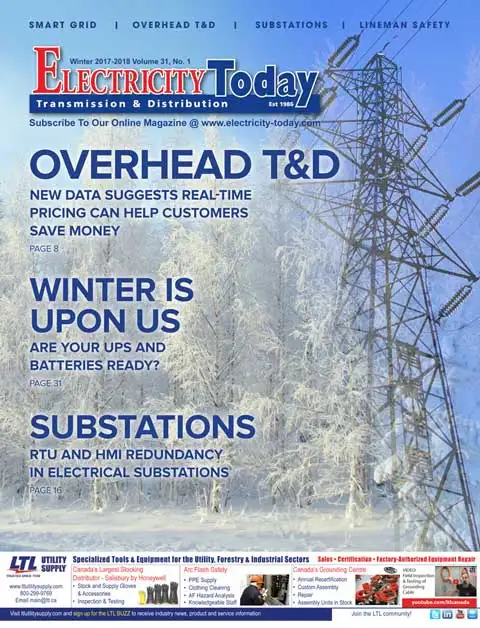
Stay informed with the latest T&D policies and technologies.
- Timely insights from industry experts
- Practical solutions T&D engineers
- Free access to every issue