NFPA 70E Training - 2027 Edition - Arc Flash and Electrical Safety Course
Our customized live online or in‑person group training can be delivered to your staff at your location.

- Live Online
- 6 hours Instructor-led
- Group Training Available
Regular Price:
$199
Coupon Price:
$149
The Tennessee Valley Authority was created during the Great Depression, in part, to serve as a "living laboratory" for rural development and new technologies.
With the aid of Congress, TVA developed new fertilizers, pioneered new power generation technologies and harnessed the Tennessee River.
However, since Congress cut off taxpayer funding for TVA and began deregulating the electric industry in the 1990s, the utility has taken a more cautious approach to new technologies, including new "clean coal" plant designs.
The federal utility decided against pursuing a coal gasification plant at its unfinished Bellefonte Nuclear Plant and backed away from joining an industry coalition, known as FutureGen, working to develop clean-coal technologies.
TVA President Tom Kilgore said the federal utility may not be a leader in pursuing new technologies, "but we are a fast follower."
But Stephen Smith, executive director for the Southern Alliance for Clean Energy, said he is disappointed that TVA is giving up its pioneering role in the utility industry.
"The only technology TVA seems to want to explore involves nuclear power, and I'm afraid that is very shortsighted," he said.
After installing the South's first coal scrubber and testing one of the country's earliest coal gasification plants in the 1970s, TVA now is waiting for other utilities to test clean-coal methods, officials said.
While TVA pursues new nuclear power designs, other utilities such as Southern Co. and Duke Energy are testing coal gasification, carbon sequestration and integrated gas combined cycle plants to help burn coal more efficiently.
Nationwide, utilities have proposed 24 coal gasification plants. TVA is not among those utilities.
Many of the incentives for developing new power plant technologies also are gone, according to Tommy Thompson, manager of fleet planning for the fossil power group.
"We no longer have the congressional funding we once received for these types of projects, and we don't have the same tax incentives as do Duke, AEP and Cynergy," he said.
Some of the tax credits from the U.S. Department of Energy for its clean-coal program don't benefit the bottom line of a government utility such as TVA.
In the near term, TVA is turning to nuclear power rather than fossil fuels - either coal or natural gas - to meet its future power demand.
TVA expects to restart its oldest nuclear reactor next May. The return of power generation at the Unit 1 reactor at the Browns Ferry Nuclear Plant, idle since 1985, will generate another 1,200 megawatts of electricity, or about enough power to supply two cities the size of Chattanooga.
In the fiscal year that begins next month, TVA will spend up to $20 million on a detailed planning study to determine the costs to finish the incomplete Watts Bar Unit 2. U.S. Sen. Lamar Alexander, R- Tenn., chairman of the TVA Congressional Caucus, previously has urged TVA to pursue coal gasification options aggressively. But in a statement last week, Sen. Alexander said TVA is uniquely positioned to restart a nuclear reactor at Browns Ferry and finish another at Watts Bar.
"Nowhere else in the country is there the possibility of getting two nuclear power plants online so soon," he said. "Coal gasification is part of the solution as well, but that's down the road a bit, and I expect TVA will continue to follow developments to make coal gasification and carbon sequestration more affordable."
TVA has joined with other utilities to support research by the Electric Power Research Institute into an integrated gasification combined cycle plant.
"We have so many dollars to spend, and we've got to figure out where is the best place for us to spend our money today," Mr. Thompson said.
Related News

Relief for power bills in B.C. offered to only part of province
BC Hydro COVID-19 Relief offers electricity bill credits for laid-off workers and small business support,…
View more
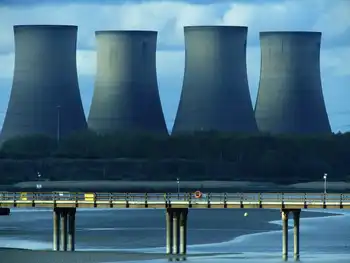
Germany turns to coal for a third of its electricity
Germany's Coal Reliance reflects an energy crisis, soaring natural gas prices, and a nuclear phase-out,…
View more

IEA praises Modi govt for taking electricity to every village; calls India 'star performer'
India Village Electrification hailed by the IEA in World Energy Outlook 2018 showcases rapid energy…
View more
BC Hydro: 2021 was a record-breaking year for electricity demand
BC Hydro 2021 Peak Load Records highlight record-breaking electricity demand, peak load spikes, heat dome…
View more
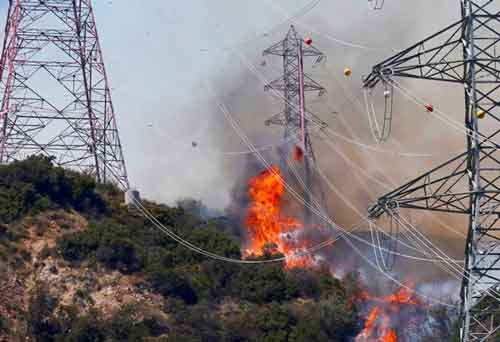
Southern California Edison Faces Lawsuits Over Role in California Wildfires
SCE Wildfire Lawsuits allege utility equipment and power lines sparked deadly Los Angeles blazes; investigations,…
View more
Negative Electricity Prices Amid Renewable Energy Surplus
France Negative Electricity Prices highlight surplus renewables as solar and wind output exceeds demand, driving…
View more
Sign Up for Electricity Forum’s Newsletter
Stay informed with our FREE Newsletter — get the latest news, breakthrough technologies, and expert insights, delivered straight to your inbox.
Electricity Today T&D Magazine Subscribe for FREE

Stay informed with the latest T&D policies and technologies.
- Timely insights from industry experts
- Practical solutions T&D engineers
- Free access to every issue

