Cross-Sound Cable Appeals Conn. Power Line Ruling

By Reuters


Arc Flash Training CSA Z462 - Electrical Safety Essentials

Our customized live online or in‑person group training can be delivered to your staff at your location.
  • Live Online
  • 6 hours Instructor-led
  • Group Training Available
Regular Price:
$249
Coupon Price:
$199
Reserve Your Seat Today
The owners of an undersea power line between Connecticut and New York appealed on Wednesday to the Connecticut Supreme Court for relief after failing to convince a lower court to let the company energize the cable.

Two weeks ago, Connecticut Superior Court Judge Lynda Munro turned down Cross-Sound Cable Co's request to order Connecticut environmental regulators to allow the operation of the cable.

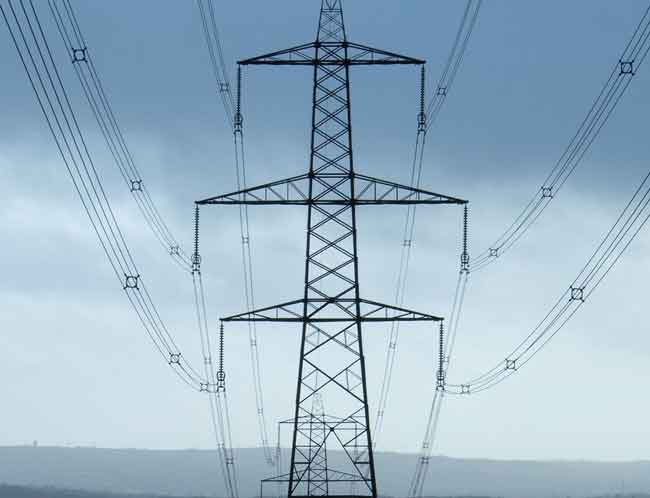
The high-voltage line, capable of delivering 330 megawatts of power, has lain dormant since it was installed last May because some state regulators said it was not buried deep enough in the New Haven Harbor on the Connecticut side of Long Island Sound.

That 330 megawatts, capable of powering some 330,000 homes, could be critical for utilities on both sides of the sound this summer when power demand peaks as people crank up their air conditioners.

Power supplies on both New York's Long Island and in southwest Connecticut are some of the tightest in the nation.

Officials at the Connecticut Department of Environmental Protection (DEP), which unlike some other state regulators has said the cable could operate safely at the present depth, have refused to alter the company's permit because of a one-year moratorium blocking new power projects in the sound.

Because the moratorium, which expires on June 3, was put in place by the Connecticut Legislature after the permit was granted, Cross-Sound has argued the moratorium does not prevent the DEP from modifying the permit to allow the operation of the cable while the company fixes the depth problem.

After the lower court sided with the DEP, Cross-Sound decided to appeal the decision to the state supreme court. The company said it expects the supreme court to rule on their request for appeal by the end of the month.

The Long Island Power Authority has already said it will ask the U.S. Department of Energy (DOE) to order Cross-Sound to energize the cable to supply emergency power if needed during the summer months. Last year, the DOE issued a similar order that was never used.

Cross-Sound is a partnership between TransEnergie U.S. (75 percent) of Westborough, Massachusetts and a subsidiary of UIL Holdings Corp. (25 percent) of New Haven, Connecticut.

TransEnergie U.S. is a subsidiary of Canada's TransEnergie, which operates high-voltage transmission lines in Quebec for provincially owned Hydro-Quebec energy company.

Related News
Altmaier's new electricity forecast: the main driver is e-mobility

Germany 2030 Electricity Demand Forecast projects 658 TWh, driven by e-mobility, heat pumps, and green hydrogen. BMWi and BDEW see higher renewables, onshore wind, photovoltaics, and faster grid expansion to meet climate targets.


Key Points

A BMWi outlook to 658 TWh by 2030, led by e-mobility, plus demand from heat pumps, green hydrogen, and industry.

✅ Transport adds ~70 TWh; cars take 44 TWh by 2030

✅ Heat pumps add 35 TWh; green hydrogen needs ~20 TWh

✅ BDEW urges 70% renewables and faster grid expansion


Gross electricity consumption in Germany will increase from 595 terawatt hours (TWh) in 2018 to 658 TWh in 2030. That is an increase of eleven percent. This emerges from the detailed analysis of the development of electricity demand that the Federal Ministry of Economics (BMWi) published on Tuesday. The main driver of the increase is therefore the transport sector. According to the paper, increased electric mobility in particular contributes 68 TWh to the increase, in line with rising EV power demand trends across markets. Around 44 TWh of this should be for cars, 7 TWh for light commercial vehicles and 17 TWh for heavy trucks. If the electricity consumption for buses and two-wheelers is added, this results in electricity consumption for e-mobility of around 70 TWh.

The number of purely battery-powered vehicles is increasing according to the investigation by the BMWi to 16 million by 2030, reflecting the global electric car market momentum, plus 2.2 million plug-in hybrids. In 2018 there were only around 100,000 electric cars, the associated electricity consumption was an estimated 0.3 TWh, and plug-in mileage in 2021 highlighted the rapid uptake elsewhere. For heat pumps, the researchers predict an increase in demand by 35 TWh to around 42 TWh. They estimate the electricity consumption for the production of around 12.5 TWh of green hydrogen in 2030 to be just under 20 TWh. The demand at battery factories and data centers will increase by 13 TWh compared to 2018 by this point in time. In the data centers, there is no higher consumption due to more efficient hardware despite advancing digitization.

The updated figures are based on ongoing scenario calculations by Prognos, in which the market researchers took into account the goals of the Climate Protection Act for 2030 and the wider European electrification push for decarbonization. In the preliminary estimate presented by Federal Economics Minister Peter Altmaier (CDU) in July, a range of 645 to 665 TWh was determined for gross electricity consumption in 2030. Previously, Altmaier officially said that electricity demand in this country would remain constant for the next ten years. In June, Chancellor Angela Merkel (CDU) called for an expanded forecast that would have to include trends in e-mobility adoption within a decade and the Internet of Things, for example.

Higher electricity demand
The Federal Association of Energy and Water Management (BDEW) is assuming an even higher electricity demand of around 700 TWh in nine years. In any case, a higher share of renewable energies in electricity generation of 70 percent by 2030 is necessary in order to be able to achieve the climate targets and to address electricity price volatility risks. The expansion paths urgently need to be increased and obstacles removed. This could mean around 100 gigawatts (GW) for onshore wind turbines, 11 GW for biomass and at least 150 GW for photovoltaics by 2030. Faster network expansion and renovation will also become even more urgent, as electric cars challenge grids in many regions.


Related News

View more

Western Canada drought impacting hydropower production as reservoirs run low

Western Canada Hydropower Drought strains British Columbia and Manitoba as reservoirs hit historic lows, cutting hydroelectric output and prompting power imports, natural gas peaking, and grid resilience planning amid climate change risks this winter.


Key Points

Climate-driven reservoir lows cut hydro in B.C. and Manitoba, prompting imports and backup gas to maintain reliability.

✅ Reservoirs at multi-year lows cut hydro generation capacity

✅ BC Hydro and Manitoba Hydro import electricity for reliability

✅ Natural gas turbines used; climate change elevates drought risk


Severe drought conditions in Western Canada are compelling two hydroelectricity-dependent provinces, British Columbia and Manitoba, to import power from other regions. These provinces, known for their reliance on hydroelectric power, are facing reduced electricity production due to low water levels in reservoirs this autumn and winter as energy-intensive customers encounter temporary connection limits.

While there is no immediate threat of power outages in either province, experts indicate that climate change is leading to more frequent and severe droughts. This trend places increasing pressure on hydroelectric power producers in the future, spurring interest in upgrading existing dams as part of adaptation strategies.

In British Columbia, several regions are experiencing "extreme" drought conditions as classified by the federal government. BC Hydro spokesperson Kyle Donaldson referred to these conditions as "historic," and a first call for power highlights the strain, noting that the corporation's large reservoirs in the north and southeast are at their lowest levels in many years.

To mitigate this, BC Hydro has been conserving water by utilizing less affected reservoirs and importing additional power from Alberta and various western U.S. states. Donaldson confirmed that these measures would persist in the upcoming months.

Manitoba is also facing challenges with below-normal levels in reservoirs and rivers. Since October, Manitoba Hydro has occasionally relied on its natural gas turbines to supplement hydroelectric production as electrical demand could double over the next two decades, a measure usually reserved for peak winter demand.

Bruce Owen, a spokesperson for Manitoba Hydro, reassured that there is no imminent risk of a power shortage. The corporation can import electricity from other regions, similar to how it exports clean energy in high-water years.

However, the cost implications are significant. Manitoba Hydro anticipates a financial loss for the current fiscal year, with more red ink tied to emerging generation needs, the second in a decade, with the previous one in 2021. That year, drought conditions led to a significant reduction in the company's power production capabilities, resulting in a $248-million loss.

The 2021 drought also affected hydropower production in the United States. The U.S. Department of Energy reported a 16% reduction in overall generation, with notable decreases at major facilities like Nevada's Hoover Dam, where production dropped by 25%.

Drought has long been a major concern for hydroelectricity producers, and they plan their operations with this risk in mind. Manitoba's record drought in 1940-41, for example, is a benchmark for Manitoba Hydro's operational planning to ensure sufficient electricity supply even in extreme low-water conditions.

Climate change, however, is increasing the frequency of such rare events, highlighting the need for more robust backup systems such as new turbine investments to enhance reliability. Blake Shaffer, an associate professor of economics at the University of Calgary specializing in electricity markets, emphasized the importance of hydroelectric systems incorporating the worsening drought forecasts due to climate change into their energy production planning.


Related News

View more

WEC Energy Group to buy 80% stake in Illinois wind farm for $345 million

WEC Energy Blooming Grove Investment underscores Midwest renewable energy growth, with Invenergy, GE turbines, and 250 MW wind power capacity, tax credits, PPAs, and utility-scale generation supplying corporate offtakers via long-term contracts.


Key Points

It is WEC Energy's $345M purchase of an 80% stake in Invenergy's 250 MW Blooming Grove wind farm in Illinois.

✅ 94 GE turbines; 250 MW utility-scale wind capacity

✅ Output contracted to two multinational offtakers

✅ Eligible for 100% bonus depreciation and wind tax credits


WEC Energy Group, the parent company of We Energies, is buying an 80% stake in a wind farm, as seen with projects like Enel's 450 MW wind farm coming online, in McLean County, Illinois, for $345 million.

The wind farm, known as the Blooming Grove Wind Farm, is being developed by Invenergy, which recently completed the largest North American wind build with GE partners, a company based in Chicago that develops wind, solar and other power projects. WEC Energy has invested in several wind farms developed by Invenergy.

With the agreement announced Monday, WEC Energy will have invested more than $1.2 billion in wind farms in the Midwest, echoing heartland investment growth across the region. The power from the wind farms is sold to other utilities or companies, as federal initiatives like DOE wind awards continue to support innovation, and the projects are separate from the investments made by WEC Energy's regulated utilities, such as We Energies, in wind power.

The project, which will consist of 94 wind turbines from General Electric, is expected to be completed this year, similar to recent project operations in the sector, and will have a capacity of 250 megawatts, WEC said in a news release.

Affiliates of two undisclosed multinational companies akin to EDF's offshore investment activity have contracted to take all of the wind farm's output.

The investment is expected to be eligible for 100% bonus depreciation and, as wind economics help illustrate key trends, the tax credits available for wind projects, WEC Energy said.


Related News

View more

Europe’s Big Oil Companies Are Turning Electric

European Oil Majors Energy Transition highlights BP, Shell, and Total rapidly scaling renewables, wind and solar assets, hydrogen, electricity, and EV charging while cutting upstream capex, aligning with net-zero goals and utility-style energy services.


Key Points

It is the shift by BP, Shell, Total and peers toward renewables, electricity, hydrogen, and EV charging to meet net-zero goals.

✅ Offshore wind, solar, and hydrogen projects scale across Europe

✅ Capex shifts, fossil output declines, net-zero targets by 2050

✅ EV charging, utilities, and power trading become core services


Under pressure from governments and investors, including rising investor pressure at utilities that reverberates across the sector, industry leaders like BP and Shell are accelerating their production of cleaner energy.

This may turn out to be the year that oil giants, especially in Europe, started looking more like electric companies.

Late last month, Royal Dutch Shell won a deal to build a vast wind farm off the coast of the Netherlands. Earlier in the year, France’s Total, which owns a battery maker, agreed to make several large investments in solar power in Spain and a wind farm off Scotland. Total also bought an electric and natural gas utility in Spain and is joining Shell and BP in expanding its electric vehicle charging business.

At the same time, the companies are ditching plans to drill more wells as they chop back capital budgets. Shell recently said it would delay new fields in the Gulf of Mexico and in the North Sea, while BP has promised not to hunt for oil in any new countries.

Prodded by governments and investors to address climate change concerns about their products, Europe’s oil companies are accelerating their production of cleaner energy — usually electricity, sometimes hydrogen — and promoting natural gas, which they argue can be a cleaner transition fuel from coal and oil to renewables, as carbon emissions drop in power generation.

For some executives, the sudden plunge in demand for oil caused by the pandemic — and the accompanying collapse in earnings — is another warning that unless they change the composition of their businesses, they risk being dinosaurs headed for extinction.

This evolving vision is more striking because it is shared by many longtime veterans of the oil business.

“During the last six years, we had extreme volatility in the oil commodities,” said Claudio Descalzi, 65, the chief executive of Eni, who has been with that Italian company for nearly 40 years. He said he wanted to build a business increasingly based on green energy rather than oil.

“We want to stay away from the volatility and the uncertainty,” he added.

Bernard Looney, a 29-year BP veteran who became chief executive in February, recently told journalists, “What the world wants from energy is changing, and so we need to change, quite frankly, what we offer the world.”

The bet is that electricity will be the prime means of delivering cleaner energy in the future and, therefore, will grow rapidly as clean-energy investment incentives scale globally.

American giants like Exxon Mobil and Chevron have been slower than their European counterparts to commit to climate-related goals that are as far reaching, analysts say, partly because they face less government and investor pressure (although Wall Street investors are increasingly vocal of late).

“We are seeing a much bigger differentiation in corporate strategy” separating American and European oil companies “than at any point in my career,” said Jason Gammel, a veteran oil analyst at Jefferies, an investment bank.

Companies like Shell and BP are trying to position themselves for an era when they will rely much less on extracting natural resources from the earth than on providing energy as a service tailored to the needs of customers — more akin to electric utilities than to oil drillers.

They hope to take advantage of the thousands of engineers on their payrolls to manage the construction of new types of energy plants; their vast networks of retail stations to provide services like charging electric vehicles; and their trading desks, which typically buy and hedge a wide variety of energy futures, to arrange low-carbon energy supplies for cities or large companies.

All of Europe’s large oil companies have now set targets to reduce the carbon emissions that contribute to climate change. Most have set a ”net zero” ambition by 2050, a goal also embraced by governments like the European Union and Britain.

The companies plan to get there by selling more and more renewable energy and by investing in carbon-free electricity across their portfolios, and, in some cases, by offsetting emissions with so-called nature-based solutions like planting forests to soak up carbon.

Electricity is the key to most of these strategies. Hydrogen, a clean-burning gas that can store energy and generate electric power for vehicles, also plays an increasingly large role.

The coming changes are clearest at BP. Mr. Looney said this month that he planned to increase investment in low-emission businesses like renewable energy by tenfold in the next decade to $5 billion a year, while cutting back oil and gas production by 40 percent. By 2030, BP aims to generate renewable electricity comparable to a few dozen large offshore wind farms.

Mr. Looney, though, has said oil and gas production need to be retained to generate cash to finance the company’s future.

Environmentalists and analysts described Mr. Looney’s statement that BP’s oil and gas production would decline in the future as a breakthrough that would put pressure on other companies to follow.

BP’s move “clearly differentiates them from peers,” said Andrew Grant, an analyst at Carbon Tracker, a London nonprofit. He noted that most other oil companies had so far been unwilling to confront “the prospect of producing less fossil fuels.”

While there is skepticism in both the environmental and the investment communities about whether century-old companies like BP and Shell can learn new tricks, they do bring scale and know-how to the task.

“To make a switch from a global economy that depends on fossil fuels for 80 percent of its energy to something else is a very, very big job,” said Daniel Yergin, the energy historian who has a forthcoming book, “The New Map,” on the global energy transition now occurring in energy. But he noted, “These companies are really good at big, complex engineering management that will be required for a transition of that scale.”

Financial analysts say the dreadnoughts are already changing course.

“They are doing it because management believes it is the right thing to do and also because shareholders are severely pressuring them,” said Michele Della Vigna, head of natural resources research at Goldman Sachs.

Already, he said, investments by the large oil companies in low-carbon energy have risen to as much as 15 percent of capital spending, on average, for 2020 and 2021 and around 50 percent if natural gas is included.

Oswald Clint, an analyst at Bernstein, forecast that the large oil companies would expand their renewable-energy businesses like wind, solar and hydrogen by around 25 percent or more each year over the next decade.

Shares in oil companies, once stock market stalwarts, have been marked down by investors in part because of the risk that climate change concerns will erode demand for their products. European electric companies are perceived as having done more than the oil industry to embrace the new energy era.

“It is very tricky for an investor to have confidence that they can pull this off,” Mr. Clint said, referring to the oil industry’s aspirations to change.

But, he said, he expects funds to flow back into oil stocks as the new businesses gather momentum.

At times, supplying electricity has been less profitable than drilling for oil and gas. Executives, though, figure that wind farms and solar parks are likely to produce more predictable revenue, partly because customers want to buy products labeled green.

Mr. Descalzi of Eni said converted refineries in Venice and Sicily that the company uses to make lower-carbon fuel from plant matter have produced better financial results in this difficult year than its traditional businesses.

Oil companies insist that they must continue with some oil and gas investments, not least because those earnings can finance future energy sources. “Not to make any mistake,” Patrick Pouyanné, chief executive of Total, said to analysts recently: Low-cost oil projects will be a part of the future.

During the pandemic, BP, Total and Shell have all scrutinized their portfolios, partly to determine if climate change pressures and lingering effects from the pandemic mean that petroleum reserves on their books — developed for perhaps billions of dollars, when oil was at the center of their business — might never be produced or earn less than previously expected. These exercises have led to tens of billions of dollars of write-offs for the second quarter, and there are likely to be more as companies recalibrate their plans.

“We haven’t seen the last of these,” said Luke Parker, vice president for corporate analysis at Wood Mackenzie, a market research firm. “There will be more to come as the realities of the energy transition bite.”


Related News

View more

Relief for power bills in B.C. offered to only part of province

BC Hydro COVID-19 Relief offers electricity bill credits for laid-off workers and small business support, announced by Premier John Horgan, while FortisBC customers face deferrals and billing arrangements across Kelowna, Okanagan, and West Kootenay.


Key Points

BC Hydro COVID-19 Relief gives bill credits to laid-off residents; FortisBC offers deferrals and payment plans.

✅ Credit equals 3x average monthly bill for laid-off BC Hydro users

✅ Small businesses on BC Hydro get three months bill forgiveness

✅ FortisBC waives late fees, no disconnections, offers deferrals


On April 1, B.C. Premier John Horgan announced relief for BC Hydro customers who are facing bills after being laid-off during the economic shutdown due to the COVID-19 epidemic, while the utility also explores time-of-use rates to manage demand.

“Giving people relief on their power bills lets them focus on the essentials, while helping businesses and encouraging critical industry to keep operating,” he said.

BC Hydro residential customers in the province who have been laid off due to the pandemic will see a credit for three times their average monthly bill and, similar to Ontario's pandemic relief fund, small businesses forced to close will have power bills forgiven for three months.

But a large region of the province which gets its power from FortisBC will not have the same bail out.

FortisBC is the electricity provider to the tens of thousands who live and work in the Silmikameen Valley on Highway 3, the city of Kelowna, the Okanagan Valley south from Penticton, the Boundary region along the U.S. border. as well as West Kootenay communities.

“We want to make sure our customers are not worried about their FortisBC bill,” spokesperson Nicole Brown said.

FortisBC customers will still be on the hook for bills despite measures being taken to keep the lights on, even as winter disconnection pressures have been reported elsewhere.

Recent storm response by BC Hydro also highlights how crews have kept electricity service reliable during recent atypical events.

“We’ve adjusted our billing practices so we can do more,” she said. “We’ve discontinued our late fees for the time being and no customer will be disconnected for any financial reason.”

Brown said they will work one-on-one with customers to help find a billing arrangement that best suits their needs, aligning with disconnection moratoriums seen in other jurisdictions.

Those arrangement, she said, could include a “deferral, an equal payment plan or other billing options,” similar to FortisAlberta's precautions announced in Alberta.

Global News inquired with the Premier’s office why FortisBC customers were left out of Wednesday’s announcement and were deferred to the Ministry of Energy, Mines and Petroleum Resources.

The Ministry referred us back to FortisBC on the issue and offered no other comment, even as peak rates for self-isolating customers remained unchanged in parts of Ontario.

“We’re examining all options of how we can further help our customers and look forward to learning more about the program that BC Hydro is offering,” Brown said.

Disappointed FortisBC customers took to social media to vent about the disparity.


Related News

View more

Electric cars will challenge state power grids

Electric Vehicle Grid Integration aligns EV charging with grid capacity using smart charging, time-of-use rates, V2G, and demand response to reduce peak load, enable renewable energy, and optimize infrastructure planning.


Key Points

Aligning EV charging with grid needs via smart charging, TOU pricing, and V2G to balance load and support renewables.

✅ Time-of-use rates shift charging to off-peak hours

✅ Smart charging responds to real-time grid signals

✅ V2G turns fleets into distributed energy storage


When Seattle City Light unveiled five new electric vehicle charging stations last month in an industrial neighborhood south of downtown, the electric utility wasn't just offering a new spot for drivers to fuel up. It also was creating a way for the service to figure out how much more power it might need as electric vehicles catch on.

Seattle aims to have nearly a third of its residents driving electric vehicles by 2030. Washington state is No. 3 in the nation in per capita adoption of plug-in cars, behind California and Hawaii. But as Washington and other states urge their residents to buy electric vehicles — a crucial component of efforts to reduce carbon emissions — they also need to make sure the electric grid can handle it amid an accelerating EV boom nationwide.

The average electric vehicle requires 30 kilowatt hours to travel 100 miles — the same amount of electricity an average American home uses each day to run appliances, computers, lights and heating and air conditioning.

An Energy Department study found that increased electrification across all sectors of the economy could boost national consumption by as much as 38 percent by 2050, in large part because of electric vehicles. The environmental benefit of electric cars depends on the electricity being generated by renewables.

So far, states predict they will be able to sufficiently boost power production. But whether electric vehicles will become an asset or a liability to the grid largely depends on when drivers charge their cars.

Electricity demand fluctuates throughout the day; demand is higher during daytime hours, peaking in the early evening. If many people buy electric vehicles and mostly try to charge right when they get home from work — as many now do — the system could get overloaded or force utilities to deliver more electricity than they are capable of producing.

In California, for example, the worry is not so much with the state’s overall power capacity, but rather with the ability to quickly ramp up production and maintain grid stability when demand is high, said Sandy Louey, media relations manager for the California Energy Commission, in an email. About 150,000 electric vehicles were sold in California in 2018 — 8 percent of all state car sales.

The state projects that electric vehicles will consume 5.4 percent of the state’s electricity, or 17,000 gigawatt hours, by 2030.

Responding to the growth in electric vehicles will present unique challenges for each state. A team of researchers from the University of Texas at Austin estimated the amount of electricity that would be required if every car on the road transitioned to electric. Wyoming, for instance, would need to nudge up its electricity production only 17 percent, while Maine would have to produce 55 percent more.

Efficiency Maine, a state trust that oversees energy efficiency and greenhouse gas reduction programs, offers rebates for the purchase of electric vehicles, part of state efforts to incentivize growth.

“We’re certainly mindful that if those projections are right, then there will need to be more supply,” said Michael Stoddard, the program’s executive director. “But it’s going to unfold over a period of the next 20 years. If we put our minds to it and plan for it, then we should be able to do it.”

A November report sponsored by the Energy Department found that there has been almost no increase in electricity demand nationwide over the past 10 years, while capacity has grown an average of 12 gigawatts per year (1 GW can power more than a half-million homes). That means energy production could climb at a similar rate and still meet even the most aggressive increase in electric vehicles, with proper planning.

Charging during off-peak hours would allow not only many electric vehicles to be added to the roads but also utilities to get more use out of power plants that run only during the limited peak times through improved grid coordination and flexible demand.

Seattle City Light and others are looking at various ways to promote charging during ideal times. One method is time-of-day rates. For the Seattle chargers unveiled last month, users will pay 31 cents per kilowatt hour during peak daytime hours and 17 cents during off-peak hours. The utility will monitor use at its charging stations to see how effective the rates are at shifting charging to more favorable times.

The utility also is working on a pilot program to study charging behavior at home. And it is partnering with customers such as King County Metro that are electrifying large vehicle fleets, including growing electric truck fleets that will demand significant power, to make sure they have both the infrastructure and charging patterns to integrate smoothly.

“Traditionally, our utility approach is to meet the load demand,” said Emeka Anyanwu, energy innovation and resources officer for Seattle City Light.

Instead, he said, the utility is working with customers to see whether they can use existing assets without the need for additional investment.

Numerous analysts say that approach is crucial.

“Even if there’s an overall increase in consumption, it really matters when that occurs,” said Sally Talberg, head of the Michigan Public Service Commission, which oversees the state’s utilities. “The encouragement of off-peak charging and other technology solutions that could come to bear could offset any negative impact.”

One of those solutions is smart charging, a system in which vehicles are plugged in but don’t charge until they receive a signal from the grid that demand has tapered off a sufficient amount. This is often paired with a lower rate for drivers who use it. Several smart-charging pilot programs are being conducted by utilities, although they have not yet been phased in widely, amid ongoing debates over charging control among manufacturers and utilities.

In many places, the increased electricity demand from electric vehicles is seen as a benefit to utilities and rate payers. In the Northwest, electricity consumption has remained relatively stagnant since 2000, despite robust population growth and development. That’s because increasing urbanization and building efficiency have driven down electricity needs.

Electric vehicles could help push electricity consumption closer to utilities’ capacity for production. That would bring in revenue for the providers, which would help defray the costs for maintaining that capacity, lowering rates for all customers.

“Having EV loads is welcome, because it’s environmentally cleaner and helps sustain revenues for utilities,” said Massoud Jourabchi, manager of economic analysis for the Northwest Power and Conservation Council, which develops power plans for the region.

Colorado also is working to promote electric cars, with the aim of putting 940,000 on the road by 2030. The state has adopted California’s zero-emission vehicles mandate, which requires automakers to reach certain market goals for their sales of cars that don’t burn fossil fuels, while extending tax credits for the purchase of such cars, investing in charging stations and electrifying state fleets.

Auto dealers have opposed the mandate, saying it infringes on consumer freedom.

“We think it should be a customer choice, a consumer choice and not a government mandate,” said Tim Jackson, president and chief executive of the Colorado Automobile Dealers Association.

Jackson also said that there’s not yet a strong consumer appetite for electric vehicles, meaning that manufacturers that fail to sell the mandated number of emission-free vehicles would be required to purchase credits, which he thinks would drive up the price of their other models.

Republicans in the state have registered similar concerns, saying electric vehicle adoption should take place based on market forces, not state intervention.

Many in the utility community are excited about the potential for electric cars to serve as mobile energy storage for the grid. Vehicle-to-grid technology, known as V2G, would allow cars charging during the day to take on surplus power from renewable energy sources.

Then, during peak demand times, electric vehicles would return some of that stored energy to the grid. As demand tapers off in the evening, the cars would be able to recharge.

In practice, V2G technology could be especially beneficial if used by heavy-duty fleets, such as school buses or utility vehicles. Those fleets would have substantial battery storage and long periods where they are idle, such as evenings and weekends — and even longer periods such as summer and the holiday season when school is out. The batteries on a bus, Jourabchi said, could store as much as 10 times the electricity needed to power a home for a day.


Related News

View more

Sign Up for Electricity Forum’s Newsletter

Stay informed with our FREE Newsletter — get the latest news, breakthrough technologies, and expert insights, delivered straight to your inbox.

Electricity Today T&D Magazine Subscribe for FREE

Stay informed with the latest T&D policies and technologies.
  • Timely insights from industry experts
  • Practical solutions T&D engineers
  • Free access to every issue

Live Online & In-person Group Training

Advantages To Instructor-Led Training – Instructor-Led Course, Customized Training, Multiple Locations, Economical, CEU Credits, Course Discounts.

Request For Quotation

Whether you would prefer Live Online or In-Person instruction, our electrical training courses can be tailored to meet your company's specific requirements and delivered to your employees in one location or at various locations.