NJ Office To Produce On-Site Electric Power

By RealEnergy Inc. Press Release


Protective Relay Training - Basic

Our customized live online or in‑person group training can be delivered to your staff at your location.
  • Live Online
  • 12 hours Instructor-led
  • Group Training Available
Regular Price:
$699
Coupon Price:
$599
Reserve Your Seat Today
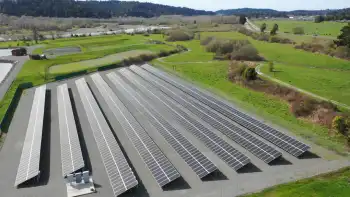
RealEnergy Inc., one of the fastest growing on-site energy companies in the US, announced it has signed a contract to install an 1125 Kilowatt (kW) on-site generation system for Park 80 West, a 488,000 sq. ft., two building office complex in Saddlebrook, NJ.

The on-site system will provide approximately half of the electricity for the office complex, an option to provide an increased level of security for tenants, and additional resources for heating and cooling the property. As with all RealEnergy systems, the remainder of the electricity necessary to operate the facility and businesses in the office complex will continue to come from the local utility company.

On-site power generation is fast becoming a preferred alternative for commercial and corporate building owners. Since on-site generation also provides the option of back-up power in the event of a blackout, property owners can offer tenants greater reliability by reducing their exposure to transmission failures.

“The primary motivation is to provide a revenue stream, reduce overall operating costs, and more recently to address growing concerns over security issues that can result from being totally dependent on the public power grid,” said Alan Krusi, RealEnergy’s CEO. He added that this is his firm’s first venture in the Northeast, RealEnergy currently has 19 systems in the design/engineering phase and another 17 systems currently operating around the US.

“While our programs to increase distributed generation systems began in the west, we think that the higher concentration of commercial buildings in the east, along with greater extremes in climate and other demand variables, will accelerate our installations on the East Coast at a much higher velocity,” said Krusi.

The on-site generation system at Park 80 West is the second such on-site system RealEnergy has provided for national real estate portfolio owner Transwestern Investment Company. Based in Chicago, Transwestern manages a national portfolio of commercial real estate including office, retail and multi-family properties valued at over $3 billion.

“As building owners, we believe that installing on-site power systems is a prudent thing to do to protect our investment and better serve our tenants. By having energy produced on-site we can offer guaranteed power for critical operations, including highly sensitive technology systems, and with lower cost generation techniques, reduce operating costs at the same time,” said Randy Bessolo, Managing Director of Transwestern.

RealEnergy’s on-site power system at the Park 80 West commercial complex is large enough to provide the equivalent power needs for 1100 average-sized homes. The system will utilize three natural gas internal combustion engines monitored remotely by RealEnergy via a private web network and the company’s proprietary software systems. The power system generates virtually no pollution and “waste heat” is reused to generate steam for heating and cooling.

RealEnergyÂ’s clients include: The State of California, AEW, CalPERS, Lend Lease, RREEF, Starwood Capital, Transwestern, Arden Realty, DivcoWest, Layton-Belling & Associates, Trammell Crow, KOR Group, Southwest Value Partners, and Walton Street.

RealEnergy Chairman, Daniel Cashdan said that producing power through on-site generation is a concept the President’s National Energy Policy cites as a valuable tool in solving the energy transmission and supply problems occurring in the U.S. today. “The RealEnergy business model was designed to address energy supply and reliability issues overall. Although we began in California, we are obviously pleased with the growing acceptance of distributed generation across the whole of North America,” said Cashdan.

Related News
Restoring power to Florida will take 'weeks, not days' in some areas

Florida Hurricane Irma Power Outages strain the grid as utilities plan rebuilds; FPL and Duke Energy deploy crews to restore transmission lines, substations, and service amid flooding, storm surge, and widespread disruptions statewide.


Key Points

Large-scale post-storm power losses in Florida requiring grid rebuilds, thousands of crews, and phased restoration.

✅ Utilities prioritize plants, transmission, substations, then critical facilities

✅ 50,000-60,000 workers mobilized; bucket trucks wait for safe winds

✅ Remote rerouting and hardening aid faster restoration amid flooding


Parts of Florida could be without electricity for more than a week, as damage from Hurricane Irma will require a complete rebuild of portions of the electricity grid, utility executives said on Monday.

Irma has knocked out power to 6.5 million Florida electricity customers, or nearly two-thirds of the state, since making landfall this weekend. In major areas such as Miami-Dade, 74 percent of the county was without power, according to Florida's division of emergency management.

Getting that power back online may require the help of 50,000 to 60,000 workers from all over the United States and Canadian power crews as well, according to Southern Company CEO and Chairman Thomas Fanning. He is also co-chair of the Electricity Subsector Coordinating Council, which coordinates the utility industry and government response to disasters and cyberthreats.

While it is not uncommon for severe storms to down power lines and damage utility poles, Irma's heavy winds and rain batted some of the state's infrastructure to the ground, Fanning said.

"'Restore' may not capture the full sense of where we are. For the very hard impacted areas, I think you're in a 'rebuild' area," he told CNBC's "Squawk Box."

"That's a big deal. People need to understand this is going to take perhaps weeks, not days, in some areas," Fanning said.

Parts of northern Florida, including Jacksonville, experienced heavy flooding, which will temporarily prevent crews from accessing some areas.

Duke Energy, which serves 1.8 million customers in parts of central and northwestern Florida, is trying to restore service to 1.2 million residences and businesses.

Florida Power & Light Company, which provides power to an estimated 4.9 million accounts across the state, had about 3.5 million customers without electricity as of Monday afternoon, said Rob Gould, vice president and chief communications officer at FPL.

The initial damage assessments suggest power can be restored to parts of the state's east coast in just days, but some of the west coast will require rebuilding that could stretch out for weeks, Gould told CNBC's "Power Lunch."

"This is not a typical restoration that you're going to see. We actually for the first time in our company history have our entire 27,000-square-mile, 35-county territory under assault by Irma," he said.

FPL said it would first repair any damage to power plants, transmission lines and substations as part of its massive response to Irma, then prioritize critical facilities such as hospitals and water treatment plants. The electricity company would then turn its attention to areas that are home to supermarkets, gas stations and other community services.

Florida utilities invested billions into their systems after devastating hurricane seasons in 2004 and 2005 in order to make them more resilient and easier to restore after a storm. Irma, which ranked among the most powerful storms in the Atlantic, has nevertheless tested those systems.

The upgrades have allowed FPL to automatically reroute power and address about 1.5 million outages, Gould said. The company strategically placed 19,500 restoration workers before the storm hit, but it cannot use bucket trucks to fix power lines until winds die down, he said.

Some parts of Florida's distribution system — the lines that deliver electricity from power plants to businesses and residences — run underground. However, the state's long coastline and the associated danger of storm surge and seawater incursion make it impractical to run lines beneath the surface in some areas.

Duke Energy has equipped 28 percent of its system with smart grid technology to reroute power remotely, according to Harry Sideris, Duke's state president for Florida. He said the company would continue to build out that capability in the future.

Duke deployed more than 9,000 linesmen and support crew members to Irma-struck areas, but cannot yet say how long some customers will be without power.

Separately, Gulf Power crews reported restoring service to more than 32,000 customers.

"At this time we do not know the exact restoration times. However, we're looking at a week or longer from the first look at the widespread damage that we had," Sideris told CNBC's "Closing Bell."

FPL said on Monday it was doing final checks before bringing back nuclear reactors that were powered down as Hurricane Irma hit Florida.

"We are in the process now of doing final checks on a few of them; we will be bringing those up," FPL President and CEO Eric Silagy told reporters.


Related News

View more

Snohomish PUD Hikes Rates Due to Severe Weather Impact

Snohomish PUD rate increase addresses storm recovery after a bomb cyclone and extended cold snap, stabilizing finances and grid reliability while offering assistance programs, payment plans, and energy efficiency for customers.


Key Points

Temp 5.8% residential hike in Feb 2025 to recover storm costs, meet cold snap demand, and uphold reliable service.

✅ 5.8% residential increase effective Feb 2025

✅ Driven by bomb cyclone damage and cold snap demand

✅ Aid includes payment plans, efficiency rebates, low income support


In early February 2025, the Snohomish County Public Utility District (PUD) announced a temporary increase in electricity rates to offset the financial impact of severe weather events, including a bomb cyclone and an extended cold snap, that occurred in late 2024. This decision aims to stabilize the utility's finances, a pattern seen at other utilities such as Florida Power & Light, which pursued a hurricane surcharge to recover storm costs, while ensuring continued service reliability for its customers.

Background of the Weather Events

In November 2024, the Pacific Northwest experienced a powerful bomb cyclone—a rapidly intensifying storm characterized by a significant drop in atmospheric pressure. This event brought heavy rainfall, strong winds, and widespread power outages across the region. Compounding the situation, a prolonged cold weather period in December 2024 and January 2025 led to increased energy demand, and similar conditions drove up Pennsylvania power rates in the same winter season, as residents and businesses relied heavily on heating systems.

Impact on Snohomish PUD

The combination of the bomb cyclone and the subsequent cold weather placed considerable strain on the Snohomish PUD's infrastructure and financial resources. The utility incurred substantial costs for emergency repairs, restoration efforts, and the procurement of additional electricity to meet the heightened demand during the cold snap. These unforeseen expenses prompted the PUD to seek a temporary rate adjustment to maintain financial stability and continue providing reliable service to its customers.

Details of the Rate Increase

Effective February 2025, the Snohomish PUD implemented a temporary electricity rate increase of 5.8% for residential customers, compared with a 3% BC Hydro increase in the same region for context. This adjustment is designed to recover the additional costs incurred during the severe weather events. The PUD has communicated that this rate increase is temporary and will be reevaluated after a specified period to determine if further adjustments are necessary.

Customer Impact and Assistance Programs

While the rate increase is intended to be temporary, it may still pose a financial burden for some customers, even as some markets expect rates to stabilize in 2025 in other jurisdictions. To mitigate this impact, the Snohomish PUD has outlined several assistance programs:

  • Payment Plans: Customers facing financial hardship can enroll in extended payment plans to spread the cost of the increased rates over a longer period.

  • Energy Efficiency Programs: The PUD offers incentives and resources to help customers reduce energy consumption, potentially lowering their overall bills.

  • Low-Income Assistance: Eligible low-income customers may qualify for additional support through state and federal assistance programs.

The utility encourages customers to contact their customer service department to explore these options and find the best solutions for their individual circumstances.

Community Response and Future Considerations

The announcement of the rate increase has elicited mixed reactions from the community. Some residents express understanding, recognizing the necessity of maintaining infrastructure and service reliability. Others have voiced concerns about the financial impact, particularly among vulnerable populations, a debate also seen with higher BC Hydro rates in nearby British Columbia.

Looking ahead, the Snohomish PUD is committed to enhancing its infrastructure to better withstand future extreme weather events, an approach aligned with other utilities' multi-year rate proposals to fund upgrades. This includes investing in grid modernization, implementing advanced weather forecasting tools, and developing comprehensive emergency response plans. The utility also plans to engage with the community through public forums and surveys to gather feedback and collaboratively develop strategies that balance financial sustainability with customer affordability.

The temporary electricity rate increase by the Snohomish County Public Utility District reflects the financial challenges posed by severe weather events and parallels regional trends, including BC Hydro's 3.75% over two years adjustments, and underscores the importance of proactive infrastructure investment and community engagement. While the rate adjustment aims to stabilize the utility's finances, the PUD remains focused on supporting its customers through assistance programs and ongoing efforts to enhance service reliability and resilience against future climate-related events.


Related News

View more

Electricity and water do mix: How electric ships are clearing the air on the B.C. coast

Hybrid Electric Ships leverage marine batteries, LNG engines, and clean propulsion to cut emissions in shipping. From ferries to cargo vessels, electrification and sustainability meet IMO regulations, Corvus Energy systems, and dockside fast charging.


Key Points

Hybrid electric ships use batteries with diesel or LNG engines to cut fuel and emissions and meet stricter IMO rules.

✅ LNG or diesel gensets recharge marine battery packs.

✅ Cuts CO2, NOx, and particulate emissions in port and at sea.

✅ Complies with IMO standards; enables quiet, efficient operations.


The river is running strong and currents are swirling as the 150-metre-long Seaspan Reliant slides gently into place against its steel loading ramp on the shores of B.C.'s silty Fraser River.

The crew hustles to tie up the ship, and then begins offloading dozens of transport trucks that have been brought over from Vancouver Island.

While it looks like many vessels working the B.C. coast, below decks, the ship is very different. The Reliant is a hybrid, partly powered by electricity, and joins BC Ferries' hybrid ships in the region, the seagoing equivalent of a Toyota Prius.

Down below decks, Sean Puchalski walks past a whirring internal combustion motor that can run on either diesel or natural gas. He opens the door to a gleaming white room full of electrical cables and equipment racks along the walls.

"As with many modes of transportation, we're seeing electrification, from electric planes to ferries," said Puchalski, who works with Corvus Energy, a Richmond, B.C. company that builds large battery systems for the marine industry.

In this case, the batteries are recharged by large engines burning natural gas.

"It's definitely the way of the future," said Puchalski.

The 10-year-old company's battery system is now in use on 200 vessels around the world. Business has spiked recently, driven by the need to reduce emissions, and by landmark projects such as battery-electric high-speed ferries taking shape in the U.S.

"When you're building a new vessel, you want it to last for, say, 30 years. You don't want to adopt a technology that's on the margins in terms of obsolescence," said Puchalski. "You want to build it to be future-proof."


Dirty ships

For years, the shipping industry has been criticized for being slow to clean up its act. Most ships use heavy fuel oil, a cheap, viscous form of petroleum that produces immense exhaust. According to the European Commission, shipping currently pumps out about 940 million tonnes of CO2 each year, nearly three per cent of the global total.

That share is expected to climb even higher as other sectors reduce emissions.

When it comes to electric ships, Scandinavia is leading the world. Several of the region's car and passenger ferries are completely battery powered — recharged at the dock by relatively clean hydro power, and projects such as Kootenay Lake's electric-ready ferry show similar progress in Canada.


Tougher regulations and retailer pressure

The push for cleaner alternatives is being partly driven by worldwide regulations, with international shipping regulators bringing in tougher emission standards after a decade of talk and study, while financing initiatives are helping B.C. electric ferries scale up.

At the same time, pressure is building from customers, such as Mountain Equipment Co-op, which closely tracks its environmental footprint. Kevin Lee, who heads MEC's supply chain, said large companies are realizing they are accountable for their contributions to climate change, from the factory to the retail floor.

"You're hearing more companies build it into their DNA in terms of how they do business, and that's cool to see," said Lee. "It's not just MEC anymore trying to do this, there's a lot more partners out there."

In the global race to cut emissions, all kinds of options are on the table for ships, including giant kites being tested to harvest wind power at sea, and ports piloting hydrogen-powered cranes to cut dockside emissions.

Modern versions of sailing ships are also being examined to haul cargo with minimal fuel consumption.

But in practical terms, hybrids and, in the future, pure electrics are likely to play a larger role in keeping the propellers turning along Canada's coast, with neighboring fleets like Washington State Ferries' upgrade underscoring the shift.


Related News

View more

Ontario, Quebec to swap energy in new deal to help with electricity demands

Ontario-Quebec Energy Swap streamlines electricity exchange, balancing peak demand across clean grids with hydroelectric and nuclear power, enhancing reliability, capacity banking, and interprovincial load management for industry growth, EV adoption, and seasonal heating-cooling needs.


Key Points

10-year, no-cash power swap aligning peaks; hydro and nuclear enhance reliability and let Ontario bank capacity.

✅ Up to 600 MW exchanged yearly; reviews adjust volumes

✅ Peaks differ: summer A/C in Ontario, winter heating in Quebec

✅ Capacity banking enables future-year withdrawals


Ontario and Quebec have agreed to swap energy to build on an electricity deal to help each other out when electricity demands peak.

The provinces' electricity operators, the Independent Electricity System Operator holds capacity auctions and Hydro-Quebec, will trade up to 600 megawatts of energy each year, said Ontario Energy Minister Todd Smith.

“The deal just makes a lot of sense from both sides,” Smith said in an interview.

“The beauty as well is that Quebec and Ontario are amongst the cleanest grids around.”

The majority of Ontario's power comes from nuclear energy while the majority of Quebec's energy comes from hydroelectric power, including Labrador power in regional transmission networks.

The deal works because Ontario and Quebec's energy peaks come at different times, Smith said.

Ontario's energy demands spike in the summer, largely driven by air conditioning on hot days, and the province has occasionally set off-peak electricity prices to provide temporary relief, he said.

Quebec's energy needs peak in the winter, mostly due to electric heating on cold days.

The deal will last 10 years, with reviews along the way to adjust energy amounts based on usage.

“With the increase in energy demand, we must adopt more energy efficiency programs like Peak Perks and intelligent measures in order to better manage peak electricity consumption,” Quebec's Energy Minister Pierre Fitzgibbon wrote in a statement.

Smith said the energy deal is a straight swap, with no payments on either side, and won't reduce hydro bills as the transfer could begin as early as this winter.

Ontario will also be able to bank unused energy to save capacity until it is needed in future years, Smith said.

Both provinces are preparing for future energy needs, as electricity demands are expected to grow dramatically in the coming years with increased demand from industry and the rise of electric vehicles, and Ontario has tabled legislation to lower electricity rates to support consumers.


Related News

View more

National Grid and SSE to use electrical transformers to heat homes

Grid Transformer Waste Heat Recovery turns substations into neighborhood boilers, supplying district heating via heat networks, helping National Grid and SSE cut emissions, boost energy efficiency, and advance low carbon, net zero decarbonization.


Key Points

Grid Transformer Waste Heat Recovery captures substation heat for district heating, cutting emissions and gas use.

✅ Captures waste heat from National Grid transformers

✅ Feeds SSE district heat networks for nearby homes

✅ Cuts carbon, improves efficiency, aligns with net zero


Thousands of homes could soon be warmed by the heat from giant electricity grid transformers for the first time as part of new plans to harness “waste heat” and cut carbon emissions from home heating.

Trials are due to begin on how to capture the heat generated by transmission network transformers, owned by National Grid, to provide home heating for households connected to district heating networks operated by SSE.

Currently, hot air is vented from the giant substations to help cool the transformers that help to control the electricity running through National Grid’s high-voltage transmission lines.

However, if the trial succeeds, about 1,300 National Grid substations could soon act as neighbourhood “boilers”, piping water heated by the substations into nearby heating networks, and on into the thousands of homes that use SSE’s services.

“Electric power transformers generate huge amounts of heat as a byproduct when electricity flows through them. At the moment, this heat is just vented directly into the atmosphere and wasted,” said Nathan Sanders, the managing director of SSE Energy Solutions.

“This groundbreaking project aims to capture that waste heat and effectively turn transformers into community ‘boilers’ that serve local heat networks with a low- or even zero-carbon alternative to fossil-fuel-powered heat sources such as gas boilers, a shift akin to a gas-for-electricity swap in heating markets,” Sanders added.

Alexander Yanushkevich, National Grid’s innovation manager, said the scheme was “essential to achieve net zero” and a “great example of how, taking a whole-system approach, including power-to-gas in Europe precedents, the UK can lead the way in helping accelerate decarbonisation”.

The energy companies believe the scheme could initially reduce heat network carbon emissions by more than 40% compared with fossil gas systems. Once the UK’s electricity system is zero carbon, and with recent milestones where wind was the main source of UK electricity on the grid, the heating solution could play a big role in helping the UK meet its climate targets.

The first trials have begun at National Grid’s specially designed testing site at Deeside in Wales to establish how the waste heat could be used in district heating networks. Once complete, the intellectual property will be shared with smaller regional electricity network owners, which may choose to roll out schemes in their areas.

Tim O’Reilly, the head of strategy at National Grid, said: “We have 1,300 transmission transformers, but there’s no reason why you couldn’t apply this technology to smaller electricity network transformers, too, echoing moves to use more electricity for heat in colder regions.”

Once the trials are complete, National Grid and SSE will have a better idea of how many homes could be warmed using the heat generated by electricity network substations, O’Reilly said, and how the heat can be used in ways that complement virtual power plants for grid resilience.

“The heavier the [electricity] load, which typically reaches a peak at around teatime, the more heat energy the transformer will be able to produce, aligning with times when wind leads the power mix nationally. So it fits quite nicely to when people require heat in the evenings,” he added.

Other projects designed to capture waste heat to use in district heating schemes include trapping the heat generated on the Northern line of London’s tube network to warm homes in Islington, and harnessing the geothermal heat from disused mines for district heating networks in Durham.

Only between 2% and 3% of the UK is connected to a district heating network, but more networks are expected to emerge in the years ahead as the UK tries to reduce the carbon emissions from homes, alongside its nuclear power plans in the wider energy strategy.


Related News

View more

Prepare for blackouts across the U.S. as summer takes hold

US Summer Grid Blackout Risk: NERC and FERC warn of strained reliability as drought, heat waves, and transmission constraints hit MISO, hydro, and renewables, elevating blackout exposure and highlighting demand response and storage solutions.


Key Points

A forecast of summer power shortfalls across the US grid, driven by heat, drought, transmission limits, and a changing resource mix.

✅ NERC and FERC warn of elevated blackout risk and reliability gaps.

✅ MISO region strained by drought, heat, and limited hydro.

✅ Mitigations: demand response, storage, and stronger transmission.


Just when it didn’t seem things couldn’t get worse — gasoline at $5 to $8 a gallon, supply shortages in everything from baby formula to new cars — comes the devastating news that many of us will endure electricity blackouts this summer, and that the U.S. has more blackouts than other developed nations according to one study.

The alarm was sounded by the nonprofit North American Electric Reliability Corp. and the Federal Energy Regulatory Commission, following a recent power grid report card highlighting vulnerabilities.

The North American electric grid is the largest machine on earth and the most complex, incorporating everything from the wonky pole you see at the roadside with a bird’s nest of wires to some of the most sophisticated engineering ever devised. It runs in real-time, even more so than the air traffic control system: All the airplanes in the sky don’t have to land at the same time, but electricity must be there at the flick of every switch.

Except it may not always be there this summer. Rod Kuckro, a respected energy journalist, says it depends on Mother Nature, with extreme weather impacts increasingly straining the grid, but the prognosis isn’t good.

Speaking on “White House Chronicle,” the weekly news and public affairs program on PBS that I host and produce, Kuckro said: “There is a confluence of factors that could affect energy supply across the majority of the (lower) 48 states. These are continued reduced hydroelectric production in the West, and the continued drought in the Southwest.”

The biggest threat to power supply, according to the NERC and the FERC, is in the vast central region, reaching from Manitoba in Canada, where grids are increasingly exposed to harsh weather in recent years, down to the Gulf of Mexico. It is served by the regional transmission organization, the Midcontinent Independent System Operator.

These operational entities are nonprofit companies that organize and distribute their regions’ bulk power for utilities. In California, it is the California Independent System Operator, working to keep the lights on as the state enters a new energy era; in the Mid-Atlantic, it is PJM; and in the Northeast, it is the New England System Independent Operator. They generate no power, but they control power flows and could initiate brownouts and blackouts.

With record storm activity and high temperatures predicted this summer, blackouts are likely to be deadly. The old, the young and the sick are all vulnerable. If the electric supply fails, with it goes everything from air conditioning to refrigeration to lights and even the ability to pump gas or access money from ATMs.

The United States, along with other modern nations, runs on electricity and when that falls short, it is catastrophic. It is chaos writ large, especially if the failure lasts more than a few hours.

On the same episode of “White House Chronicle,” Daniel Brooks, vice president of integrated grid and energy systems at the Electric Power Research Institute, also referred to a “confluence of factors” contributing to the impending electricity crisis. Brooks said, “We’re going through a significant change in terms of the energy mix and resources, and the way those resources behave under certain weather conditions.”

If power supply is stressed this summer, change in the generating mix will get a lot of political attention. At heart is the switch from fossil fuel generation to renewables. If there are power outages, a political storm will ensue. The Biden administration will be accused of speeding the switch to renewables, although the utilities don’t say that.

The weather is deteriorating, and, as experts note, the grid’s biggest challenge isn’t demand but climate change pressures that compound risks, and the grid is stretched in dealing with new realities as well as coping with old bugaboos, like the extreme difficulty in building transmission lines. Better transmission would relieve a lot of grid stress.

Peter Londa, president of Tantalus Systems, which helps its 260 utility customers digitize and cope with the new realities, explained some of the difficulties facing the utilities not only in the shifting sources of generation but also in the new shape of the electric demand. For example, he said, electric vehicles, particularly the much-awaited Ford F-150 Lightning pickup, could be an asset to homeowners and utilities, as California increasingly turns to batteries to stabilize its grid. During a blackout, their EVs could be used to power their homes for days. They could be a source of storage if thousands of owners signed up with their utilities in a storage program.

The fact is that utilities are facing three major shifts: in the generation to wind and solar, in customer demand, and especially in weather. Mother Nature is on a rampage and we all must adjust to that.


Related News

View more

Sign Up for Electricity Forum’s Newsletter

Stay informed with our FREE Newsletter — get the latest news, breakthrough technologies, and expert insights, delivered straight to your inbox.

Electricity Today T&D Magazine Subscribe for FREE

Stay informed with the latest T&D policies and technologies.
  • Timely insights from industry experts
  • Practical solutions T&D engineers
  • Free access to every issue

Download the 2025 Electrical Training Catalog

Explore 50+ live, expert-led electrical training courses –

  • Interactive
  • Flexible
  • CEU-cerified