Dynegy gets $1.66 bln financing deal

By


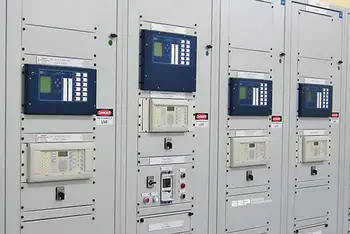
Electrical Testing & Commissioning of Power Systems

Our customized live online or in‑person group training can be delivered to your staff at your location.
  • Live Online
  • 12 hours Instructor-led
  • Group Training Available
Regular Price:
$599
Coupon Price:
$499
Reserve Your Seat Today
Dynegy Inc. , a U.S. power company, on Wednesday said a key subsidiary landed a $1.66 billion loan package that forestalled sizable debt payments that were fast coming due.

The new financing for Dynegy Holdings Inc., which replaces $1.3 billion in existing credit facilities set to mature in the next two months, is the latest in a string of recent bank deals struck by U.S. utilities. The industry has struggled with a credit crunch amid a sharp downturn in energy trading activity since the collapse of Enron Corp. On Monday, Reliant Resources Inc. secured a $6.2 billion loan package critical to revitalizing its business and rebuilding its credit. Its banks let pass a March 28 deadline for a $2.9 billion payment, which would have forced Reliant to file for bankruptcy had it come due. CMS Energy Corp. also lined up $850 million in financing on Monday. Houston based Dynegy's new funding, which includes a $1.1 billion revolving credit facility and term loans of $200 million and $360 million, respectively mature in 2005. The package is secured by a substantial amount of Dynegy's assets and stock, and requires the company to pay off its loan with the proceeds of all but one of its planned asset sales. The interest rate Dynegy is expected to pay is the London Interbank Offered Rate plus 4.75 percentage points. "This takes care of us out into 2005 and this marks the day where we push our business plan to center stage and away from liquidity concerns," Dynegy Chief Executive Bruce Williamson told Reuters in an interview. "Now we shift to operating our business and we have to demonstrate that we are going to be that fiscally disciplined company," he said. Williamson said Dynegy finished up its negotiations 26 days before its debt came due, unlike other companies that had to get extensions. Dynegy's shares fell 10 percent after the announcement, closing down 29 cents at $2.59 on the New York Stock Exchange. One analyst said the market will need time to evaluate the company's financial position in light of the new financing. "This deal removes the liquidity risks that may have concerned a lot of investors," said Credit Lyonnais analyst Gordon Howald, who has a "hold" rating on the stock and owns no shares in the company. "What investors need to do now is say 'If the liquidity risk is gone then how do we value Dynegy?'" he said. Dynegy in its statement said the increased interest costs would not affect its previously announced earnings guidance of 8 cents to 15 cents per share or cash flow guidance of $1.2 billion to $1.3 billion for 2003. Favorable natural gas and power prices would offset the interest costs, the company said.

The industry has struggled with a credit crunch amid a sharp downturn in energy trading activity since the collapse of Enron Corp.

On Monday, Reliant Resources Inc. secured a $6.2 billion loan package critical to revitalizing its business and rebuilding its credit. Its banks let pass a March 28 deadline for a $2.9 billion payment, which would have forced Reliant to file for bankruptcy had it come due. CMS Energy Corp. also lined up $850 million in financing on Monday.

Houston based Dynegy's new funding, which includes a $1.1 billion revolving credit facility and term loans of $200 million and $360 million, respectively mature in 2005.

The package is secured by a substantial amount of Dynegy's assets and stock, and requires the company to pay off its loan with the proceeds of all but one of its planned asset sales.

The interest rate Dynegy is expected to pay is the London Interbank Offered Rate plus 4.75 percentage points.

"This takes care of us out into 2005 and this marks the day where we push our business plan to center stage and away from liquidity concerns," Dynegy Chief Executive Bruce Williamson told Reuters in an interview.

"Now we shift to operating our business and we have to demonstrate that we are going to be that fiscally disciplined company," he said.

Williamson said Dynegy finished up its negotiations 26 days before its debt came due, unlike other companies that had to get extensions.

Dynegy's shares fell 10 percent after the announcement, closing down 29 cents at $2.59 on the New York Stock Exchange.

One analyst said the market will need time to evaluate the company's financial position in light of the new financing.

"This deal removes the liquidity risks that may have concerned a lot of investors," said Credit Lyonnais analyst Gordon Howald, who has a "hold" rating on the stock and owns no shares in the company.

"What investors need to do now is say 'If the liquidity risk is gone then how do we value Dynegy?'" he said.

Dynegy in its statement said the increased interest costs would not affect its previously announced earnings guidance of 8 cents to 15 cents per share or cash flow guidance of $1.2 billion to $1.3 billion for 2003. Favorable natural gas and power prices would offset the interest costs, the company said.

Related News
B.C. electricity demand hits an all-time high

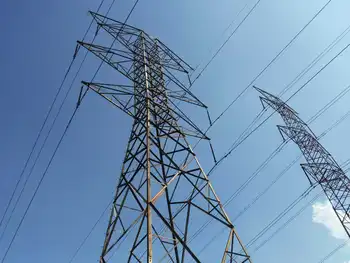
BC Hydro Peak Electricity Demand reached a record 10,902 megawatts during a cold snap, driven by home heating. Peak hours surged; load shifting and energy conservation can ease strain on the grid and lower bills.


Key Points

Record winter peak of 10,902 MW, set during a cold snap, largely from home heating demand at peak hours.

✅ All-time high load: 10,902 MW between 5 and 6 p.m., Dec. 27.

✅ Cold snap increased home heating demand during peak hours.

✅ Shift laundry and dishwashers off-peak; use programmable thermostats.


BC Hydro says the province set a new record for peak electricity demand on Monday as temperatures hit extreme lows, and Quebec shattered consumption records during similar cold weather.

Between 5 and 6 p.m. on Dec. 27, demand for electricity hit an all-time high of 10,902 megawatts, which is higher than the previous record of 10,577 megawatts set in 2020, and follows a record-breaking year in 2021 for the utility.

“The record represents a single moment in the hour when demand for electricity was the highest yesterday,” says Simi Heer, BC Hydro spokesperson, in a statement. “Most of the increase is likely due to additional home heating required during this cold snap.”

In addition to the peak demand record on Monday, BC Hydro has observed an overall increase in electricity demand since Friday, and has noted that cryptocurrency mining electricity use is an emerging load in the province as well. Monday’s hourly peak demand was 18 per cent higher than Friday’s, while Calgary's electricity use soared during a frigid February, underscoring how cold snaps strain regional grids.

“BC Hydro has enough supply options in place to meet increasing electricity demand,” adds Heer, and pointed to customer supports like a winter payment plan for households managing higher bills. “However, if British Columbians want to help ease some of the demand on the system during peak times, we encourage shifting activities like doing laundry or running dishwashers to earlier in the day or later in the evening.”

BC Hydro is also offering energy conservation tips for people looking to lower their electricity use and their electricity bills, noting that Earth Hour once saw electricity use rise in the province:

Manage your home heating actively by turning the heat down when no one his home or when everyone is sleeping. Consider installing a programmable thermostat to automatically adjust temperatures at different times based on your family's activities, and remember that in warmer months wasteful air conditioning can add $200 to summer energy bills. BC Hydro recommends the following temperatures:

16 degrees Celsius when sleeping or away from home
21 degrees Celsius when relaxing, watching TV
18 degrees Celsius when doing housework or cleaning


Related News

View more

Winter Storm Leaves Many In Texas Without Power And Water

Texas Power Grid Crisis strains ERCOT as extreme cold, ice storms, and heavy snow trigger rolling blackouts, load shedding, and boil-water notices, leaving millions without electricity while frozen turbines and low gas pressure hinder generation.


Key Points

A statewide emergency of outages and boil-water notices as ERCOT battles extreme cold and load shedding.

✅ Millions without power; ERCOT orders load shedding

✅ Boil-water notices in Austin, Houston, Fort Worth

✅ Frozen equipment, low gas pressure, extreme cold disrupt supply


Nearly 3 million homes and businesses in Texas remain without power, some for a third consecutive day, as severe winter weather continues to pummel the state, forcing some localities to issue boil-water notices and urge residents to reduce their electricity usage.

Heavy snowfall, ice storms and bitter temperatures continue to put an enormous strain on the state's power grid. This as the Electric Reliability Council of Texas (ERCOT), which manages roughly 75% of the Texas power grid, announced Wednesday morning that some 600,000 households had power restored overnight.

That still left another 2.7 million customers having to endure extreme cold with no indication of when the thaw would break in their homes.

"We know millions of people are suffering," ERCOT's president and CEO, Bill Magness, said in a statement Wednesday. "We have no other priority than getting them electricity. No other priority."

ERCOT also said Wednesday that it was urging local utilities to shed some 14,000 megawatts of load, which translates to roughly 2.8 million customers, to prepare for a sudden increase in demand.

"The ability to restore more power is contingent on more generation coming back online," said Dan Woodfin, the senior director of ERCOT's system operations, and utility supply-chain constraints can further complicate repair timelines for some utilities.

He said that about 185 generating units were offline, stemming from a range of factors including frozen wind turbines, low gas pressure and frozen instrumentation.

But many Texans feel abandoned by the council and power companies and they are lashing out at the local face of utilities.

The City of Austin's community-owned electric utility, Austin Energy, issued a tweet saying crews that are working to restore power are facing harassment.


"Our crews have been working 24/7 and in these elements," Austin Energy announced. "Some of our crews are reporting incidents of harassment, threatening them and even throwing things at them."

Officials pleaded with the public to remain calm. "I know people are extremely frustrated. But please, I bet of you, do not approach AE crews."

Parts of Austin are under a boil water notice, which Austin Water Director Greg Meszaros attempted to explain during a press briefing Wednesday afternoon.

"There was a large main break in that area, maybe multiple ones. We're seeing main breaks and pipes bursting by the tens of thousands. Our entire system is under stress," Meszaros said.

It's not just the Lone Star State that is being crippled by the arctic blast, with a deep freeze slamming the energy sector across the country.

At least two dozen people have died this week from weather-related incidents, according to The Associated Press.

The National Weather Service reports that more than 100 million Americans are being affected by extreme winter weather from the south central U.S. to the East Coast, including Arkansas, Louisiana, Mississippi, North Carolina, Virginia and West Virginia, and analysts warn of blackout risks nationwide during extreme heat as well.

The National Weather Service adds that cold temperatures over the nation's heartland will begin to "moderate in the coming days" but that many parts will remain 20 to 35 degrees below normal in the Great Plains, Mississippi Valley and lower Great Lakes region.

"Potential is increasing for significant icing across portions of the Mid-Atlantic, which will be very impactful, especially for those hardest hit from the previous ice storm," the National Weather Service tweeted Wednesday.

Texas Gov. Greg Abbott railed against ERCOT, and Elon Musk criticized the agency as unreliable, saying the utility "has been anything but reliable over the past 48 hours."

"This is unacceptable," Abbott added, as residents were facing rotating intentional power outages. The governor issued an executive order that will add reforms for how the power grid is managed, including grid reliability improvements under discussion, as an emergency legislative item for the state legislature to review.

The rolling power outages forced Fort Worth to extend a boil-water notice for roughly 212,000 residents. Officials said the outages affected the city's systems that both treat water and move it to customers.

Fort Worth officials said nine other localities that purchase water from the city are also affected, including Haslet, Keller, Lake Worth and Northlake.

Officials in Houston also issued a boil-water notice for the city's residents Wednesday.

"Do not drink the water without boiling it first," Houston Public Works said from its official Twitter account. "Bring all water to a boil for at least two minutes. Let it cool before using."

In Harris County, which includes Houston, Judge Lina Hidalgo warned residents about extended power outages.

"Let me give it to you straight, based on the visibility I have: Whether you have power or not right now, there is a possibility of power outages even beyond the length of this weather," Hidalgo said, according to Houston Public Media.

The NPR member station adds that county officials have also reported more than 300 cases of carbon monoxide poisoning since Monday as residents going without electricity search desperately for alternative sources of warmth.

"In no uncertain terms, this is a public health disaster and a public health emergency," Samuel Prater, an emergency physician at Memorial Hermann-Texas Medical Center, said at a news briefing Tuesday.

Prater warned residents that over the last 24 hours, emergency officials "have seen a striking increase in the number of cases related to improper heating sources," including indoor use of generators, charcoal grills, campfire stoves and other devices that are being used to warm homes. The result, he added, is carbon monoxide poisoning of entire families.

"If you think you or a loved one has become ill from carbon monoxide poisoning, first thing you need to do is get outside to fresh air," Prater said.

A woman and an 8-year-old girl are among those who have reportedly died from carbon monoxide poisoning after a vehicle was left running inside a garage in an attempt to generate heat, according to Houston's ABC affiliate.

As Texas endures further weather-related issues, including road and highway closures, there's a renewed focus on how the Texas power grid has failed, and why the grid is facing another crisis amid this prolonged cold.

The Texas electrical grid is "facing conditions that it was not designed for," said Emily Grubert, a professor at Georgia Tech whose expertise includes electric networks.

"These are really extreme conditions for the Texas grid. It's very cold. It's cold across the entire state, and it's cold for a long time. This does not happen very often," she said in an interview with NPR's Morning Edition.

"Demand really spiked both in the electricity and the natural gas systems at the same time as a lot of the generators were not able to operate because of those cold conditions, and not being prepared for it is really what's going on," Grubert said. "But a lot of grids are susceptible to really, really major failures when they are this far outside of design conditions."

Abbott told Fox News on Tuesday that with weather-related shutdowns in wind and solar energy, which account for more than 10% of the state's grid, renewable energy is partly to blame for the Texas power crisis, even as he later touted the grid's readiness heading into the fall.

"It just shows that fossil fuel is necessary for the state of Texas as well as other states to make sure that we'll be able to heat our homes in the wintertime and cool our homes in the summertime," Abbott said.

But Grubert said that "coal, gas and nuclear actually shut down because of the extreme cold due to things like instruments freezing, et cetera. So I think the overall point here is all of the fuels were really, really struggling."


Related News

View more

America Going Electric: Dollars And Sense

California Net Zero Grid Investment will fuel electrification, renewable energy buildout, EV adoption, and grid modernization, boosting utilities, solar, and storage, while policy, IRA incentives, and transmission upgrades drive reliability and long-term rate base growth.


Key Points

Funding to electrify sectors and modernize the grid, scaling renewables, EVs, and storage to meet 2045 net zero goals.

✅ $370B over 22 years to meet 2045 net zero target

✅ Utilities lead gains via grid modernization and rate base growth

✅ EVs, solar, storage scale; IRA credits offset costs


$370 billion: That’s the investment Edison International CEO Pedro Pizarro says is needed for California’s power grid to meet the state’s “net zero” goal for CO2 emissions by 2045.

Getting there will require replacing fossil fuels with electricity in transportation, HVAC systems for buildings and industrial processes. Combined with population growth and data demand potentially augmented by artificial intelligence, that adds up to an 82 percent increase in electricity demand over 22 years, or 3 percent annually, and a potential looming shortage if buildout lags.

California’s plans also call for phasing out fossil fuel generation in the state, despite ongoing dependence on fossil power during peaks. And presumably, its last nuclear plant—PG&E Corp’s (PCG) Diablo Canyon—will be eventually be shuttered as well. So getting there also means trebling the state’s renewable energy generation and doubling usage of rooftop solar.

Assuming this investment is made, it’s relatively easy to put together a list of beneficiaries. Electric vehicles hit 20 percent market share in the state in Q2, even as pandemic-era demand shifts complicate load forecasting. And while competition from manufacturers has increased, leading manufacturers like Tesla TSLA -3% Inc (TSLA) can look forward to rising sales for some time—though that’s more than priced in for Elon Musk’s company at 65 times expected next 12 months earnings.

In the past year, California regulators have dialed back net metering through pricing changes affecting compensation, a subsidy previously paying rooftop solar owners premium prices for power sold back to the grid. That’s hit share prices of SunPower Corp (SPWR) and Sunrun Inc (RUN) quite hard, by further undermining business plans yet to demonstrate consistent profitability.

Nonetheless, these companies too can expect robust sales growth, as global prices for solar components drop and Inflation Reduction Act tax credits at least somewhat offset higher interest rates. And the combination of IRA tax credits and U.S. tariff walls will continue to boost sales at solar manufacturers like JinkoSolar Holding (JKS).

The surest, biggest beneficiaries of California’s drive to Net Zero are the utilities, reflecting broader utility trends in grid modernization, with investment increasing earnings and dividends. And as the state’s largest pure electric company, Edison has the clearest path.

Edison is currently requesting California regulators OK recovery over a 30-year period of $2.4 billion in losses related to 2017 wildfires. Assuming a amicable decision by early next year, management can then turn its attention to upgrading the grid. That investment is expected to generate long-term rate base growth of 8 percent at year, fueling 5 to 7 percent annual earnings growth through 2028 with commensurate dividend increases.

That’s a strong value proposition Edison stock, with trades at just 14 times expected next 12 months earnings. The yield of roughly 4.4 percent at current prices was increased 5.4 percent this year and is headed for a similar boost in December.

When California deregulated electricity in 1996, it required utilities with rare exceptions to divest their power generation. As a result, Edison’s growth opportunity is 100 percent upgrading its transmission and distribution grid. And its projects can typically be proposed, sited, permitted and built in less than a year, limiting risk of cost overruns to ensure regulatory approval and strong investment returns.

Edison’s investment plan is also pretty much immune to an unlikely backtracking on Net Zero goals by the state. And the company has a cost argument as well: Dr Pizarro cites U.S. Department of Energy and Department of Transportation data to project inflation-adjusted savings of 40 percent in California’s total customer energy bills from full electrification.

There’s even a reason to believe 40 percent savings will prove conservative. Mainly, gasoline currently accounts for a bit more than half energy expenditures. And after a more than 10-year global oil and gas investment drought, supplies are likely get tighter and prices possibly much higher in coming years.

Of course, those savings will only show up after significant investment is made. At this point, no major utility system in the world runs on 100 percent renewable energy, and California’s blackout politics underscore how reliability concerns shape deployment. And the magnitude of storage technology needed to overcome intermittency in solar and wind generation is not currently available let alone affordable, though both cost and efficiency are advancing.

Taking EVs from 20 to 100 percent of California’s new vehicle sales calls for a similar leap in efficiency and cost, even with generous federal and state subsidy. And while technology to fully electrify buildings and homes is there, economically retrofitting statewide is almost certainly going to be a slog.

At the end of the day, political will is likely to be as important as future technological advance for how much of Pizarro’s $370 billion actually gets spent. And the same will be true across the U.S., with state governments and regulators still by and large calling the shots for how electricity gets generated, transmitted and distributed—as well as who pays for it and how much, even as California’s exported policies influence Western markets.

Ironically, the one state where investors don’t need to worry about renewable energy’s prospects is one of the currently reddest politically. That’s Florida, where NextEra Energy NEE +2.8% (NEE) and other utilities can dramatically cut costs to customers and boost reliability by deploying solar and energy storage.

You won’t hear management asserting it can run the Sunshine State on 100 percent renewable energy, as utilities and regulators do in some of the bluer parts of the country. But by demonstrating the cost and reliability argument for solar deployment, NextEra is also making the case why its stock is America’s highest percentage bet on renewables’ growth—particularly at a time when all things energy are unfortunately becoming increasingly, intensely political.


Related News

View more

Kenya Power on the spot over inflated electricity bills

Kenya Power token glitches, inflated bills disrupt prepaid meters via M-Pesa paybill 888880 and third-party vendors like Vendit and Dynamo, causing delays, fast-depleting tokens, and billing estimates; customers report weekend outages and business losses.


Key Points

Service failures delaying token generation and disputed charges from estimated meter readings and slow processing.

✅ Impacts M-Pesa paybill 888880 and authorized third-party vendors

✅ Causes delays, fast-depleting tokens, weekend business closures

✅ Linked to system downtime, billing estimates, meter reading gaps


Kenya Power is again on the spotlight following claims of inflated power bills and a glitch in its electronic payment system that made it impossible to top up tokens on prepaid meters.

Thousands of customers started experiencing the hitch in tokens generation on Friday evening, with the problem extending through the weekend.

Small businesses such as barber shops that top up multiple times a week were hardest hit.

“My business usually thrives during weekends but I was forced to close early in the evening due to lack of power although I had paid for the tokens that were never generated,” said Mr John Kamau, a fast food restaurant owner in Nairobi.

Kenya Power processes up to 200,000 electronic transactions per day for power users, with 85 per cent done through its Safaricom M-Pesa paybill number 888880.

The remaining share is handled by its authorised third party vendors such as Vendit (paybill number 501200) and Dynamo (800904), which charge a premium for the transaction.

The sole electricity distributor admitted its system encountered challenges that crippled token generation across all vendors, advising customers on prepaid meters to buy the units from Kenya Power banking halls across the country until normalcy returned.


STATEMENT

“The IT team is trying to figure out where the problem was before we issue a comprehensive statement on the issue,” the firm responded to Nation queries, adding that the issue had been resolved by yesterday afternoon.

Customers who use Vendit confirmed to Nation they had successfully bought tokens yesterday afternoon.

However, there have been complaints that third party vendors process tokens almost in real time, unlike Kenya Power which, despite indicating a 30 minute delay in its service promise, sometimes takes up to six hours.  

But other users complained of inflated power bills after being slapped with abnormally high charges.


TOKENS

The holder of account number 30624694, for instance, received a post-paid bill of Sh16,765 last month, up from Sh894 the previous month.

She indulged the company and ended up paying just over Sh1,000.

There have also been complaints of tokens getting depleted too fast. For instance, one customer who normally uses Sh4,000 per month complained of her credit running out in a week.

Kenya Power maintains it cannot read all post-paid meters across the country, compelling it to make estimates for a number of customers.

The company argues it is not cost-effective to have meter readers go to all homes. The firm recently indicated plans to put all domestic consumers on prepaid meters to reduce non-payment of electricity bills and cut operation costs on meter reading and postage.


POWER CONSUMPTION

The Nairobi Securities Exchange-listed firm has also adopted a new integrated customer management system to enable consumers to self-check their power consumption and understand their electricity bill and payment obligations through a phone app.

In the past, concerns have been rife that customers often encounter delays when buying tokens through paybill number 888880, unlike through other vendors.

This has raised questions on the ownership of the vendors and the cash commissions they are entitled to, with holiday scam warnings circulating in some markets as well.


FOUL PLAY

Kenya Power has, however, denied any foul play, saying the authorisation of other vendors was to ease pressure on its payment channel, which handles 85 per cent of the nearly 200,000 transactions per day.

“In fact we have 11 vendors, including Equitel, it’s just that people are only aware of Vendit and Dynamo because they have been aggressive in their marketing,” the company said.

Kenya Power has been battling court cases over inflated power bills after it emerged that the utility firm was backdating bills worth Sh10.1 billion from last November.


Related News

View more

Snohomish PUD Hikes Rates Due to Severe Weather Impact

Snohomish PUD rate increase addresses storm recovery after a bomb cyclone and extended cold snap, stabilizing finances and grid reliability while offering assistance programs, payment plans, and energy efficiency for customers.


Key Points

Temp 5.8% residential hike in Feb 2025 to recover storm costs, meet cold snap demand, and uphold reliable service.

✅ 5.8% residential increase effective Feb 2025

✅ Driven by bomb cyclone damage and cold snap demand

✅ Aid includes payment plans, efficiency rebates, low income support


In early February 2025, the Snohomish County Public Utility District (PUD) announced a temporary increase in electricity rates to offset the financial impact of severe weather events, including a bomb cyclone and an extended cold snap, that occurred in late 2024. This decision aims to stabilize the utility's finances, a pattern seen at other utilities such as Florida Power & Light, which pursued a hurricane surcharge to recover storm costs, while ensuring continued service reliability for its customers.

Background of the Weather Events

In November 2024, the Pacific Northwest experienced a powerful bomb cyclone—a rapidly intensifying storm characterized by a significant drop in atmospheric pressure. This event brought heavy rainfall, strong winds, and widespread power outages across the region. Compounding the situation, a prolonged cold weather period in December 2024 and January 2025 led to increased energy demand, and similar conditions drove up Pennsylvania power rates in the same winter season, as residents and businesses relied heavily on heating systems.

Impact on Snohomish PUD

The combination of the bomb cyclone and the subsequent cold weather placed considerable strain on the Snohomish PUD's infrastructure and financial resources. The utility incurred substantial costs for emergency repairs, restoration efforts, and the procurement of additional electricity to meet the heightened demand during the cold snap. These unforeseen expenses prompted the PUD to seek a temporary rate adjustment to maintain financial stability and continue providing reliable service to its customers.

Details of the Rate Increase

Effective February 2025, the Snohomish PUD implemented a temporary electricity rate increase of 5.8% for residential customers, compared with a 3% BC Hydro increase in the same region for context. This adjustment is designed to recover the additional costs incurred during the severe weather events. The PUD has communicated that this rate increase is temporary and will be reevaluated after a specified period to determine if further adjustments are necessary.

Customer Impact and Assistance Programs

While the rate increase is intended to be temporary, it may still pose a financial burden for some customers, even as some markets expect rates to stabilize in 2025 in other jurisdictions. To mitigate this impact, the Snohomish PUD has outlined several assistance programs:

  • Payment Plans: Customers facing financial hardship can enroll in extended payment plans to spread the cost of the increased rates over a longer period.

  • Energy Efficiency Programs: The PUD offers incentives and resources to help customers reduce energy consumption, potentially lowering their overall bills.

  • Low-Income Assistance: Eligible low-income customers may qualify for additional support through state and federal assistance programs.

The utility encourages customers to contact their customer service department to explore these options and find the best solutions for their individual circumstances.

Community Response and Future Considerations

The announcement of the rate increase has elicited mixed reactions from the community. Some residents express understanding, recognizing the necessity of maintaining infrastructure and service reliability. Others have voiced concerns about the financial impact, particularly among vulnerable populations, a debate also seen with higher BC Hydro rates in nearby British Columbia.

Looking ahead, the Snohomish PUD is committed to enhancing its infrastructure to better withstand future extreme weather events, an approach aligned with other utilities' multi-year rate proposals to fund upgrades. This includes investing in grid modernization, implementing advanced weather forecasting tools, and developing comprehensive emergency response plans. The utility also plans to engage with the community through public forums and surveys to gather feedback and collaboratively develop strategies that balance financial sustainability with customer affordability.

The temporary electricity rate increase by the Snohomish County Public Utility District reflects the financial challenges posed by severe weather events and parallels regional trends, including BC Hydro's 3.75% over two years adjustments, and underscores the importance of proactive infrastructure investment and community engagement. While the rate adjustment aims to stabilize the utility's finances, the PUD remains focused on supporting its customers through assistance programs and ongoing efforts to enhance service reliability and resilience against future climate-related events.


Related News

View more

3 Reasons Why Cheap Abundant Electricity Is Getting Closer To Reality

Renewable Energy Breakthroughs drive quantum dots solar efficiency, Air-gen protein nanowires harvesting humidity, and cellulose membranes for flow batteries, enabling printable photovoltaics, 24/7 clean power, and low-cost grid storage at commercial scale.


Key Points

Advances like quantum dot solar, Air-gen, and cellulose flow battery membranes that improve clean power and storage.

✅ Quantum dots raise solar conversion efficiency, are printable

✅ Air-gen harvests electricity from humidity with protein nanowires

✅ Cellulose membranes cut flow battery costs, aid grid storage


Science never sleeps. The quest to find new and better ways to do things continues in thousands of laboratories around the world. Today, the global economy is based on the use of electricity, and one analysis shows wind and solar potential could meet 80% of US demand, underscoring what is possible. If there was a way to harness all the energy from the sun that falls on the Earth every day, there would be enough of electricity available to meet the needs of every man, woman, and child on the planet with plenty left over. That day is getting closer all the time. Here are three reasons why.

Quantum Dots Make Better Solar Panels
According to Science Daily, researchers at the University of Queensland have set a new world record for the conversion of solar energy to electricity using quantum dots — which pass electrons between one another and generate electrical current when exposed to solar energy in a solar cell device. The solar devices they developed have beaten the existing solar conversion record by 25%.

“Conventional solar technologies use rigid, expensive materials. The new class of quantum dots the university has developed are flexible and printable,” says professor Lianzhou Wang, who leads the research team. “This opens up a huge range of potential applications, including the possibility to use it as a transparent skin to power cars, planes, homes and wearable technology. Eventually it could play a major part in meeting the United Nations’ goal to increase the share of renewable energy in the global energy mix.”

“This new generation of quantum dots is compatible with more affordable and large-scale printable technologies,” he adds. “The near 25% improvement in efficiency we have achieved over the previous world record is important. It is effectively the difference between quantum dot solar cell technology being an exciting prospect and being commercially viable.” The research was published on January 20 in the journal Nature Energy.

Electricity From Thin Air
Science Daily also reports that researchers at UMass Amherst also have interesting news. They claim they created a device called an Air-gen, short for air powered generator. (Note: recently we reported on other research that makes electricity from rainwater.) The device uses protein nanowires created by a microbe called Geobacter. Those nanowires can generate electricity from thin air by tapping the water vapor present naturally in the atmosphere. “We are literally making electricity out of thin air. The Air-gen generates clean energy 24/7. It’s the most amazing and exciting application of protein nanowires yet,” researchers Jun Yao and Derek Lovely say. There work was published February 17 in the journal Nature.

The new technology developed in Yao’s lab is non-polluting, renewable, and low-cost. It can generate power even in areas with extremely low humidity such as the Sahara Desert. It has significant advantages over other forms of renewable energy including solar and wind, Lovley says, because unlike these other renewable energy sources, the Air-gen does not require sunlight or wind, and “it even works indoors,” a point underscored by ongoing grid challenges that slow full renewable adoption.

Yao says, “The ultimate goal is to make large-scale systems. For example, the technology might be incorporated into wall paint that could help power your home. Or, we may develop stand-alone air-powered generators that supply electricity off the grid, and in parallel others are advancing bio-inspired fuel cells that could complement such devices. Once we get to an industrial scale for wire production, I fully expect that we can make large systems that will make a major contribution to sustainable energy production. This is just the beginning of a new era of protein based electronic devices.”

Improved Membranes For Flow Batteries From Cellulose
Storing energy is almost as important to decarbonizing the environment as making it in the first place, with the rise of affordable solar batteries improving integration.  There are dozens if not hundreds of ways to store electricity and they all work to one degree or another. The difference between which ones are commercially viable and ones that are not often comes down to money.

Flow batteries — one approach among many, including fuel cells for renewable storage — use two liquid electrolytes — one positively charged and one negatively charged — separated by a membrane that allows electrons to pass back and forth between them. The problem is, the liquids are highly corrosive. The membranes used today are expensive — more than $1,300 per square meter.

Phys.org reports that Hongli Zhu, an assistant professor of mechanical and industrial engineering at Northeastern University, has successfully created a membrane for use in flow batteries that is made from cellulose and costs just $147.68 per square meter. Reducing the cost of something by 90% is the kind of news that gets people knocking on your door.

The membrane uses nanocrystals derived from cellulose in combination with a polymer known as polyvinylidene fluoride-hexafluoropropylene.  The naturally derived membrane is especially efficient because its cellular structure contains thousands of hydroxyl groups, which involve bonds of hydrogen and oxygen that make it easy for water to be transported in plants and trees.

In flow batteries, that molecular makeup speeds the transport of protons as they flow through the membrane. “For these materials, one of the challenges is that it is difficult to find a polymer that is proton conductive and that is also a material that is very stable in the flowing acid,” Zhu says.

Cellulose can be extracted from natural sources including algae, solid waste, and bacteria. “A lot of material in nature is a composite, and if we disintegrate its components, we can use it to extract cellulose,” Zhu says. “Like waste from our yard, and a lot of solid waste that we don’t always know what to do with.”

Flow batteries can store large amounts of electricity over long periods of time — provided the membrane between the storage tanks doesn’t break down. To store more electricity, simply make the tanks larger, which makes them ideal for grid storage applications where there is often plenty of room to install them. Slashing the cost of the membrane will make them much more attractive to renewable energy developers and help move the clean energy revolution forward.

The Takeaway
The fossil fuel crazies won’t give up easily. They have too much to lose and couldn’t care less if life on Earth ceases to exist for a few million years, just so long as they get to profit from their investments. But they are experiencing a death of a thousand cuts. None of the breakthroughs discussed above will end thermal power generation all by itself, but all of them, together with hundreds more just like them happening every day, every week, and every month, even as we confront clean energy's hidden costs across supply chains, are slowly writing the epitaph for fossil fuels.

And here’s a further note. A person of Chinese ancestry is the leader of all three research efforts reported on above. These are precisely the people being targeted by the United States government at the moment as it ratchets up its war on immigrants and anybody who cannot trace their ancestry to northern Europe. Imagine for a moment what will happen to America when researchers like them depart for countries where they are welcome instead of despised. 


Related News

View more

Sign Up for Electricity Forum’s Newsletter

Stay informed with our FREE Newsletter — get the latest news, breakthrough technologies, and expert insights, delivered straight to your inbox.

Electricity Today T&D Magazine Subscribe for FREE

Stay informed with the latest T&D policies and technologies.
  • Timely insights from industry experts
  • Practical solutions T&D engineers
  • Free access to every issue

Download the 2025 Electrical Training Catalog

Explore 50+ live, expert-led electrical training courses –

  • Interactive
  • Flexible
  • CEU-cerified