Higher electricity standards must be mandated, Jersey commish says

By Canadian Press


High Voltage Maintenance Training Online

Our customized live online or in‑person group training can be delivered to your staff at your location.

  • Live Online
  • 12 hours Instructor-led
  • Group Training Available
Regular Price:
$599
Coupon Price:
$499
Reserve Your Seat Today
The big blackout of 2003 brought a useful sense of urgency to problems facing North America's electrical power grids and showed the need for tougher rules, a U.S. utilities commissioner said recently.

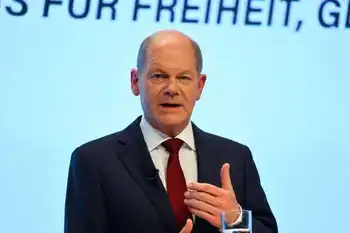
"We have action only when the pain of inaction is more than the pain of action," Connie Hughes, a member of New Jersey's Board of Public Utilities, told the Economic Club of Toronto.

Now, "getting the damn thing fixed" instead of pointing fingers of blame is the most important thing, said Hughes, who also heads a key infrastructure body at the U.S. National Association of Regional Utility Commissioners.

The Aug. 14 power outage showed that higher standards for U.S. and Canadian electrical utilities "must be mandated. They cannot be voluntary," Hughes said.

The outage, linked to power-line failures in Ohio, cut off power to 50 million people in eight states, Ontario and Quebec.

Along with improved equipment standards, "there must be funds for monitoring and enforcement," Hughes said. "And the standards must be measurable - and changeable, because technology is so innovative."

Utility commissions must get more involved in the long-term planning of power projects to match population growth, she said. "They can't be just reactive, coming in too late in the process."

As for who will pay to upgrade electrical grids, Hughes predicted a combination of public and private spending in Canada and the United States will be necessary.

On utility deregulation - a major issue on both sides of the border - she said a blend of public and private efforts will again be the best route.

"I believe in competition and market forces, but you still need monitoring. The market is not going to do that."

Government can also offer more financial incentives so that private companies make necessary investments in power projects, Hughes said. "The No. 1 job is a safe, reliable service at a reasonable cost."

A Canada-U.S. task force now engaged in a scientific investigation into the power outages "needs to be non-political," she said. "There should be no finger-pointing."

On the binational nature of the probe, Hughes said "it's a regional world" in which efficiencies don't necessarily recognize national boundaries. "Regional planning is the only effective way."

After the speech, Placer Dome CEO George Pirie said in interview that industry is waiting to see whether Ontario's electricity sector will end up totally regulated, non-regulated or semi-regulated.

Deryk King, CEO of Ontario energy marketer Direct Energy, told the meeting he hopes the decisions are shaped by "a fact-based, objective dialogue."

Direct Energy and gold miner Placer Dome were two of the sponsors of the Economic Club meeting.

Related News

Medicine Hat Grant Winners to Upgrade Grid and Use AI for Energy Savings

Medicine Hat Smart Grid AI modernizes electricity distribution with automation, sensors, and demand response, enhancing energy efficiency and renewable integration while using predictive analytics and real-time data to reduce consumption and optimize grid operations.


Key Points

An initiative using smart grid tech and AI to optimize energy use, cut waste, and improve renewable integration.

✅ Predictive analytics forecast demand to balance load and prevent outages.

✅ Automation, sensors, and meters enable dynamic, resilient distribution.

✅ Integrates solar and wind with demand response to cut emissions.


The city of Medicine Hat, Alberta, is taking bold steps toward enhancing its energy infrastructure and reducing electricity consumption with the help of innovative technology. Recently, several grant winners have been selected to improve the city's electricity grid distribution and leverage artificial intelligence (AI) to adapt to electricity demands while optimizing energy use. These projects promise to not only streamline energy delivery but also contribute to more sustainable practices by reducing energy waste.

Advancing the Electricity Grid

Medicine Hat’s electricity grid is undergoing a significant transformation, thanks to a new set of initiatives funded by government grants that advance a smarter electricity infrastructure vision for the region. The city has long been known for its commitment to sustainable energy practices, and these new projects are part of that legacy. The winners of the grants aim to modernize the city’s electricity grid to make it more resilient, efficient, and adaptable to the changing demands of the future, aligning with macrogrid strategies adopted nationally.

At the core of these upgrades is the integration of smart grid technologies. A smart grid is a more advanced version of the traditional power grid, incorporating digital communications and real-time data to optimize the delivery and use of electricity. By connecting sensors, meters, and control systems across the grid, along with the integration of AI data centers where appropriate, the grid can detect and respond to changes in demand, adjust to faults or outages, and even integrate renewable energy sources more efficiently.

One of the key aspects of the grant-funded projects involves automating the grid. Automation allows for the dynamic adjustment of power distribution in response to changes in demand or supply, reducing the risk of blackouts or inefficiencies. For instance, if an area of the city experiences a surge in energy use, the grid can automatically reroute power from less-used areas or adjust the distribution to avoid overloading circuits. This kind of dynamic response is crucial for maintaining a stable and reliable electricity supply.

Moreover, the enhanced grid will be able to better incorporate renewable energy sources such as solar and wind power, reflecting British Columbia's clean-energy shift as well, which are increasingly important in Alberta’s energy mix. By utilizing a more flexible and responsive grid, Medicine Hat can make the most of renewable energy when it is available, reducing reliance on non-renewable sources.

Using AI to Reduce Energy Consumption

While improving the grid infrastructure is an essential first step, the real innovation comes in the form of using artificial intelligence (AI) to reduce energy consumption. Several of the grant winners are focused on developing AI-driven solutions that can predict energy demand patterns, optimize energy use in real-time, and encourage consumers to reduce unnecessary energy consumption.

AI can be used to analyze vast amounts of data from across the electricity grid, such as weather forecasts, historical energy usage, and real-time consumption data. This analysis can then be used to make predictions about future energy needs. For example, AI can predict when the demand for electricity will peak, allowing the grid operators to adjust supply ahead of time, ensuring a more efficient distribution of power. By predicting high-demand periods, AI can also assist in optimizing the use of renewable energy sources, ensuring that solar and wind power are utilized when they are most abundant.

In addition to grid management, AI can help consumers save energy by making smarter decisions about how and when to use electricity. For instance, AI-powered smart home devices can learn household routines and adjust heating, cooling, and appliance usage to reduce energy consumption without compromising comfort. By using data to optimize energy use, these technologies not only reduce costs for consumers but also decrease overall demand on the grid, leading to a more sustainable energy system.

The AI initiatives are also expected to assist businesses in reducing their carbon footprints. By using AI to monitor and optimize energy use, industrial and commercial enterprises can cut down on waste and reduce energy-related operational costs, while anticipating digital load growth signaled by an Alberta data centre agreement in the province. This has the potential to make Medicine Hat a more energy-efficient city, benefiting both residents and businesses alike.

A Sustainable Future

The integration of smart grid technology and AI-driven solutions is positioning Medicine Hat as a leader in sustainable energy practices. The city’s approach is focused not only on improving energy efficiency and reducing waste but also on making electricity consumption more manageable and adaptable in a rapidly changing world. These innovations are a crucial part of Medicine Hat's long-term strategy to reduce carbon emissions and meet climate goals while ensuring reliable and affordable energy for its residents.

In addition to the immediate benefits of these projects, the broader impact is likely to influence other municipalities across Canada, including insights from Toronto's electricity planning for rapid growth, and beyond. As the technology matures and proves successful, it could set a benchmark for other cities looking to modernize their energy grids and adopt sustainable, AI-driven solutions.

By investing in these forward-thinking technologies, Medicine Hat is not only future-proofing its energy infrastructure but also taking decisive steps toward a greener, more energy-efficient future. The collaboration between local government, technology providers, and the community marks a significant milestone in the city’s commitment to innovation and sustainability.


Related News

View more

U.S. Electricity Sales Projections Continue to Fall

US Electricity Demand Outlook examines EIA forecasts, GDP decoupling, energy efficiency, electrification, electric vehicles, grid load growth, and weather variability to frame long term demand trends and utility planning scenarios.


Key Points

An analysis of EIA projections showing demand decoupling from GDP, with EV adoption and efficiency shaping future grid load.

✅ EIA lowers load growth; demand decouples from GDP.

✅ Efficiency and sector shifts depress kWh sales.

✅ EV adoption could revive load and capacity needs.


Electricity producers and distributors are in an unusual business. The product they provide is available to all customers instantaneously, literally at the flip of a switch. But the large amount of equipment, both hardware and software to do this takes years to design, site and install.

From a long range planning perspective, just as important as a good engineering design is an accurate sales projections. For the US electric utility industry the most authoritative electricity demand projec-tions come from the Department of Energy’s Energy Information Administration (EIA). EIA's compre-hensive reports combine econometric analysis with judgment calls on social and economic trends like the adoption rate of new technologies that could affect future electricity demand, things like LED light-ing and battery powered cars, and the rise of renewables overtaking coal in generation.

Before the Great Recession almost a decade ago, the EIA projected annual growth in US electricity production at roughly 1.5 percent per year. After the Great Recession began, the EIA lowered its projections of US electricity consumption growth to below 1 percent. Actual growth has been closer to zero. While the EIA did not antici-pate the last recession or its aftermath, we cannot fault them on that.

After the event, though, the EIA also trimmed its estimates of economic growth. For the 2015-2030 period it now predicts 2.1 percent economic and 0.3 percent electricity growth, down from previously projections of 2.7 percent and 1.3 percent respectively. (See Figures 1 and 2.)


Table 1. EIA electric generation projections by year of forecast (kWh billions)


Table 2. EIA forecast of GDP by year of forecast (billion 2009 $)

Back in 2007, the EIA figured that every one percent increase in economic activity required a 0.48 percent in-crease in electric generation to support it. By 2017, the EIA calculated that a 1 percent growth in economic activity now only required a 0.14 percent increase in electric output. What accounts for such a downgrade or disconnect between electricity usage and economic growth? And what factors might turn the numbers 
around?

First, the US economy lost energy intensive heavy industry like smelting, steel mills and refineries; patterns in China's electricity sector highlight how industrial shifts can reshape power demand. A more service oriented economy (think health care) relies more heavily on the movement of data or information and uses far less power than a manufacturing-oriented economy.

A small volcano in Argentina is about to fuel the next tech boom – and a little known company is going to be right at the center. Early investors stand to gain incredible profits and you can too. Read the report.

Second, internet shopping has hurt so-called "brick and mortar" retailers. Despite the departure of heavy industry, in years past a burgeoning US commercial sector increased its demand and usage of electricity to offset the industrial decline. But not anymore. Energy efficiency measures as well as per-haps greater concern about global warming and greenhouse gas emissions and have cut into electricity sales. “Do more with less” has the right ring to it.

But there may be other components to the ongoing decline in electricity usage. Academic studies show that electricity usage seems to increase with income along an S curve, and flattens out after a certain income level. That is, if you earn $1 billion per year you do not (or cannot) use ten times a much electricity as someone earning only $100 million.

But people at typical, middle income levels increase or decrease electricity usage when incomes rise or fall. The squeeze on middle income families was discussed often in the late presidential campaign. In recent decades an increasing percentage of income has gone to a small percentage of the population at the top of the income scale. This trend probably accounts for some weakness in residential sales. This suggests that government policy addressing income inequality would also boost electricity sales.

Population growth affects demand for electricity as well as the economy as a whole. The EIA has made few changes in its projections, showing 0.7 percent per year population growth in 2015- 2030 in both the 2007 and 2017 forecasts. Recent studies, however, have shown a drop in the birth rate to record lows. More troubling, from a national health perspective is that the average age of death may have stopped rising. Those two factors point to lower population growth, especially if the government also restricts immi-gration. Thus, the US may be approaching a period of rather modest population growth.

All of the above factors point to minimal sales growth for electricity producers in the US--perhaps even lower than the seemingly conservative EIA estimates. But the cloud on the horizon has a silver lining in the shape of an electric car. Both the United Kingdom and France have set dates to end of production of automobiles with internal combustion engines. Several European car makers have declared that 20 percent of their output will be electric vehicles by the early 2020s. If we adopt automobiles powered by electricity and not gasoline or diesel, electricity sales would increase by one third. For the power indus-try, electric vehicles represent the next big thing.

We don’t pretend to know how electric car sales will progress. But assume vehicle turnover rates re-main at the current 7 percent per year and electric cars account for 5 percent of sales in the first five years (as op-posed to 1 percent now), 20 percent in the next five years and 50 percent in the third five year period. Wildly optimistic assumptions? Maybe. By 2030, electric cars would constitute 28 percent of the vehicle fleet. They would add about 10 percent to kilowatt hour sales by that date, assuming that battery efficiencies do not improved by then. Those added sales would require increased electric generation output, with low-emissions sources expected to cover almost all the growth globally. They would also raise long term growth rates for 2015-2030 from the present 0.3 percent to 1.0 percent. The slow upturn in demand should give the electric companies time to gear up so to speak.

In the meantime, weather will continue to play a big role in electricity consumption. Record heat-induced demand peaks are being set here in the US even as surging global demand puts power systems under strain worldwide.

Can we discern a pattern in weather conditions 15 years out? Maybe we can, but that is one topic we don’t expect a government agency to tackle in public right now. Meantime, weather will affect sales more than anything else and we cannot predict the weather. Or can we?


Related News

View more

ABO to build 10MW Tunisian solar park

ABO Wind Tunisia 10MW Solar Project will build a photovoltaic park in Gabes with a STEG PPA, fixed tariff, 2,500 m grid connection, producing 18 million kWh annually, targeted for 2020 commissioning with local partners.


Key Points

A 10MW photovoltaic park in Gabes with a 20-year STEG PPA and fixed tariff, slated for 2020 commissioning.

✅ 18 million kWh/year; 2,500 m grid tie, 20-year fixed tariff

✅ Electricity supplied to STEG under PPA; 2020 commissioning

✅ Located in Gabes; built with local partners, 10MW capacity


ABO Wind has received a permit and a tariff for a 10MW photovoltaic project in Tunisia, amid global activity such as Spain's 90MW wind project now underway, which it plans to build and commission in 2020.

The solar park, in the governorate of Gabes, is 400km south of the country’s capital Tunis and aligns with renewable funding initiatives seen across developing markets.

The developer said it plans to build the project next year in close cooperation with local partners, as regional markets from North Africa to the Gulf expand, with Saudi Arabia boosting wind capacity as well.

ABO Wind department head Nicolas Konig said: “The solar park will produce more than 18 million kilowatt hours of electricity per year and will feed it into the grid at a distance of 2500 metres.”

The developer will conclude an electricity supply contract with the state-owned energy supplier (Societe tunisienne de l’electricite et du gaz (STEG), which will provide a fixed remuneration over 20 years, a model echoed by Germany's wind-solar tender for the electricity fed into the grid.

Earlier this year, ABO Wind had already secured a tariff for a wind farm with a capacity of 30MW in a tender, 35km south-east of Tunis, underscoring Tunisia's wind investments under its long-term plan.

The company is working on half a dozen Tunisian wind and solar projects, as institutions like the World Bank support wind growth in developing countries.

“We are making good progress on our way to assemble a portfolio of several ready-to-build wind and solar projects attractive to investors, as Saudi clean energy targets continue to expand globally,” said ABO Wind general manager responsible for international business development Patrik Fischer.


Related News

View more

Britain Goes Full Week Without Coal Power

Britain Coal-Free Week signals a historic shift to clean energy, with zero coal power, increased natural gas and renewables, lower greenhouse gas emissions, and ambitious UK energy policy targeting a 2025 coal phase-out and decarbonization.


Key Points

A seven-day period with no coal power in the UK, signaling cleaner energy and progress on emission reductions.

✅ Seven days of zero coal generation in the UK

✅ Natural gas and renewables dominated the electricity mix

✅ Coal phase-out targeted by 2025; emissions cuts planned


For the first time in a century, Britain weaned itself off of coal consumption for an entire week, a coal-free power record for the country.

Reuters reported that Britain went seven days without relying on any power generated by coal-powered stations as the share of coal in the grid continued to hit record lows.

The accomplishment is symbolic of a shift to more clean energy sources, with wind surpassing coal in 2016 and the UK leading the G20 in wind share as of recent years; Britain was home to the first coal-powered plant back in the 1880s.

Today, Britain has some aggressive plans in place to completely eliminate its coal power generation permanently by 2025, with a plan to end coal power underway. In addition, Britain aims to cut its total greenhouse gas emissions by 80 percent from 1990 levels within the next 30 years.

Natural gas was the largest source of power for Britain in 2018, providing 39 percent of the nation's total electricity, as the Great Britain generation dashboard shows. Coal contributed only about 5 percent, though low-carbon generation stalled in 2019 according to reports. Burning natural gas also produces greenhouse gases, but it is much more efficient and greener than coal.

In the U.S., 63.5 percent of electricity generated in 2018 came from fossil fuels. About 35.1 percent was produced from natural gas and 27.4 percent came from coal. In addition, 19.3 percent of electricity came from nuclear power and 17.1 percent came from renewable energy sources, according to the U.S. Energy Information Administration.


Related News

View more

Cost of US nuclear generation at ten-year low

US Nuclear Generating Costs 2017 show USD33.50/MWh for nuclear energy, the lowest since 2008, as capital expenditures, fuel costs, and operating costs declined after license renewals and uprates, supporting a reliable, low-carbon grid.


Key Points

The 2017 US nuclear average was USD33.50/MWh, lowest since 2008, driven by reduced capital, fuel, and operating costs.

✅ Average cost USD33.50/MWh, lowest since 2008

✅ Capital, fuel, O&M costs fell sharply since 2012 peak

✅ License renewals, uprates, market reforms shape competitiveness


Average total generating costs for nuclear energy in 2017 in the USA were at their lowest since 2008, according to a study released by the Nuclear Energy Institute (NEI), amid a continuing nuclear decline debate in other regions.

The report, Nuclear Costs in Context, found that in 2017 the average total generating cost - which includes capital, fuel and operating costs - for nuclear energy was USD33.50 per megawatt-hour (MWh), even as interest in next-generation nuclear designs grows among stakeholders. This is 3.3% lower than in 2016 and more than 19% below 2012's peak. The reduction in costs since 2012 is due to a 40.8% reduction in capital expenditures, a 17.2% reduction in fuel costs and an 8.7% reduction in operating costs, the organisation said.

The year-on-year decline in capital costs over the past five years reflects the completion by most plants of efforts to prepare for operation beyond their initial 40-year licence. A few major items - a series of vessel head replacements; steam generator replacements and other upgrades as companies prepared for continued operation, and power uprates to increase output from existing plants - caused capital investment to increase to a peak in 2012. "As a result of these investments, 86 of the [USA's] 99 operating reactors in 2017 have received 20-year licence renewals and 92 of the operating reactors have been approved for uprates that have added over 7900 megawatts of electricity capacity. Capital spending on uprates and items necessary for operation beyond 40 years has moderated as most plants are completing these efforts," it says.

Since 2013, seven US nuclear reactors have shut down permanently, with the Three Mile Island debate highlighting wider policy questions, and another 12 have announced their permanent shutdown. The early closure for economic reasons of reliable nuclear plants with high capacity factors and relatively low generating costs will have long-term economic consequences, the report warns: replacement generating capacity, when needed, will produce more costly electricity, fewer jobs that will pay less, and, for net-zero emissions objectives, more pollution, it says.

NEI Vice President of Policy Development and Public Affairs John Kotek said the "hardworking men and women of the nuclear industry" had done an "amazing job" reducing costs through the institute's Delivering the Nuclear Promise campaign and other initiatives, in line with IAEA low-carbon lessons from the pandemic. "As we continue to face economic headwinds in markets which do not properly compensate nuclear plants, the industry has been doing its part to reduce costs to remain competitive," he said.

"Some things are in urgent need of change if we are to keep the nation's nuclear plants running and enjoy their contribution to a reliable, resilient and low-carbon grid. Namely, we need to put in place market reforms that fairly compensate nuclear similar to those already in place in New York, Illinois and other states," Kotek added.

Cost information in the study was collected by the Electric Utility Cost Group with prior years converted to 2017 dollars for accurate historical comparison.


Related News

View more

Research shows that Ontario electricity customers want more choice and flexibility

Hydro One Account Customization lets Ontario customers pick billing due dates, enable balanced billing, get early high usage notifications, monitor electricity consumption, and receive outage alerts, offering flexibility during COVID-19.


Key Points

A flexible toolkit to set due dates, balance bills, get usage alerts, and track electricity.

✅ Pick your billing due date for better cash flow

✅ Balanced billing smooths seasonal usage spikes

✅ Early high usage and outage alerts via text or email


Hydro One announced it is providing its customers with the flexibility to customize their account. Customers can choose their own billing due date, flatten usage spikes from temperature fluctuations through balanced billing and the Ultra-Low Overnight Price Plan, and monitor their electricity consumption by signing up for early high usage notifications.

Research shows that Ontario electricity customers want more choice and flexibility (CNW Group/Hydro One Inc.)
"Being in-tune with our customers' needs is more important than ever. As we continue to navigate the COVID-19 pandemic, customers tell us that choice and flexibility, alongside electricity relief, will help them during this difficult time," said Jason Fitzsimmons, Chief Corporate Affairs and Customer Care Officer, Hydro One. "As a customer-driven organization, we have an important responsibility to support customers with relief, flexibility and choice."

According to recent research conducted by Angus Reid, 78 per cent of Ontario electricity customers said balanced billing would help them better manage their finances, even as peak hydro rates remained unchanged for many self-isolating customers. Balanced billing flattens out the spikes in electricity usage that commonly occurs in the summer due to air conditioning use and in the winter due to heating.

The research also found that 72 per cent of customers would like to pick their own due date to better manage their finances. This feature is now included in Hydro One's new customization bundle, which will be shared with customers through an awareness campaign. Other customization tools include alerts when electricity usage falls outside of the customer's normal pattern, the ability to report outages online and the ability to receive text messages or emails when outages occur. Customers can visit www.HydroOne.com/Choice to learn more.

"Customers can pick and choose the tools that work best for them. We are now able to offer a suite of features built for any lifestyle as our employees support Ontario's COVID-19 response across the province," said Fitzsimmons.

In addition to these customization options, Hydro One has also developed a number of customer support measures during COVID-19, including a Pandemic Relief Fund to offer payment flexibility and financial assistance to customers. The company is also extending its ban on electricity disconnections to ensure that no customer is disconnected at a time when support is needed most. More information about Hydro One's Pandemic Relief Program can be found at www.HydroOne.com/PandemicRelief. Customers can continue to contact Hydro One to determine individual payment plans and determine financial assistance programs available to meet their needs, especially as disconnection pressures can arise for some households.


Related News

View more

Sign Up for Electricity Forum’s Newsletter

Stay informed with our FREE Newsletter — get the latest news, breakthrough technologies, and expert insights, delivered straight to your inbox.

Electricity Today T&D Magazine Subscribe for FREE

Stay informed with the latest T&D policies and technologies.
  • Timely insights from industry experts
  • Practical solutions T&D engineers
  • Free access to every issue

Download the 2025 Electrical Training Catalog

Explore 50+ live, expert-led electrical training courses –

  • Interactive
  • Flexible
  • CEU-cerified