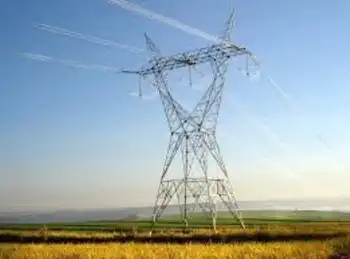
Elster to take lead on KCBPU smart grid

By PR Newswire


CSA Z463 Electrical Maintenance

Our customized live online or in‑person group training can be delivered to your staff at your location.

  • Live Online
  • 6 hours Instructor-led
  • Group Training Available
Regular Price:
$249
Coupon Price:
$199
Reserve Your Seat Today
The Kansas City Board of Public Utilities KCBPU has selected Elster for their smart grid deployment, choosing the EnergyAxis Smart Grid solution to streamline business and operational processes and provide cost-effective services to its customer base.

"Our customers and their unique needs were our primary consideration in awarding Elster this contract — we needed a Smart Grid technology partner that understood these needs and could meet our unique geographic and technology requirements for both electricity and water," said Don Gray, general manager, KCBPU.

"Elster has demonstrated global success in challenging conditions with multi-utilities in electricity and water, making us very confident that their EnergyAxis system will enable our customers to realize the benefits of the Smart Grid," Gray added.

Google recently announced its selection of Kansas City, Kansas, as the location for its ultra-high-speed fiber project. This network is expected to be 100 times faster than most broadband connection speeds.

With Elster's proven technologies, which include advanced metering infrastructure AMI, KCBPU will install Ethernet-connected Rex3 Smart Meters and replace outdated control systems and infrastructure. This will enable the utility to roll out valuable new services such as outage management, time-of-use TOU rates, remote connect and disconnect service, flexible billing and leak detection capabilities to its customers.

As part of its Smart Grid plan, KCBPU plans to deploy more than 69,000 of Elster's smart electric meters and 55,000 Elster smart water meters over the next few years.

"KCBPU is dedicated to providing the highest quality of electric and water services at the lowest possible cost to its customers, and, through this partnership with Elster, they will be able to achieve this mission with even greater success," said David Green, executive vice president, customers and markets, North America, Elster.

"By investing in the Elster EnergyAxis Smart Grid solution and replacing its aging water and electric infrastructure, KCBPU is also enhancing its abilities to support the changing needs of its customers," Green added.

Related News

Fish boom prompts energy conglomerate to spend $14.5M to bury subsea cables

Maritime Link Cable Burial safeguards 200-kV subsea cables in the Cabot Strait as Emera and Nova Scotia Power trench lines to mitigate bottom trawling risks from a redfish boom, ensuring Muskrat Falls hydro delivery.


Key Points

Trenching Cabot Strait subsea power cables to prevent redfish-driven bottom trawling and ensure Muskrat Falls power.

✅ $14.492M spent trenching 59 km at 400 m depth

✅ Protects 200-kV, 170-km subsea interconnects from trawls

✅ Driven by Gulf redfish boom; DFO and UARB consultations


The parent company of Nova Scotia Power disclosed this week to the Utility and Review Board, amid Site C dam watchdog attention to major hydro projects, that it spent almost $14,492,000 this summer to bury its Maritime Links cables lying on the floor of the Cabot Strait between Newfoundland and Cape Breton.

It's a fish story no one saw coming, at least not Halifax-based energy conglomerate Emera.

The parent company of Nova Scotia Power disclosed this week to the Utility and Review Board that it spent almost $14,492,000 this summer to bury its Maritime Link cables lying on the floor of the Cabot Strait between Newfoundland and Cape Breton.

The cables were protected because an unprecedented explosion in the redfish population in the Gulf of St Lawrence is about to trigger a corresponding boom in bottom trawling in the area.

Also known as ocean perch, redfish were not on anyone's radar when the $1.5-billion Maritime Link was designed and built to carry Muskrat Falls hydroelectricity from Newfoundland to Nova Scotia.

The two 200-kilovolt electrical submarine cables spanning the Cabot Strait are the longest in North America, compared with projects like the New England Clean Power Link planned further south. They are each 170 kilometres long and weigh 5,500 tonnes.

Nova Scotia Power customers are paying for the Maritime Link in return for a minimum of 20 per cent of the electricity generated by Muskrat Falls over 35 years.

The electricity is supposed to start sending first electricity through the Maritime Link in mid-2020.

First time cost disclosed
In August, the company buried 59 kilometres of subsea cables one metre below the bottom at depths of 400 metres.

"These cables had not been previously trenched due to the absence of fishing activities at those depths when the cables were originally installed," spokesperson Jeff Myrick wrote in an email to CBC News in October.

Ratepayers will get the bill next year, as utilities also face risks like copper theft that can drive costs in the region. Until now, the company had declined to release costs relating to protecting the Maritime Link.

The bill will be presented to regulators, a process that has affected projects such as a Manitoba Hydro line to Minnesota, when the company applies to recover Maritime Link costs from Nova Scotia Power ratepayers in 2020.

Myrick said the company was acting after consultation with the Department of Fisheries and Oceans.

Unexpected consequences
After years of overfishing in the 1980s and early 1990s, redfish quotas were slashed and a moratorium imposed on some redfish.

Confusingly, there are actually two redfish species in the Gulf of St. Lawrence.

But very strong recent year classes, that have coincided with warming waters in the gulf, as utilities adapt to climate change considerations grow, have produced redfish in massive numbers.

After years of overfishing, the redfish population is now booming in the Gulf of St. Lawrence. (Submitted by Marine Institute)
There is now believed to be three-million tonnes of redfish in the Gulf of St Lawrence.

The Department of Fisheries and Oceans is expected to increase quotas in the coming years and the fishing industry is gearing up in a big way.

Earlier this month, Scotia Harvest announced it will begin construction of a new $14-million fish plant in Digby next spring in part to process increased redfish catches.


Related News

View more

Zapping elderly brains with electricity improves short-term memory — for almost an hour

Transcranial electrical stimulation synchronizes brain waves to bolster working memory, aligning neural oscillations across the prefrontal and temporal cortex. This noninvasive brain stimulation may counter cognitive aging by restoring network coupling and improving short-term recall.


Key Points

Transcranial electrical stimulation applies scalp currents to synchronize brain waves, briefly enhancing working memory.

✅ Synchronizes prefrontal-temporal networks to restore coupling

✅ Noninvasive tES/tACS protocols show rapid, reversible gains

✅ Effects lasted under an hour; durability remains to be tested


To read this sentence, you hold the words in your mind for a few seconds until you reach the period. As you do, neurons in your brain fire in coordinated bursts, generating electrical waves that let you hold information for as long as it is needed, much as novel devices can generate electricity from falling snow under specific conditions. But as we age, these brain waves start to get out of sync, causing short-term memory to falter. A new study finds that jolting specific brain areas with a periodic burst of electricity might reverse the deficit—temporarily, at least.

The work makes “a strong case” for the idea that out-of-sync brain waves in specific regions can drive cognitive aging, says Vincent Clark, a neuroscientist at the University of New Mexico in Albuquerque, who was not involved in the research. He adds that the brain stimulation approach in the study may result in a new electrical therapy for age-related deficits in working memory.

Working memory is “the sketchpad of the mind,” allowing us to hold information in our minds over a period of seconds. This short-term memory is critical to accomplishing everyday tasks such as planning and counting, says Robert Reinhart, a neuroscientist at Boston University who led the study. Scientists think that when we use this type of memory, millions of neurons in different brain areas communicate through coupled bursts of activity, a form of electrical conduction that coordinates timing across networks. “Cells that fire together, wire together,” Reinhart says.

But despite its critical role, working memory is a fragile cognitive resource that declines with age, Reinhart says. Previous studies had suggested that reduced working-memory performance in the elderly is linked to uncoupled activity in different brain areas. So Reinhart and his team set out to test whether recoupling brain waves in older adults could boost the brain’s ability to temporarily store information, a systems-level coordination challenge akin to efforts to use AI for energy savings on modern power grids.

To do so, the researchers used jolts of weak electrical current to synchronize waves in the prefrontal and temporal cortex—two brain areas critical for cognition, a targeted approach not unlike how grids use batteries to stabilize power during strain—and applied the current to the scalps of 42 healthy people in their 60s and 70s who showed no signs of decline in mental ability. Before their brains were zapped, participants looked at a series of images: an everyday object, followed briefly by a blank screen, and then either an identical or a modified version of the same object. The goal was to spot whether the two images were different.

Then the participants took the test again, while their brains were stimulated with a current. After about 25 minutes of applying electricity, participants were on average more accurate at identifying changes in the images than they were before the stimulation. Following stimulation, their performance in the test was indistinguishable from that of a group of 42 people in their 20s. And the waves in the prefrontal and temporal cortex, which had previously been out of sync in most of the participants, started to fire in sync, the researchers report today in Nature Neuroscience, a synchronization imperative reminiscent of safeguards that prevent power blackouts on threatened grids. No such effects occurred in a second group of older people who received jolts of current that didn’t synchronize waves in the prefrontal and temporal cortex.

By using bursts of current to knock brain waves out of sync, the researchers also modulated the brain chatter in healthy people in their 20s, making them slower and less accurate at spotting differences in the image test.

“This is a very nice and clear demonstration of how functional connections underlie memory in younger adults and how alterations … can lead to memory reductions in older adults,” says Cheryl Grady, a cognitive neuroscientist at the Rotman Research Institute at Baycrest in Toronto, Canada. It’s also the first time that transcranial stimulation has been shown to restore working memory in older people, says Michael O’Sullivan, a neuroscientist at the University of Queensland in Brisbane, Australia, though electricity in medicine extends far beyond neurostimulation.

But whether brain zapping could turbocharge the cognitive abilities of seniors or help improve the memories of people with diseases like Alzheimer’s is still unclear: In the study, the positive effects on working memory lasted for just under an hour—though Reinhart says that’s as far as they recorded in the experiment. The team didn’t see the improvements decline toward the end, so he suspects that the cognitive boost may last for longer. Still, researchers say much more work has to be done to better understand how the stimulation works.

Clark is optimistic. “No pill yet developed can produce these sorts of effects safely and reliably,” he says. “Helping people is the ultimate goal of all of our research, and it’s encouraging to see that progress is being made.”


Related News

View more

China's nuclear energy on steady development track, say experts

China Nuclear Power Expansion accelerates with reactor approvals, Hualong One and CAP1400 deployments, rising gigawatts, clean energy targets, carbon neutrality goals, and grid reliability benefits to meet coastal demand and reduce emissions.


Key Points

An accelerated reactor buildout to add clean capacity, curb emissions, and improve grid reliability nationwide.

✅ Approvals surge for Hualong One and CAP1400 third-gen reactors

✅ Capacity targets approach 100 GW installed by 2030

✅ Supports carbon neutrality, energy security, and lower costs


While China has failed to accomplish its 2020 nuclear target of 58 gigawatts under operation and 30 GW under construction, insiders are optimistic about prospects for the nonpolluting energy resource in China over the next five years as the country has stepped up nuclear approvals and construction since 2020.

China expects to record 49 operating nuclear facilities and capacity of more than 51 GW as of the end of 2020. Nuclear power currently makes up around 2.4 percent of the country's total installed energy capacity, said the China Nuclear Energy Association. There are 19 facilities that have received approval and are under construction, with capacity exceeding 20 GW, ranking top globally as nuclear project milestones worldwide continue, it said.

"With surging power demand from coastal regions, more domestic technology, including next-gen nuclear, will be adopted with installations likely nearing 100 GW by the end of 2030," said Wei Hanyang, a power market analyst at Bloomberg New Energy.

Following the Fukushima nuclear reactor disaster in 2011 in Japan, China has, like many countries including Japan, Germany and Switzerland, suspended nuclear power project approvals for a period, including construction of the pilot project of Shidaowan nuclear power plant in Shandong province that uses CAP1400 technology, based on third-generation Westinghouse AP1000 reactor technology.

As China promotes greener development and prioritizes safety and security of nuclear power plant construction, it has pledged to hit peak emissions before 2030 and achieve carbon neutrality by 2060, with electricity meeting 60% of energy use by 2060 according to Shell, the Shidaowan plant, originally scheduled to launch construction in 2014 and enter service in 2018, is expected to start fuel loading and begin operations this year.

Joseph Jacobelli, an independent energy analyst and executive vice-president for Asia business at Cenfura Ltd, a smart energy services company, said recent developments confirm China's ongoing commitment to further boost the country's nuclear sector.

"The nuclear plants can help meet China's goal of reducing greenhouse gas emissions as the country reduces coal power production and provide air pollution-free energy at a lower cost to consumers. China's need for clean energy means that nuclear power generation definitely has an important place in the long-term energy mix," Jacobelli said.

He added that Chinese companies' cost control capabilities and technological advancements, and operational performance improvements such as the AP1000 refueling outage record, are also likely to continue providing domestic companies with advantages, as the cost per kilowatt-hour is very important, especially as solar, wind and other clean energy solutions become even cheaper over the next few years.

China approved two nuclear projects in 2020- Hainan Changjiang nuclear power plant unit 2 and Zhejiang San'ao nuclear power plant unit 1. This is after the country launched three new nuclear power plants in 2019 in the provinces of Shandong, Fujian and Guangdong, which marked the end of a moratorium on new projects.

The Zhejiang San'ao nuclear power plant saw concrete poured for unit 1 on Dec 31, according to its operator China General Nuclear. It will be the first of six Hualong One pressurized water reactors to be built at the site as well as the first Chinese nuclear power plant project to involve private capital.

Jointly invested, constructed and operated by CGN, Zheneng Electric Power, Wenzhou Nuclear Energy Development, Cangnan County Haixi Construction Development and Geely Maijie Investment, the project creates a new model of mixed ownership of nuclear power enterprises, said CGN.

The world's first Hualong One reactor at unit 5 of China National Nuclear Corp's Fuqing nuclear plant in Fujian province was connected to the grid in November. With the start of work on San'ao unit 1, China now has further seven Hualong One units under construction, including Fuqing 6, which is scheduled to go online this year.

CNNC is also constructing one unit at Taipingling in Guangdong and two at Zhangzhou in Fujian province. CGN is building two at its Fangchenggang site in Guangxi Zhuang autonomous region. In addition, two Hualong One units are under construction at Karachi in Pakistan, while CGN proposes to use a UK version of the Hualong One at Bradwell in the United Kingdom, aligning with the country's green industrial revolution strategy.


Related News

View more

Canadian nuclear projects bring economic benefits

Ontario Nuclear Refurbishment Economic Impact powers growth as Bruce Power's MCR and OPG's Darlington unit 2 refurbishment drive jobs, supply-chain spending, medical isotopes, clean baseload power, and lower GHG emissions across Ontario and Canada.


Key Points

It is the measured gains from Bruce Power's MCR and OPG's Darlington refurbishment in jobs, taxes, and clean energy.

✅ CAD7.6B-10.6B impact in Ontario; CAD8.1B-11.6B nationwide.

✅ Supports 60% nuclear supply, jobs, and medical isotopes.

✅ MCR and Darlington cut GHGs, drive innovation and supply chains.


The 13-year Major Component Replacement (MCR) project being undertaken as part of Bruce Power's life-extension programme, which officially began with a reactor taken offline earlier this year, will inject billions of dollars into Ontario's economy, a new report has found. Meanwhile, the major project to refurbish Darlington unit 2 remains on track for completion in 2020, Ontario Power Generation (OPG) has announced.

The Ontario Chamber of Commerce (OCC) said its report, Major Component Replacement Project Economic Impact Analysis, outlines an impartial assessment of the MCR programme and related manufacturing contracts across the supply chain. The report was commissioned by Bruce Power.

"Our analysis shows that Bruce Power's MCR project is a fundamental contributor to the Ontario economy. More broadly, the life-extension of the Bruce Power facility will provide quality jobs for Ontarians, produce a stable supply of medical isotopes for the world's healthcare system, and deliver economic benefit through direct and indirect spending," OCC President and CEO Rocco Rossi said."As Ontario's energy demand grows, nuclear truly is the best option to meet those demands with reduced GHG [greenhouse gas] emissions. The Bruce Power MCR Project will not only drive economic growth in the region, it will position Ontario as a global leader in nuclear innovation and expertise."

According to the OCC's economic analysis, the MCR's economic impact on Ontario is estimated to be between CAD7.6 billion (USD5.6 billion) and CAD10.6 billion. Nationally, its economic impact is estimated to be between CAD8.1 billion and CAD11.6 billion. It estimates that the federal government will receive CAD144 million in excise tax and CAD1.2 billion in income tax, while the provincial government will receive CAD300 million and CAD437 million. Ontario’s municipal governments are estimated to receive a collective CAD192 million in tax.

The nuclear industry currently provides 60% of Ontario’s daily energy supply needs, with Pickering life extension plans bolstering system reliability, and is made up of over 200 companies and more than 60,000 jobs across a diversity of sectors such as operations, manufacturing, skilled trades, healthcare, and research and innovation, the report notes.

Greg Rickford, Ontario's minister of Energy, Northern Development and Mines, and minister of Indigenous Affairs, said continued use of the Bruce generating station which recently set an operating record would create jobs and advance Ontario’s nuclear industrial sector. "It is great to see projects like the MCR that help make Ontario the best place to invest, do business and find a job," he said.

The MCR is part of Bruce Power's overall life-extension programme, which started in January 2016. Bruce 6 will be the first of the six Candu units to undergo an MCR which will take 46 months to complete and give the unit a further 30-35 years of operational life. The total cost of refurbishing Bruce units 3-8 is estimated at about CAD8 billion, in addition to CAD5 billion on other activities under the life-extension programme, which is scheduled for completion by 2053.


Darlington milestones

OPG's long-term refurbishment programme at Darlington, alongside SMR plans for the site announced by the province, began with unit 2 in 2016 after years of detailed planning and preparation. Reassembly of the reactor, which was disassembled last year, is scheduled for completion this spring, and the unit 2 refurbishment project remains on track for completion in early 2020. At the same time, final preparations are under way for the start of the refurbishment of unit 3.

"We've entered a critical phase on the project," Senior Vice President of Nuclear Refurbishment Mike Allen said. "OPG and our project partners continue to work as an integrated team to meet our commitments on Unit 2 and our other three reactors at Darlington Nuclear Generating Station."

A 350-tonne generator stator manufactured by GE in Poland is currently in transit to Canada, where it will be installed in Darlington 3's turbine hall as the province also breaks ground on its first SMR this year.

The 10-year Darlington refurbishment is due to be completed in 2026, while the province plans to refurbish Pickering B to extend output beyond that date.


Related News

View more

Perry presses ahead on advanced nuclear reactors

Advanced Nuclear Reactors drive U.S. clean energy with small modular reactors, a new test facility at Idaho National Laboratory, and public-private partnerships accelerating nuclear innovation, safety, and cost reductions through DOE-backed programs and university simulators.


Key Points

Advanced nuclear reactors are next-gen designs, including SMRs, offering safer, cheaper, low-carbon power.

✅ DOE test facility at Idaho National Laboratory

✅ Small modular reactors with passive safety systems

✅ University simulators train next-gen nuclear operators


Energy Secretary Rick Perry is advancing plans to shift the United States towards next-gen nuclear power reactors.

The Energy Department announced this week it has launched a new test facility at the Idaho National Laboratory where private companies can work on advanced nuclear technologies, as the first new U.S. reactor in nearly seven years starts up, to avoid the high costs and waste and safety concerns facing traditional nuclear power plants.

“[The National Reactor Innovation Center] will enable the demonstration and deployment of advanced reactors that will define the future of nuclear energy,” Perry said.

With climate change concerns growing and net-zero emissions targets emerging, some Republicans and Democrats are arguing for the need for more nuclear reactors to feed the nation’s electricity demand. But despite nuclear plants’ absence of carbon emissions, the high cost of construction, questions around what to do with the spent nuclear rods and the possibility of meltdown have stymied efforts.

A new generation of firms, including Microsoft founder Bill Gates’ Terra Power venture, are working on developing smaller, less expensive reactors that do not carry a risk of meltdown.

“The U.S. is on the verge of commercializing groundbreaking nuclear innovation, and we must keep advancing the public-private partnerships needed to traverse the dreaded valley of death that all too often stifles progress,” said Rich Powell, executive director of ClearPath, a non-profit advocating for clean energy and green industrial strategies worldwide.

The new Idaho facility is budgeted at $5 million under next year’s federal budget, even as the cost of U.S. nuclear generation has fallen to a ten-year low, which remains under negotiation in Congress.

On Thursday another advanced nuclear developer working on small modular systems, Oregon-based NuScale Power, announced it was building three virtual nuclear control rooms at Texas A&M University, Oregon State University and the University of Idaho, with funding from the Energy Department.

The simulators will be open to researchers and students, to train on the operation of smaller, modular reactors, as well as the general public.

NuScale CEO John Hopkins said the simulators would “help ensure that we educate future generations about the important role nuclear power and small modular reactor technology will play in attaining a safe, clean and secure energy future for our country.”


Related News

View more

States have big hopes for renewable energy. Get ready to pay for it.

New York Climate Transition Costs highlight rising utility bills for ratepayers as the state pursues renewable energy, electrification, and a zero-emissions grid, with Inflation Reduction Act funding to offset consumer burdens while delivering health benefits.


Key Points

Ratepayer-funded costs to meet New York's renewable targets and zero-emissions grid, offset by federal incentives.

✅ $48B in projects funded by consumers over two decades

✅ Up to 10% of utility bills already paid by some upstate users

✅ Targets: 70% renewables by 2030; zero-emissions grid by 2040


A generational push to tackle climate change in New York that includes its Green New Deal is quickly becoming a pocketbook issue headed into 2024.

Some upstate New York electric customers are already paying 10 percent of their electricity bills to support the state’s effort to move off fossil fuels and into renewable energy. In the coming years, people across the state can expect to give up even bigger chunks of their income to the programs — $48 billion in projects is set to be funded by consumers over the next two decades.

The scenario is creating a headache for New York Democrats grappling with the practical and political risk of the transition.


It’s an early sign of the dangers Democrats across the country will face as they press forward with similar policies at the state and federal level. New Jersey, Maryland and California are also wrestling with the issue and, in some cases, are reconsidering their ambitious plans, including a 100% carbon-free mandate in California.

“This is bad politics. This is politics that are going to hurt all New Yorkers,” said state Sen. Mario Mattera, a Long Island Republican who has repeatedly questioned the costs of the state’s climate law and who will pay for it.

Democrats, Mattera said, have been unable to explain effectively the costs for the state’s goals. “We need to transition into renewable energy at a certain rate, a certain pace,” he said.

Proponents say the switch will ultimately lower energy bills by harnessing the sun and wind, result in significant health benefits and — critically — help stave off the most devastating climate change scenarios. And they hope new money to go green from the Inflation Reduction Act, celebrating its one-year anniversary, can limit costs to consumers.

New York has statutory mandates calling for 70 percent renewable electricity by 2030 and a fully “zero emissions” grid by 2040, among the most aggressive targets in the country, aligning with a broader path to net-zero electricity by mid-century. The grid needs to be greened, while demand for electricity is expected to more than double by 2050 — the same year when state law requires emissions to be cut by 85 percent from 1990 levels.

But some lawmakers in New York, particularly upstate Democrats, and similar moderates across the nation are worried about moving too quickly and sparking a backlash against higher costs, as debates over Minnesota's 2050 carbon-free plan illustrate. The issue is another threat to Democrats heading into the critical 2024 battleground House races in New York, which will be instrumental in determining control of Congress.

Even Gov. Kathy Hochul, a Democrat who is fond of saying that “we’re the last generation to be able to do anything” about climate change, last spring balked at the potential price tag of a policy to achieve New York’s climate targets, a concern echoed in debates over a fully renewable grid by 2030 elsewhere. And she’s not the only top member of her party to say so.

“If it’s all just going to be passed along to the ratepayers — at some point, there’s a breaking point, and we don’t want to lose public support for this agenda,” state Comptroller Tom DiNapoli, a Democrat, warned in an interview.


Related News

View more

Sign Up for Electricity Forum’s Newsletter

Stay informed with our FREE Newsletter — get the latest news, breakthrough technologies, and expert insights, delivered straight to your inbox.

Electricity Today T&D Magazine Subscribe for FREE

Stay informed with the latest T&D policies and technologies.
  • Timely insights from industry experts
  • Practical solutions T&D engineers
  • Free access to every issue

Live Online & In-person Group Training

Advantages To Instructor-Led Training – Instructor-Led Course, Customized Training, Multiple Locations, Economical, CEU Credits, Course Discounts.

Request For Quotation

Whether you would prefer Live Online or In-Person instruction, our electrical training courses can be tailored to meet your company's specific requirements and delivered to your employees in one location or at various locations.