Sweden
—
EU Grids Package pushback intensifies as Bulgaria, Finland, France, Poland and Sweden warn that centralised electricity grid planning could raise costs, slow the green transition and undermine energy security, urging regional coordination and cross-border cooperation.
Essential Takeaways
-
Five EU states contest centralised grid planning approach
-
Warning of higher costs, delays, and energy security risks
-
Proposal favors regional planning with cross-border cooperation
-
Parliament rapporteur backs central scenario with safeguards
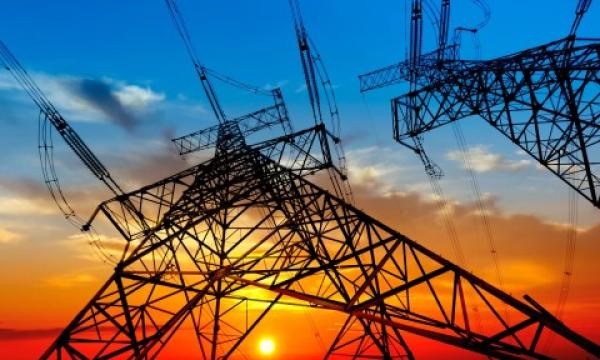
Five European Union governments are pushing back against the European Commission's proposed EU Grids Package, arguing that a highly centralised approach to electricity transmission planning would raise costs, slow the green transition and weaken security of supply. In a document from the five capitals, Bulgaria, Finland, France, Poland and Sweden contend that grid development commanded from the centre risks misaligned investments and insufficient focus on how national power systems actually operate. Their warning lands amid persistent affordability pressures across the bloc, a theme reflected in prior coverage such as eu balks electricity prices, as governments and operators weigh who pays for accelerated build outs and reinforcements.
The five states advocate strengthening regional planning and evaluation instead of relying on a single top down template. They argue that coordinated regions can better capture local network constraints, generation mixes and system services while still enabling interconnection where it makes economic sense. Their stance dovetails with broader debates about long term affordability and investor signals, echoed in europe future electricity prices, even as member states pursue divergent technology pathways and capacity needs.
The Commission tabled its grid overhaul in December, aiming to tighten coordination when revising the law governing trans European energy infrastructure, including the use of a central scenario to steer investment planning across countries. While the five capitals resist an exclusive top down method, they do not reject European coordination altogether; the document supports cross border cooperation and recognises the need for interconnected infrastructure to deliver decarbonisation and energy security. Those objectives are central to ongoing market design discussions, including the type of reforms profiled in eu revamps electricity, where grid expansion, flexibility and permitting timelines are frequently linked.
In the European Parliament, the lawmaker steering the file, Tsvetelina Penkova, broadly backs stronger Union level planning anchored by a central scenario, while also preserving national input and transparency safeguards. Her draft report, published in late April, highlights harmonised cost benefit analysis and infrastructure needs identification as tools to bring coherence without eliminating national responsibilities. The balance between EU wide alignment and domestic prerogatives has also featured in member state discussions, including dynamics explored in france germany eu electricity reform, as capitals seek predictable rules for transmission build outs and cross border capacity.
Negotiations among the 27 countries continue under the current Council Presidency, which has already circulated changes intended to reflect concerns raised by different groups. Officials involved describe the talks as moving toward a compromise, even as debates persist over how to apportion funding between beneficiaries and net contributors. Commission leaders have urged a political agreement before the summer, but with positions still hardening in places, diplomats caution the file may carry over to the incoming Irish Presidency on 1 July. For consumers and industry, the outcome will shape how planning risk, connection queues and price stability are managed across the single market, alongside instruments such as eu electricity fixed contracts that aim to cushion volatility within a reformed market framework.
Whichever compromise emerges, the core tension remains: how to scale cross border grids fast enough to integrate renewables and electrify demand, while ensuring planning reflects national system realities and cost efficient delivery. The five capitals argue that empowering regional cooperation and system operator led assessments will keep investment focused where it yields the highest net benefits. The Parliament's lead negotiator, by contrast, sees a stronger centre as a way to avoid duplication, accelerate cross border projects and standardise methodologies. Reconciling those approaches will determine whether the package becomes a blueprint that accelerates decarbonisation and resilience, or a framework that member states perceive as misaligned with their operational needs.
Related News
Electricity distributors warn excess solar power in network could cause blackouts, damage infrastructure
Australian Rooftop Solar Grid Constraints are driving debates over voltage rise, export limits, inverter curtailment,…
View more
Power Outage in Northeast D.C.
Northeast D.C. Power Outage highlights Pepco substation equipment failure, widespread service disruptions, grid reliability concerns,…
View more

Tesla’s Powerwall as the beating heart of your home
GMP Tesla Powerwall Program replaces utility meters with smart battery storage, enabling virtual power plant…
View more
China, Cambodia agree to nuclear energy cooperation
Cambodia-CNNC Nuclear Energy MoU advances peaceful nuclear cooperation, human resources development, and Belt and Road…
View more
Maryland opens solar-power subscriptions to all
Maryland Community Solar Program enables renters and condo residents to subscribe to offsite solar, earn…
View more
Hydro One wants to spend another $6-million to redesign bills
Hydro One Bill Redesign Spending sparks debate over Ontario Energy Board regulation, rate applications, privatization,…
View more
Sign Up for Electricity Forum’s Newsletter
Stay informed with our FREE Newsletter — get the latest news, breakthrough technologies, and expert insights, delivered straight to your inbox.
Electricity Today T&D Magazine Subscribe for FREE

Stay informed with the latest T&D policies and technologies.
- Timely insights from industry experts
- Practical solutions T&D engineers
- Free access to every issue
