Evacuation plan dismissed by Indian Point

By New York Times


Substation Relay Protection Training

Our customized live online or in‑person group training can be delivered to your staff at your location.

  • Live Online
  • 12 hours Instructor-led
  • Group Training Available
Regular Price:
$699
Coupon Price:
$599
Reserve Your Seat Today
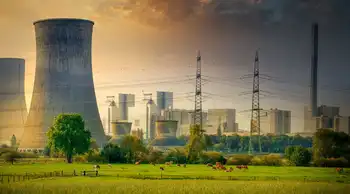
The operators of the Indian Point nuclear power plant said that they did not expect ever to face the combination of earthquake and flooding that devastated Japan this month. But in the aftermath of those disasters, they said, some regulatory changes were to be expected.

Executives of Entergy, which owns Indian Point, told the Westchester County Board of LegislatorsÂ’ Environmental and Energy Committee at a meeting here that it was too soon to know what should be done differently at the plant. They said they did not foresee a natural disaster of the same magnitude in the New York area the plant is on the Hudson River in Buchanan, 35 miles north of Midtown.

But, they said, they did expect regulators to insist on some changes after the damage done to the Fukushima Daiichi Nuclear Power Station in Japan.

“I have no doubt there will be changes we make in response to this event,” said John McCann, vice president of nuclear safety and licensing for Entergy. But, he said, he was “in no position” to say what they would be.

Mr. McCann reassured the legislators that Indian Point had been designed to withstand an earthquake much stronger than any on record in the region, though not one as powerful as the quake that rocked Japan. He said repeatedly that the greater threat to public safety in Japan had come not from the earthquake, but from the tsunami.

It was the tsunami, he said, that washed away the tanks of fuel for the emergency generators and left the Japanese unable to keep the plantÂ’s rectors cooled. Indian Point has several sources of power and water that should preclude a similar situation there, he said.

Even if all sources failed, he added, there were “severe-accident-management” plans drawn up, calling, for instance, for water from the Hudson to be pumped to the plant to keep the fuel rods and spent fuel rods from overheating.

But Michael B. Kaplowitz of Somers, chairman of the environment committee, asked, “How can you test that?” Mr. Kaplowitz wondered aloud if the plan amounted to calling in a “fire brigade” to pump water onto the rods to prevent a meltdown.

The Entergy executives said they had been storing spent fuel rods in 10 “dry casks” on concrete pads. The casks, they said, were designed to withstand the degree of shaking that would accompany an earthquake of magnitude 6.0 on the Richter scale, the same level, they said, that the plant could handle.

Some of the legislators seemed more worried about the plan for evacuating the area around Indian Point, especially after the Nuclear Regulatory Commission recommended that people in Japan stay at least 50 miles away from the crippled Fukushima plant. The existing evacuation plan for Indian Point adheres only to the current federal standard of a 10-mile radius around a nuclear plant.

One legislator, Peter B. Harckham of Katonah, recalled having been among those evacuated after the accident at the Three Mile Island nuclear plant near Harrisburg, Pa., in 1979. “I can just tell you, it didn’t work,” he said. “It took us well over four hours to go a short distance.”

Another legislator, William Burton of Ossining, said that he shared with his neighbors “a not-unreasonable fear of not being warned soon enough” of trouble at Indian Point.

“As soon as the siren goes off, I’ll jump in my car and I’ll be in gridlock on 9A before things start,” he said, referring to a highway that runs along the Hudson.

Despite the advice the federal regulators gave to people in Japan, the Entergy executives expressed doubt that the evacuation zone would be expanded to reach as far as New York City. Asked if a feasible plan to evacuate much or all of the city could be drawn up, EntergyÂ’s director of emergency planning, Michael J. Slobodien, said neither he nor the federal regulators knew.


“We really don’t have enough information to begin to answer that question,” Mr. Slobodien said. He said the idea that regulators would demand an evacuation plan for an area beyond 10 miles was “rank speculation.”

Related News

Alberta's Path to Clean Electricity

Alberta Clean Electricity Regulations face federal mandates and provincial autonomy, balancing greenhouse gas cuts, net-zero 2050 goals, and renewable energy adoption across wind, solar, and hydro, while protecting jobs and economic stability in energy communities.


Key Points

Rules to cut power emissions, boost renewables, and align Alberta with federal net-zero goals under federal mandates.

✅ Phases out coal and curbs greenhouse gas emissions

✅ Expands wind, solar, and hydro to diversify the grid

✅ Balances provincial autonomy with national climate targets


In a recent development, Alberta finds itself at a crossroads between provincial autonomy and federal mandates concerning federal clean electricity regulations that shape long-term planning. The province, known for its significant oil and gas industry, faces increasing pressure to align its energy policies with federal climate goals set by Ottawa.

The federal government, under the leadership of Environment Minister Steven Guilbeault, has proposed regulations aimed at reducing greenhouse gas emissions and transitioning towards a cleaner energy future that prioritizes clean grids and batteries across provinces. These regulations are part of Canada's broader commitment to combat climate change and achieve net-zero emissions by 2050.

The Federal Perspective

From Ottawa's standpoint, stringent regulations on Alberta's electricity sector are necessary to meet national climate targets. This includes measures to phase out coal-fired power plants and increase reliance on renewable energy sources such as wind, solar, and hydroelectric power. Minister Guilbeault emphasizes the importance of these regulations in mitigating Canada's carbon footprint and fostering sustainable development.

Alberta's Response

In contrast, Alberta has historically championed provincial autonomy in energy policy, leveraging its vast fossil fuel resources to drive economic growth. The province remains cautious about federal interventions that could potentially disrupt its energy sector, a cornerstone of its economy, especially amid changes to how electricity is produced and paid for now under discussion.

Premier Jason Kenney has expressed concerns over federal overreach, and his influence over electricity policy has shaped proposals in the legislature. He emphasizes the province's efforts in adopting cleaner technologies while balancing economic stability and environmental sustainability.

The Balancing Act

The challenge lies in finding a middle ground between federal imperatives and provincial priorities, as interprovincial disputes like B.C.'s export-restriction challenge complicate coordination. Alberta acknowledges the need to diversify its energy portfolio and reduce emissions but insists on preserving its jurisdiction over energy policy. The province has already made strides in renewable energy development, including investing in wind and solar projects alongside traditional energy sources.

Economic Implications

For Alberta, the transition to cleaner electricity carries significant economic implications as the electricity market heads for a reshuffle in the coming years. It entails navigating the complexities of energy transition, ensuring job retention, and fostering innovation in sustainable technologies. Critics argue that abrupt federal regulations could exacerbate economic hardships, particularly in communities reliant on the fossil fuel industry.

Moving Forward

As discussions continue between Alberta and Ottawa, finding common ground, including consideration of recent market change proposals from the province, remains essential. Collaborative efforts are necessary to develop tailored solutions that accommodate both environmental responsibilities and economic realities. This includes exploring incentives for renewable energy investment, supporting energy sector workers in transitioning to new industries, and leveraging Alberta's expertise in energy innovation.

Conclusion

Alberta's journey towards clean electricity regulation exemplifies the delicate balance between regional autonomy and federal oversight in Canada's complex federal system. While tensions persist between provincial and federal priorities, both levels of government share a common commitment to addressing climate change and advancing sustainable energy solutions.

The outcome of these negotiations will not only shape Alberta's energy landscape but also influence Canada's overall progress towards a greener future. Finding equitable solutions that respect provincial autonomy while achieving national environmental goals remains paramount in navigating this evolving policy landscape.


Related News

View more

Germany considers U-turn on nuclear phaseout

Germany Nuclear Power Extension debated as Olaf Scholz weighs energy crisis, gas shortages from Russia, slow grid expansion in Bavaria, and renewables delays; stress test results may guide policy alongside coal plant reactivations.


Key Points

A proposal to delay Germany's nuclear phaseout to stabilize power supply amid gas cuts and slow grid upgrades.

✅ Driven by Russia gas cuts and Nord Stream 1 curtailment

✅ Targets Bavaria grid bottlenecks; renewables deployment delays

✅ Decision awaits grid stress test; coalition parties remain split


The German chancellor on Wednesday said it might make sense to extend the lifetime of Germany's three remaining nuclear power plants.

Germany famously decided to stop using atomic energy in 2011, and the last remaining plants were set to close at the end of this year.

However, an increasing number of politicians have been arguing for the postponement of the closures amid energy concerns arising from Russia's invasion of Ukraine. The issue divides members of Scholz's ruling traffic-light coalition.

What did the chancellor say?
Visiting a factory in western Germany, where a vital gas turbine is being stored, Chancellor Olaf Scholz was responding to a question about extending the lifetime of the power stations.

He said the nuclear power plants in question were only relevant for a small proportion of electricity production. "Nevertheless, that can make sense," he said.

The German government has previously said that renewable energy alternatives are the key to solving the country's energy problems.

However, Scholz said this was not happening quickly enough in some parts of Germany, such as Bavaria.

"The expansion of power line capacities, of the transmission grid in the south, has not progressed as quickly as was planned," the chancellor said.

"We will act for the whole of Germany, we will support all regions of Germany in the best possible way so that the energy supply for all citizens and all companies can be guaranteed as best as possible."

The phaseout has been planned for a long time. Germany's Social Democrat government, under Merkel's predecessor Gerhard Schröder, had announced that Germany would stop using nuclear power by 2022 as planned.

Schröder's successor Angela Merkel — herself a former physicist — had initially sought to extend to life of existing nuclear plants to as late as 2037. She viewed nuclear power as a bridging technology to sustain the country until new alternatives could be found.

However, Merkel decided to ditch atomic energy in 2011, after the Fukushima nuclear disaster in Japan, setting Germany on a path to become the first major economy to phase out coal and nuclear in tandem.

Nuclear power accounted for 13.3% of German electricity supply in 2021. This was generated by six power plants, of which three were switched off at the end of 2021. The remaining three — Emsland, Isar and Neckarwestheim — were due to shut down at the end of 2022. 

Germany's energy mix 1st half of 2022
The need to fill an energy gap has emerged after Russia dramatically reduced gas deliveries to Germany through the Nord Stream 1 pipeline, though nuclear power would do little to solve the gas issue according to some officials. Officials in Berlin say the Kremlin is seeking to punish the country — which is heavily reliant on Moscow's gas — for its support of Ukraine and sanctions on Russia.

Germany has already said it will temporarily fire up mothballed coal and oil power plants in a bid to solve the looming power crisis.

Social Democrat Scholz and Germany's energy minister, Robert Habeck, from the Green Party, a junior partner in the three-way coalition government, had previously ruled out any postponement of the nuclear phasout, despite debate over a possible resurgence of nuclear energy among some lawmakers. The third member of Scholz's coalition, the neoliberal Free Democrats, has voiced support for the extension, as has the opposition conservative CDU-CSU bloc.

Berlin has said it will await the outcome of a new "stress test" of Germany's electric grid before deciding on the phaseout.


Related News

View more

Minnesota Power energizes Great Northern Transmission Line

Great Northern Transmission Line delivers 250 MW of carbon-free hydropower from Manitoba Hydro, strengthening Midwest grid reliability, enabling wind storage balancing, and advancing Minnesota Power's EnergyForward strategy for cleaner, renewable energy across the region.


Key Points

A 500 kV cross-border line delivering 250 MW of carbon-free hydropower, strengthening reliability and enabling renewables.

✅ 500 kV, 224-mile line from Manitoba to Minnesota

✅ Delivers 250 MW hydropower via ALLETE-Minnesota Power

✅ Enables wind storage and grid balancing with Manitoba Hydro


Minnesota Power, a utility division of ALLETE Inc. (NYSE:ALE), has energized its Great Northern Transmission Line, bringing online an innovative delivery and storage system for renewable energy that spans two states and one Canadian province, similar to the Maritime Link project in Atlantic Canada.

The 500 kV line is now delivering 250 megawatts of carbon-free hydropower from Manitoba, Canada, to Minnesota Power customers.

Minnesota Power completed the Great Northern Transmission Line (GNTL) in February 2020, ahead of schedule and under budget. The 224-mile line runs from the Canadian border in Roseau County to a substation near Grand Rapids, Minnesota. It consists of 800 tower structures which were fabricated in the United States and used 10,000 tons of North American steel. About 2,200 miles of wire were required to install the line's conductors. The GNTL also is contributing significant property tax revenue to local communities along the route.

"This is such an incredible achievement for Minnesota Power, ALLETE, and our region, and is the culmination of a decade-long vision brought to life by our talented and dedicated employees," said ALLETE President and CEO Bethany Owen. "The GNTL will help Minnesota Power to provide our customers with 50 percent renewable energy less than a year from now. As part of our EnergyForward strategy, it also strengthens the grid across the Midwest and in Canada, enhancing reliability for all of our customers."

With the GNTL energized and connected to Manitoba Hydro's recently completed Manitoba-Minnesota Transmission Project at the border, the companies now have a unique "wind storage" mechanism that quickly balances energy supply and demand in Minnesota and Manitoba, and enables a larger role for renewables in the North American energy grid.

The GNTL and its delivery of carbon-free hydropower are important components of Minnesota Power's EnergyForward strategy to transition away from coal and add renewable power sources while maintaining reliable and affordable service for customers, echoing interties like the Maritime Link that facilitate regional power flows. It also is part of a broader ALLETE strategy to advance and invest in critical regional transmission and distribution infrastructure, such as the TransWest Express transmission project, to ensure grid integrity and enable cleaner energy to reduce carbon emissions.

"The seed for this renewable energy initiative was planted in 2008 when Minnesota Power proposed purchasing 250 megawatts of hydropower from Manitoba Hydro. Beyond the transmission line, it also included a creative asset swap to move wind power from North Dakota to Minnesota, innovative power purchase agreements, and a remarkable advocacy process to find an acceptable route for the GNTL," said ALLETE Executive Chairman Al Hodnik. "It marries wind and water in a unique connection that will help transform the energy landscape of North America and reduce carbon emissions related to the existential threat of climate change."

Minnesota Power and Manitoba Hydro, a provincial Crown Corporation, coordinated on the project from the beginning, navigating National Energy Board reviews along the way. It is based on the companies' shared values of integrity, environmental stewardship and community engagement.

"The completion of Minnesota Power's Great Northern Transmission Line and our Manitoba-Minnesota Transmission Project is a testament to the creativity, perseverance, cooperation and skills of hundreds of people over so many years on both sides of the border," said Jay Grewal, president and CEO of Manitoba Hydro. "Perhaps even more importantly, it is a testament to the wonderful, longstanding relationship between our two companies and two countries. It shows just how much we can accomplish when we all work together toward a common goal."

Minnesota Power engaged federal, state and local agencies; the sovereign Red Lake Nation and other tribes, reflecting First Nations involvement in major transmission planning; and landowners along the proposed routes beginning in 2012. Through 75 voluntary meetings and other outreach forums, a preferred route was selected with strong support from stakeholders that was approved by the Minnesota Public Utilities Commission in April 2016.

A four-year state and federal regulatory process culminated in late 2016 when the federal Department of Energy approved a Presidential Permit for the GNTL, similar to the New England Clean Power Link process, needed because of the international border crossing. Construction of the line began in early 2017.

"A robust stakeholder process is essential to the success of any project, but especially when building a project of this scope," Owen said. "We appreciated the early engagement and support from stakeholders, local communities and tribes, agencies and regulators through the many approval milestones to the completion of the GNTL."


Related News

View more

Scottish Wind Delivers Equivalent Of 98% Of Country’s October Electricity Demand

Scotland Wind Energy October saw renewables supply the equivalent of 98 percent of electricity demand, as onshore wind outpaced National Grid needs, cutting emissions and powering households, per WWF Scotland and WeatherEnergy.


Key Points

A monthly update showing Scottish onshore wind met the equivalent of 98% of electricity demand in October.

✅ 98% of monthly electricity demand equivalent met by wind

✅ 16 days exceeded total national demand, per data

✅ WWF Scotland and WeatherEnergy cited; lower emissions


New figures publicized by WWF Scotland have revealed that wind energy generated the equivalent of 98% of the country’s electricity demand in October, or enough electricity to power millions of Scottish homes across the country.

Scotland has regularly been highlighted as a global wind energy leader, and over the last few years has repeatedly reported record-breaking months for wind generation. Now, it’s all very well and good to say that Scottish wind delivered 98% of the country’s electricity demand, but the specifics are a little different — hence why WWF Scotland always refers to it as wind providing “the equivalent of 98%” of Scotland’s electricity demand. That’s why it’s worth looking at the statistics provided by WWF Scotland, sourced from WeatherEnergy, part of the European EnergizAIR project:

  • National Grid demand for the month – 1,850,512 MWh
  • What % of this could have been provided by wind power across Scotland – 98%
  • Best day – 23rd October 2018, generation was 105,900.94 MWh, powering 8.72m homes, 356% of households. Demand that day was 45,274.5MWh – wind generation was 234% of that.
  • Worst day – 18th October 2018 when generation was 18,377.71MWh powering 1,512,568 homes, 62% of households. Demand that day was 73,628.5MWh – wind generation was 25%
  • How many days generation was over 100% of households – 27
  • How many days generation was over 100% of demand – 16

“What a month October proved to be, with wind powering on average 98 per cent of Scotland’s entire electricity demand for the month, at a time when wind became the UK’s main power source and exceeding our total demand for a staggering 16 out of 31 days,” said Dr Sam Gardner, acting director at WWF Scotland.

“These figures clearly show wind is working, it’s helping reduce our emissions and is the lowest cost form of new power generation. It’s also popular, with a recent survey also showing more and more people support turbines in rural areas. That’s why it’s essential that the UK Government unlocks market access for onshore wind at a time when we need to be scaling up electrification of heat and transport.”

Alex Wilcox Brooke, Weather Energy Project Manager at Severn Wye Energy Agency, added: “Octobers figures are a prime example of how reliable & consistent wind production can be, with production on 16 days outstripping national demand.”


Related News

View more

Over 30% of Global Electricity from Renewables

Global Renewable Electricity Milestone signals solar, wind, hydro, and geothermal surpass 30% of power generation, driven by falling costs, battery storage, smart grids, and ambitious policy targets that strengthen energy security and decarbonization.


Key Points

It marks renewables exceeding 30% of global power, enabled by cheaper tech, storage, and strong policy.

✅ Costs of solar and wind fall, boosting competitiveness

✅ Storage and smart grids improve reliability and flexibility

✅ Policies target decarbonization while ensuring just transition


A recent report by the energy think tank Ember marks a significant milestone in the global energy transition. For the first time ever, according to their analysis, renewable energy sources like solar, wind, hydro, and geothermal now account for more than 30% of the world's electricity generation, a milestone echoed by wind and solar growth globally. This achievement signifies a pivotal shift towards a cleaner and more sustainable energy future.

The report attributes this growth to several key factors. Firstly, the cost of renewable energy technologies like solar panels and wind turbines has plummeted in recent years, making them increasingly competitive with traditional fossil fuels. Secondly, advancements in battery storage technology are facilitating the integration of variable renewable sources like solar and wind into the grid, addressing concerns about reliability. Thirdly, a growing number of countries are implementing ambitious renewable energy targets and policies, driven by environmental concerns and the desire for energy security.

The rise of renewables is not uniform across the globe. Europe leads the pack, with the European Union generating a staggering 44% of its electricity from renewable sources in 2023. Countries like Denmark, Germany, and Spain are at the forefront of this clean energy revolution. Developing nations are also starting to embrace renewables, driven by factors like falling technology costs and the need for affordable electricity access.

However, challenges remain. Fossil fuels still dominate the global energy mix, accounting for roughly two-thirds of electricity generation. Integrating a higher proportion of variable renewables into the grid necessitates robust storage solutions and smart grid technologies. Additionally, the transition away from fossil fuels needs to be managed carefully to ensure a just and equitable outcome for workers in the coal, oil, and gas sectors.

Despite these challenges, the report by Ember paints an optimistic picture. The rapid growth of renewables demonstrates their increasing viability and underscores the global commitment to a cleaner energy future, and in the United States, for example, renewables are projected to reach one-fourth of U.S. electricity generation, reinforcing this trajectory. The report also highlights the economic benefits of renewables, with new jobs created in the clean energy sector and reduced reliance on volatile fossil fuel prices.

Looking ahead, continued technological advancements, supportive government policies, and increased investment in renewable energy infrastructure are all crucial for further growth, with scenarios such as BNEF's 2050 outlook suggesting wind and solar could provide half of electricity, underscoring the importance of sustained effort. Furthermore, international cooperation is essential to ensure a smooth and equitable global energy transition. Developed nations can play a vital role by sharing technology and expertise with developing countries.

The 30% milestone is a significant step forward, but it's just the beginning. As the world strives to combat climate change and ensure energy security for future generations, renewables are poised to play a central role in powering a sustainable future, with wind and solar surpassing coal in the U.S. offering a clear signal of the shift. The report by Ember serves as a powerful reminder that a clean energy future is not just a dream, but a rapidly unfolding reality.


Related News

View more

Advanced Reactors Will Stand On The Shoulders Of Giants

Advanced Nuclear Reactors redefine nuclear energy with SMRs, diverse fuels, passive safety, digital control rooms, and flexible heat and power, pairing veteran operator expertise with cost-efficient, carbon-free electricity for a resilient grid.


Key Points

SMR-based advanced reactors with passive cooling and digital controls deliver flexible power and process heat.

✅ Veteran operators transfer proven safety culture and risk management.

✅ SMRs, passive safety, and digital controls simplify operations.

✅ Flexible output: electricity, process heat, and grid support.


Advanced reactors will break the mold of what we think next-gen nuclear power can accomplish: some will be smaller, some will use different kinds of fuel and others will do more than just make electricity. This new technology may seem like uncharted waters, but when operators, technicians and other workers start up the first reactors of the new generation, they will bring with them years of nuclear experience to run machines that have been optimized with lessons from the current fleet.

While advanced reactors are often portrayed as the future of nuclear energy, and atomic energy is heating up across markets, its our current plants that have paved the way for these exciting innovations and which will be workhorses for years to come.


Reactor Veterans Bring Their Expertise to New Designs

Many of the workers who will operate the next generation of reactors come from a nuclear background. Even though the design of an advanced reactor may be different, the experience and instincts these operators have gained from working at the current fleet will help new plants get off to a more productive start.

They have a questioning attitude; they are always exploring what could go wrong and always understanding the notion of risk management in nuclear operations, whether its the oldest design or the newest design, said Chip Pardee, the president of Terrestrial Energy USA, who is the former chief operating officer at two nuclear utilities, Exelon Corp. and the Tennessee Valley Authority.

They have respect for the technology and a bias towards conservative decision-making.

Jhansi Kandasamy, vice president of engineering at GE Hitachi Nuclear Energy, agrees. She said that the presence of industry veterans will benefit the new modelslike the 300 megawatt boiling water reactor her company is developing.

From the beginning, a new reactor will have people who have touched it, worked on it, and experienced it, she said.

Theyre going to be able to tell you if something doesnt look right, because theyve lived through it.


Experience Informs New Reactor Design

Advanced reactors are designed by engineers who are fully familiar with existing plants and can use that experience to optimize the new ones, like a family building a house and wanting the kitchen just so. New reactors will be simpler to operate because of insights gained from years of operations of the current fleet, and some designs even integrate molten salt energy storage to enhance flexibility.

NuScale Power LLC, for example, has a very different design from the current fleet amid an advanced nuclear push that is reshaping development: up to 12 small reactorsinstead of one or two large reactorsmanaged from a single digital control roominstead of one full of analog switches and dials. When the company designed its control room, it brought in industry veterans who had collectively worked at more than two dozen nuclear plants.

The experts that NuScale brought in critiqued everything, even down to the shape of the symbols on the computer screens to make them easier to read for operators who sometimes need to quickly interpret lots of incoming data. The control panels for NuScales small modular reactor (SMR) present information according to its importance and automatically call up appropriate procedures for operators.

Many advanced reactors are also smaller than those currently operating, which makes their components simpler and less expensive. Kandasamy pointed out that the giant mechanical pumps in todays reactors generate a lot of heat and require a lot of supporting systems, including air conditioning in the rooms that house them.

GE Hitachis SMR design relies more on passive cooling so it needs fewer pumps, and those that remain use magnets, so they generate less heat. Fewer, smaller pumps means a smaller building and less cost.


Advanced Nuclear Will Further the Work of Current Reactors

Advanced reactors promise improved flexibility and the ability to do more kinds of work, including nuclear beyond electricity applications, to displace carbon and stabilize the climate. And they will continue nuclear energys legacy of providing reliable, carbon-free electricity, as a recent new U.S. reactor startup illustrates in practice. As new designs come on line over the next decade, we will continue to rely on operating plants which provide nearly 55 percent of the countrys carbon-free electricity.

The world will need all the carbon-free generation it can get for many years to come, as companies, states and countries aim for zero emissions by mid-century and pursue strategies like the green industrial revolution to accelerate deployment. That means it will need wind, solar, advanced reactors and current plants.


Related News

View more

Sign Up for Electricity Forum’s Newsletter

Stay informed with our FREE Newsletter — get the latest news, breakthrough technologies, and expert insights, delivered straight to your inbox.

Electricity Today T&D Magazine Subscribe for FREE

Stay informed with the latest T&D policies and technologies.
  • Timely insights from industry experts
  • Practical solutions T&D engineers
  • Free access to every issue

Download the 2025 Electrical Training Catalog

Explore 50+ live, expert-led electrical training courses –

  • Interactive
  • Flexible
  • CEU-cerified