Montreal and Winnipeg Exchanges Consider Emissions Trading

By Canadian Press


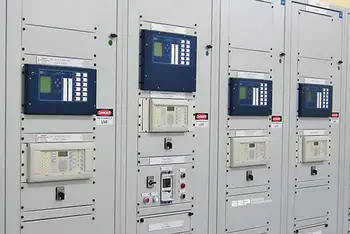
NFPA 70b Training - Electrical Maintenance

Our customized live online or in‑person group training can be delivered to your staff at your location.
  • Live Online
  • 12 hours Instructor-led
  • Group Training Available
Regular Price:
$699
Coupon Price:
$599
Reserve Your Seat Today
As Canada moves toward implementation of the Kyoto accord, the Montreal Exchange and the Winnipeg Commodities Exchange are eyeing a potentially lucrative business in carbon emissions trading.

Such a system is seen as a way to encourage innovation among large industrial emitters and cut costs by letting the market determine where greenhouse gas emissions can be made most efficiently. Leon Bitton, vice-president of the Montreal Exchange, says the carbon-trading market could be worth $1.6 billion assuming a $10 per tonne price for carbon permits. The actual price of permits will be determined by supply and demand.

"Trading carbon emissions allowances is no different than trading any other commodity," said Bitton in an interview.

But the Canadian market probably isn't large enough to support two trading centres, he said.

That means there could be a rivalry in the offing.

The Winnipeg Commodity Exchange has already established a branch for carbon trading, called the Canadian Climate Exchange.

"Right now we're in the exploratory phase," said spokesman Steve Teller.

"We're meeting with industry and government to determine what kind of market is going to be there. I think it certainly has the potential to be quite a large market."

Bitton said the Montreal Exchange has the necessary expertise to set up a market, but has not yet decided whether to make a proposal.

The Montreal Exchange deals in financial derivatives such as stock options and the Winnipeg exchange deals in derivatives such as wheat futures. A derivative is a financial product that derives its value from something else.

Large emitters such as oil and gas producers, cement kilns, steel mills and power plants are expected to account for up to half of Canada's greenhouse emissions in coming years.

But the cost of cutting emissions varies widely from one industry to the next, and from one plant to the next.

Therefore, every industry would have a target for cutting emissions that takes account of its circumstances.

Domestic trading would allow the companies that can easily meet their emission targets to sell their surplus emission permits to other companies for which it would be more difficult to meet the target.

It's expected that the Canadian system will be linked to an international system.

Britain already has a greenhouse gas emissions trading system and the European Union is plann+ing to have a union-wide system in place by 2005.

"I think that it would probably be worth considering to have the Canadian emissions trading system, if there is one, up and running to some degree coincident with the European one," said Teller.

"Otherwise they may begin trading products and we may be losing customers."

Teller plays down the competition with Montreal but acknowledges some will see it as "an east-west thing."

"We don't necessarily consider it a rivalry right now but potentially when things are clearer our paths may converge more."

The problem for both institutions is that the rules for emissions trading have not yet been determined. Alberta and the federal government are working on different plans which do not appear to mesh.

The federal government is just beginning to negotiate covenants with large emitters to set reduction targets.

Ottawa must also decide on some form of legislation that will require large emitters to join the system, and impose penalties on those who don't comply.

Such legislation is likely to be controversial regardless of how it is framed, since there will inevitably be costs for most companies.

What's clear is that the problem of achieving Kyoto compliance has moved beyond the realm of scientists and politicians to that of financial experts.

"Climate change has become more than an environmental issue," said Bitton. "It's an issue of business and financial risk management."

Related News

US Automakers Will Build 30,000 Electric Vehicle Chargers

Automaker EV Fast-Charging Network will deploy 30,000 DC fast chargers across US and Canada, supporting CCS and NACS, integrating Tesla compatibility, easing range anxiety, and expanding highway and urban charging infrastructure with amenities and uptime.


Key Points

A $1B joint venture by seven automakers to build 30,000 DC fast chargers with CCS and NACS across the US and Canada.

✅ 30,000 DC fast chargers by 2030 across US and Canada

✅ Supports CCS and NACS; Tesla compatibility planned

✅ Launching mid-2024; focus on highways, urban hubs, amenities


Seven major automakers announced a plan on Wednesday to nearly double the number of fast chargers in the United States in an effort to address one of the main reasons that people hesitate to buy electric cars, even as the age of electric cars accelerates.

The carmakers — BMW Group, General Motors, Honda, Hyundai, Kia, Mercedes-Benz Group and Stellantis — will initially invest at least $1 billion in a joint venture that will build 30,000 charging ports on major highways and other locations in the United States and Canada.

The United States and Canada have about 36,000 fast chargers — those that can replenish a drained battery in 30 minutes or less. In some sparsely populated areas, such chargers can be hundreds of miles apart. Surveys show that fear about not being able to find a charger during longer journeys is a major reason that some car buyers are reluctant to buy electric vehicles.

Sales of electric vehicles have risen quickly in the United States as the market hits an inflection point, but there are signs that demand is softening. As a result, Tesla, Ford and other carmakers have cut prices in recent months and are offering incentives. Popular models that had long waiting lists last year are now available in a few days or weeks.

Major carmakers are investing billions of dollars to manufacture electric vehicles and batteries and to establish supplier networks. Having staked their futures on the technology, they have a strong incentive to ensure that electric vehicles catch on with car buyers, even as gas-electric hybrids help bridge the transition.

The chargers installed by the joint venture will have plugs designed for the connections used by most carmakers other than Tesla, as well as the standard developed by Tesla, amid fights for control over charging, that Ford, G.M. and other companies have said they intend to switch to in 2025.

“The better experience people have, the faster E.V. adoption will grow,” Mary T. Barra, the chief executive of General Motors, said in a statement.

The seven automakers plan to formalize the joint venture and announce its name by the end of the year, Chris Martin, a Honda spokesman, said. The first chargers will begin operating around the middle of 2024, he said, with all 30,000 in place by the end of the decade.

The joint venture is open to adding other partners, he said. Among major automakers, Ford was a notable absence from the announcement on Wednesday. The company said in a statement on Wednesday that it would continue to iThe partnership also does not include Volkswagen. The company is a majority shareholder of Electrify America, one of the largest fast-charging providers.

Tesla accounts for more than half the fast chargers in the United States and has said it will open its networks to other car brands, though, so far, it has only made fewer than 100 ports available. Owners of Ford and G.M. vehicles, among others, will be able to connect to 12,000 Tesla fast chargers using an adapter beginning next year. In 2025, Ford and G.M. plan to make models designed to take the Tesla plug without an adapter.

The decision by the seven carmakers to form the joint venture is an indication that they do not intend to rely solely on Tesla, which dominates sales of electric vehicles, for charging.

The chargers being built by the joint venture will be concentrated in urban areas and along major highways, especially those used most heavily by vacationers and other travelers, the companies said in a joint statement. Charging stations will be close to restrooms, restaurants and other amenities. The partners said they would try to take advantage of federal and state funds available for charging infrastructure amid questions about whether the U.S. has the power to charge it at scale.

Most electric vehicle owners charge at home and rarely need to use public chargers. Home chargers typically replenish batteries overnight. Most public chargers, about 125,000 in the United States and Canada, also operate relatively slowly — taking four to 10 hours to do the job.nvest in its own network, which allows Ford owners to charge from a variety of providers with one mobile phone app.


Related News

View more

BC Hydro electricity demand down 10% amid COVID-19 pandemic

BC Hydro electricity demand decline reflects COVID-19 impacts across British Columbia, with reduced industrial load, full reservoirs, strategic spilling, and potential rate increases, as hydropower plants adjust operations at Seven Mile, Revelstoke, and Site C.


Key Points

A 10% COVID-19-driven drop in BC power use, prompting reservoir spilling, plant curtailment, and potential rate hikes.

✅ 10% load drop; industrial demand down 7% since mid-March

✅ Reservoirs near capacity; controlled spilling to mitigate risk

✅ Possible rate hikes; Site C construction continues


Elecricity demand is down 10 per cent across British Columbia, an unprecedented decline in commercial electricity consumption sparked by the COVID-19 pandemic, according to a BC Hydro report.

Power demand across hotels, offices, recreational facilities and restaurants have dwindled as British Columbians self isolate, and bill relief for residents and businesses was introduced during this period.

The shortfall means there's a surplus of water in reservoirs across the province.

"This drop in load in addition to the spring snow melt is causing our reservoirs to reach near capacity, which could lead to environmental concerns, as well as public safety risks if we don't address the challenges now," said spokesperson Tanya Fish.

Crews will have to strategically spill reservoirs to keep them from overflowing, a process that can have negative impacts on downstream ecosystems. Excessive spilling can increase fish mortality rates.

Spilling is currently underway at the Seven Mile and Revelstoke reservoirs. In addition, several small plants have been shut down.

Site C and hydro rates
According to the report, titled Demand Dilemma, the decline could continue into April 2021 and drop by another two per cent, even as a regulator report alleged BC Hydro misled oversight bodies.

Major industry — forestry, mining and oil and gas — accounts for about 30 per cent of BC Hydro's overall electricity load. Energy demand from these customers has dropped by seven per cent since mid-March, while in Manitoba a Consumers Coalition has urged rejection of proposed rate increases.

BC Hydro says a prolonged drop in demand could have an impact on future rates, which could potentially go up as the power provider looks to recoup deferred operating costs and financial losses.

In Manitoba, Manitoba Hydro's debt has grown significantly, underscoring the financial risks utilities face during demand shocks.

Fish said the crown corporation still expects there to be increased demand in the long-term. She said construction of the Site C Dam is continuing as planned to support clean-energy generation in the province. There are currently nearly 1,000 workers on-site.


Related News

View more

Why an energy crisis and $5 gas aren't spurring a green revolution

U.S. Energy Transition Delays stem from grid bottlenecks, permitting red tape, solar tariff uncertainty, supply-chain shocks, and scarce affordable EVs, risking deeper fossil fuel lock-in despite climate targets for renewables, transmission expansion, and decarbonization.


Key Points

Delays driven by grid limits, permitting, and supply shocks that slow renewables, transmission, EVs, and decarbonization.

✅ Grid interconnection and transmission backlogs stall renewables

✅ Tariff probes and supply chains disrupt utility-scale solar

✅ Permitting, policy gaps, and EV costs sustain fossil fuel use


Big solar projects are facing major delays. Plans to adapt the grid to clean energy are confronting mountains of red tape. Affordable electric vehicles are in short supply.

The United States is struggling to squeeze opportunity out of an energy crisis that should have been a catalyst for cleaner, domestically produced power. After decades of putting the climate on the back burner, the country is finding itself unprepared to seize the moment and at risk of emerging from the crisis even more reliant on fossil fuels.

10 steps you can take to lower your carbon footprint
The problem is not entirely unique to the United States. Across the globe, climate leaders are warning that energy shortages including coal and nuclear disruptions prompted by Russia’s unprovoked invasion of Ukraine and high gas prices driven by inflation threaten to make the energy transition an afterthought — potentially thwarting efforts to keep global temperature rise under 1.5 degrees Celsius.

“The energy crisis exacerbated by the war in Ukraine has seen a perilous doubling down on fossil fuels by the major economies,” U.N. Secretary General António Guterres said at a conference in Vienna on Tuesday, according to prepared remarks. He warned governments and investors that a failure to immediately and more aggressively embrace clean energy could be disastrous for the planet.

U.S. climate envoy John F. Kerry suggested that nations are falling prey to a flawed logic that fossil fuels will help them weather this period of instability, undermining U.S. national security and climate goals, which has seen gas prices climb to a record-high national average of $5 per gallon. “You have this new revisionism suggesting that we have to be pumping oil like crazy, and we have to be moving into long-term [fossil fuel] infrastructure building,” he said at the Time100 Summit in New York this month. “We have to push back.”

Climate envoy John F. Kerry attends the Summit of the Americas in Los Angeles on June 8. Kerry has criticized the tendency to turn toward fossil fuels in times of uncertainty. (Apu Gomes/AFP/Getty Images)
In the United States — the world’s second-largest emitter of greenhouse gases after China — the hurdles go beyond the supply-chain crisis and sanctions linked to the war in Ukraine. The country’s lofty goals for all carbon pollution to be gone from the electricity sector by 2035 and for half the cars sold to be electric by 2030 are jeopardized by years of neglect of the electrical grid, regulatory hurdles that have set projects back years, and failures by Congress and policymakers to plan ahead.
The challenges are further compounded by plans to build costly new infrastructure for drilling and exporting natural gas that will make it even harder to transition away from the fossil fuel.

“We are running into structural challenges preventing consumers and businesses from going cleaner, even at this time of high oil and gas prices,” said Paul Bledsoe, a climate adviser in the Clinton administration who now works on strategy at the Progressive Policy Institute, a center-left think tank. “It is a little alarming that even now, Congress is barely talking about clean energy.”

Consumers are eager for more wind and solar. Companies looking to go carbon-neutral are facing growing waitlists for access to green energy, and a Pew Research Center poll in late January found that two-thirds of Americans want the United States to prioritize alternative energy over fossil fuel production.

But lawmakers have balked for more than a decade at making most of the fundamental economic and policy changes such as a clean electricity standard that experts widely agree are crucial to an orderly and accelerated energy transition. The United States does not have a tax on carbon, nor a national cap-and-trade program that would reorient markets toward lowering emissions. The unraveling in Congress of President Biden’s $1.75 trillion Build Back Better plan has added to the head winds that green-energy developers face, even as climate law results remain mixed.

Vice President Harris tours electric school buses at Meridian High School in Falls Church, Va., on May 20. (Mandel Ngan/AFP/Getty Images)
“There is literally nothing pushing this forward in the U.S. beyond the tax code and some state laws,” said Heather Zichal, a former White House climate adviser who is now the chief executive of the American Clean Power Association.

The effects of the U.S. government’s halting approach are being felt by solar-panel installers, who saw the number of projects in the most recent quarter fall to the lowest level since the pandemic began. There was 24 percent less solar installed in the first quarter of 2022 than in the same quarter of 2021.

The holdup largely stems from a Commerce Department investigation into alleged tariff-dodging by Chinese manufacturers. Faced with the potential for steep retroactive penalties, hundreds of industrial-scale solar projects were frozen in early April. Weak federal policies to encourage investment in solar manufacturing left American companies ill-equipped to fill the void.

“We shut down multiple projects and had to lay off dozens of people,” said George Hershman, chief executive of SOLV Energy, which specializes in large solar installations. SOLV, like dozens of other solar companies, is now scrambling to reassemble those projects after the administration announced a pause of the tariffs.

Meanwhile, adding clean electricity to the aging power grid has become an increasingly complicated undertaking, given the failure to plan for adequate transmission lines and long delays connecting viable wind and solar projects to the electricity network.


Related News

View more

Reconciliation and a Clean Electricity Standard

Clean Electricity Standard (CES) sets utility emissions targets, uses tradable credits, and advances decarbonization via technology-agnostic benchmarks, carbon capture, renewable portfolio standards, upstream methane accounting, and cap-and-trade alternatives in reconciliation policy.


Key Points

CES sets utility emissions targets using tradable credits and benchmarks to drive power-sector decarbonization.

✅ Annual clean energy targets phased to 2050

✅ Tradable credits for compliance across utilities

✅ Includes upstream methane and lifecycle emissions


The Biden Administration and Democratic members of Congress have supported including a clean electricity standard (CES) in the upcoming reconciliation bill. A CES is an alternative to pricing carbon dioxide through a tax or cap-and-trade program and focuses on reducing greenhouse gas emissions produced during electricity generation by establishing targets, while early assessments show mixed results so far. In principle, it is a technology-agnostic approach. In practice, however, it pushes particular technologies out of the market.

The details of the CES are still being developed, but recent legislation may provide insight into how the CES could operate. In May, Senator Tina Smith and Representative Ben Ray Luján introduced the Clean Energy Standard Act of 2019 (CESA), while Minnesota's 100% carbon-free mandate offers a state-level parallel, and in January 2020, the House Energy and Commerce Committee released a discussion draft of the Climate Leadership and Environmental Action for our Nation’s (CLEAN) Future Act. Both bills increase the clean energy target annually until 2050 in order to phase out emissions. Both bills also create a credit system where clean sources of electricity as determined by a benchmark, carbon dioxide emitted per kilowatt-hour, receive credits. These credits may be transferred, sold, and auctioned so utilities that fail to meet targets can procure credits from others, as large energy customers push to accelerate clean energy globally.

The bills’ benchmarks vary, and while the CLEAN Future Act allows natural gas-fired generators to receive partial credits, CESA does not. Under both bills, these generators would be expected to install carbon capture technology to continue meeting increasing targets for clean electricity generation. Both bills go beyond considering the emissions resulting from generation and include upstream emissions for natural gas-fired generators. Natural gas, a greenhouse gas, that is leaked upstream of a generator during transportation is to be included among its emissions. The CLEAN Future Act also calls for newly constructed hydropower generators to account for the emissions associated with the facility’s construction despite producing clean electricity. These additional provisions demonstrate not only the CES’s inability to fully address the issue of emissions but also the slippery slope of expanding the program to include other markets, echoing cost and reliability concerns as California exports its energy policies across the West.

A majority of states have adopted clean energy, electricity, or renewable portfolio standards, with some considering revamping electricity rates to clean the grid, leaving legislators with plenty of examples to consider. As they weigh their options, legislators should consider if they are effectively addressing the problem at hand, economy-wide emissions reductions, and at what cost, drawing on examples like New Mexico's 100% clean electricity bill to inform trade-offs.


Related News

View more

Affordable, safe' nuclear power is key to reaching Canada's climate goals: federal minister

Canada Nuclear Power Expansion highlights SMRs, clean energy, net-zero targets, and robust regulation to deliver safe, reliable baseload electricity, spur investment, and economically decarbonize remote communities, mines, and grids across provinces securely.


Key Points

Canada Nuclear Power Expansion grows SMRs and reactors to meet climate targets with safe, reliable baseload power.

✅ Deploys SMRs for remote communities, mines, and industrial sites

✅ Streamlines regulation to ensure safety, trust, and timely approvals

✅ Provides clean, reliable baseload to hit net-zero electricity goals


Canada must expand its nuclear power capacity if it is to reach its climate targets, according to Canadian Minister of Natural Resources Seamus Oregan.

Speaking to the Canadian Nuclear Association’s annual conference, Seamus O’Regan said the industry has to grow.

“As the world tackles a changing climate, nuclear power is poised to provide the next wave of clean, affordable, safe and reliable power,” he told a packed room.

The Ottawa conference was the largest the industry has run with dozens of companies and more than 900 people in attendance. Provincial cabinet ministers from Saskatchewan and Ontario were also there. Those two provinces, along with New Brunswick, signed a memorandum in December as part of a premiers' nuclear initiative to work together on small modular reactor technology.

People need to know that it’s safe

Small modular reactors are units that produce less power than large generating stations, but can be constructed easier and are expected to be safer to operate. Canadian firms have about a dozen of the proposed reactors working their way through the regulatory process, with New Brunswick's SMR plans drawing scrutiny.

The smaller reactors could be used in groups to replace large units, but the industry also hopes to use them in rural or isolated communities, mines or even oilsands projects, potentially replacing the diesel power generators some remote communities use.

The Canadian government issued a road map to support the industry in 2018 and O’Regan committed Thursday to putting some teeth on that proposal later this year, as provinces like Ontario explore new large-scale nuclear plants to meet demand, with specific steps the government will take.

“We have been working so hard to support this industry. We are placing nuclear energy front and centre, something that has never been done before.”

O’Regan said the government’s role is a clear, streamlined regulatory system that will promote the industry, but also help the Canadian public to trust the reactors will be safe.

“People need to know that it’s safe. They need to know that it’s regulated. They need to know that it’s safe for them,” he said.

The Liberals promised during the campaign that they would gradually reduce Canada’s carbon emissions even after hitting the targets in the Paris Agreement by 2030. By 2050, Prime Minister Justin Trudeau said he expects Canada to be carbon neutral, mindful of lessons from Europe's power crisis on reliability.

The government hasn’t outlined how it will achieve that goal. O’Regan said more detail is coming, but it’s clear that nuclear is going to have to play a major part, echoing the UK’s green industrial revolution approach to reactor deployment.

“I have not seen a credible plan for net zero without nuclear as part of the mix. I don’t think we are going to be relying on any one technology. I think it’s going to be a whole host of things.”

O’Regan said large investors are looking for countries that are on the path to net zero.

“Everybody has their shirt sleeves rolled up and we know we need to work on this, not only do we have to work on this for the urgency of the planet, but we have to work on it for Canadian jobs.”

He added, “We must focus on those areas where Canada can and should lead, like nuclear.”

Canadians are ready to take a fresh look at nuclear

John Gorman, president of the Canadian Nuclear Association, said he was thrilled with O’Regan’s comments.

“I took the minister’s remarks this morning as being perhaps the strongest language of support for the nuclear industry in a number of years.”

Gorman said the industry is in strong shape and is working with utility companies such as Ontario Power Generation and regulators to move projects forward.

“It’s this amazing collaboration and coordination that is enabling us to beat others to the roll out of these small modular reactors,” he said.

He said provinces that might not have looked at nuclear before now have an incentive to do it, because of climate change. A former solar industry executive, Gorman said solar and wind power are important, as Ontario plans to seek new wind and solar power to ease supply pressures, but they won’t be able to keep up with rising power demands.

“Globally we are seeing increased recognition that climate change is real and that it’s a crisis, we are also seeing recognition that we are not making as much progress on decarbonizing our electricity system as we thought,” he said. “Canadians are ready to take a fresh look at nuclear and see the real facts.”


Related News

View more

EV Fires Raise Health Concerns for Firefighters

EV Firefighter Cancer Risks: lithium-ion battery fires, toxic metals like nickel and chromium, hazardous smoke plumes, and prolonged exposure threaten first responders; SCBA use, decontamination, and evidence-based protocols help reduce occupational health impacts.


Key Points

Health hazards from EV battery fires exposing responders to toxic metals and smoke, elevating long-term cancer risk.

✅ Nickel and chromium in EV smoke linked to lung and sinus cancers

✅ Use SCBA, on-scene decon, and post-incident cleaning to cut exposure

✅ Adopt EV fire SOPs: cooling, monitoring, isolation, air monitoring


As electric vehicles (EVs) become more popular, the EV fire risks to firefighters are becoming an increasing concern. These fires, fueled by the high-capacity lithium-ion batteries in EVs, produce dangerous chemical exposures that could have serious long-term health implications for first responders.

Claudine Buzzo, a firefighter and cancer survivor, knows firsthand the dangers that come with the profession. She’s faced personal health battles, including rare pancreatic cancer and breast cancer, both of which she attributes to the hazards of firefighting. Now, as EV adoption increases and some research links adoption to fewer asthma-related ER visits in local communities, Buzzo and her colleagues are concerned about how EV fires might add to their already heavy exposure to harmful chemicals.

The fire risks associated with EVs are different from those of traditional gasoline-powered vehicles. Dr. Alberto Caban-Martinez, who is leading a study at the Sylvester Comprehensive Cancer Center, explains that the high concentrations of metals released in the smoke from an EV fire are linked to various cancers. For instance, nickel, a key component in EV batteries, is associated with lung, nasal, and laryngeal cancers, while chromium, another metal found in some EV batteries, is linked to lung and sinus cancers.

Research from the Firefighter Cancer Initiative indicates that the plume of smoke from an EV fire contains significantly higher concentrations of these metals than fires from traditional vehicles. This raises the risk of long-term health problems for firefighters who respond to such incidents.

While the Electric Vehicle Association acknowledges the risks associated with various types of vehicle fires, they maintain that the lithium-ion batteries in EVs may not present a significantly higher risk than other common fire hazards, even as broader assessments suggest EVs are not a silver bullet for climate goals. Nonetheless, the growing body of research is causing concern among health experts, urging for further studies into how these new types of fires could affect firefighter health and how upstream electricity generation, where 18% of electricity in 2019 came from fossil fuels in Canada, factors into overall risk perceptions.

Fire departments and health researchers are working to understand the full scope of these risks and are emphasizing the importance of protective gear, such as self-contained breathing apparatuses, to minimize exposure during EV fire responses, while also considering questions like grid impacts during charging operations and EV sustainability improvements in different regions.


Related News

View more

Sign Up for Electricity Forum’s Newsletter

Stay informed with our FREE Newsletter — get the latest news, breakthrough technologies, and expert insights, delivered straight to your inbox.

Electricity Today T&D Magazine Subscribe for FREE

Stay informed with the latest T&D policies and technologies.
  • Timely insights from industry experts
  • Practical solutions T&D engineers
  • Free access to every issue

Live Online & In-person Group Training

Advantages To Instructor-Led Training – Instructor-Led Course, Customized Training, Multiple Locations, Economical, CEU Credits, Course Discounts.

Request For Quotation

Whether you would prefer Live Online or In-Person instruction, our electrical training courses can be tailored to meet your company's specific requirements and delivered to your employees in one location or at various locations.