By Calgary Herald


NFPA 70b Training - Electrical Maintenance

Our customized live online or in‑person group training can be delivered to your staff at your location.
  • Live Online
  • 12 hours Instructor-led
  • Group Training Available
Regular Price:
$699
Coupon Price:
$599
Reserve Your Seat Today
$3M ads will extol energy reforms

The province will spend up to $3 million over the next three years on an advertising campaign trying to convince Albertans government has not abandoned them with electricity deregulation.

According to a government document, the campaign will also extol the virtues of the new restructured energy industry, citing new consumer choices, and explain upcoming changes.

The Alberta Liberals obtained the document, which asks advertising or public relations agencies to come forward with proposals for the campaign.

"I think it's obscene," Liberal MLA Hugh MacDonald said recently. "Now we're trying to manipulate public opinion with the public's own money, and that is wrong."

MacDonald said no amount of advertising will give consumers affordable and stable prices for natural gas and electricity.

In the document, the first key message of the campaign is "government has not abandoned the consumer through this restructuring process, and maintains its commitment to consumer protection against high prices for utilities."

The paper notes a 2002 telephone poll commissioned by Alberta Energy found 56 per cent of Albertans believe government is the most credible source for information on Alberta's electricity market.

Jim Wachowich, an advocate for the Consumers' Association, said "deregulation was supposed to sell itself."

He said he doesn't know how the government is going to sell the benefits. "All we have is costs of deregulation."

The campaign, which could include TV, radio, print, flyer and Internet advertisements, is to be launched later this fall.

Energy Minister Murray Smith said Albertans have asked for clear information about the restructured market and want to be assured the government will protect consumers as the market changes.

"It's rather laughable that the Liberals, who months ago were asking when this campaign will start, are squawking as we expand on our existing consumer protection and customer choice activities," Smith said in a prepared statement.

Smith has been talking publicly about the campaign for several months, according to his department.

The document notes Direct Energy is entering the retail electricity and natural gas market, and other retailers have increased their marketing efforts.

"More aggressive marketing tactics have consumers at all levels searching for objective information," it reads.

Related News

Europe Stores Electricity in Natural Gas Pipes

Power-to-gas converts surplus renewable electricity into green hydrogen or synthetic methane via electrolysis and methanation, enabling seasonal energy storage, grid balancing, hydrogen injection into gas pipelines, and decarbonization of heat, transport, and industry.


Key Points

Power-to-gas turns excess renewable power into hydrogen or methane for storage, grid support, and clean fuel.

✅ Enables hydrogen injection into existing natural gas networks

✅ Balances grids and provides seasonal energy storage capacity

✅ Supplies low-carbon fuels for industry, heat, and heavy transport


Last month Denmark’s biggest energy firm, Ørsted, said wind farms it is proposing for the North Sea will convert some of their excess power into gas. Electricity flowing in from offshore will feed on-shore electrolysis plants that split water to produce clean-burning hydrogen, with oxygen as a by-product. That would supply a new set of customers who need energy, but not as electricity. And it would take some strain off of Europe’s power grid as it grapples with an ever-increasing share of hard-to-handle EU wind and solar output on the grid.

Turning clean electricity into energetic gases such as hydrogen or methane is an old idea that is making a comeback as renewable power generation surges and crowds out gas in Europe. That is because gases can be stockpiled within the natural gas distribution system to cover times of weak winds and sunlight. They can also provide concentrated energy to replace fossil fuels for vehicles and industries. Although many U.S. energy experts argue that this “power-to-gas” vision may be prohibitively expensive, some of Europe’s biggest industrial firms are buying in to the idea.

European power equipment manufacturers, anticipating a wave of renewable hydrogen projects such as Ørsted’s, vowed in January that, as countries push for hydrogen-ready power plants across Europe, all of their gas-fired turbines will be certified by next year to run on up to 20 percent hydrogen, which burns faster than methane-rich natural gas. The natural gas distributors, meanwhile, have said they will use hydrogen to help them fully de-carbonize Europe’s gas supplies by 2050.

Converting power to gas is picking up steam in Europe because the region has more consistent and aggressive climate policies and evolving electricity pricing frameworks that support integration. Most U.S. states have goals to clean up some fraction of their electricity supply; coal- and gas-fired plants contribute a little more than a quarter of U.S. greenhouse gas emissions. In contrast, European countries are counting on carbon reductions of 80 percent or more by midcentury—reductions that will require an economywide switch to low-carbon energy.

Cleaning up energy by stripping the carbon out of fossil fuels is costly. So is building massive new grid infrastructure, including transmission lines and huge batteries, amid persistent grid expansion woes in parts of Europe. Power-to-gas may be the cheapest way forward, complementing Germany’s net-zero roadmap to cut electricity costs by a third. “In order to reach the targets for climate protection, we need even more renewable energy. Green hydrogen is perceived as one of the most promising ways to make the energy transition happen,” says Armin Schnettler, head of energy and electronics research at Munich-based electric equipment giant Siemens.

Europe already has more than 45 demonstration projects to improve power-to-gas technologies and their integration with power grids and gas networks. The principal focus has been to make the electrolyzers that convert electricity to hydrogen more efficient, longer-lasting and cheaper to produce.

The projects are also scaling up the various technologies. Early installations converted a few hundred kilowatts of electricity, but manufacturers such as Siemens are now building equipment that can convert 10 megawatts, which would yield enough hydrogen each year to heat around 3,000 homes or fuel 100 buses, according to financial consultancy Ernst & Young.

The improvements have been most dramatic for proton-exchange membrane electrolyzers, which are akin to the fuel cells used in hydrogen vehicles (but optimized to produce hydrogen rather than consume it). The price of proton-exchange electrolyzers has dropped by roughly 40 percent during the past decade, according to a study published in February in Nature Energy. They are also five times more compact than older alkaline electrolysis plants, enabling onsite hydrogen production near gas consumers, and they can vary their power consumption within seconds to operate on fluctuating wind and solar generation.

Many European pilot projects are demonstrating “methanation” equipment that converts hydrogen to methane, too, which can be used as a drop-in replacement for natural gas. Europe’s electrolyzer plants, however, are showing that methanation is not as critical to the power-to-gas vision as advocates long believed. Many electrolyzers are injecting their hydrogen directly into natural gas pipelines—something that U.S. gas firms forbid—and they are doing so without impacting either the gas infrastructure or natural gas consumers.

Europe’s first large-scale hydrogen injection began in eastern Germany in 2013 at a two-megawatt electrolyzer installed by Essen-based power firm E.ON. Germany has since ratcheted up the amount of hydrogen it allows in natural gas lines from an initial 2 percent by volume to 10 percent, in a market where renewables now outpace coal and nuclear in Germany, and other European states have followed suit with their own hydrogen allowances. Christopher Hebling, head of hydrogen technologies at the Freiburg-based Fraunhofer Institute for Solar Energy Systems, predicts that such limits will rise to the 20-percent level anticipated by Europe’s turbine manufacturers.

Moving renewable hydrogen and methane via natural gas pipelines promises to cut the cost of switching to renewable energy. For example, gas networks have storage caverns whose reserves could be tapped to run gas-fired electric generation power plants during periods of low wind and solar output. Hebling notes that Germany’s gas network can store 240 terawatt-hours of energy—roughly 25 times more energy than global power grids can presently store by pumping water uphill to refill hydropower reservoirs. Repurposing gas infrastructure to help the power system could save European consumers 138 billion euros ($156 billion) by 2050, according to Dutch energy consultancy Navigant (formerly Ecofys).

For all the pilot plants and promise, renewable hydrogen presently supplies a tiny fraction of Europe’s gas. And, globally, around 4 percent of hydrogen is supplied via electrolysis, with the bulk refined from fossil fuels, according to the International Renewable Energy Agency.

Power-to-gas is catching up, however. According to the February Nature Energy study, renewable hydrogen already pays for itself in some niche applications, and further electrolyzer improvements will progressively extend its market. “If costs continue to decline as they have done in recent years, power-to-gas will become competitive at large scale within the next decade,” says study co-author Gunther Glenk, an economist at the Technical University of Munich.

Glenk says power-to-gas could scale up faster if governments guaranteed premium prices for renewable hydrogen and methane, as they did to mainstream solar and wind power.

Tim Calver, an energy storage researcher turned consultant and Ernst & Young’s executive director in London, agrees that European governments need to step up their support for power-to-gas projects and markets. Calver calls the scale of funding to date, “not proportionate to the challenge that we face on long-term decarbonization and the potential role of hydrogen.”


Related News

View more

Cheap oil contagion is clear and present danger to Canada

Canada Oil Recession Outlook analyzes the Russia-Saudi price war, OPEC discord, COVID-19 demand shock, WTI and WCS collapse, Alberta oilsands exposure, U.S. shale stress, and GDP risks from blockades and fiscal responses.


Key Points

An outlook on how the oil price war and COVID-19 demand shock could tip Canada into recession and strain producers.

✅ WTI and WCS prices plunge on OPEC-Russia discord

✅ Alberta oilsands face break-even pressure near 30 USD WTI

✅ RBC flags global recession; GDP hit from blockades, virus


A war between Russia and Saudi Arabia for market share for oil may have been triggered by the COVID-19 pandemic in China, but the oil price crash contagion that it will spread could have impacts that last longer than the virus.

The prospects for Canada are not good.

Plunging oil prices, reduced economic activity from virus containment, and the fallout from weeks of railway blockades over the Coastal GasLink pipeline all add up to “a one-two-three punch that I think is almost inevitably going to put Canada in a position where its growth has to be negative,” said Dan McTeague, a former Liberal MP and current president of Canadians for Affordable Energy. The situation “certainly has the makings” of a recession, said Ken Peacock, chief economist for the Business Council of British Columbia.

“At a minimum, it’s going to be very disruptive and we’re going to have maybe one negative quarter,” Peacock said. “Whether there’s a second one, where it gets labeled a recession, is a different question. But it’s going to generate some turmoil and challenges over the next two quarters – there’s no doubt about that.”

RBC Economics on March 13 announced it now predicts a global recession and cut its growth projections for Canada's economy in 2020 by half a per cent.

Oil price futures plunged 30% last week, dragging stock markets and currencies, including the Canadian dollar, down with them, even as a deep freeze strained U.S. energy systems. That drop came on top of a 17% decline in February, due to falling demand for oil due to the virus.

The latest price plunge – the worst since the 1991 Gulf War – was the result of Russia and the Organization of Petroleum Exporting Countries (OPEC), led by Saudi Arabia, failing to agree on oil production cuts.

The COVID-19 outbreak in China – the world’s second-largest oil consumer – had resulted in a dramatic drop in oil demand in that country, and a sudden glut of oil, with the U.S. energy crisis affecting electricity, gas and EV markets.

OPEC has historically been able to moderate global oil prices by controlling output. But when Russia refused to co-operate with OPEC and agree to production cuts, Saudi Arabia’s state-owned company, Aramco, announced it plans to boost its oil output from 9.7 million barrels per day (bpd) to 12.3 million bpd in April.

In response to that announcement, West Texas Intermediate (WTI) prices dropped 18% to below US$34 per barrel while the Canadian Crude Index fell 24% to US$21. Western Canadian Select dropped 39% to US$15.73.

The effect on Alberta oilsands producers was severe and immediate. Cenovus Energy Inc. (TSX:CVE) saw roughly $2 billion in market cap erased on March 9, when its stock dropped by 52%, which came on top of a 12% drop March 6.

The company responded the very next day by announcing it would cut spending by 32% in 2020, suspend its oil-by-rail program and defer expansion projects.

MEG Energy Corp. (TSX:MEG), which suffered a 56% share price drop on March 9, also announced a 20% reduction in its 2020 capital spending plan.

Peter Tertzakian, chief economist for ARC Energy Research Institute, wrote last week that Russia’s plan is to try to hurt U.S. shale oil producers, who have more than doubled U.S. oil production over the past decade.

Anas Alhajji, a global oil analyst, expects that plan could work. Even before the oil price shock, he had predicted the great shale boom in the U.S. was coming to an end.

“Shale production will decline, and the myth of ‘explosive growth’ will end,” he told Business in Vancouver. “The impact is global and Canadian producers might suffer even more if the oil that Saudi Arabia sends to the U.S. is medium and heavy. This might last longer than what people think.”

The question for Alberta is how Canadian producers can continue to operate through a period of cheap oil. Alberta producers do not compete on the global market. They serve a niche market of U.S. heavy oil refiners, and Biden-era policy is seen as potentially more favourable for Canada’s energy sector than alternatives.

“On the positive side, the industry is battle-hardened,” Tertzakian wrote. “Over the past five years, innovative companies have already learned to endure some of the lowest prices in the world.”

But he added that they need WTI prices of US$30 per barrel just to break even.

“But that’s an average break-even threshold for an industry with a wide variation in costs. That means at that level about half the companies can’t pay their bills and half are treading water.”

Just prior to the oil price plunge, the International Energy Agency (IEA) updated its 2020 forecast for global oil consumption from an 825,000 bpd increase in oil consumption to a 90,000 bpd decrease, due to the COVID-19 virus and consequent economic contraction and reduction in travel.

The IEA predicts global oil demand won’t return to “normal” until the second half of 2020. But even if demand does return to pre-virus levels, that doesn’t mean oil prices will – not if Saudi Arabia can sustain increased oil production at low prices, and evolving clean grid priorities could influence the trajectory too.

The oil plunge was greeted in Alberta with alarm. Alberta Premier Jason Kenney warned Alberta is in “uncharted territory” as consumers are urged to lock in rates and said his government might have to review its balanced budget and resort to emergency deficit spending.

While British Columbians – who pay some of the highest gasoline prices in North America – will enjoy lower gasoline prices at a time when prices are usually starting a seasonal spike, B.C.’s economy could feel knock-on effects from a recession in Alberta.

“We sell a lot of inputs, do a lot of trade with Alberta, so it’s important for B.C., Alberta’s economic health,” Peacock said, “and recent tensions over electricity purchase talks underscore that.”

Last week, the Trudeau government announced $1 billion in emergency funding to cope with the virus and waived a one-week waiting period for unemployment insurance.


Related News

View more

Ontario Poised to Miss 2030 Emissions Target

Ontario Poised to Miss 2030 Emissions Target highlights how rising greenhouse gas emissions from electricity generation and natural gas power plants threaten Ontario’s climate goals, environmental sustainability, and clean energy transition efforts amid growing economic and policy challenges.


Why is Ontario Poised to Miss 2030 Emissions Target?

Ontario Poised to Miss 2030 Emissions Target examines the province’s setback in meeting climate goals due to higher power-sector emissions and shifting energy policies.

✅ Rising greenhouse gas emissions from gas-fired electricity generation

✅ Climate policy uncertainty and missed environmental targets

✅ Balancing clean energy transition with economic pressures

Ontario’s path toward meeting its 2030 greenhouse gas emissions target has taken a sharp turn for the worse, according to internal government documents obtained by Global News. The province, once on track to surpass its reduction goals, is now projected to miss them—largely due to rising emissions from electricity generation, even as the IEA net-zero electricity report highlights rising demand nationwide.

In October 2024, the Ford government’s internal analysis indicated that Ontario was on track to reduce emissions by 28 percent below 2005 levels by 2030, effectively exceeding its target. But a subsequent update in January 2025 revealed a grim reversal. The new forecast showed an increase of about eight megatonnes (Mt) of emissions compared to the previous model, with most of the rise attributed to the province’s energy policies.

“This forecast is about 8 Mt higher than the October 2024 forecast, mainly due to higher electricity sector emissions that reflect the latest ENERGY/IESO energy planning and assumptions,” the internal document stated.

While the analysis did not specify which policy shifts triggered the change, experts point to Ontario’s growing reliance on natural gas. The use of gas-fired power plants has surged to fill temporary gaps created by nuclear refurbishment projects and other grid constraints, even as renewable energy’s role grows. In fact, natural gas generation in early 2025 reached its highest level since 2012.

The internal report cited “changing electricity generation,” nuclear power refurbishment, and “policy uncertainty” as major risks to achieving the province’s climate goals. But the situation may be even worse than the government’s updated forecast suggests.

On Wednesday, Ontario’s auditor general warned that the January projections were overly optimistic. The watchdog’s new report concluded the province could fall even further behind its 2030 emissions target, noting that reductions had likely been overestimated in several sectors, including transportation—such as electric vehicle sales—and waste management. “An even wider margin” of missed goals was now expected, the auditor said.

Environment Minister Todd McCarthy defended the government’s position, arguing that climate goals must be balanced against economic realities. “We cannot put families’ financial, household budgets at risk by going off in a direction that’s not achievable,” McCarthy said.

The minister declined to commit to new emissions targets beyond 2030—or even to confirm that the existing goals would be met—but insisted efforts were ongoing. “We are continuing to meet our commitment to at least try to meet our commitment for the 2030 target,” he told reporters. “But targets are not outcomes. We believe in achievable outcomes, not unrealistic objectives.”

Environmental advocates warn that Ontario’s reliance on fossil-fuel generation could lock the province into higher emissions for years, undermining national efforts to decarbonize Canada’s electricity grid. With cleaning up Canada’s electricity expected to play a central role in both industrial growth and climate action, the province’s backslide represents a significant setback for Canada’s overall emissions strategy.

Other provinces face similar challenges; for example, B.C. is projected to miss its 2050 targets by a wide margin.

As Ontario weighs its next steps, the tension between energy security, affordability, and environmental responsibility continues to define the province’s path toward a lower-carbon future and Canada’s 2050 net-zero target over the long term.


Related Articles


View more

EU Plans To Double Electricity Use By 2050

European Green Deal Electrification accelerates decarbonization via renewables, electric vehicles, heat pumps, and clean industry, backed by sustainable finance, EIB green lending, just transition funds, and energy taxation reform to phase out fossil fuels.


Key Points

An EU plan to replace fossil fuels with renewable electricity in transport, buildings, and industry, supported by green finance.

✅ Doubles electricity's share to cut CO2 and phase out fossil fuels.

✅ Drives EVs, heat pumps, and electrified industry via renewables.

✅ Funded by EIB lending, EU budget, and just transition support.


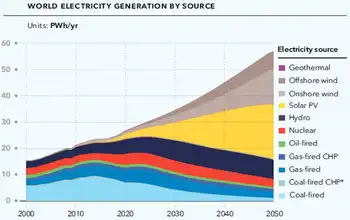
The European Union is preparing an ambitious plan to completely decarbonize by 2050. Increasing the share of electricity in Europe’s energy system – electricity that will increasingly come from renewable sources - will be at the center of this strategy, aligning with the broader global energy transition under way, the new head of the European Commission’s energy department said yesterday.

This will mean more electric cars, electric heating and electric industry. The idea is that fossil fuels should no longer be a primary energy source, heating homes, warming food or powering cars. In the medium term they should only be used to generate electricity, a shift mirrored by New Zealand's electricity shift efforts, which then powers these things, resulting in less CO2 emissions.

“First assessments show we need to double the share of electricity in energy consumption by 2050,” Ditte Juul-Jørgensen said at an event in Brussels this week, a goal echoed by recent calls to double investment in power systems from world leaders. “We’ve already seen an increase in the last decade, but we need to go further”.

Juul-Jørgensen, who started in her job as director-general of the commission’s energy department in August, has come to the role at a pivotal time for energy. The 2050 decarbonization proposal from the Commission, the EU’s executive branch, is expected to be approved next month by EU national leaders. A veto from Poland that has blocked adoption until now is likely to be overcome if Poland and other Eastern European countries are offered financial assistance from a “just transition fund”, according to EU sources.

Ursula von der Leyen, the incoming President of the Commission, has promised to unveil a “European Green Deal” in her first 100 days in office designed to get the EU to its 2050 goal. Juul-Jørgensen will be working with the incoming EU Energy Commissioner, Kadri Simson, on designing this complex strategy. The overall aim will be to phase out fossil fuels, and increase the use of electricity from green sources, amid trends like oil majors pivoting to electric across Europe today.

“This will be about how do we best make use of electricity to feed into other sectors,” Juul-Jørgensen said. “We need to think about transforming it into other sources, and how to best transport it.”

“But the biggest challenge from what I see today is that of investment and finance - the changes we have to make are very significant.”


Financing problems

The Commission is going to try to tackle the challenges of financing the energy transition with two tools: dedicated climate funding in the EU budget, and dedicated climate lending from the European Investment Bank.

“The EIB will play an increasing role in future. We hope to see agreement [with the EIB board] on that in the coming months so there’s a clear operator in the EIB to support the green transition. We’re looking at something around €400 billion a year.”

The Commission’s proposed dedicated climate spending in the next seven-year budget must still be approved by the 28 EU national governments. Juul-Jørgensen said there is unanimous agreement on the amount: 25% of the budget. But there is disagreement about how to determine what is green spending.

“A lot of work has been ongoing to ensure that when it comes to counting it reflects the reality of the investments,” she said. “We’re working on the taxonomy on sustainable finance - internally identifying sectors contributing to overall climate objectives.”


Electricity pact

Juul-Jørgensen was speaking at an event organized by the the Electrification Alliance, a pact between nine industry organizations to lobby for electricity to be put at the heart of the European green deal. They signed a declaration at the event calling for a variety of measures to be included in the green deal, reflecting debates over a fully renewable grid by 2030 in other jurisdictions, including a change to the EU’s energy taxation regime which incentivizes a switch from fossil fuel to electricity consumption.

“Electrification is the most important solution to turn the vision of a fossil-free Europe into reality,” said Laurence Tubiana, CEO of the European Climate Foundation, one of the signatories, and co-architect of the Paris Agreement.

“We are determined to deliver, but we must be mindful of the different starting points and secure sufficient financing to ensure a fair transition”, said Magnus Hall, President of electricity industry association Eurelectric, another signatory.

The energy taxation issue has been particularly tricky for the EU, since any change in taxation rules requires the unanimous consent of all 28 EU countries. But experts say that current taxation structures are subsidizing fossil fuels and punishing electricity, as recent UK net zero policy changes illustrate, and unless this is changed the European Green Deal can have little effect.

“Yes this issue will be addressed in the incoming commission once it takes up its function,” Juul-Jørgensen said in response to an audience question. “We all know the challenge - the unanimity requirement in the Council - and so I hope that member states will agree to the direction of work and the need to address energy taxation systems to make sure they’re consistent with the targets we’ve set ourselves.”

But some are concerned that the transformation envisioned by the green deal will have negative impacts on some of the most vulnerable members of society, including those who work in the fossil fuel sector.

This week the Centre on Regulation in Europe sent an open letter to Frans Timmermans, the Commission Vice President in charge of climate, warning that they need to be mindful of distributional effects. These worries have been heightened by the yellow vest protests in France, which were sparked by French President Emmanuel Macron’s attempt to increase fuel taxes for non-electric cars.

“The effectiveness of climate action and sustainability policies will be challenged by increasing social and political pressures,” wrote Máximo Miccinilli, the center’s director for energy. “If not properly addressed, those will enhance further populist movements that undermine trust in governance and in the public institutions.”

Miccinilli suggests that more research be done into identifying, quantifying and addressing distributional effects before new policies are put in place to phase out fossil fuels. He proposes launching a new European Observatory for Distributional Effects of the Energy Transition to deal with this.

EU national leaders are expected to vote on the 2050 decarbonization target, building on member-state plans such as Spain's 100% renewable electricity goal by mid-century, at a summit in Brussels on December 12, and Von der Leyen will likely unveil her European Green Deal in March.


Related News

View more

Tariff Threats Boost Support for Canadian Energy Projects

Canadian Energy Infrastructure Tariffs are reshaping pipelines, deregulation, and energy independence, as U.S. trade tensions accelerate approvals for Alberta oil sands, Trans Mountain expansion, and CAPP proposals amid regulatory reform and market diversification.


Key Points

U.S. tariff threats drive approvals, infrastructure, and diversification to strengthen Canada energy security.

✅ Tariff risk boosts support for pipelines and export routes

✅ Faster project approvals and deregulation gain political backing

✅ Diversifying markets reduces reliance on U.S. buyers


In recent months, the Canadian energy sector has experienced a shift in public and political attitudes toward infrastructure projects, particularly those related to oil and gas production. This shift has been largely influenced by the threat of tariffs from the United States, as well as growing concerns about energy independence and U.S.-Canada trade tensions more broadly.

Scott Burrows, the CEO of Pembina Pipeline Corp., noted in a conference call that the potential for U.S. tariffs on Canadian energy imports has spurred a renewed sense of urgency and receptiveness toward energy infrastructure projects in Canada. With U.S. President Donald Trump’s proposed tariffs Trump tariff threat on Canadian imports, particularly a 10% tariff on energy products, there is increasing recognition within Canada that these projects are essential for the country’s long-term economic and energy security.

While the direct impact of the tariffs is not immediate, industry leaders are optimistic about the long-term benefits of deregulation and faster project approvals, even as some see Biden as better for Canada’s energy sector overall. Burrows highlighted that while it will take time for the full effects to materialize, there are significant "tailwinds" in favor of faster energy infrastructure development. This includes the possibility of more streamlined regulatory processes and a shift toward more efficient project timelines, which could significantly benefit the Canadian energy sector.

This changing landscape is particularly important for Alberta’s oil production, which is one of the largest contributors to Canada’s energy output. The Canadian Association of Petroleum Producers (CAPP) has responded to the growing tariff threat by releasing an “energy platform,” outlining recommendations for Ottawa to help mitigate the risks posed by the evolving trade situation. The platform includes calls for improved infrastructure, such as pipelines and transportation systems, and priorities like clean grids and batteries, to ensure that Canadian energy can reach global markets more effectively.

The tariff threat has also sparked a wider conversation about the need for Canada to strengthen its energy infrastructure and reduce its dependency on the U.S. for energy exports. With the potential for escalating trade tensions, there is a growing push for Canadian energy resources to be processed and utilized more domestically, though cutting Quebec’s energy exports during a tariff war. This has led to increased political support for projects like the Trans Mountain pipeline expansion, which aims to connect Alberta’s oil sands to new markets in Asia via the west coast.

However, the energy sector’s push for deregulation and quicker approvals has raised concerns among environmental groups and Indigenous communities. Critics argue that fast-tracking energy projects could lead to inadequate environmental assessments and greater risks to local ecosystems. These concerns underscore the tension between economic development and environmental protection in the energy sector.

Despite these concerns, there is a clear consensus that Canada’s energy industry needs to evolve to meet the challenges posed by shifting trade dynamics, even as polls show support for energy and mineral tariffs in the current dispute. The proposed U.S. tariffs have made it increasingly clear that the country’s energy infrastructure needs significant investment and modernization to ensure that Canada can maintain its status as a reliable and competitive energy supplier on the global stage.

As the deadline for the tariff decision approaches, and as Ford threatens to cut U.S. electricity exports, Canada’s energy sector is bracing for the potential fallout, while also preparing to capitalize on any opportunities that may arise from the changing trade environment. The next few months will be critical in determining how Canadian policymakers, businesses, and environmental groups navigate the complex intersection of energy, trade, and regulatory reform.

While the threat of U.S. tariffs may be unsettling, it is also serving as a catalyst for much-needed changes in Canada’s energy policy. The push for faster approvals and deregulation may help address some of the immediate concerns facing the sector, but it will be crucial for the government to balance economic interests with environmental and social considerations as the country moves forward in its energy transition.


Related News

View more

The German economy used to be the envy of the world. What happened?

Germany's Economic Downturn reflects an energy crisis, deindustrialization risks, export weakness, and manufacturing stress, amid Russia gas loss, IMF and EU recession forecasts, and debates over electricity price caps and green transition.


Key Points

An economic contraction from energy price shocks, export weakness, and bottlenecks in manufacturing and digitization.

✅ Energy shock after loss of cheap Russian gas

✅ Exports slump amid China slowdown and weak demand

✅ Policy gridlock on power price cap and permits


Germany went from envy of the world to the worst-performing major developed economy. What happened?

For most of this century, Germany racked up one economic success after another, dominating global markets for high-end products like luxury cars and industrial machinery, selling so much to the rest of the world that half the economy ran on exports.

Jobs were plentiful, the government’s financial coffers grew as other European countries drowned in debt, and books were written about what other countries could learn from Germany.

No longer. Now, Germany is the world’s worst-performing major developed economy, with both the International Monetary Fund and European Union expecting it to shrink this year.

It follows Russia’s invasion of Ukraine and the loss of Moscow’s cheap Russian gas that underpinned industry — an unprecedented shock to Germany’s energy-intensive industries, long the manufacturing powerhouse of Europe.

The sudden underperformance by Europe’s largest economy has set off a wave of criticism, handwringing and debate about the way forward.

Germany risks “deindustrialization” as high energy costs and government inaction on other chronic problems threaten to send new factories and high-paying jobs elsewhere, said Christian Kullmann, CEO of major German chemical company Evonik Industries AG.

From his 21st-floor office in the west German town of Essen, Kullmann points out the symbols of earlier success across the historic Ruhr Valley industrial region: smokestacks from metal plants, giant heaps of waste from now-shuttered coal mines, a massive BP oil refinery and Evonik’s sprawling chemical production facility.

These days, the former mining region, where coal dust once blackened hanging laundry, is a symbol of the energy transition, as the power sector’s balancing act continues with wind turbines and green space.

The loss of cheap Russian natural gas needed to power factories “painfully damaged the business model of the German economy,” Kullmann told The Associated Press. “We’re in a situation where we’re being strongly affected — damaged — by external factors.”

After Russia cut off most of its gas to the European Union, spurring an energy crisis in the 27-nation bloc that had sourced 40% of the fuel from Moscow, the German government asked Evonik to turn to coal by keeping its 1960s coal-fired power plant running a few months longer.

The company is shifting away from the plant — whose 40-story smokestack fuels production of plastics and other goods — to two gas-fired generators that can later run on hydrogen amid plans to become carbon neutral by 2030 and following the nuclear phase-out of recent years.

One hotly debated solution: a government-funded cap on industrial electricity prices to get the economy through the renewable energy transition, amid an energy crisis that even saw a temporary nuclear extension to stabilize supply.

The proposal from Vice Chancellor Robert Habeck of the Greens Party has faced resistance from Chancellor Olaf Scholz, a Social Democrat, and pro-business coalition partner the Free Democrats. Environmentalists say it would only prolong reliance on fossil fuels, while others advocate a nuclear option to meet climate goals.

Kullmann is for it: “It was mistaken political decisions that primarily developed and influenced these high energy costs. And it can’t now be that German industry, German workers should be stuck with the bill.”

The price of gas is roughly double what it was in 2021, with a senior official arguing nuclear would do little to solve that gas issue, hurting companies that need it to keep glass or metal red-hot and molten 24 hours a day to make glass, paper and metal coatings used in buildings and cars.

A second blow came as key trade partner China experiences a slowdown after several decades of strong economic growth.

These outside shocks have exposed cracks in Germany’s foundation that were ignored during years of success, including lagging use of digital technology in government and business and a lengthy process to get badly needed renewable energy projects approved.


Related News

View more

Sign Up for Electricity Forum’s Newsletter

Stay informed with our FREE Newsletter — get the latest news, breakthrough technologies, and expert insights, delivered straight to your inbox.

Electricity Today T&D Magazine Subscribe for FREE

Stay informed with the latest T&D policies and technologies.
  • Timely insights from industry experts
  • Practical solutions T&D engineers
  • Free access to every issue

Download the 2025 Electrical Training Catalog

Explore 50+ live, expert-led electrical training courses –

  • Interactive
  • Flexible
  • CEU-cerified