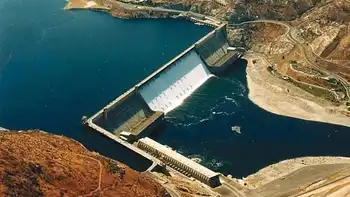
Albertans Facing Higher Gas Bills

By Canadian Press


NFPA 70b Training - Electrical Maintenance

Our customized live online or in‑person group training can be delivered to your staff at your location.

  • Live Online
  • 12 hours Instructor-led
  • Group Training Available
Regular Price:
$699
Coupon Price:
$599
Reserve Your Seat Today
Thousands of power consumers across Alberta could be facing much higher power bills in the coming months if they get their electricity from Atco Electric.

Atco has applied for rate riders that could sharply increase utility bills for 110-thousand residential and farm customers in northern and eastern Alberta.

The company will offer evidence to provincial regulators that it ended up paying more for power last year and early this year than what customers paid.

Energy Minister Murray Smith told the legislature in March that "there will be no rate riders in the future".

A spokesman for the minister says Smith won't comment on these new rate riders until the Alberta Energy and Utilities Board decides whether to approve them.

But New Democrat Brian Mason says this makes a mockery of Smith's promises of lower power rates under deregulation.

Related News
Trump's Canada Tariff May Spike NY Energy Prices

25% Tariff on Canadian Imports threatens New York energy markets, disrupting hydroelectric power and natural gas supply chains, raising electricity prices, increasing gas costs, and intensifying trade tensions, policy uncertainty, and cross-border logistics risks.


Key Points

A U.S. policy imposing 25% duties on Canadian goods, risking higher New York electricity and natural gas costs.

✅ Hydroelectric and gas imports face costlier cross-border flows

✅ Higher utility bills for NY households and businesses

✅ Supply chain volatility and policy uncertainty increase


President Donald Trump announced the imposition of a 25% tariff on all imports from Canada, citing concerns over drug trafficking and illegal immigration. This decision has raised significant concerns among experts and residents in New York, who warn that the tariff could lead to increased electricity and gas prices in the state.

Impact on New York's Energy Sector

New York relies heavily on energy imports from Canada, particularly electricity and natural gas. Canada is a major supplier of hydroelectric power to the northeastern United States, including New York, with its electricity exports at risk amid trade tensions. The imposition of a 25% tariff on Canadian goods could disrupt this supply chain, leading to higher energy costs for consumers and businesses in New York. Justin Wilcox, an energy analyst, stated, "If the tariff is implemented, it could lead to increased costs for electricity and gas, affecting both consumers and businesses."

Potential Economic Consequences

The increased energy costs could have broader economic implications for New York, and some experts advise against cutting Quebec's exports to avoid exacerbating market volatility. Higher electricity and gas prices may lead to increased operational costs for businesses, potentially resulting in higher prices for goods and services, while tariff threats have boosted support for Canadian energy projects that could reshape regional supply. This could exacerbate the cost-of-living challenges faced by residents and strain the state's economy.

Political and Diplomatic Reactions

The tariff has also sparked political and diplomatic reactions, including threats to cut U.S. electricity exports from Ontario that raised tensions. New York Governor Kathy Hochul expressed concern over the potential economic impact, stating, "We are closely monitoring the situation and are prepared to take necessary actions to protect New York's economy." Additionally, Canadian officials have expressed their disapproval of the tariff, and Ontario Premier Doug Ford's Washington meeting underscored ongoing discussions, emphasizing the importance of the trade relationship between the two countries.

Historical Context

This development is part of a broader pattern of trade tensions between the United States and its neighbors. In 2018, the U.S. imposed tariffs on Canadian steel and aluminum, leading to retaliatory measures from Canada. The current situation underscores the ongoing challenges in international trade relations, where a recent tariff threat delayed Quebec's green energy bill and highlighted the potential domestic impacts of such policies.

The imposition of a 25% tariff on Canadian imports by President Trump has raised significant concerns in New York regarding potential increases in electricity and gas prices. Experts warn that this could lead to higher costs for consumers and businesses, with broader economic implications for the state. As the situation develops, it will be crucial to monitor the responses from both state and federal officials, as well as how Canadians support tariffs on energy and minerals may influence policy, and the potential for diplomatic negotiations to address these trade tensions.


Related News

View more

Germany shuts down its last three nuclear power plants

Germany Nuclear Phase-Out ends power generation from reactors, prioritizing energy security, renewables, and emissions goals amid the Ukraine war, natural gas shortages, decommissioning plans, and climate change debates across Europe and the national power grid.


Key Points

Germany Nuclear Phase-Out ends reactors, shifting to renewables to balance energy security, emissions, climate goals.

✅ Three reactors closed: Emsland, Isar II, Neckarwestheim II

✅ Pivot to renewables, efficiency, and grid resilience

✅ Continued roles in fuel fabrication and decommissioning


Germany is no longer producing any electricity from nuclear power plants, a move widely seen as turning its back on nuclear for good.

Closures of the Emsland, Isar II, and Neckarwestheim II nuclear plants in Germany were expected. The country announced plans to phase out nuclear power in 2011. However, in the fall of 2022, with the Ukraine war constraining access to energy, especially in Europe, Germany decided to extend nuclear power operations for an additional few months to bolster supplies.

“This was a highly anticipated action. The German government extended the lifetimes of these plants for a few months but never planned beyond that,” David Victor, a professor of innovation and public policy at UC San Diego, said.

Responses to the closures ranged from aghast that Germany would shut down a clean source of energy production, especially as Europe is losing nuclear power just when it really needs energy. In contrast, the global response to anthropogenic climate change continues to be insufficient to celebratory that the country will avoid any nuclear accidents like those that have happened in other parts of the world.

A collection of esteemed scientists, including two Nobel laureates and professors from MIT and Columbia, made a last-minute plea in an open letter published on April 14 on the nuclear advocacy group’s website, RePlaneteers, to keep the reactors operating, reviving questions about a resurgence of nuclear energy in Germany today.

“Given the threat that climate change poses to life on our planet and the obvious energy crisis in which Germany and Europe find themselves due to the unavailability of Russian natural gas, we call on you to continue operating the last remaining German nuclear power plants,” the letter states.

The open letter states that the Emsland, Isar II, and Neckarwestheim II facilities provided more than 10 million German households with electricity, even as some officials argued that nuclear would do little to solve the gas issue then. That’s a quarter of the population.

“This is hugely disappointing, when a secure low carbon 24/7 source of energy such as nuclear was available and could have continued operation for another 40 years,” Henry Preston, spokesperson for the World Nuclear Association. “Germany’s nuclear industry has been world-class. All three reactors shut down at the weekend performed extremely well.”

Despite the shutdown, some segments of nuclear industrial processes will continue to operate. “Germany’s nuclear sector will continue to be first class in the wider nuclear supply chain in areas such as fuel fabrication and decommissioning,” Preston said.

While the open letter did not succeed in keeping the nuclear reactors open, it does underscore a crucial reason why nuclear power has been part of global energy conversations recently, with some arguing it is a needed option for climate policy after a generational lull in the construction of nuclear power plants: climate change.

Generating electricity with nuclear reactors does not create any greenhouse gases. And as global climate change response efforts continue to fall short of emission targets, atomic energy is getting renewed consideration, and Germany has even considered a U-turn on its phaseout amid renewed debate.


Related News

View more

Cooperation agreement for Rosatom and Russian Academy

Rosatom-RAS Cooperation drives joint R&D in nuclear energy, nuclear medicine, fusion, particle accelerators, laser technologies, fuel cycle safety, radioactive waste management, and supercomputing, aligning strategic planning and standards to accelerate innovation across Russia's nuclear sector.


Key Points

A pact uniting Rosatom and RAS on nuclear R&D, fusion, and medicine to advance nuclear technologies across Russia.

✅ Joint R&D in fusion, accelerators, lasers, and new materials

✅ Focus on fuel cycle closure, safety, and waste management

✅ Shared strategic planning, standards, and expert evaluation


Russian state atomic energy corporation Rosatom and the Russian State Academy of Sciences are to cooperate on joint scientific, technical and innovative activities in areas including nuclear energy, nuclear medicine and other areas of the electricity sector under an agreement signed in Moscow on 7 February.

The cooperation agreement was signed by Rosatom Director General Alexei Likhachov and President of the Russian Academy of Sciences Alexander Sergeev during a joint meeting to mark Russian Science Day. Under its terms, the partners will cooperate in organising research and development activities aimed at providing technological advantages in various sectors of the domestic industry, as well as creating and developing interdisciplinary scientific and technological centres and organisations supporting energy sector training and innovation. They will also jointly develop strategic planning documents, improve the technical and scientific regulatory and legal framework, and carry out expert evaluations of scientific and technical projects and scientific consultations.

Rosatom said the main areas of cooperation in the agreement are: the development of laser technologies and particle accelerators; the creation of modern diagnostic equipment, nuclear medicine and radiation therapy; controlled thermonuclear fusion; nuclear energy of the future; new materials; the nuclear fuel cycle and its closure; safety of nuclear energy and power sector pandemic response preparedness; environmental aspects of radioactive waste management; modern supercomputers, databases, application packages, and import-substituting codes; and also X-ray astronomy and nuclear planetology.

Likhachov said joint activities between Rosatom and the Academy would strengthen the Russian nuclear industry's "leadership" in the world and allow the creation of new technologies that would shape the future image of the nuclear industry in Russia. "Within the framework of the Agreement, we intend to expand work on the entire spectrum of advanced scientific research. The most important direction of our cooperation will be the integration of fundamental, exploratory and applied scientific research, including in the interests of the development of the nuclear industry. We will work together to form the nuclear energy industry of the future, and enhance grid resilience, to create new materials, new radiation technologies,” he said.

Sergeyev noted the "rich history" of cooperation between the Academy of Sciences and the nuclear industry, including modern safety practices such as arc flash training that support operations. “All major projects in the field of military and peaceful nuclear energy were carried out jointly by scientists and specialists of our organisations, which largely ensured their timeliness and success," he said.


Related News

View more

Siemens Energy to unlock a new era of offshore green hydrogen production

Offshore Wind-to-Hydrogen Integration enables green hydrogen by embedding an electrolyzer in offshore turbines. Siemens Gamesa and Siemens Energy align under H2Mare to decarbonize industry, advance the Paris Agreement, and unlock scalable, off-grid renewable production.


Key Points

A method integrating electrolyzers into offshore wind turbines to generate green hydrogen and reduce carbon emissions.

✅ Integrated electrolyzer at turbine base for off-grid operation

✅ Enables scalable, cost-efficient green hydrogen production

✅ Supports decarbonization targets under Paris Agreement


To reach the Paris Agreement goals, the world will need vast amounts of green hydrogen and, with offshore wind growth accelerating, wind will provide a large portion of the power needed for its production.

Siemens Gamesa and Siemens Energy announced today that they are joining forces combining their ongoing wind-to-hydrogen developments to address one of the major challenges of our decade - decarbonizing the economy to solve the climate crisis.

The companies are contributing with their developments to an innovative solution that fully integrates an electrolyzer into an offshore wind turbine as a single synchronized system to directly produce green hydrogen. The companies intend to provide a full-scale offshore demonstration of the solution by 2025/2026. The German Federal Ministry of Education and Research, reflecting Germany's clean energy progress, announced today that the developments can be implemented as part of the ideas competition 'Hydrogen Republic of Germany'.

'Our more than 30 years of experience and leadership in the offshore wind industry, coupled with Siemens Energy's expertise in electrolyzers, brings together brilliant minds and cutting-edge technologies to address the climate crisis. Our wind turbines play a huge role in the decarbonization of the global energy system, and the potential of wind to hydrogen means that we can do this for hard-to-abate industries too. It makes me very proud that our people are a part of shaping a greener future,' said Andreas Nauen, Siemens Gamesa CEO.

Christian Bruch, CEO of Siemens Energy, explains: 'Together with Siemens Gamesa, we are in a unique position to develop this game changing solution. We are the company that can leverage its highly flexible electrolyzer technology and create and redefine the future of sustainable offshore energy production. With these developments, the potential of regions with abundant offshore wind, such as the UK offshore wind sector, will become accessible for the hydrogen economy. It is a prime example of enabling us to store and transport wind energy, thus reducing the carbon footprint of economy.'

Over a time frame of five years, Siemens Gamesa plans to invest EUR 80 million and Siemens Energy is targeting to invest EUR 40 million in the developments. Siemens Gamesa will adapt its development of the world's most powerful turbine, the SG 14-222 DD offshore wind turbine to integrate an electrolysis system seamlessly into the turbine's operations. By leveraging Siemens Gamesa's intricate knowledge and decades of experience with offshore wind, electric losses are reduced to a minimum, while a modular approach ensures a reliable and efficient operational set-up for a scalable offshore wind-to-hydrogen solution. Siemens Energy will develop a new electrolysis product to not only meet the needs of the harsh maritime offshore environment and be in perfect sync with the wind turbine, but also to create a new competitive benchmark for green hydrogen.

The ultimate fully integrated offshore wind-to-hydrogen solution will produce green hydrogen using an electrolyzer array located at the base of the offshore wind turbine tower, blazing a trail towards offshore hydrogen production. The solution will lower the cost of hydrogen by being able to run off grid, much like solar-powered hydrogen in Dubai showcases for desert environments, opening up more and better wind sites. The companies' developments will serve as a test bed for making large-scale, cost-efficient hydrogen production a reality and will prove the feasibility of reliable, effective implementation of wind turbines in systems for producing hydrogen from renewable energy.

The developments are part of the H2Mare initiative which is a lighthouse project likely to be supported by the German Federal Ministry of Education and Research ideas competition 'Hydrogen Republic of Germany'. The H2mare initiative under the consortium lead of Siemens Energy is a modular project consisting of multiple sub-projects to which more than 30 partners from industry, institutes and academia are contributing. Siemens Energy and Siemens Gamesa will contribute to the H2Mare initiative with their own developments in separate modular building blocks.

About hydrogen and its role in the green energy transition

Currently 80 million tons of hydrogen are produced each year and production is expected to increase by about 20 million tons by 2030. Just 1% of that hydrogen is currently generated from green energy sources. The bulk is obtained from natural gas and coal, emitting 830 million tons of CO2 per year, more than the entire nation of Germany or the global shipping industry. Replacing this current polluting consumption would require 820 GW of wind generating capacity, 26% more than the current global installed wind capacity. Looking further ahead, many studies suggest that by 2050 production will have grown to about 500 million tons, with a significant shift to green hydrogen already signaled by projects like Brazil's green hydrogen plant now underway. The expected growth will require between 1,000 GW and 4,000 GW of renewable capacity by 2050 to meet demand, and in the U.S. initiatives like DOE hydrogen hubs aim to catalyze this build-out, which highlights the vast potential for growth in wind power.


Related News

View more

A new nuclear reactor in the U.S. starts up. It's the first in nearly seven years

Vogtle Unit 3 Initial Criticality marks the startup of a new U.S. nuclear reactor, initiating fission to produce heat, steam, and electricity, supporting clean energy goals, grid reliability, and carbon-free baseload power.


Key Points

Vogtle Unit 3 Initial Criticality is the first fission startup, launching power generation at a new U.S. reactor.

✅ First new U.S. reactor to reach criticality since 2016

✅ Generates carbon-free baseload power for the grid

✅ Faced cost overruns and delays during construction


For the first time in almost seven years, a new nuclear reactor has started up in the United States.

On Monday, Georgia Power announced that the Vogtle nuclear reactor Unit 3 has started a nuclear reaction inside the reactor as part of the first new reactors in decades now taking shape at the plant.

Technically, this is called “initial criticality.” It’s when the nuclear fission process starts splitting atoms and generating heat, Georgia Power said in a written announcement.

The heat generated in the nuclear reactor causes water to boil. The resulting steam spins a turbine that’s connected to a generator that creates electricity.

Vogtle’s Unit 3 reactor will be fully in service in May or June, Georgia Power said.

The last time a nuclear reactor reached the same milestone was almost seven years ago in May 2016 when the Tennessee Valley Authority started splitting atoms at the Watts Bar Unit 2 reactor in Tennessee, Scott Burnell, a spokesperson for the Nuclear Regulatory Commission, told CNBC.

“This is a truly exciting time as we prepare to bring online a new nuclear unit that will serve our state with clean and emission-free energy for the next 60 to 80 years,” Chris Womack, CEO of Georgia Power, said in a written statement. 

Including the newly turned-on Vogtle Unit 3 reactor, there are currently 93 nuclear reactors operating in the United States and, collectively, they generate 20% of the electricity in the country, although a South Carolina plant leak recently showed how outages can sideline a unit for weeks.

Nuclear reactors, which help combat global warming and support net-zero emissions goals, generate about half of the clean, carbon-free electricity generated in the U.S.

Most of the nuclear power reactors in the United States were constructed between 1970 and 1990, but construction slowed significantly after the accident at Three Mile Island near Middletown, Pennsylvania, on March 28, 1979, even as interest in next-gen nuclear power has grown in recent years. From 1979 through 1988, 67 nuclear reactor construction projects were canceled, according to the U.S. Energy Information Administration.

However, because nuclear energy is generated without releasing carbon dioxide emissions, which cause global warming, the increased sense of urgency in responding to climate change has given nuclear energy a chance at a renaissance as atomic energy heats up again globally.

The cost associated with building nuclear reactors is a major barrier to a potential resurgence in nuclear energy, however, even as nuclear generation costs have fallen to a ten-year low. And the new builds at Vogtle have become an epitome of that charge: The construction of the two Vogtle reactors has been plagued by cost overruns and delays.


Related News

View more

Heating and Electricity Costs in Germany Set to Rise

Germany 2025 Energy Costs forecast electricity and heating price trends amid gas volatility, renewables expansion, grid upgrades, and policy subsidies, highlighting impacts on households, industries, efficiency measures, and the Energiewende transition dynamics.


Key Points

Electricity stabilizes, gas-driven heating stays high; renewables, subsidies, and efficiency measures moderate costs.

✅ Power prices stabilize above pre-crisis levels

✅ Gas volatility keeps heating bills elevated

✅ Subsidies and efficiency upgrades offset some costs


As Germany moves into 2025, the country is facing significant shifts in heating and electricity costs. With a variety of factors influencing energy prices, including geopolitical tensions, government policies, and the ongoing transition to renewable energy sources, consumers and businesses alike are bracing for potential changes in their energy bills. In this article, we will explore how heating and electricity costs are expected to evolve in Germany in the coming year and what that means for households and industries.

Energy Price Trends in Germany

In recent years, energy prices in Germany have experienced notable fluctuations, particularly due to the aftermath of the global energy crisis, which was exacerbated by the Russian invasion of Ukraine. This geopolitical shift disrupted gas supplies, which in turn affected electricity prices and strained local utilities across the country. Although the German government introduced measures to mitigate some of the price increases, many households have still felt the strain of higher energy costs.

For 2024, experts predict that electricity prices will likely stabilize but remain higher than pre-crisis levels. While electricity prices nearly doubled in 2022, they have gradually started to decline, and the market has adjusted to the new realities of energy supply and demand. Despite this, the cost of electricity is expected to stay elevated as Germany continues to phase out coal and nuclear energy while ramping up the use of renewable sources, which often require significant infrastructure investments.

Heating Costs: A Mixed Outlook

Heating costs in Germany are heavily influenced by natural gas prices, which have been volatile since the onset of the energy crisis. Gas prices, although lower than the peak levels seen in 2022, are still considerably higher than in the years before. This means that households relying on gas heating can expect to pay more for warmth in 2024 compared to previous years.

The government has implemented measures to cushion the impact of these increased costs, such as subsidies for vulnerable households and efforts to support energy efficiency upgrades. Despite these efforts, consumers will still feel the pinch, particularly in homes that use older, less efficient heating systems. The transition to more sustainable heating solutions, such as heat pumps, remains a key goal for the German government. However, the upfront cost of such systems can be a barrier for many households.

The Role of Renewable Energy and the Green Transition

Germany has set ambitious goals for its energy transition, known as the "Energiewende," which aims to reduce reliance on fossil fuels and increase the share of renewable energy sources in the national grid. In 2024, Germany is expected to see further increases in renewable energy generation, particularly from wind and solar power. While this transition is essential for reducing carbon emissions and improving long-term energy security, the shift comes with its own challenges already documented in EU electricity market trends reports.

One of the main factors influencing electricity costs in the short term is the intermittency of renewable energy sources. Wind and solar power are not always available when demand peaks, requiring backup power generation from fossil fuels or stored energy. Additionally, the infrastructure needed to accommodate a higher share of renewables, including grid upgrades and energy storage solutions, is costly and will likely contribute to rising electricity prices in the near term.

On a positive note, Germany's growing investment in renewable energy is expected to make the country less reliant on imported fossil fuels, particularly natural gas, which has been a major source of price volatility. Over time, as the share of renewables in the energy mix grows, the energy system should become more stable and less susceptible to geopolitical shocks, which could lead to more predictable and potentially lower energy costs in the long run.

Government Interventions and Subsidies

To help ease the burden on consumers, the German government has continued to implement various measures to support households and businesses. One of the key programs is the reduction in VAT (Value Added Tax) on electricity, which has been extended in some regions. This measure is designed to make electricity more affordable for all households, particularly those on fixed incomes facing EU energy inflation pressures that have hit the poorest hardest.

Moreover, the government has been providing financial incentives for households and businesses to invest in energy-efficient technologies, such as insulation and energy-saving heating systems, complementing the earlier 200 billion euro energy shield announced to buffer surging prices. These incentives are intended to reduce overall energy consumption, which could offset some of the rising costs.

The outlook for heating and electricity costs in Germany for 2024 is mixed, even as energy demand hit a historic low amid economic stagnation. While some relief from the extreme price spikes of 2022 may be felt, energy costs will still be higher than they were in previous years. Households relying on gas heating will likely see continued elevated costs, although those who invest in energy-efficient solutions or renewable heating technologies may be able to offset some of the increases. Similarly, electricity prices are expected to stabilize but remain high due to the country’s ongoing transition to renewable energy sources.

While the green transition is crucial for long-term sustainability, consumers must be prepared for potentially higher energy costs in the short term. Government subsidies and incentives will help alleviate some of the financial pressure, but households should consider strategies to reduce energy consumption, such as investing in more efficient heating systems or adopting renewable energy solutions like solar panels.

As Germany navigates these changes, the country’s energy future will undoubtedly be shaped by a delicate balance between environmental goals and the economic realities of transitioning to a greener energy system.


Related News

View more

Sign Up for Electricity Forum’s Newsletter

Stay informed with our FREE Newsletter — get the latest news, breakthrough technologies, and expert insights, delivered straight to your inbox.

Electricity Today T&D Magazine Subscribe for FREE

Stay informed with the latest T&D policies and technologies.
  • Timely insights from industry experts
  • Practical solutions T&D engineers
  • Free access to every issue

Live Online & In-person Group Training

Advantages To Instructor-Led Training – Instructor-Led Course, Customized Training, Multiple Locations, Economical, CEU Credits, Course Discounts.

Request For Quotation

Whether you would prefer Live Online or In-Person instruction, our electrical training courses can be tailored to meet your company's specific requirements and delivered to your employees in one location or at various locations.