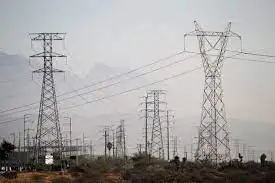
Heat wave sparks fear over electricity

By The Toronto Star


Arc Flash Training CSA Z462 - Electrical Safety Essentials

Our customized live online or in‑person group training can be delivered to your staff at your location.

  • Live Online
  • 6 hours Instructor-led
  • Group Training Available
Regular Price:
$249
Coupon Price:
$199
Reserve Your Seat Today
Hot summer weather coupled with cold nuclear reactors have revived the spectre of last year's electricity shortages in Ontario.

The year's first heat wave has caught the province without an array of generators that were supposed to be in place by the time the summer need for air conditioning pushed electricity demand upward.

Premier Ernie Eves acknowledged yesterday the province's electricity system is still stretched thin.

"Obviously there are things the government can't control and the weather is one of them," Eves said at an outdoor press conference under a blazing sun.

"This week will be a test, there is no doubt about that," he said. "When the temperature goes over 30C, it's always a challenge."

Last summer was marked by soaring power prices, greater reliance on expensive imported power, and appeals for consumers to cut back power use.

The rising prices triggered a political storm for the government, which reacted by freezing the price of power at 4.3 cents a kilowatt hour for householders and small businesses.

This year was supposed to be better, with new generators coming on stream in time for the hot summer weather. But summer's here, and many of the generators still aren't.

Unavailable generators this week include:

An array of temporary generators, capable of producing 409 megawatts of power, sprinkled around the province in areas where transmission bottlenecks can create local shortages. They were intended to be in place for the hot weather, but contracts with suppliers were still being drafted yesterday; the generators won't be working before late next month.

Two mothballed reactors at the Bruce A nuclear generating station were supposed to return to service this month. Delays mean the first unit likely won't deliver full power until late July, and the second, four weeks after that. The two reactors can supply a combined total of 1,500 megawatts. Duncan Hawthorne, chief executive of Bruce Power, said yesterday he has "high confidence" they'll hit the current target.

The first unit of the mothballed Pickering A reactor is not due to return to service until late next month. It is designed to deliver 515 megawatts.

Taken together, the missing generators have the capacity to supply 10 per cent of Ontario's electricity needs on a day of high demand.

Yesterday, demand for power peaked at more than 22,000 megawatts. The all-time record demand was set last Aug. 13, when Ontario at one point was sucking up 25,414 megawatts.

Terry Young, spokesperson for the Independent Electricity Market Operator, said demand is expected to increase as the weather warms, and could reach 24,500 megawatts tomorrow when temperatures hit 33C.

Tom Adams, executive director of Energy Probe, said the current situation points out the "nuclear hole" in Ontario's electricity grid caused by the delays in the mothballed reactors returning to service.

He noted outages are not confined to nuclear generators. Yesterday, more than 9,000 megawatts of Ontario's total generating capacity of about 30,000 megawatts was out of service.

"That's way too much for this time of year," Adams said.

Young said some of the sidelined generators are expected to return to service over the next few days. One unidentified generator, in fact, kicked back in recently.

"But clearly we're looking at assistance from neighbouring jurisdictions in terms of bringing power into this market," he said. "The supply's on the tight side, and it'll get tighter as (time) goes on."

On hot days last summer, the province had to import as much as 4,300 megawatts of power.

The high demand and idled generators revived last summer's fears of power failures. The Toronto area was on the verge of a brownout or blackout at one point last July, but was saved when a breeze sprang up that kept transmission lines cool enough to keep running at full capacity.

With the tight supplies, the price of power paid by large businesses edged up to 8.5 cents a kilowatt hour, compared with an average price over the past year of about 6 cents. That's still far below last summer's record of more than $1 a kilowatt hour.

Big power users represented by the Association of Major Power Consumers of Ontario (AMPCO) were putting on a brave face.

"AMPCO still has a lot of confidence in the system," said president Mary Ellen Richardson. "The system worked well last summer. We think it worked well despite all the stresses, and we've got a good system."

Related News

Northvolt Affirms Continuation of EV Battery Plant Project Near Montreal

Northvolt Montreal EV Battery Plant advances as a Quebec clean energy hub, leveraging hydroelectric power to supply EV batteries, strengthen North American supply chains, and support automakers' electrification with sustainable manufacturing and regional distribution.


Key Points

A Quebec-based EV battery facility using hydroelectric power to scale sustainable production for North America.

✅ Powered by Quebec hydro for lower-carbon cell manufacturing

✅ Strengthens North American EV supply chain resilience

✅ Creates local jobs, R&D, and advanced manufacturing skills


Northvolt, a prominent player in the electric vehicle (EV) battery industry, has reaffirmed its commitment to proceed with its battery plant project near Montreal as originally planned. This development marks a significant step forward in Northvolt's expansion strategy and signals confidence in Canada's role in the global EV market.

The decision to move forward with the EV battery plant project near Montreal underscores Northvolt's strategic vision to establish a strong foothold in North America's burgeoning electric vehicle sector. The plant is poised to play a crucial role in meeting the growing demand for sustainable battery solutions as automakers accelerate their transition towards electrification.

Located strategically in Quebec, a province known for its abundant hydroelectric power and supportive government policies towards clean energy initiatives, including major Canada-Quebec investments in battery assembly, the battery plant project aligns with Canada's commitment to promoting green technology and reducing carbon emissions. By leveraging Quebec's renewable energy resources, Northvolt aims to produce batteries with a lower carbon footprint compared to traditional manufacturing processes.

The EV battery plant is expected to contribute significantly to the local economy by creating jobs, stimulating economic growth, and fostering technological innovation in the region, much as a Niagara Region battery plant is catalyzing development in Ontario. As Northvolt progresses with its plans, collaboration with local stakeholders, including government agencies, educational institutions, and industry partners, will be pivotal in ensuring the project's success and maximizing its positive impact on the community.

Northvolt's decision to advance the battery plant project near Montreal also reflects broader trends in the global battery manufacturing landscape. With increasing emphasis on sustainability and supply chain resilience, companies like Northvolt are investing in diversified production capabilities, including projects such as a $1B B.C. battery plant, to meet regional market demands and reduce dependency on overseas suppliers.

Moreover, the EV battery plant project near Montreal represents a milestone in Canada's efforts to strengthen its position in the global electric vehicle supply chain, with EV assembly deals helping put the country in the race. By attracting investments from leading companies like Northvolt, Canada aims to build a robust ecosystem for electric vehicle manufacturing and innovation, driving economic competitiveness and environmental stewardship.

The plant's proximity to key markets in North America further enhances its strategic value, enabling efficient distribution of batteries to automotive manufacturers across the continent. This geographical advantage positions Northvolt to capitalize on the growing demand for electric vehicles in Canada, the United States, and beyond, supporting Canada-U.S. collaboration on supply chains and market growth.

Looking ahead, Northvolt's commitment to advancing the EV battery plant project near Montreal underscores its long-term vision and dedication to sustainable development. As the global electric vehicle market continues to evolve, alongside the U.S. auto sector's pivot to EVs, investments in battery manufacturing infrastructure will play a critical role in shaping the industry's future landscape and accelerating the adoption of clean transportation technologies.

In conclusion, Northvolt's affirmation to proceed with the EV battery plant project near Montreal represents a significant milestone in Canada's transition towards sustainable mobility solutions. By harnessing Quebec's renewable energy resources and fostering local partnerships, Northvolt aims to establish a state-of-the-art manufacturing facility that not only supports the growth of the electric vehicle sector but also contributes to Canada's leadership in clean technology innovation, bolstered by initiatives like Nova Scotia vehicle-to-grid pilots that strengthen grid readiness nationwide. As the project moves forward, its impact on economic growth, job creation, and environmental sustainability is expected to resonate positively both locally and globally.


Related News

View more

Germany's Energy Crisis Deepens as Local Utilities Cry for Help

Germany energy liquidity crisis is straining municipal utilities as gas and power prices surge, margin calls rise, and Russian supply cuts bite, forcing state support, interventions, and emergency financing to stabilize households and businesses.


Key Points

A cash squeeze on German municipal utilities as soaring gas and power prices trigger margin calls and funding gaps.

✅ Margin calls and spot-market purchases strain cash flow

✅ State liquidity lines and EU collateral support proposed

✅ Gazprom cuts, Uniper distress heighten default risks


Germany’s fears that soaring power prices and gas prices could trigger a deeper crisis is starting to get real. 

Several hundred local utilities are coming under strain and need support, according to the head of Germany’s largest energy lobby group. The companies, generally owned by municipalities, supply households and small businesses directly and are a key part of the country’s power and gas network.

“The next step from the government and federal states must be to secure liquidity for these municipal companies,” Kerstin Andreae, chairwoman of the German Association of Energy and Water Industries, told Bloomberg in Berlin. “Prices are rising, and they have no more money to pay the suppliers. This is a big problem.”

Germany’s energy crunch intensified over the weekend after Russia’s Gazprom PJSC halted its key gas pipeline indefinitely, a stark wake-up call for policymakers to reduce fossil fuel dependence. European energy prices have surged again amid concerns over shortages this winter and fears of a worst-case energy scenario across the bloc. 

Many utilities are running into financial issues as they’re forced to cover missing Russian deliveries with expensive supplies on the spot market. German energy giant Uniper SE, which supplies local utilities, warned it will likely burn through a 7 billion-euro ($7 billion) government safety net and will need more help already this month.

Some German local utilities have already sought help, according to a government official, who asked not to be identified in line with briefing rules.  

With Europe’s largest economy already bracing for recession, Chancellor Olaf Scholz’s administration is battling on several fronts, testing the government’s financial capacity. The ruling coalition agreed Sunday on a relief plan worth about 65 billion euros -- part of an emerging energy shield package to contain the fallout of surging costs for households and businesses. 

Starting in October, local utilities will have to pay a levy for the gas acquired, which will further increase their financial burden, Andreae said.

Margin Calls
European gas prices are more than four times higher than usual for this time of year, underscoring why rolling back electricity prices is tougher than it appears for policymakers, as Russia cuts supplies in retaliation for sanctions related to its invasion of Ukraine. When prices peak, energy companies have to pay margin calls, extra collateral required to back their trades.

Read more: Energy Trade Risks Collapsing Over Margin Calls of $1.5 Trillion

The problem has hit local utilities in other countries as well. In Austria, the government approved a 2 billion-euro loan for Vienna’s municipal utility last month. 

The European Union is also planning help, floating gas price cap strategies among other tools. The bloc’s emergency measures will include support for electricity producers struggling to find enough cash to guarantee trades, according to European Commission President Ursula von der Leyen.

The situation has worsened in Germany as some of the country’s big gas importers are reluctant to sell more supplies to some of municipal companies amid fears they could default on payments, Andreae said. 


Related News

View more

The Innovative Solution Bringing Electricity To Crisis Stricken Areas

Toyota and Honda Moving e delivers hydrogen backup power via a fuel cell bus, portable batteries, and power exporters for disaster relief, emergency electricity, and grid outage support near charging stations and microgrids.


Key Points

A hydrogen mobile power system using a fuel cell bus and batteries to supply emergency electricity during disasters.

✅ Fuel cell bus outputs up to 18 kW, 454 kWh capacity

✅ Portable batteries and power exporter deliver site power

✅ Supports disaster relief near hydrogen charging stations


Without the uninterrupted supply of power and electricity, modern economies would be unable to function. A blackout can impact everything from transport to health care, communication, and even water supplies, as seen in a near-blackout in Japan that strained the grid. It is one of the key security concerns for every government on earth, a point underscored by Fatih Birol on electricity options during the pandemic, and the growth in the market for backup power reflects that fact. In 2018, the global Backup Power market was $14.9 billion and is expected to reach $22 billion by the end of 2025, growing at a CAGR of 5.0 percent between 2019 and 2025.

It is against this backdrop that Toyota and Honda have come up with a new and innovative solution to providing electricity during disasters. The two transport giants have launched a mobile power generation system that consists of a fuel cell bus that can carry a large amount of hydrogen, aligned with Japan's hydrogen energy system efforts underway, portable external power output devices, and portable batteries to disaster zones. The system, which is called ‘Moving e’ includes Toyota’s charging station fuel cell bus, Honda’s power exporter 9000 portable external power output device, two types of Honda’s portable batteries, and a Honda Mobile Power Pack Charge & Supply Concept charger/discharger for MPP. 

In simple terms, the bus would drive to a disaster zone, and while other approaches such as gravity energy storage are advancing, the portable batteries and power output devices would be used to extract electricity from the fuel cell bus and provide it wherever it is needed. The bus itself can generate 454kWh and has a maximum output of 18kW. That is more than enough energy to supply electricity for large indoor areas such as an evacuation area. The bus is also fitted with space for people to nap or rest during a disaster.

The two companies plan to test the effectiveness of the Moving e at multiple municipalities and businesses. These locations will have to be within 100km of a hydrogen station that is capable of refueling the bus. If the bus has to drive 200km, then its electricity supply to the disaster zone would drop from 490kwh to 240kWh. While there aren’t currently enough hydrogen stations to make this a realistic scenario for all disaster zones, especially as countries push for hydrogen-ready power plants in Germany and related infrastructure, hydrogen is growing increasingly competitive with gasoline and diesel.

While gas generators are still considered more reliable and generally cheaper than backup batteries for home use, cleaner backup power is growing increasingly popular, and novel storage like power-to-gas in Europe is also advancing across grids. This latest development by Toyota and Honda is another step forward for the battery and fuel cell industry, with initiatives like PEM hydrogen R&D in China accelerating progress, – especially considering the meteoric rise of hydrogen energy in recent years.


Related News

View more

Consumers Coalition wants Manitoba Hydro?s proposed rate increase rejected

Manitoba Hydro Interim Rate Increase faces PUB scrutiny as consumers coalition challenges a 5% electricity rate hike, citing drought planning, retained earnings, affordability, transparency, and impacts on fixed incomes and northern communities.


Key Points

A proposed 5% electricity rate hike under PUB review, opposed by consumers citing drought planning and affordability.

✅ Coalition backs 2% hike; 5% seen as undue burden

✅ PUB review sought; interim process lacks transparency

✅ Retained earnings, efficiencies cited to offset drought


The Consumers Coalition is urging the Public Utilities Board (PUB) to reject Manitoba Hydro’s current interim rate increase application, amid ongoing debates about Hydro governance and policy.

Hydro is requesting a five per cent jump in electricity rates starting on January 1, claiming drought conditions warrant the increase but the coalition disagrees, saying a two per cent increase would be sufficient.

The coalition, which includes Harvest Manitoba, the Consumers’ Association of Canada-Manitoba, and the Aboriginal Council of Winnipeg, said a 5 per cent rate increase would put an unnecessary strain on consumer budgets, especially for those on fixed incomes or living up north.

"We feel that, in many ways, Manitobans have already paid for this drought," said Gloria Desorcy, executive director of the Consumers’ Association of Canada - Manitoba.

The coalition argues that hydroelectric companies already plan for droughts and that hydro should be using past earnings to mitigate any losses.

The group claims drought conditions would have added about 0.8 per cent to Hydro’s bottom line. They said remaining revenues from a two per cent increase could then be used to offset the increased costs of major projects like the Keeyask generating station and service its growing debt obligations.

The group also said Hydro is financially secure and is projecting a positive net income of $112 million next year without rate increases, even as utility profits can swing with market conditions, assuming the drought doesn’t continue.

They argue Hydro can use retained earnings as a tool to mitigate losses, rather than relying on deferral accounting that shifts costs, and find further efficiencies within the corporation.

"So we said two per cent, which is much more palatable for consumers especially at the time when so many consumers are struggling with so many higher bills,” said Desorcy.

According to the coalition’s calculations, that works out to a $2-4 increase per month, and debates such as ending off-peak pricing in Ontario show how design affects bills, depending on whether electricity is used for heating, but it could be higher.

The coalition said their proposed two per cent rate increase should be applied to all Manitoba Hydro customers and have a set expiration date of January 1, 2023.

Another issue, according to the coalition, is the process of an interim rate application does not provide any meaningful transparency and accountability, whereas recent OEB decisions in Ontario have outlined more robust public processes.

Desorcy said the next step is up to the PUB, though board upheaval at Hydro One in Ontario shows how governance shifts can influence outcomes.

The board is expected to decide on the proposed increase in the next couple of weeks.


Related News

View more

Tories 'taking the heart out of Manitoba Hydro' by promoting subsidiaries, scrapping low-cost pledges: NDP

Manitoba Hydro Privatization Debate centers on subsidiaries, Crown corporation governance, clean energy priorities, and electricity rates, as board terms shift oversight and transparency, sparking concerns about sell-offs and government control.


Key Points

A dispute over Hydro's governance, subsidiaries, electricity rates, and clean energy amid fears of partial privatization.

✅ Rewritten terms allow subsidiaries and shift board duties.

✅ Low rates and clean energy mandates softened in guidance.

✅ Govt cites Hydro Act; NDP warns of sell-off risks.


The board of Manitoba Hydro is being reminded it can divvy up some of the utility's work to subsidiaries — which the NDP is decrying as a step toward privatization. 

A sentence seemingly granting the board permission to create subsidiaries was included in the board's new terms of reference, which the NDP raised during question period Wednesday. 

The document also eliminated references asking Manitoba Hydro to keep electricity rates low, even as rate hike hearings proceed, and supply power in an environmentally-friendly fashion.

NDP raises spectre of Manitoba Hydro's privatization with new CEO
"They're essentially taking the heart out of Manitoba Hydro," NDP leader Wab Kinew said.

Cheap, clean energy is the basis by which the Crown corporation was formed, even as scaled-back rate increases are planned for next year, he said. 

"That's the whole reason we created this utility in the first place."

Another addition to the board's guidelines include stating the corporation is responsible to the government minister, who must be "proactively informed" when significant issues arise. 

The provincial government, however, says the rewritten terms of reference was the directive of the Manitoba Hydro board and not itself.

CBC's requests to the government for an interview were directed to Manitoba Hydro.

In an interview, Manitoba Hydro spokesperson Scott Powell said the energy utility has undergone no legislative changes, and is still governed by the Manitoba Hydro Act. 

The terms of reference were altered to align the board's duties with the new act overseeing Crown corporations, Powell said.

"Whether you have one or two words different in the terms of reference, the essence of the company hasn't changed."

While the new terms of reference no longer instructs the corporation to ensure an "environmentally responsible supply of energy for Manitobans," it encourages the board to "promote economy and efficiency in all phases of power generation and distribution."

On the cost to ratepayers, the updated directions asks the utility to deliver "safe, reliable energy services at a fair price," a standard clarified by a recent appeal court ruling on First Nations rates, but the board is not specifically instructed with keeping electricity rates low. 

Kinew contends the added sentence on subsidiaries permits Hydro to be broken off and sold for parts, although the terms of reference does not specify if any subsidiary would be wholly owned by Hydro or contracted to a private company.

Powell said Manitoba Hydro has been permitted to create subsidiaries since 1997, and nothing has changed since.

Kinew warned about Hydro's privatization last week when Jay Grewal was announced as Hydro's incoming CEO and president.

She was employed with B.C. Hydro when then-premier Gordon Campbell — hired by the Manitoba government to investigate costly overruns on two electricity megaprojects — sold off segments of the utility.

She then became managing director of Accenture, a global management consulting firm, which acquired several B.C. Hydro departments.

During question period Wednesday, Pallister disputed that Manitoba Hydro is bound to be sold.

He slammed the NDP's "Americanization strategy" of producing more electricity than it is capable of selling, which has saddled ratepayers with billions in debt and prompted proposed 2.5% annual increases in coming years. 

The makeup of the Hydro board has undergone a complete turnover in under a year, a contrast to Ontario's Hydro One shakeup vow during that period.

Nine of the 10 members resigned en masse this March over an impasse with the Pallister government. The lone holdover, Cliff Graydon, was dismissed from his post last month after the Progressive Conservatives removed him from caucus. 


Related News

View more

Disruptions in the U.S. coal, nuclear power industries strain the economy and invite brownouts

Electric power market crisis highlights grid reliability risks as coal and nuclear retire amid subsidies, mandates, and cheap natural gas; intermittent wind and solar raise blackout concerns, resilience costs, and pricing distortions across regulated markets.


Key Points

Reliability and cost risks as coal and nuclear retire; subsidies distort prices; intermittent renewables strain grid.

✅ Coal and nuclear retirements reduce baseload capacity

✅ Subsidies and mandates distort market pricing signals

✅ Intermittent renewables increase blackout and grid risk


Is anyone paying any attention to the crisis that is going on in our electric power markets?

Over the past six months at least four major nuclear power plants have been slated for shutdown, including the last one in operation in California. Meanwhile, dozens of coal plants have been shuttered as well — despite low prices and cleaner coal. Some of our major coal companies may go into bankruptcy.

This is a dangerous game we are playing here with our most valuable resource — outside of clean air and water. Traditionally, we've received almost half our electric power nationwide from coal and nuclear power, and for good reason. They are cheap sources of power and they are highly resilient and reliable.

The disruption to coal and nuclear power wouldn't be disturbing if this were happening as a result of market forces. That's only partially the case.

#google#

The amazing shale oil and gas revolution is providing Americans with cheap gas for home heating and power generation. Hooray. The price of natural gas has fallen by nearly two-thirds over the last decade and this has put enormous price pressure on other forms of power generation.

But this is not a free-market story of Schumpeterian creative destruction. If it were, then wind and solar power would have been shutdown years ago. They can't possibly compete on a level playing field with $3 natural gas.

In most markets solar and wind power survive purely because the states mandate that as much as 30 percent of residential and commercial power come from these sources. The utilities have to buy it regardless of price, even as electricity demand is flat in many regions. What a sweet deal. The California state legislature just mandated that every new home spend $10,000 on solar panels on the roof.

Well over $100 billion of subsidies to big wind and big solar were doled out over the last decade, and even with the avalanche of taxpayer subsidies and bailout funds many of these companies like Solyndra (which received $500 million in handouts) failed, underscoring why a green revolution hasn't materialized as promised.

These industries are not anywhere close to self sufficiency. In 2017 amid utility trends to watch the wind industry admitted that without a continuation of a multi-billion tax credit, the wind turbines would stop turning.

This combines with the left's war on coal through regulations that have destroyed coal plants in many areas. (Thank goodness for the exports of coal or the industry would be in much bigger trouble.)

Bottom line: Our power market is a Soviet central planner's dream come true and it is extinguishing our coal and nuclear industries.


Why should anyone care?

First, because government subsidies, regulations and mandates make electric power more expensive. Natural gas prices have fallen by two-thirds, but electric power costs have still risen in most areas — thanks to the renewable mandates.

More importantly, the electric power market isn't accurately pricing in the value of resilience and reliability. What is the value of making sure the lights don't go off? What is the cost to the economy and human health if we have rolling brownouts and blackouts because the aging U.S. grid doesn't have enough juice during peak demand.

Politicians, utilities and federal regulators are shortsightedly killing our coal and nuclear capacities without considering the risk of future energy shortages and power disruptions. Once a nuclear plant is shutdown, you can't just fire it back up again when you need it.

Wind and solar are notoriously unreliable. Most places where wind power is used, coal plants are needed to back up the system during peak energy use and when the wind isn't blowing.

The first choice to fix energy markets is to finally end the tangled web of layers and layers of taxpayer subsidies and mandates and let the market choose. Alas, that's nearly impossible given the political clout of big wind and solar.

The second best solution is for the regulators and utilities to take into account the grid reliability and safety of our energy. Would people be willing to pay a little more for their power to ensure against brownouts? I sure would. The cost of having too little energy far exceeds the cost of having too much.

A glass of water costs pennies, but if you're in a desert dying of thirst, that water may be worth thousands of dollars.

I'll admit I'm not sure what the best solution is to the power plant closures. But if we have major towns and cities in the country without electric power for stretches of time because of green energy fixation, Americans are going to be mighty angry and our economy will take a major hit.

When our manufacturers, schools, hospitals, the internet and iPhones shut down, we're not going to think wind and solar power are so chic.

If the lights start to go out five or 10 years from now, we will look back at what is happening today and wonder how we could have been so darn stupid.


Related News

View more

Sign Up for Electricity Forum’s Newsletter

Stay informed with our FREE Newsletter — get the latest news, breakthrough technologies, and expert insights, delivered straight to your inbox.

Electricity Today T&D Magazine Subscribe for FREE

Stay informed with the latest T&D policies and technologies.
  • Timely insights from industry experts
  • Practical solutions T&D engineers
  • Free access to every issue

Live Online & In-person Group Training

Advantages To Instructor-Led Training – Instructor-Led Course, Customized Training, Multiple Locations, Economical, CEU Credits, Course Discounts.

Request For Quotation

Whether you would prefer Live Online or In-Person instruction, our electrical training courses can be tailored to meet your company's specific requirements and delivered to your employees in one location or at various locations.