By The Toronto Star


Arc Flash Training CSA Z462 - Electrical Safety Essentials

Our customized live online or in‑person group training can be delivered to your staff at your location.

  • Live Online
  • 6 hours Instructor-led
  • Group Training Available
Regular Price:
$249
Coupon Price:
$199
Reserve Your Seat Today
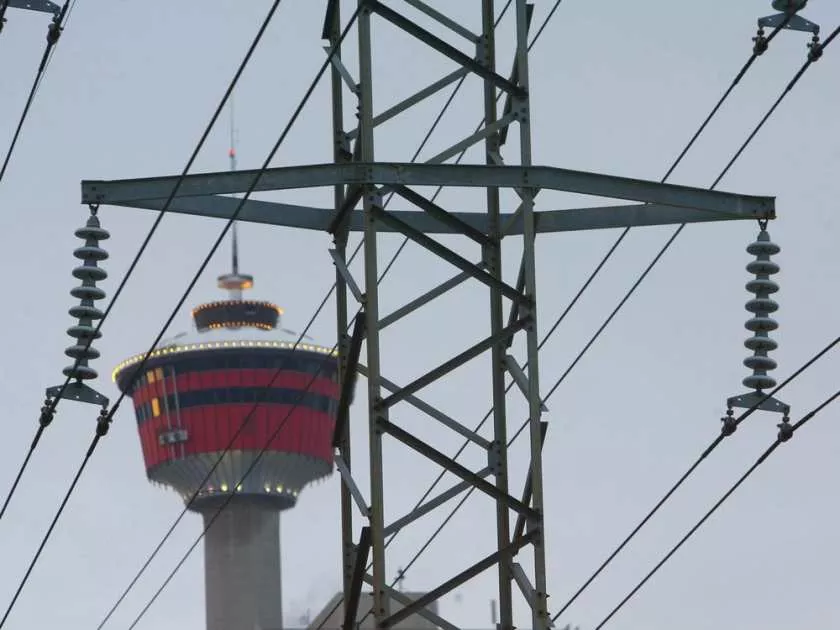
End to hydro freeze urged

Ontario's new government should lift the electricity price freeze soon — certainly before 2006 when the freeze is now due to expire, says the Conference Board of Canada in two papers issued recently.

That means prices will rise in the near term, said Gilles Rhéaume, co-author of the papers. But the board argues that market signals are needed both to encourage consumers to conserve power, and to encourage generating firms to invest in more power plants.

"The longer you wait (before lifting the price freeze) the less conservation you're going to be seeing, the less investment in new generation you're going to be seeing," Rhéaume said in an interview. "The longer you wait, the worse it's going to be."

The board recognizes that higher prices could be a burden on low-income Canadians, said Rhéaume. To offset that burden, the board recommends offering a special tax credit to those with low incomes, in the same way they receive a GST rebate.

Most electricity industry observers agree that Ontario has too little generating capacity to serve existing demand. Some say the answer is to build new generating stations; others say the province should focus on reducing demand for power.

The board says the province should not revert to last year's market system, which left consumers wide open to fluctuating power prices if they hadn't signed long-term, fixed-price contracts.

Related News
US nuclear innovation act becomes law

NEIMA advances NRC regulatory modernization, creating a licensing framework for advanced reactors, improving uranium permitting, capping reactor fees, and mandating DOE planning for excess uranium, boosting transparency, accountability, and innovation across the US nuclear sector.


Key Points

NEIMA is a US law modernizing NRC rules and enabling advanced reactor licensing while reforming fees.

✅ Modernizes NRC licensing for advanced reactors

✅ Caps annual reactor fees and boosts transparency

✅ Streamlines uranium permitting; directs DOE plans


Bipartisan legislation modernising US nuclear regulation and supporting the establishment of a licensing framework for next-generation advanced reactors has been signed by US President Donald Trump, whose order boosting U.S. uranium and nuclear energy underscored the administration's focus on the sector.

The Nuclear Energy Innovation and Modernisation Act (NEIMA) became law on 14 January.

As well as directing the Nuclear Regulatory Commission (NRC) to modify the licensing process for commercial advanced nuclear reactor facilities, the bill establishes new transparency and accountability measures to the regulator's budget and fee programmes, and caps fees for existing reactors. It also directs the NRC to look at ways of improving the efficiency of uranium licensing, including investigating the safety and feasibility of extending uranium recovery licences from ten to 20 years' duration, and directs the Department of Energy, which oversees nuclear cleanup and related projects, to issue at least every ten years a long-term plan detailing the management of its excess uranium inventories.

Maria Korsnick, president and CEO of the US Nuclear Energy Institute, described NEIMA as a "significant, positive step" toward the reform of the NRC's fee collection process. "This legislation establishes a more equitable and transparent funding structure which will benefit all operating reactors and future licensees," she said. "The bill also reaffirms Congress’s support for nuclear innovation by working to establish an efficient and stable regulatory structure that is prepared to license the advanced reactors of the future."

Marilyn Kray, president-elect of the American Nuclear Society, said the passage of the legislation was a "big win" for the nation and its nuclear community. "By reforming outdated laws, NRC will now be able to invest more freely in advanced nuclear R&D and licensing activities. This in turn will accelerate deployment of cutting-edge American nuclear systems and better prepare the next generation of nuclear engineers and technologists," she said.

The bill was introduced in 2017 by Senator John Barrasso of Wyoming. It was approved by Congress on 21 December by 361 votes to 10, having been passed by the Senate the previous day, even as later Biden's climate law developments produced mixed results.

NEIMA is one of several bipartisan bills that support advanced nuclear innovation considered by the 115th US Congress, which ended on 2 January. These are: the Nuclear Energy Innovation Capabilities Act (NEICA); the Nuclear Energy Leadership Act; the Nuclear Utilisation of Keynote Energy Act; the Advanced Nuclear Fuel Availability Act, a focus sharpened by the U.S. ban on Russian uranium in the fuel market; and legislation to expedite so-called part 810 approvals, which are needed for the export of technology, equipment and components. NEICA, which supports the deployment of advanced reactors and also directs the DOE to develop a reactor-based fast neutron source for the testing of advanced reactor fuels and materials, was signed into law in October.


Related News

View more

How Ukraine Will Keep the Lights On This Winter

Ukraine Winter Energy Strategy strengthens the power grid through infrastructure repairs, electricity imports, renewable integration, nuclear output, and conservation to ensure reliable heating, blackout mitigation, and grid resilience with international aid, generators, and transmission lines.


Key Points

A wartime plan to stabilize Ukraine's grid via repairs, imports, renewables, and nuclear to deliver reliable electricity.

✅ Repairs, imports, and demand management stabilize the grid.

✅ Renewables and nuclear reduce outage risks in winter.

✅ International aid supplies transformers, generators, expertise.


As Ukraine braces for the winter months, the question of how the country will keep the lights on has become a pressing concern, as the country fights to keep the lights on amid ongoing strikes. The ongoing war with Russia has severely disrupted Ukraine's energy infrastructure, leading to widespread damage to power plants, transmission lines, and other critical energy facilities. Despite these challenges, Ukraine has been working tirelessly to maintain its energy supply during the cold winter months, which are essential not only for heating but also for the functioning of homes, businesses, hospitals, and schools. Here's a closer look at the steps Ukraine is taking to keep the lights on this winter and ensure that its people have access to reliable electricity.

1. Repairing Damaged Infrastructure

One of the most immediate concerns for Ukraine's energy sector is the extensive damage inflicted on its power infrastructure by Russian missile and drone attacks. Since the war began in 2022, Ukraine has faced repeated attacks targeting power plants, substations, and power lines, including strikes on western regions that caused widespread outages across communities. These attacks have left parts of the country with intermittent or no electricity, and repairing the damage has been a monumental task.

However, Ukraine has made significant progress in restoring its energy infrastructure. Government agencies and energy companies have been working around the clock to repair power plants and transmission networks. Teams of technicians and engineers have been deployed to restore power to areas that have been hardest hit by Russian attacks, often under difficult and dangerous conditions. While some areas may continue to face outages, efforts to rebuild the energy grid are ongoing, with the government prioritizing critical infrastructure to ensure that hospitals, military facilities, and essential services have access to power.

2. Energy Efficiency and Conservation Measures

To cope with reduced energy availability and avoid overloading the grid, Ukrainian authorities have been encouraging energy efficiency and conservation measures. These efforts are particularly important during the winter when demand for electricity and heating is at its peak.

The government has implemented energy-saving programs, urging citizens and businesses to reduce their consumption and adopt new energy solutions that can be deployed quickly. Measures include limiting electricity use during peak hours, setting thermostats lower in homes and businesses, and encouraging the use of energy-efficient appliances. Ukrainian officials have also been promoting public awareness campaigns to educate people about the importance of energy conservation, which is crucial to avoid grid overload and ensure the distribution of power across the country.

3. Importing Energy from Abroad

To supplement domestic energy production, Ukraine has been working to secure electricity imports from neighboring countries. Ukraine has long been interconnected with energy grids in countries such as Poland, Slovakia, and Hungary, which allows it to import electricity during times of shortage. In recent months, Ukraine has ramped up efforts to strengthen these connections, ensuring that it can import electricity when domestic production is insufficient to meet demand, and in a notable instance, helped Spain during blackouts through coordinated cross-border support.

While electricity imports from neighboring countries provide a temporary solution, this is not without its challenges. The cost of importing electricity can be high, and the country’s ability to import large amounts of power depends on the availability of energy in neighboring nations; officials say there are electricity reserves and no scheduled outages if strikes do not resume. Ukraine has been actively seeking new energy partnerships and working with international organizations to secure access to electricity, including exploring the potential for importing energy from the European Union.

4. Harnessing Renewable Energy Sources

Another key part of Ukraine's strategy to keep the lights on this winter is tapping into renewable energy sources, particularly wind and solar power. While Ukraine’s energy sector has historically been dependent on fossil fuels, the country has been making strides in integrating renewable energy into its grid. Solar and wind energy are particularly useful in supplementing the national grid, especially during the winter months when demand is high.

Renewable energy sources are less vulnerable to missile strikes compared to traditional power plants, making them an attractive option for Ukraine's energy strategy. Although renewable energy currently represents a smaller portion of Ukraine’s overall energy mix, its contribution is expected to increase as the country invests more in clean energy infrastructure. In addition to reducing dependence on fossil fuels, this shift is aligned with Ukraine’s broader environmental goals and will be important for the long-term sustainability of its energy sector.

5. International Aid and Support

International support has been crucial in helping Ukraine keep the lights on during the war. Western allies, including the European Union and the United States, have provided financial assistance, technical expertise, and equipment to help restore the energy infrastructure, though Washington recently ended some grid restoration support as priorities shifted. In addition to rebuilding power plants and transmission lines, Ukraine has received advanced energy technologies and materials to strengthen its energy security.

The U.S. has sent electrical transformers, backup generators, and other essential equipment to help Ukraine restore its energy grid. The European Union has also provided both financial and technical assistance, supporting Ukraine’s efforts to integrate more renewable energy into its grid and enhancing the country’s ability to import electricity from neighboring states.

6. The Role of Nuclear Energy

Ukraine’s nuclear energy plants play a critical role in the country’s electricity supply. Before the war, nuclear power accounted for around 50% of Ukraine’s total electricity generation, and for communities near the front line, electricity is civilization that depends on reliable baseload. Despite the ongoing conflict, Ukrainian nuclear plants have remained operational, though they face heightened security risks due to the proximity of active combat zones.

In the winter months, nuclear plants are expected to continue providing a significant portion of Ukraine's electricity, which is essential for meeting the country's heating and power needs. The government has made efforts to ensure the safety and security of these plants, which remain a vital part of the country's energy strategy.

Keeping the lights on in Ukraine during the winter of 2024 is no small feat, given the war-related damage to energy infrastructure, rising energy demands, and ongoing security risks. However, the Ukrainian government has taken proactive steps to address these challenges, including repairing critical infrastructure, importing energy from neighboring countries, promoting energy efficiency, and expanding renewable energy sources. International aid and the continued operation of nuclear plants also play a vital role in ensuring a reliable energy supply. While challenges remain, Ukraine’s resilience and determination to overcome its energy crisis are clear, and the country is doing everything it can to keep the lights on through this difficult winter.


Related News

View more

Changes Coming For Ontario Electricity Consumers

Ontario Electricity Billing Changes include OEB-backed shifts to time-of-use or tiered pricing, landlord blanket elections, LDC implementation guidance, a customer choice webpage with a bill calculator, and ENDM rate mitigation messaging.


Key Points

They are OEB measures enabling TOU-to-tiered switching, landlord elections, LDC guidance, and ENDM bill messages.

✅ Option to switch from TOU to tiered pricing

✅ Landlord blanket elections on tenant turnover

✅ ENDM-led bill info and rate mitigation messaging


By David Stevens, Aird & Berlis LLP

Electricity consumers in Ontario may see a couple of electricity rate changes in their bills in the coming months.

First, as we have already discussed, as of November 1, 2020, regulated price plan customers will have the option to switch to "tiered pricing" instead of time-of-use (TOU) pricing structures. Those who switch to "tiered pricing" will see changes in their electricity bills.

The Ontario Energy Board (OEB) has now issued final amendments to the Standard Supply Service Code to support the customer election process necessary to switch from TOU pricing to tiered pricing. The main change from what was already published in previous OEB notices is that landlords will be permitted to make a "blanket election" between TOU pricing and tiered pricing that will apply each time a tenant's account reverts back to the landlord on turnover of the rental unit. In its most recent notice, the OEB acknowledges that implementing the new customer billing option as of Nov. 1 (less than two months from now) will be challenging and directs Local Distribution Companies (LDCs) who cannot meet this date to be immediately in touch with the OEB. Finally, the OEB indicates that there will be a dedicated "customer choice webpage for consumers, including a bill calculator" in place by early October.

Second, as of January 1, 2021 low-volume consumers will see additional messaging on their bills to inform them of available rate mitigation programs.

A recent proposal posted on Ontario's Regulatory Registry indicates that the Ministry of Energy, Northern Development and Mines (ENDM) proposes that LDCs and Utility Sub-Meter Providers will be required to include a new on-bill message for low-volume consumers that "will direct customers to ENDM's new web page for further information about how the province provides financial support to electricity consumers." This new requirement is planned to be in place as of January 1, 2021. In conjunction with this requirement, the ENDM plans to launch a new web page that will provide "up-to-date information about electricity bills," including information about rate mitigation programs available to consumers. Parties are invited to submit comments on the ENDM proposal by October 5, 2020.


Related News

View more

OPINION | Bridging the electricity gap between Alberta and B.C. makes perfect climate sense

BC-Alberta Transmission Intertie enables clean hydro to balance wind and solar, expanding transmission capacity so Site C hydro can dispatch power, cut emissions, lower costs, and accelerate electrification across provincial grids under federal climate policy.


Key Points

A cross-provincial grid link using BC hydro to firm Alberta wind and solar, cutting emissions and costs.

✅ Balances variable renewables with dispatchable hydro from Site C.

✅ Enables power trade: peak exports, low-cost wind imports.

✅ Lowers decarbonization costs and supports electrification goals.


By Mark Jaccard

Lost in the news and noise of the federal government's newly announced $170-per-tonne carbon tax was a single, critical sentence in Canada's updated climate plan, one that signals a strategy that could serve as the cornerstone for a future free of greenhouse gas emissions.

"The government will work with provinces and territories to connect parts of Canada that have abundant clean hydroelectricity with parts that are currently more dependent on fossil fuels for electricity generation — including by advancing strategic intertie projects."

Why do we think this one sentence is so important? And what has it got to do with the controversial Site C project Site C electricity debate under construction in British Columbia?

The answer lies in the huge amount of electricity we'll need to generate in Canada to achieve our climate goals for 2030 and 2050. Even while we aggressively pursue energy efficiency, our electric cars, buses and perhaps trucks in Canada's net-zero race will need a huge amount of new electricity, as will our buildings and industries. 

Luckily, Canada is blessed with an electricity system that is the envy of the world — already over 80 per cent zero emission, the bulk being from flexible hydro-electricity, with a backbone of nuclear power largely in Ontario, a national electricity success and rapidly growing shares of cheap wind and solar. 

Provincial differences
Yet the story differs significantly from one province to another. While B.C.'s electricity is nearly emissions free, the opposite is true of its neighbour, Alberta, where more than 80 per cent still comes from fossil fuels. This, despite an impressive shift away from coal power in recent years.

Now imagine if B.C. and Alberta were one province.

This might sound like the start of a bad joke, or a horror movie to some, but it's the crux of new research by a trio of energy economists who put a fine point on the value of such co-operation.

The study, by Brett Dolter, Kent Fellows and Nic Rivers, takes a detailed look at the economic case for completing Site C, BC Hydro's controversial large hydro project under construction, and makes three key conclusions.

First, they argue Site C should likely not have been started in the first place. Only a narrow set of assumptions can now justify its total cost. But what's done is done, and absent a time machine, the decision to complete the dam rests on go-forward costs.

On that note, their second conclusion is no more optimistic. Considering the cost to complete the project, even accounting for avoiding termination costs should it be cancelled, they find the economics of completing Site C over-budget status to be weak. If the New York Times had a Site C needle in the style of the newspaper's election visual, it would be "leaning cancel" at this point.

In Alberta, more than 80 per cent of the electricity still comes from fossil fuels, despite an impressive shift away from coal power in recent years. (CBC)
But it is their third conclusion that stands out as worthy of attention. They argue there is a case for completing Site C if the following conditions are met:

B.C. and Alberta reduce their electricity sector emissions by more than 75 per cent (this really means Alberta, given B.C.'s already clean position); and

B.C. and Alberta expand their ability to move electricity between their respective provinces by building new transmission lines.

Let's deal with each of these in turn.

On Condition 1, we give an emphatic: YES! Reducing electricity emissions is an absolute must to meet climate pledges if Canada is to come even close to achieving its net-zero goals. As noted above, a clean electricity grid will be the cornerstone of a decarbonized economy as we generate a great deal more power to electrify everything from industrial processes to heating to transportation and more. 

Condition 2 is more challenging. Talk of increasing transmission connections across Canada, including Hydro-Québec's U.S. strategy has been ongoing for over 50 years, with little success to speak of. But this time might well be different. And the implications for a completed Site C, should the government go that route, are profound.

Wind and solar costs rapidly declining
Somewhat ironically, the case for Site C is made stronger by the rapidly declining costs of two of its apparent renewable competitors: wind and solar.

The cost of wind and solar generation has fallen by 70 per cent and 90 per cent, respectively, a dramatic decline in the past 10 years. No longer can these variable sources of power be derided as high cost; they are unequivocally the cheapest sources of raw energy in electricity systems today.

However, electricity system operators must deal with their "non-dispatchability," a seemingly complicated term that simply means they produce electricity only when the sun shines and the wind blows, which is not necessarily when electricity customers want their electricity delivered (dispatched) to them. And because of this characteristic, the value of dispatchable electricity sources, like a completed Site C, will grow as a complement to wind and solar. 

Thus, as Alberta's generation of cheap wind and solar grows, so too does the value of connecting it with the firm, dispatchable resources available in B.C.

Rather than displacing wind and solar, large hydro facilities with the ability to increase or decrease output on short notice can actually enable more investment in these renewable sources. Expanding the transmission connection, with Site C on one side of that line, becomes even more valuable.

Many in B.C. might read this and rightly ask themselves, why should we foot the bill for this costly project to help out Albertans? The answer is that it won't be charity — B.C. will get paid handsomely for the power it delivers in peak periods and will be able to import wind power at low prices from Alberta in other times. B.C. will benefit greatly from these gains of trade.

Turning to Alberta, why should Albertans support B.C. reaping these gains? The answer is two-fold.

First, Site C will actually enable more low-cost wind and solar to be built in Alberta due to hydro's ability to balance these non-dispatchable renewables. Jobs and economic opportunity will occur in Alberta from this renewable energy growth.

Second, while B.C. imports won't come cheap, they will be less costly than the decarbonization alternatives Alberta would need without B.C.'s flexible hydro, as the economists' study shows. This means lower overall costs to Alberta's power consumers.

A clear role for Ottawa
To be sure, there are challenges to increasing the connectedness of B.C. and Alberta's power systems, not least of which is BC Hydro being a regulated, government-owned monopoly while Alberta is a competitive market amongst private generators. Some significant accommodations in climate policy and grids will be needed to ensure both sides can compete and benefit from trade on an equal footing.

There is also the pesky matter of permitting and constructing thousands of kilometres of power lines. Getting linear energy infrastructure built in Canada has not exactly been our forte of late.

We are not naive to the significant challenges in such an approach, but it's not often that we see such a clear narrative for beneficial climate action that, when considered at the provincial level, is likely to be thwarted, but when considered more broadly can produce a big win.

It's the clearest example yet of a role for the federal government to bridge the gap, to facilitate the needed regulatory conversations, and, let's be frank, to bring money to the table to make the line happen. Neither provincial side is likely to do it on their own, nor, as history has shown, are they likely to do it together. 

For a government committed to reducing emissions, and with a justified emphasis on the electricity sector, the opportunity to expand the Alberta-B.C. transmission intertie, leveraging the flexibility of B.C.'s hydro with the abundance of wind and solar potential on the Prairies, offers a potential massive decarbonization win for Western Canada that is too good to ignore.


Mark Jaccard, a professor at Simon Fraser University, and Blake Shaffer, a professor at the University of Calgary


Related News

View more

Wind generates more than half of Summerside's electricity in May

Summerside Wind Power reached 61% in May, blending renewable energy, municipal utility operations, and P.E.I. wind farms, driving city revenue, advancing green city goals, and laying groundwork for smart grid integration.


Key Points

Summerside Wind Power is the city utility's wind supply, 61% in May, generating revenue that supports local services.

✅ 61% of electricity in May from wind; annual target 45%.

✅ Mix of city-owned farm and West Cape Wind Farm contract.

✅ Revenues projected at $2.9M; funds municipal budget and services.


During the month of May, 61 per cent of the electricity Summerside's homes, businesses and industries used came from wind power sources.

25 per cent was purchased from the West Cape Wind Farm in West Point, P.E.I. — the city has had a contract with it since 2007. The other 36 per cent came from the city's own wind farm, which was built in 2009. 

"One of the strategic goals that was planned for by the city back in 2005 was to try to become a 100 per cent green city," said Greg Gaudet, Summerside's director of municipal services.

"The city started looking at ways it could adopt green practices into its operations on everything it owns and operates and provides services to the community."

Summerside Electric powers about 6,200 residential, 970 commercial and 30 industrial customers and also sells to NB Power, while Nova Scotia Power now generates 30 per cent of its electricity from renewables.

The Summerside Wind Farm is owned by the City of Summerside, which then sells the electricity to Summerside Electric, which it also owns, for profit. 

For the months of April and May, the wind farm generated $630,000 for the city. Last year, it was $507,000 over the same time frame, which does not include a 2 per cent rate increase imposed this year.

"We had a lot of good, strong days of wind for the month of May over other years. So normally we'd be on average somewhere in the range of the 45 per cent range for those months," said Gaudet. 

The city's annual target for wind generation is also 45 per cent, which aligns with the view that more energy sources make better projects. Gaudet said it balances out over the year, with winter being the best and production dropping as low as 25 per cent in the summer months.

At Summerside council's monthly meeting on Monday, May's 61 per cent figure was touted as one of the highest months on record.

"To have one at 61 per cent means we had great production from our wind facilities and contracts, though communities such as Portsmouth have raised turbine noise and flicker concerns in other contexts," Gaudet said.

The utility also owns and provides power through a diesel generation plant.

Municipal money maker
The municipality projects its wind energy production will generate $2.9 million for the city in its current fiscal year, which began April 1, paralleling job gains seen in Alberta's renewables surge this year.

"Any revenues that are received from the wind farm facility goes into the City of Summerside budget," Gaudet said. "Then the council decides on how that money is accrued and where it goes and what it supports in the community."

Wind power generated $2.89 million for the city in the 2019-2020 fiscal year. The budget originally projected $3.2 million in revenue, but blade damage sustained during post-tropical storm Dorian put two turbines out of commission for a few weeks.

Gaudet called this their "only bad year" and officials said they see this year's target to be a bit more conservative and achievable regardless of hiccups and uncontrollable forces, such as the wind they're harnessing.

"It's performed outstandingly well," said Gaudet of the operation.

"There's been no huge, major cost factors with the wind farm to date ... its production has been fairly consistent from year to year." 

Gaudet said the technology has already been piloted at a smaller operation at Credit Union Place, aligning with municipal solar power projects elsewhere.

The goal of the project is to bring Summerside's renewable portfolio up to a yearly average of 62 per cent. Gaudet said it's expected to be commissioned by May 2022 at the latest and after that, the city hopes to focus on smart grid technology.

"It's a long-term goal and I think it's the right [investment] to make," he said. "You have to be environmentally conscious and a steward of your community.

"I think Summerside is that and does that ... a model for North America to look at how a city can work a relationship with an electric utility for the betterment."


Related News

View more

We Energies refiles rate hike request driven by rising nuclear power costs

We Energies rate increase driven by nuclear energy costs at Point Beach, Wisconsin PSC filings, and rising utility rates, affecting electricity prices for residential, commercial, and industrial customers while supporting WEC carbon reduction goals.


Key Points

A 2021 utility rate hike to recover Point Beach nuclear costs, modestly raising Wisconsin electricity bills.

✅ Residential bills rise about $0.73 per month

✅ Driven by $55.82/MWh Point Beach contract price

✅ PSC review and consumer advocates assessing alternatives


Wisconsin's largest utility company is again asking regulators to raise rates to pay for the rising cost of nuclear energy.

We Energies says it needs to collect an additional $26.5 million next year, an increase of about 3.4%.

For residential customers, that would translate to about 73 cents more per month, or an increase of about 0.7%, while some nearby states face steeper winter rate hikes according to regulators. Commercial and industrial customers would see an increase of 1% to 1.5%, according to documents filed with the Public Service Commission.

If approved, it would be the second rate increase in as many years for about 1.1 million We Energies customers, who saw a roughly 0.7% increase in 2020 after four years of no change, while Manitoba Hydro rate increase has been scaled back for next year, highlighting regional contrasts.

We Energies' sister utility, Wisconsin Public Service Corp., has requested a 0.13% increase, which would add about 8 cents to the average monthly residential bill, which went up 1.6% this year.

We Energies said a rate increase is needed to cover the cost of electricity purchased from the Point Beach nuclear power plant, which according to filings with the Securities Exchange Commission will be $55.82 per megawatt-hour next year.

So far this year, the average wholesale price of electricity in the Midwestern market was a little more than $25.50 per megawatt-hour, and recent capacity market payouts on the largest U.S. grid have fallen sharply, reflecting broader market conditions.

Owned and operated by NextEra Energy Resources, the 1,200-megawatt Point Beach Nuclear Plant is Wisconsin's last operational reactor. We Energies sold the plant for $924 million in 2007 and entered into a contract to purchase its output for the next two decades.

Brendan Conway, a spokesman for WEC Energy Group, said customers have benefited from the sale of the plant, which will supply more than a third of We Energies' demand and is a key component in WEC's strategy to cut 80% of its carbon emissions by 2050, amid broader electrification trends nationwide.

"Without the Point Beach plant, carbon emissions in Wisconsin would be significantly higher," Conway said.

As part of negotiations on its last rate case, WEC agreed to work with consumer advocates and the PSC to review alternatives to the contracted price increases, which were structured to begin rising steeply in 2018.

Tom Content, executive director of the Citizens Utility Board, said the contract will be an issue for We Energies customers into the next decade

"It's a significant source (of energy) for the entire state," Content said. "But nuclear is not cheap."

WEC filed the rate requests Monday, one week after the withdrawing similar applications. Conway said the largely unchanged filings had "undergone additional review by senior management."

WEC last week raised its second quarter profit forecast to 67 to 69 cents per share, up from the previous range of 58 to 62 cents per share.

The company credited better than expected sales in April and May along with operational cost savings and higher authorized profit margin for American Transmission Company, of which WEC is the majority owner.

Wisconsin's other investor-owned utilities have reported lower than expected fuel costs for 2020 and 2021, even as emergency fuel stock programs in New England are expected to cost millions this year.

Alliant Energy has proposed using about $31 million in fuel savings to help freeze rates in 2021, aligning with its carbon-neutral electricity plans as it rolls out long-term strategy, while Xcel Energy is proposing to lower its rates by 0.8% next year and refund its customers about $9.7 million in fuel costs for this year.

Madison Gas and Electric is negotiating a two-year rate structure with consumer groups who are optimistic that fuel savings can help prevent or offset rate increases, though some utilities are exploring higher minimum charges for low-usage customers to recover fixed costs.


Related News

View more

Sign Up for Electricity Forum’s Newsletter

Stay informed with our FREE Newsletter — get the latest news, breakthrough technologies, and expert insights, delivered straight to your inbox.

Electricity Today T&D Magazine Subscribe for FREE

Stay informed with the latest T&D policies and technologies.
  • Timely insights from industry experts
  • Practical solutions T&D engineers
  • Free access to every issue

Live Online & In-person Group Training

Advantages To Instructor-Led Training – Instructor-Led Course, Customized Training, Multiple Locations, Economical, CEU Credits, Course Discounts.

Request For Quotation

Whether you would prefer Live Online or In-Person instruction, our electrical training courses can be tailored to meet your company's specific requirements and delivered to your employees in one location or at various locations.