`Number of factors' triggered blackout

By ASSOCIATED PRESS


High Voltage Maintenance Training Online

Our customized live online or in‑person group training can be delivered to your staff at your location.

  • Live Online
  • 12 hours Instructor-led
  • Group Training Available
Regular Price:
$599
Coupon Price:
$499
Reserve Your Seat Today
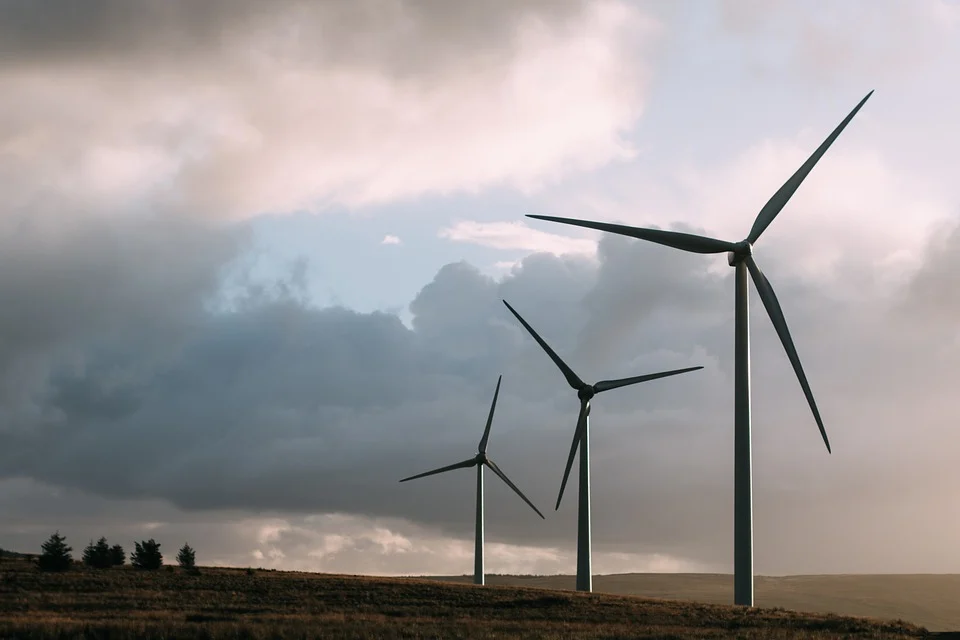
WASHINGTON — A U.S.-Canadian task force has completed its interim report and will cite a number of causes, not a single event, for the power blackout last August, U.S. Energy Secretary Spencer Abraham says.

The findings could come as early as mid November.

Abraham would not give specifics because some report details must be cleared up with Canadian officials.

He made clear, however, that no single smoking gun will be cited as the cause of the Aug. 14 blackout that darkened parts of eight U.S. states and Ontario.

"I think you're going to see there are a number of factors that emerged during this investigation as being ... causes or partial causes," said Abraham.

Abraham said the U.S.-Canadian task force investigating the blackout has been scrupulous in trying to be accurate in its findings, but will open its interim conclusions to a review by other parties, who might want to challenge some of the conclusions.

Those suggestions would be considered before a final report and recommendations were issued, he said.

Investigators have concluded that many of the problems on the day of the blackout began in Ohio, where a number of power lines belonging to First Energy Corp. failed during the hour before the power outage.

Investigators also have been examining what influence a number of independent power producers, who were pumping large amounts of electricity through northern Ohio lines on the day of the blackout, might have had on the system.

One theory has been that the system suffered from a shortage of so-called reactive power, essential to maintain voltage needed to push electrons through the system.

The Canadian Federation of Independent Business estimated the massive blackout cost the Ontario economy $1 billion to $2 billion.

Related News
Military Is Ramping Up Preparation For Major U.S. Power Grid Hack

DARPA RADICS Power Grid Security targets DoD resilience to cyber attacks, delivering early warning, detection, isolation, and characterization tools, plus a secure emergency network to protect critical infrastructure and speed grid restoration and communications.


Key Points

A DoD/DARPA initiative to detect, contain, and rapidly recover the U.S. grid from sophisticated cyber attacks.

✅ Early warning separates attacks from routine outages

✅ Pinpoints intrusion points and malware used

✅ Builds secure emergency network for rapid restoration


The U.S. Department of Defense is growing increasingly concerned about hackers taking down our power grid and crippling the nation, reflecting a renewed focus on grid protection across agencies, which is why the Pentagon has created a $77-million security plan that it hopes will be up and running by 2020.

The U.S. power grid is threatened every few days. While these physical and cyber attacks have never led to wide-scale outages, attacks are getting more sophisticated. According to a 494-page report released by the Department of Energy in January and a new grid report card, the nation’s grid “faces imminent danger from cyber attacks.” Such a major, sweeping attack could threaten “U.S. lifeline networks, critical defense infrastructure, and much of the economy; it could also endanger the health and safety of millions of citizens.” If it were to happen today, America could be powered-down and vulnerable for weeks.

#google#

The DoD is working on an automated system to speed up recovery time to a week or less — what it calls the Rapid Attack Detection, Isolation, and Characterization (RADICS) program. DARPA, the Pentagon’s research arm, originally solicited proposals in late 2015, asking for technology that did three things. Primarily, it had to detect early warning signs and distinguish between attacks and normal outages, especially after intrusions at U.S. electric utilities underscored the risk, but it also had to pinpoint the access point of the attack and determine what malicious software was used. Finally, it must include an emergency system that can rapidly connect various power-supply centers, without any human coordination. This would allow emergency and military responders to have an ad hoc communication system in place moments after an attack.

“If a well-coordinated cyberattack on the nation’s power grid were to occur today, the time it would take to restore power would pose daunting national security challenges,” said DARPA program manager John Everett, in a statement, at the time. “Beyond the severe domestic impacts, including economic and human costs, prolonged disruption of the grid would hamper military mobilization and logistics, impairing the government’s ability to project force or pursue solutions to international crises.”

DARPA plans to spend $77 million on RADICS, while DOE funding to improve the grid complements these initiatives. Last November, SRI International announced it had received $7.3 million from the program. In December, Raython was granted $9 million. The latest addition is BAE Systems, which received $8.6 million last month to develop technology that detects and contains power-grid threats, and creates a secure emergency provisional system that restores some power and communication in the wake of an attack — what is being called a secure emergency network.

According to the military news site Defense Systems, BAE’s SEN would rely on radio, satellite, or wireless internet — particularly as ransomware attacks continue to rise — whatever is available that allows the grid to continue working. The SEN would serve as a wireless connection between separate power grid stations.

While the ultimate goal of the RADICS program will be the restoration of civilian power and communications, the SEN will prioritize communication networks that would be used for defense or combat, so the U.S. government can still wage war while the rest of us are in the dark.


Related News

View more

Tariff Threats Boost Support for Canadian Energy Projects

Canadian Energy Infrastructure Tariffs are reshaping pipelines, deregulation, and energy independence, as U.S. trade tensions accelerate approvals for Alberta oil sands, Trans Mountain expansion, and CAPP proposals amid regulatory reform and market diversification.


Key Points

U.S. tariff threats drive approvals, infrastructure, and diversification to strengthen Canada energy security.

✅ Tariff risk boosts support for pipelines and export routes

✅ Faster project approvals and deregulation gain political backing

✅ Diversifying markets reduces reliance on U.S. buyers


In recent months, the Canadian energy sector has experienced a shift in public and political attitudes toward infrastructure projects, particularly those related to oil and gas production. This shift has been largely influenced by the threat of tariffs from the United States, as well as growing concerns about energy independence and U.S.-Canada trade tensions more broadly.

Scott Burrows, the CEO of Pembina Pipeline Corp., noted in a conference call that the potential for U.S. tariffs on Canadian energy imports has spurred a renewed sense of urgency and receptiveness toward energy infrastructure projects in Canada. With U.S. President Donald Trump’s proposed tariffs Trump tariff threat on Canadian imports, particularly a 10% tariff on energy products, there is increasing recognition within Canada that these projects are essential for the country’s long-term economic and energy security.

While the direct impact of the tariffs is not immediate, industry leaders are optimistic about the long-term benefits of deregulation and faster project approvals, even as some see Biden as better for Canada’s energy sector overall. Burrows highlighted that while it will take time for the full effects to materialize, there are significant "tailwinds" in favor of faster energy infrastructure development. This includes the possibility of more streamlined regulatory processes and a shift toward more efficient project timelines, which could significantly benefit the Canadian energy sector.

This changing landscape is particularly important for Alberta’s oil production, which is one of the largest contributors to Canada’s energy output. The Canadian Association of Petroleum Producers (CAPP) has responded to the growing tariff threat by releasing an “energy platform,” outlining recommendations for Ottawa to help mitigate the risks posed by the evolving trade situation. The platform includes calls for improved infrastructure, such as pipelines and transportation systems, and priorities like clean grids and batteries, to ensure that Canadian energy can reach global markets more effectively.

The tariff threat has also sparked a wider conversation about the need for Canada to strengthen its energy infrastructure and reduce its dependency on the U.S. for energy exports. With the potential for escalating trade tensions, there is a growing push for Canadian energy resources to be processed and utilized more domestically, though cutting Quebec’s energy exports during a tariff war. This has led to increased political support for projects like the Trans Mountain pipeline expansion, which aims to connect Alberta’s oil sands to new markets in Asia via the west coast.

However, the energy sector’s push for deregulation and quicker approvals has raised concerns among environmental groups and Indigenous communities. Critics argue that fast-tracking energy projects could lead to inadequate environmental assessments and greater risks to local ecosystems. These concerns underscore the tension between economic development and environmental protection in the energy sector.

Despite these concerns, there is a clear consensus that Canada’s energy industry needs to evolve to meet the challenges posed by shifting trade dynamics, even as polls show support for energy and mineral tariffs in the current dispute. The proposed U.S. tariffs have made it increasingly clear that the country’s energy infrastructure needs significant investment and modernization to ensure that Canada can maintain its status as a reliable and competitive energy supplier on the global stage.

As the deadline for the tariff decision approaches, and as Ford threatens to cut U.S. electricity exports, Canada’s energy sector is bracing for the potential fallout, while also preparing to capitalize on any opportunities that may arise from the changing trade environment. The next few months will be critical in determining how Canadian policymakers, businesses, and environmental groups navigate the complex intersection of energy, trade, and regulatory reform.

While the threat of U.S. tariffs may be unsettling, it is also serving as a catalyst for much-needed changes in Canada’s energy policy. The push for faster approvals and deregulation may help address some of the immediate concerns facing the sector, but it will be crucial for the government to balance economic interests with environmental and social considerations as the country moves forward in its energy transition.


Related News

View more

British Columbia Halts Further Expansion of Self-Driving Vehicles

BC Autonomous Vehicle Ban freezes new driverless testing and deployment as BC develops a regulatory framework, prioritizing safety, liability clarity, and road sharing with pedestrians and cyclists while existing pilot projects continue.


Key Points

A moratorium pausing new driverless testing until a safety-first regulatory framework and clear liability rules exist.

✅ Freezes new AV testing and deployment provincewide

✅ Current pilot shuttles continue under existing approvals

✅ Focus on safety, liability, and road-user integration


British Columbia has halted the expansion of fully autonomous vehicles on its roads. The province has announced it will not approve any new applications for testing or deployment of vehicles that operate without a human driver until it develops a new regulatory framework, even as it expands EV charging across the province.


Safety Concerns and Public Questions

The decision follows concerns about the safety of self-driving vehicles and questions about who would be liable in the event of an accident. The BC government emphasizes the need for robust regulations to ensure that self-driving cars and trucks can safely share the road with traditional vehicles, pedestrians, and cyclists, and to plan for infrastructure and power supply challenges associated with electrified fleets.

"We want to make sure that British Columbians are safe on our roads, and that means putting the proper safety guidelines in place," said Rob Fleming, Minister of Transportation and Infrastructure. "As technology evolves, we're committed to developing a comprehensive framework to address the issues surrounding self-driving technology."


What Does the Ban Mean?

The ban does not affect current pilot projects involving self-driving vehicles that already operate in BC, such as limited shuttle services and segments of the province's Electric Highway that support charging and operations.


Industry Reaction

The response from industry players working on autonomous vehicle technology has been mixed, amid warnings of a potential EV demand bottleneck as adoption ramps up. While some acknowledge the need for clear regulations, others express concern that the ban could stifle innovation in the province.

"We understand the government's desire to ensure safety, but a blanket ban risks putting British Columbia behind in the development of this important technology," says a spokesperson for a self-driving vehicle start-up.


Debate Over Self-Driving Technology

The BC ban highlights a larger debate about the future of autonomous vehicles. While proponents point to potential benefits such as improved safety, reduced traffic congestion, and increased accessibility, and national policies like Canada's EV goals aim to accelerate adoption, critics raise concerns about liability, potential job losses in the transportation sector, and the ability of self-driving technology to handle complex driving situations.


BC Not Alone

British Columbia is not the only jurisdiction grappling with the regulation of self-driving vehicles. Several other provinces and states in both Canada and the U.S. are also working to develop clear legal and regulatory frameworks for this rapidly evolving technology, even as studies suggest B.C. may need to double its power output to fully electrify road transport.


The Road Ahead

The path forward for fully autonomous vehicles in BC depends on the government's ability to create a regulatory framework that balances safety considerations with fostering innovation, and align with clean-fuel investments like the province's hydrogen project to support zero-emission mobility.  When and how that framework will materialize remains unclear, leaving the future of self-driving cars in the province temporarily uncertain.


Related News

View more

Renewable power surpasses fossil fuels for first time in Europe

EU Renewable Power Overtakes Fossil Fuels, reflecting a greener energy mix as wind, solar, and hydro expand, cutting CO2 emissions and curbing coal while negative prices rise amid pandemic-driven demand drops.


Key Points

A milestone as renewables surpass fossil power in the EU, driven by wind, solar, hydro growth and pandemic demand.

✅ 40% renewables vs 34% fossil in H1 across 27 EU states

✅ Wind, solar, hydro rose; coal generation fell 32% year-on-year

✅ Lower demand, carbon prices, grid priority boosted clean output


Renewable power for the first time contributed a bigger share in the European generation mix than fossil fuels, as described in Europe's green surge as the fallout from the pandemic cut energy demand.

About 40 percent of the electricity in the first half in the 27 EU countries came from renewable sources, exceeding the global renewables share reported elsewhere, compared with 34 percent from plants burning fossil fuels, according to environmental group Ember in London. As a result, carbon dioxide emissions from the power sector fell 23 percent.

The rise is significant and encouraging for law makers as Europe prepares to spend billions of euros to recover from the virus, with wind power investments underscoring the momentum, and set the bloc on track to neutralize its carbon footprint by the middle of the century.

“This marks a symbolic moment ​in the transition of Europe’s electricity sector,” said Dave Jones, an electricity analyst at Ember. “For countries like Poland and Czech Republic grappling with how to get off coal, there is now a clear way out.”

While power demand slumped, output from wind and solar farms increased, reflecting global wind and solar gains, because more plants came online in breezy and sunny weather. At the same time, wet conditions boosted hydro power in Iberia and the Nordic markets.

Those conditions helped renewables become a rare bright spot throughout the economic tumult this year. In many areas, renewable sources of electricity have priority to the grid, meaning they could keep growing even as demand shrank and other power plants were turned off.

Electricity demand in the EU fell 7 percent overall. Fossil-fuel power generation plunged 18 percent in the first half compared with a year earlier. Renewable generation grew by 11 percent, according to Ember.

Coal was by far the biggest loser in 2020. It’s one of the most-polluting sources of power and its share is slumping in Europe as the price of carbon increases, with renewables surpassing coal in the US illustrating the broader shift, and governments move to cut emissions. Power from coal fell 32 percent across the EU.

Despite the economics, the decision to shut off coal for good will come down to political agreements between producers and governments, while reducing reliance on Russian energy reshapes policy debates.

One consequence of the jump in renewables is that negative prices have increased, as solar is reshaping prices in Northern Europe in similar ways. On particularly windy or sunny days when there isn’t much demand, the grid can be flooded with power. That’s leading wind farms to be shut off and customers to be paid to consume electricity.


Related News

View more

No public details for Newfoundland electricity rate mitigation talks

Muskrat Falls rate mitigation progresses as Newfoundland and Labrador and Ottawa align under the updated Atlantic Accord, targeting affordable electricity rates through federal involvement, PUB input, and potential financing solutions with Nalcor, Emera, and lenders.


Key Points

An initiative by NL and Ottawa to keep electricity rates affordable via federal support, PUB input, and financing options.

✅ Federal-provincial talks under the updated Atlantic Accord

✅ PUB process integrated for independent oversight

✅ Possible roles for Nalcor, Emera, and project lenders


At the announcement of an updated Atlantic Accord between the provincial and federal governments, Newfoundland and Larbrador Premier Dwight Ball gave notice federal Finance Minister Bill Morneau will be in St. John’s to talk about the cost of Muskrat Falls and how Labrador power flows through Quebec to market.

“We look forward to welcoming Minister Morneau and his team to advance discussions on federal financing and rate mitigation,” read a statement from the premier’s office Tuesday, in response to questions about that coming meeting and federal-provincial work on rate mitigation.

At the announcement, Ball specifically said the plan is to “finalize federal involvement for making sure electricity rates remain affordable,” such as shielding ratepayers from overruns through federal-provincial measures, with Ball and MP Seamus O’Regan trumpeting the provincial-federal relationship.

The provincial and federal governments are not the only two parties involved in provincial power rates and handling of Muskrat Falls, even as electricity users have started paying for the project across Newfoundland and Labrador, but The Telegram is told details of meetings on rate mitigation are not being released, down to the list of attendees.

The premier’s office was asked specifically about the involvement of Nalcor Energy, including a recent financial update during the pandemic, Emera, Goldman, TD or any others involved in project financing. The response was that the plan is not to indicate what is being explored and who might be involved, until there is something more concrete to speak about.

The government’s plan is to have something to feed into the ongoing work of the Public Utilities Board, to develop a more complete response for rate mitigation, including lump-sum credits on electricity bills and other tools, for the PUB’s final report, due in 2020, even as regulators in Nova Scotia weigh a 14% rate hike in a separate proceeding.


Related News

View more

Energy storage poised to tackle grid challenges from rising EVs as mobile chargers bring new flexibility

EV Charging Grid Readiness addresses how rising EV adoption, larger batteries, and fast charging affect electric utilities, using vehicle-to-grid, energy storage, mobile and temporary chargers, and smart charging to mitigate distribution stress.


Key Points

Planning and tech to manage EV load growth with V2G, storage and smart charging to avoid overloads on distribution grids.

✅ Lithium-ion costs may drop 60%, enabling new charger models

✅ Mobile and temporary chargers buffer local distribution peaks

✅ Smart charging and V2G defer transformer and feeder upgrades


The impacts of COVID-19 likely mean flat electric vehicle (EV) sales this year, but a trio of new reports say the long-term outlook is for strong growth — which means the electric grid and especially state power grids will need to respond.

As EV adoption grows, newer vehicles will put greater stress on the electric grid due to their larger batteries and capacity for faster charging, according to Rhombus Energy Solutions, while a DOE lab finds US electricity demand could rise 38% as EV adoption scales. A new white paper from the company predicts the cost of lithium-ion batteries will drop by 60% over the next decade, helping enable a new set of charging solutions.

Meanwhile, mobile and temporary EV charging will grow from 0.5% to 2% of the charging market by 2030, according to new Guidehouse research. The overall charging market is expected to reach reach almost $16 billion in revenues in 2020 and more than $60 billion by 2030. ​A third report finds long-range EVs are growing their share of the market as well, and charging them could cause stress to electric distribution systems. 

"One can expect that the number of EVs in fleets will grow very rapidly over the next ten years," according to Rhombus' report. But that means many fleet staging areas will have trouble securing sufficient charging capacity as electric truck fleets scale up.

"Given the amount of time it takes to add new megawatt-level power feeds in most cities (think years), fleet EVs will run into a significant 'power crisis' by 2030," according to Rhombus.

"Grid power availability will become a significant problem for fleets as they increase the number of electric vehicles they operate," Rhombus CEO Rick Sander said in a statement. "Integrating energy storage with vehicle-to-grid capable chargers and smart [energy management system] solutions as seen in California grid stability efforts is a quick and effective mitigation strategy for this issue."

Along with energy storage, Guidehouse says a new, more flexible approach to charger deployment enabled by grid coordination strategies will help meet demand. That means chargers deployed by a van or other mobile stations, and "temporary" chargers that can help fleets expand capacity. 

According to Guidehouse, the temporary units "are well positioned to de-risk large investments in stationary charging infrastructure" while also providing charge point networks and service providers "with new capabilities to flexibly supply predictable changes in EV transportation behaviors and demand surges."

"Mobile charging is a bit of a new area in the EV charging scene. It primarily leverages batteries to make chargers mobile, but it doesn't necessarily have to," Guidehouse Senior Research Analyst Scott Shepard told Utility Dive. 

"The biggest opportunity is with the temporary charging format," said Shepard. "The bigger units are meant to be located at a certain site for a period of time. Those units are interesting because they create a little more scale-ability for sites and a little risk mitigation when it comes to investing in a site."

"Utilities could use temporary chargers as a way to provide more resilient service, using these chargers in line with on-site generation," Shepard said.

Increasing rates of EV adoption, combined with advances in battery size and charging rates, "will impact electric utility distribution infrastructure at a higher rate than previously projected," according to new analysis from FleetCarma.

The charging company conducted a study of over 3,900 EVs, illustrating the rapid change in vehicle capabilities in just the last five years. According to FleetCarma, today's EVs use twice as much energy and draw it at twice the power level. The long-range EV has increased as a proportion of new electric vehicle sales from 14% in 2014 to 66% in 2019 in the United States, it found.

Long-range EVs "are very different from older electric vehicles: they are driven more, they consume more energy, they draw power at a higher level and they are less predictable," according to FleetCarma.

Guidehouse analysts say grid modernization efforts and energy storage can help smooth the impacts of charging larger vehicles. 

Mobile and temporary charging solutions can act as a "buffer" to the distribution grid, according to Guidehouse's report, allowing utilities to avoid or defer some transmission and distribution upgrade costs that could be required due to stress on the grid from newer vehicles.

"At a high level, there's enough power and energy to supply EVs with proper management in place," said Shepard. "And in a lot of different locations, those charging deployments will be built in a way that protects the grid. Public fast charging, large commercial sites, they're going to have the right infrastructure embedded."

"But for certain areas of the grid where there is low visibility, there is the potential for grid disruption and questions about whether the UK grid can cope with EV demand," said Shepard. "This has been on the mind of utilities but never realized: overwhelming residential transformers."

As EVs with higher charging and energy capacities are connected to the grid, Shepard said, "you are going to start to see some of those residential systems come under pressure, and probably see increased incidences of having to upgrade transformers." Some residential upgrades can be deferred through smarter charging programs, he added.


Related News

View more

Sign Up for Electricity Forum’s Newsletter

Stay informed with our FREE Newsletter — get the latest news, breakthrough technologies, and expert insights, delivered straight to your inbox.

Electricity Today T&D Magazine Subscribe for FREE

Stay informed with the latest T&D policies and technologies.
  • Timely insights from industry experts
  • Practical solutions T&D engineers
  • Free access to every issue

Live Online & In-person Group Training

Advantages To Instructor-Led Training – Instructor-Led Course, Customized Training, Multiple Locations, Economical, CEU Credits, Course Discounts.

Request For Quotation

Whether you would prefer Live Online or In-Person instruction, our electrical training courses can be tailored to meet your company's specific requirements and delivered to your employees in one location or at various locations.