Iowa Utilities Board RefusesTRANSLink Proposal

By Iowa Utilities Board


Protective Relay Training - Basic

Our customized live online or in‑person group training can be delivered to your staff at your location.

  • Live Online
  • 12 hours Instructor-led
  • Group Training Available
Regular Price:
$699
Coupon Price:
$599
Reserve Your Seat Today
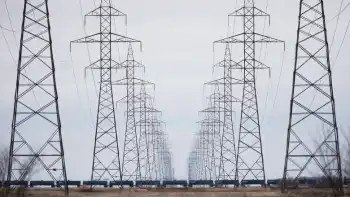
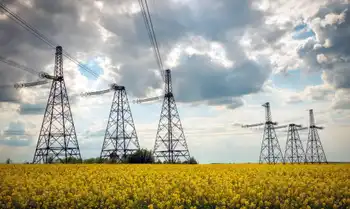
The Iowa Utilities Board recently did not approve the applications of Interstate Power and Light Company and MidAmerican Energy Company to transfer control of their electric transmission assets to an independent company (TRANSLink).=

The IUB found that more time was needed to study concepts presented in the case. Questions regarding regulatory jurisdiction persist, and the position of the Federal Energy Regulatory Commission (FERC) on the formation of regional transmission organizations (RTOs) remains unsettled. The IUB encourages both utilities to file new applications as the process of regionalizing transmission service evolves.

“This was a tough decision,” said IUB Chair Diane Munns. “The utility companies worked very hard to put these reorganization proposals together. We commend them for that. Timing was key to this decision as more information is needed and we were facing a statutory deadline. It is still very early in this whole process, which is why we will encourage the utility companies to refile.”

More than two years ago, the FERC ordered utilities to join RTOs, but did not require a particular mode of participation. TRANSLink represents the applicantsÂ’ proposed means for meeting the FERC transmission requirements, but the FERC stance on the RTO process has changed since the TRANSLink proposal was filed with the IUB.

The IUB decided on June 4 that evidence in the case did not adequately demonstrate optimal cost-effective RTO participation, although it did acknowledge the proposals could possibly provide customer benefits such as lower wholesale electricity costs.

The IUB determined that the proposed TRANSLink model might limit its authority to review the transmission costs of Interstate and MidAmerican, which could adversely affect rated paid by customers. The IUB has concerns about InterstateÂ’s proposal to contribute its transmission assets and the risk this might impose on Iowa customers. Board members felt this situation warranted further investigation.

Reorganization applications were filed by Interstate on Nov. 26, 2002, and by MidAmerican on Dec. 18, 2002. Interstate proposed to transfer ownership of its transmission assets, while MidAmerican sought transfer of control through a lease agreement. The board consolidated the cases. Intervenors in the case were the Office Consumer Advocate, TRANSLink, the Iowa Consumers Coalition, Deere and Company, Resale Power Group of Iowa, Central Iowa Power Cooperative and Com Bell Power Cooperative.

Related News
N.S. senior suspects smart meter to blame for shocking $666 power bill

Nova Scotia Power smart meter billing raises concerns amid estimated billing, catch-up bills, and COVID-19 meter reading delays, after seniors report doubled electricity usage and higher utility charges despite consistent consumption and on-time payments.


Key Points

Smart meter billing uses digital reads, limits estimates, and may trigger catch-up charges after reading suspensions.

✅ COVID-19 reading pause led to estimated bills and later catch-ups

✅ Smart meters reduce reliance on estimated billing errors

✅ Customers can seek payment plans and bill reviews


A Nova Scotia senior says she couldn't believe her eyes when she opened her most recent power bill. 

Gloria Chu was billed $666 -- more than double what she normally pays, and similar spikes such as rising electricity bills in Calgary have drawn attention.

As someone who always pays her bi-monthly Nova Scotia Power bill in full and on time, Chu couldn't believe it.

According to her bill, her electricity usage almost tripled during the month of May, compared to last year, and is even more than it was last winter, and with some utilities exploring seasonal power rates customers may see confusing swings.

She insists she and her husband aren't doing anything differently -- but one thing has changed.

"I have had a problem since they put the smart meter in," said Chu, who lives in Upper Gulf Shore, N.S.

Chu got a big bill right after the meter was installed in January, too. That one was more than $530.

She paid it, but couldn't understand why it was so high.

As for this bill, she says she just can't afford it, especially amid a recently approved 14% rate hike in Nova Scotia.

"That's all of my CPP," Chu said. "Actually, it's more than my CPP."

Chu says a neighbor up the road who also has a smart meter had her bill double, too. In nearby Pugwash, she says some residents have seen an increase of about $20-$30.

Nova Scotia Power had put a pause on installing smart meters because of the COVID-19 pandemic, but it has resumed as of June 1, with the goal of upgrading 500,000 meters by 2021, even as in other provinces customers have faced fees for refusing smart meters during similar rollouts.

In this case, the utility says it's not the meter that's the problem, and notes that in New Brunswick some old meters gave away free electricity even as the pandemic forced Nova Scotia Power to suspend meter readings for two months.

"As a result, every one of our customers in Nova Scotia received an estimated bill," said Jennifer parker, Nova Scotia Power's director of customer care.

The utility estimated Chu's bill at $182 -- less than she normally pays -- so her latest bill is considered a catch-up bill after meter readings resumed last month.

Parker admits how estimates are calculated isn't perfect.

"There would be a lot of customers who probably had a more accurate bill because of the way that we estimate, and that's actually one of things that smart meters will get rid of, is that we won't need to do estimated billing," Parker said.

Chu isn't quite convinced.

"It is pretty smart for the power company, but it's not smart for us," she said with a laugh.

Nova Scotia Power has put a hold on her bill and says it will work with Chu on an affordable solution, though the province cannot order the utility to lower rates which limits what can be offered.

She just hopes to never see a big bill like this again, while elsewhere in Newfoundland and Labrador a lump-sum electricity credit is being provided to help customers.


Related News

View more

Barakah Unit 1 reaches 100% power as it steps closer to commercial operations, due to begin early 2021

Barakah Unit 1 100 Percent Power signals the APR-1400 reactor delivering 1400MW of clean baseload electricity to the UAE grid, advancing decarbonisation, reliability, and Power Ascension Testing milestones ahead of commercial operations in early 2021.


Key Points

The milestone where Unit 1 reaches full 1400MW output to the UAE grid, providing clean, reliable baseload electricity.

✅ Delivers 1400MW from a single generator to the UAE grid

✅ Enables clean, reliable baseload power with zero operational emissions

✅ Completes key Power Ascension Testing before commercial operations


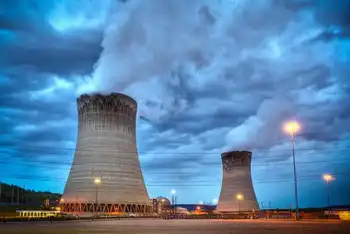
The Emirates Nuclear Energy Corporation, ENEC, has announced that its operating and maintenance subsidiary, Nawah Energy Company, Nawah, has successfully achieved 100% of the rated reactor power capacity for Unit 1 of the Barakah Nuclear Energy Plant. This major milestone, seen as a crucial step in Abu Dhabi towards completion, brings the Barakah plant one step closer to commencing commercial operations, scheduled in early 2021.

100% power means that Unit 1 is generating 1400MW of electricity from a single generator connected to the UAE grid for distribution. This milestone makes the Unit 1 generator the largest single source of electricity in the UAE.

The Barakah Nuclear Energy Plant is the largest source of clean baseload electricity in the country, capable of providing constant and reliable power in a sustainable manner around the clock. This significant achievement accelerates the decarbonisation of the UAE power sector, while also supporting the diversification of the Nation’s energy portfolio as it transitions to cleaner electricity sources, similar to the steady development in China of nuclear energy programs now underway.

The accomplishment follows shortly after the UAE’s celebration of its 49th National Day, providing a strong example of the country’s progress as it continues to advance towards a sustainable, clean, secure and prosperous future, having made the UAE the first Arab nation to open a nuclear plant as it charts this path. As the Nation looks towards the next 50 years of achievements, the Barakah plant will generate up to 25 percent of the country’s electricity, while also acting as a catalyst of the clean carbon future of the Nation.

Mohamed Ibrahim Al Hammadi, Chief Executive Officer of ENEC said: "We are proud to deliver on our commitment to power the growth of the UAE with safe, clean and abundant electricity. Unit 1 marks a new era for the power sector and the future of the clean carbon economy of the Nation, with the largest source of electricity now being generated without any emissions. I am proud of our talented UAE Nationals, working alongside international experts who are working to deliver this clean electricity to the Nation, in line with the highest standards of safety, security and quality." Nawah is responsible for operating Unit 1 and has been responsible for safely and steadily raising the power levels since it commenced the start-up process in July, and connection to the grid in August.

Achieving 100% power is one of the final steps of the Power Ascension Testing (PAT) phase of the start-up process for Unit 1. Nawah’s highly skilled and certified nuclear operators will carry out a series of tests before the reactor is safely shut down in preparation for the Check Outage. During this period, the Unit 1 systems will be carefully examined, and any planned or corrective maintenance will be performed to maintain its safety, reliability and efficiency prior to the commencement of commercial operations.

Ali Al Hammadi, Chief Executive Officer of Nawah, said: "This is a key achievement for the UAE, as we safely work through the start-up process for Unit 1 of the Barakah plant. Successfully reaching 100% of the rated power capacity in a safe and controlled manner, undertaken by our highly trained and certified nuclear operators, demonstrates our commitment to safe, secure and sustainable operations as we now advance towards our final maintenance activities and prepare for commercial operations in 2021." The Power Ascension Testing of Unit 1 is overseen by the independent national regulator – the Federal Authority for Nuclear Regulation (FANR), which has conducted 287 inspections since the start of Barakah’s development. These independent reviews have been conducted alongside more than 40 assessments and peer reviews by the International Atomic Energy Agency, IAEA, and World Association of Nuclear Operators, WANO, reflecting milestones at nuclear projects worldwide that benchmark safety and performance.

This is an important milestone for the commercial performance of the Barakah plant. Barakah One Company, ENEC’s subsidiary in charge of the financial and commercial activities of the Barakah project signed a Power Purchase Agreement, PPA, with the Emirates Water and Electricity Company, EWEC, in 2016 to purchase all of the electricity generated at the plant for the next 60 years. Electricity produced at Barakah feeds into the national grid in the same manner as other power plants, flowing to homes and business across the country.

This milestone has been safely achieved despite the challenges of COVID-19. Since the beginning of the global pandemic, ENEC, and subsidiaries Nawah and Barakah One Company, along with companies that form Team Korea, including Korea Hydro & Nuclear Power, with KHNP’s work in Bulgaria illustrating its global role, have worked closely together, in line with all national and local health authority guidelines, to ensure the highest standards for health and safety are maintained for those working on the project. ENEC and Nawah’s robust business continuity plans were activated, alongside comprehensive COVID-19 prevention and management measures, including access control, rigorous testing, and waste water sampling, to support health and wellbeing.

The Barakah Nuclear Energy Plant, located in the Al Dhafra region of the Emirate of Abu Dhabi, is one of the largest nuclear energy new build projects in the world, with four APR-1400 units. Construction of the plant began in 2012 and has progressed steadily ever since. Construction of Units 3 and 4 are in the final stages with 93 percent and 87 percent complete respectively, benefitting from the experience and lessons learned during the construction of Units 1 and 2, while the construction of the Barakah Plant as a whole is now more than 95 percent complete.

Once the four reactors are online, Barakah Plant will deliver clean, efficient and reliable electricity to the UAE grid for decades to come, providing around 25 percent of the country’s electricity and, as other nations like Bangladesh expand with IAEA assistance, reinforcing global decarbonisation efforts, preventing the release of up to 21 million tons of carbon emissions annually – the equivalent of removing 3.2 million cars off the roads each year.


Related News

View more

Two-thirds of the U.S. is at risk of power outages this summer

Home Energy Independence reduces electricity costs and outage risks with solar panels, EV charging, battery storage, net metering, and smart inverters, helping homeowners offset tiered rates and improve grid resilience and reliability.


Key Points

Home Energy Independence pairs solar, batteries, and smart EV charging to lower bills and keep power on during outages.

✅ Offset rising electricity rates via solar and net metering

✅ Add battery storage for backup power and peak shaving

✅ Optimize EV charging to avoid tiered rate penalties


The Department of Energy recently warned that two-thirds of the U.S. is at risk of losing power this summer. It’s an increasingly common refrain: Homeowners want to be less reliant on the aging power grid and don’t want to be at the mercy of electric utilities due to rising energy costs and dwindling faith in the power grid’s reliability.

And it makes sense. While the inflated price of eggs and butter made headlines earlier this year, electricity prices quietly increased at twice the rate of overall inflation in 2022, even as studies indicate renewables aren’t making power more expensive overall, and homeowners have taken notice. In fact, according to Aurora Solar’s Industry Snapshot, 62% expect energy prices will continue to rise.

Homeowners aren’t just frustrated that electricity is pricey when they need it, they’re also worried it won’t be available at all when they feel the most vulnerable. Nearly half (48%) of homeowners are concerned about power outages stemming from weather events, or grid imbalances from excess solar in some regions, followed closely by outages due to cyberattacks on the power grid.

These concerns around reliability and cost are creating a deep lack of confidence in the power grid. Yet, despite these growing concerns, homeowners are increasingly using electricity to displace other fuel sources.

The electrification of everything
From electric heat pumps to electric stoves and clothes dryers, homeowners are accelerating the electrification of their homes. Perhaps the most exciting example is electric vehicle (EV) adoption and the need for home charging. With major vehicle makers committing to ambitious electric vehicle targets and even going all-electric in the future, EVs are primed to make an even bigger splash in the years to come.

The by-product of this electrification movement is, of course, higher electric bills because of increased consumption. Homeowners also risk paying more for every unit of energy they use if they’re part of a tiered pricing utility structure, where energy-insecure households often pay 27% more on electricity because customers are charged different rates based on the total amount of energy they use. Many new electric vehicle owners don’t realize this until they are deep into purchasing their new vehicle, or even when they open that first electric bill after the car is in their driveway.

Sure, this electrification movement can feel counterintuitive given the power grid concerns. But it’s actually the first step toward energy independence, and emerging models like peer-to-peer energy sharing could amplify that over time.

Balancing conflicting movements
The fact is that electrification is moving forward quickly, even among homeowners who are concerned about electricity prices and power grid reliability, and about why the grid isn’t yet 100% renewable in the U.S. This has the potential to lead to even more discontent with electric utilities and growing anxiety over access to electricity in extreme situations. There is a third trend, though, that can help reconcile these two conflicting movements: the growth of solar.

The popularity of solar is likely higher than you think: Nearly 77% of homeowners either have solar panels on their homes or are interested in purchasing solar. The Aurora Solar Industry Snapshot report also showed a nearly 40% year-over-year increase in residential solar projects across the U.S. in 2022, as the country moves toward 30% power from wind and solar overall, aligning with the Solar Energy Industries Association’s (SEIA) Solar Market Insight Report, which found, “Residential solar had a record year [in 2022] with nearly 6 GWdc of installations, representing 40% growth over 2021.”

It makes sense that finding ways to tamp down—even eliminate—growing bills caused by the electrification of homes is accelerating interest in solar, as more households weigh whether residential solar is worth it for their budgets, and residential solar installers are seeing this firsthand. The link between EVs and solar is a great proof point: Almost 80% of solar professionals said EV adoption often drives new interest in solar. 


Related News

View more

The Evolution of Electric Vehicle Charging Infrastructure in the US

US EV Charging Infrastructure is evolving with interoperable NACS and CCS standards, Tesla Supercharger access, federal funding, ultra-fast charging, mobile apps, and battery advances that reduce range anxiety and expand reliable, nationwide fast-charging access.


Key Points

Nationwide network, standards, and funding enabling fast, interoperable EV charging access for drivers across the US.

✅ NACS and CCS interoperability expands cross-network access

✅ Tesla Superchargers opening to more brands accelerate adoption

✅ Federal funding builds fast chargers along highways and communities


The landscape of electric vehicle (EV) charging infrastructure in the United States is rapidly evolving, driven by technological advancements, collaborative efforts between automakers and charging networks across the country, and government initiatives to support sustainable transportation.

Interoperability and Collaboration

Recent developments highlight a shift towards interoperability among charging networks, even as control over charging continues to be contested across the market today. The introduction of the North American Charging Standard (NACS) and the adoption of the Combined Charging System (CCS) by major automakers underscore efforts to standardize charging protocols. This move aims to enhance convenience for EV drivers by allowing them to use multiple charging networks seamlessly.

Tesla's Role and Expansion

Tesla, a trailblazer in the EV industry, has expanded its Supercharger network to accommodate other EV brands. This initiative represents a significant step towards inclusivity, addressing range anxiety and supporting the broader adoption of electric vehicles. Tesla's expansive network of fast-charging stations across the US continues to play a pivotal role in shaping the EV charging landscape.

Government Support and Infrastructure Investment

The federal government's commitment to infrastructure development is crucial in advancing EV adoption. The Bipartisan Infrastructure Law allocates substantial funding for EV charging station deployment along highways and in underserved communities, while automakers plan 30,000 chargers to complement public investment today. These investments aim to expand access to charging infrastructure, promote economic growth, and reduce greenhouse gas emissions associated with transportation.

Technological Advancements and User Experience

Technological innovations in EV charging, including energy storage and mobile charging solutions, continue to improve user experience and efficiency. Ultra-fast charging capabilities, coupled with user-friendly interfaces and mobile apps, simplify the charging process for consumers. Advancements in battery technology also contribute to faster charging times and increased vehicle range, enhancing the practicality and appeal of electric vehicles.

Challenges and Future Outlook

Despite progress, challenges remain in scaling EV charging infrastructure to meet growing demand. Issues such as grid capacity constraints are coming into sharp focus, alongside permitting processes and funding barriers that necessitate continued collaboration between stakeholders. Addressing these challenges is crucial in supporting the transition to sustainable transportation and achieving national climate goals.

Conclusion

The evolution of EV charging infrastructure in the United States reflects a transformative shift towards sustainable mobility solutions. Through interoperability, government support, technological innovation, and industry collaboration, stakeholders are paving the way for a robust and accessible charging ecosystem. As investments and innovations continue to shape the landscape, and amid surging U.S. EV sales across 2024, the trajectory of EV infrastructure development promises to accelerate, ensuring reliable and widespread access to charging solutions that support a cleaner and greener future.


Related News

View more

New president at Manitoba Hydro to navigate turmoil at Crown corporation

Jay Grewal Manitoba Hydro Appointment marks the first woman CEO at the Crown utility, amid debt, rate increase plans, privatization debate, and Metis legal challenge, following board turmoil and Premier Pallister's strained relations.


Key Points

The selection of Jay Grewal as Manitoba Hydro's first woman CEO amid debt, rate hikes, and legal disputes.

✅ First woman CEO of Manitoba Hydro

✅ Faces debt, rate hikes, and project overruns

✅ Amid privatization debate and Metis legal action


The Manitoba government has appointed a new president and chief executive officer at its Crown-owned energy utility.

Jay Grewal becomes the first woman to head Manitoba Hydro, and takes over the top spot as the utility faces mounting financial challenges, rising electricity demand and turmoil.

Grewal has previously held senior roles at Capstone Mining Corp and B.C. Hydro, and is currently president of the Northwest Territories Power Corporation.

She will replace outgoing president Kelvin Shepherd, who recently announced he is retiring, on Feb. 4.

The utility was hit by the sudden resignations of nine of its 10 board members in March, who said they had been unable to meet with Premier Brian Pallister to discuss pressing issues like servicing energy-intensive customers facing the utility.

Manitoba Hydro is also in the middle of a battle between the Progressive Conservative government and the Manitoba Metis Federation over the cancellation of two agreements that would have given the Metis $87 million.

The federation has launched a legal challenge over one deal and says its likely going to do the same over the second agreement.

Grewal also takes over the utility at a time when it has racked up billions of dollars in debt building new generating stations and transmission lines. Manitoba Hydro has told the provincial regulatory agency it needs rate increases of nearly eight per cent a year for the next few years to help pay for the projects.

The utility also exports electricity, with deals such as SaskPower's purchase agreement expanding sales to Saskatchewan.

"Ms. Grewal is a proven leader, with extensive senior leadership experience in the utility, resource and consulting sectors," Crown Services Minister Colleen Mayer said in a written statement Thursday.

The Opposition New Democrats said Grewal's appointment is a sign the government wants to privatize Manitoba Hydro. Grewal's time at B.C. Hydro coincided with the privatization of some parts of that Crown utility, the NDP said.

The B.C. premier at the time, Gordon Campbell, was recently hired by Manitoba to review two major projects that ran over-budget and have added to the provincial debt.

NDP Leader Wab Kinew asked Pallister in the legislature Thursday to promise not to privatize Manitoba Hydro. Pallister would only point to a law that requires a referendum to be held before a Crown entity can be sold off.

"We stand by that (law)," Pallister said. "We believe Manitobans are the proper decision-makers in respect of any of the future structuring of Manitoba Hydro."


Related News

View more

As California enters a brave new energy world, can it keep the lights on?

California Grid Transition drives decarbonization with renewable energy, EV charging, microgrids, and energy storage, while tackling wildfire risk, aging infrastructure, and cybersecurity threats to build grid resilience and reliability across a rapidly electrifying economy.


Key Points

California Grid Transition is the statewide shift to renewables, storage, EVs, and resilient, secure infrastructure.

✅ Integrates solar, wind, storage, and demand response at scale

✅ Expands microgrids and DERs to enhance reliability and resilience

✅ Addresses wildfire, aging assets, and cybersecurity risks


Gretchen Bakke thinks a lot about power—the kind that sizzles through a complex grid of electrical stations, poles, lines and transformers, keeping the lights on for tens of millions of Californians who mostly take it for granted.

They shouldn’t, says Bakke, who grew up in a rural California town regularly darkened by outages. A cultural anthropologist who studies the consequences of institutional failures, she says it’s unclear whether the state’s aging electricity network and its managers can handle what’s about to hit it, as U.S. blackout risks continue to mount.

California is casting off fossil fuels to become something that doesn’t yet exist: a fully electrified state of 40 million people. Policies are in place requiring a rush of energy from renewable sources such as the sun and wind and calling for millions of electric cars that will need charging—changes that will tax a system already fragile, unstable and increasingly vulnerable to outside forces.

“There is so much happening, so fast—the grid and nearly everything about energy is in real transition, and there’s so much at stake,” said Bakke, who explores these issues in a book titled simply, “The Grid.”

The state’s task grew more complicated with this week’s announcement that Pacific Gas and Electric, which provides electricity for more than 5 million customer accounts, intends to file for bankruptcy in the face of potentially crippling liabilities from wildfires. But the reshaping of California’s energy future goes far beyond the woes of a single company.

The 19th-century model of one-way power delivery from utility companies to customers is being reimagined. Major utilities—and the grid itself—are being disrupted by rooftops paved with solar panels and the rise of self-sufficient neighborhood mini-grids. Whole cities and counties are abandoning big utilities and buying power from wholesalers and others of their choosing.

With California at the forefront of a new energy landscape, officials are racing to design a future that will not just reshape power production and delivery but also dictate how we get around and how our goods are made. They’re debating how to manage grid defectors, weighing the feasibility of an energy network that would expand to connect and serve much of the West and pondering how to appropriately regulate small power producers.

“We are in the depths of the conversation,” said Michael Picker, president of the state Public Utilities Commission, who cautions that even as the system is being rebooted, like repairing a car while driving in practice, there’s no real plan for making it all work.

Such transformation is exceedingly risky and potentially costly. California still bears the scars of having dropped its regulatory reins some 20 years ago, leaving power companies to bilk the state of billions of dollars it has yet to completely recover. And utility companies will undoubtedly pass on to their customers the costs of grid upgrades to defend against natural and man-made threats.

Some weaknesses are well known—rodents and tree limbs, for example, are common culprits in power outages, even as longer, more frequent outages afflict other parts of the U.S. A gnawing squirrel squeezed into a transformer on Thanksgiving Day three years ago, shutting off power to parts of Los Angeles International Airport. The airport plans to spend $120 million to upgrade its power plant.

But the harsh effects of climate change expose new vulnerabilities. Rising seas imperil coastal power plants. Electricity infrastructure is both threatened by and implicated in wildfires. Picker estimates that utility operations are related to one in 10 wildland fires in California, which can be sparked by aging equipment and winds that send tree branches crashing into power lines, showering flammable landscapes with sparks.

California utilities have been ordered to make their lines and equipment more fire-resistant as they’re increasingly held accountable for blazes they cause. Pacific Gas and Electric reported problems with some of its equipment at a starting point of California’s deadliest wildfire, which killed at least 86 people in November in the town of Paradise. The cause of the fire is under investigation.

New and complex cyber threats are more difficult to anticipate and even more dangerous. Computer hackers, operating a world away, can—and have—shut down electricity systems, toggling power on and off at will, and even hijacked the computers of special teams dispatched to restore control.

Thomas Fanning, CEO of Southern Co., one of the country’s largest utilities, recently disclosed that his teams have fended off multiple attempts to hack a nuclear power plant the firm operates. He called grid hacking “the most important under-reported war in American history.”

However, if you’ve got what seems like an insoluble problem requiring a to-the-studs teardown and innovative rebuild, California is a good place to start. After all, the first electricity grid was built in San Francisco in 1879, three years before Thomas Edison’s power station in New York City. (Edison’s plant burned to the ground a decade later.)

California’s energy-efficiency regulations have helped reduce statewide energy use, which peaked a decade ago and is on the decline, somewhat easing pressure on the grid. The major utilities are ahead of schedule in meeting their obligation to obtain power from renewable sources.

California’s universities are teaming with national research labs to develop cutting-edge solutions for storing energy produced by clean sources. California is fortunate in the diversity of its energy choices: hydroelectric dams in the north, large-scale solar operations in the Mojave Desert to the east, sprawling windmill farms in mountain passes and heat bubbling in the Geysers, the world’s largest geothermal field north of San Francisco. A single nuclear-power plant clings to the coast near San Luis Obispo, but it will be shuttered in 2025.

But more renewable energy, accessible at the whims of weather, can throw the grid off balance. Renewables lack the characteristic that power planners most prize: dispatchability, ready when called on and turned off when not immediately needed. Wind and sun don’t behave that way; their power is often available in great hunks—or not at all, as when clouds cover solar panels or winds drop.

In the case of solar power, it is plentiful in the middle of the day, at a time of low demand. There’s so much in California that most days the state pays its neighbors to siphon some off,  lest the excess impede the grid’s constant need for balance—for a supply that consistently equals demand.

So getting to California’s new goals of operating on 100 percent clean energy by 2045 and having 5 million electric vehicles within 12 years will require a shift in how power is acquired and managed. Consumers will rely more heavily on battery storage, whose efficiency must improve to meet that demand.


Related News

View more

Sign Up for Electricity Forum’s Newsletter

Stay informed with our FREE Newsletter — get the latest news, breakthrough technologies, and expert insights, delivered straight to your inbox.

Electricity Today T&D Magazine Subscribe for FREE

Stay informed with the latest T&D policies and technologies.
  • Timely insights from industry experts
  • Practical solutions T&D engineers
  • Free access to every issue

Live Online & In-person Group Training

Advantages To Instructor-Led Training – Instructor-Led Course, Customized Training, Multiple Locations, Economical, CEU Credits, Course Discounts.

Request For Quotation

Whether you would prefer Live Online or In-Person instruction, our electrical training courses can be tailored to meet your company's specific requirements and delivered to your employees in one location or at various locations.