Power Shortages Spark Anger in Iraq

By ABCNews.com


NFPA 70b Training - Electrical Maintenance

Our customized live online or in‑person group training can be delivered to your staff at your location.

  • Live Online
  • 12 hours Instructor-led
  • Group Training Available
Regular Price:
$699
Coupon Price:
$599
Reserve Your Seat Today
Few people in Iraq were happier to see the Americans come and Saddam Hussein go than Iraqi Airways pilot Adnan Amin.

Amin hasn't been able to fly since his country was cut off from the world in 1989. But as he walks the five floors up to his apartment each day, he is thinking not about democracy, but electricity.

The Amin family kitchen is cluttered with plastic bottles filled with water. In one of the two stainless steel sinks sits a portable camping stove -- its burner is on high and a battered kettle rumbles as it spits steam.

The temperature outside is 115 degrees Fahrenheit.

The Amins live a perfectly modern life: refrigerator, air conditioner, television. But nothing works, not even the building's water pump. Because, as is usual here in Baghdad these days, the electricity isn't working.

On a good day, the Amins will have power for eight hours, but never all at once. And they never know when. Amin says the electricity supply in Baghdad today is far worse than it was before the war.

"Iraq without electricity -- you can't live here," says Amin. "It's very, very hot. No air conditioning. No water. We can't live. So I need electricity more than democracy."

Employed But Idle

Khalid Ayub Majid owns a small metal lathing shop in central Baghdad. It is a scene worthy of Dickens. The grimy shop is open to the street, and the workers sit at their machines wiping the sweat onto their oil-stained T-shirts. Some are fanning themselves, trying to stir the heavy hot air.

The seven men who work in the shop are among the luckiest in Iraq. They have jobs. With Saddam's centralized, state-controlled economy in tatters and so much of government infrastructure bombed and looted, it is estimated that unemployment in this country is 70 percent.

But the men here at the lathe shop are idle. Without power, their lathes cannot run. They wait, just in case the power comes back. While they wait, there is no work. No pay.

Majid says he knows who to blame. "Every sane person," he says, "knows that if America wants to fix the electricity they can do it."

Fallen Towers

Travel more than an hour west of Baghdad, into the desert past Abu Ghraib, and you quickly see the scale of the problem. Two major electric transmission lines pass through here, and together they are the source of 15 percent of Baghdad's power supply. But not today.

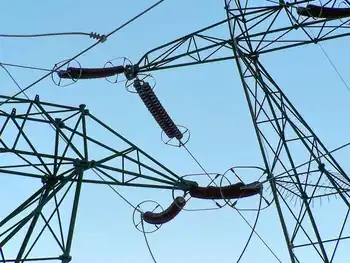
More than 30 towers on the north line fell like dominoes when the area was bombed during the war. The mangled towers look like an orderly row of giraffes, each one with its neck bent to the ground. Much of the thick electric cable is gone, stripped by looters.

A few hundred yards away a crew of 20 men is trying to repair the south line. It worked until over a month ago, when someone -- perhaps a looter, perhaps a Saddam loyalist determined to undermine U.S. rebuilding efforts here -- took a torch to the legs of four towers. They tumbled.

The men working here are Iraqis, employees of the National Electricity Commission. They have a truck with a crane on it, but the rest of their heavy equipment was looted in the chaos that followed the war. They have no spare parts. They struggle to restore one of the fallen towers, cannibalizing its own parts to make it stand.

If this operation works, the tower will be shorter than its neighbors but tall enough to carry cables.

At midday, the sun blazes above the open desert. The metal is so hot that even though the workers wear gloves, they pour water onto it before they touch it. The water sizzles and boils.

Fahd Mtafi, the electrical engineer in charge here, points to where the saboteurs have sliced the tower.

Mtafi says with proper equipment, he could have the four towers up in a few days.

When asked when the line will be running again, he says, "It will take a few weeks. The problem is, after we fix it, somebody will sabotage it again."

His biggest concern, though, is security. Other crews have been attacked and killed. His men have no guns, no protection.

"We need equipment," he pleads, "but we need protection too."

A War in Itself

The U.S. adviser to the Iraq Electricity Commission is Peter Gibson, an Army Corps of Engineers employee. It's his job to work with Iraqis to get the power back on. Faced with a badly maintained power system and constant looting, he has not found his work easy.

"We are fighting a war," says Gibson. "We're trying to bring back electricity -- that is a war in itself. To mechanically bring all these things back together, it is a war it's not the same kind of killing war, but it's a war."

It is a war the United States cannot afford to lose if it wants the Iraqi people to support the rebuilding efforts here. The message is clear: There can be no democracy without electricity.

Related News

West Coast consumers won't benefit if Trump privatizes the electrical grid

BPA Privatization would sell the Bonneville Power Administration's transmission lines, raising FERC-regulated grid rates for ratepayers, impacting hydropower and the California-Oregon Intertie under the Trump 2018 budget proposal in the Pacific Northwest region.


Key Points

Selling Bonneville's transmission grid to private owners, raising rates and returns, shifting costs to ratepayers.

✅ Trump 2018 budget targets BPA transmission assets for sale.

✅ Higher capital costs, taxes, and profit would raise transmission rates.

✅ California-Oregon Intertie and hydropower flows face price impacts.


President Trump's 2018 budget proposal is so chock-full of noxious elements — replacing food stamps with "food boxes," drastically cutting Medicaid and Medicare, for a start — that it's unsurprising that one of its most misguided pieces has slipped under the radar.

That's the proposal to privatize the government-owned Bonneville Power Administration, which owns about three-quarters of the high-voltage electric transmission lines in a region that includes California, Washington state and Oregon, serving more than 13.5 million customers. By one authoritative estimate, any such sale would drive up the cost of transmission by 26%-44%.

The $5.2-billon price cited by the Trump administration, moreover, is nearly 20% below the actual value of the Bonneville grid — meaning that a private buyer would pocket an immediate windfall of $1.2 billion, at the expense of federal taxpayers and Bonneville customers.

Trump's plan for Portland, Ore.-based Bonneville is part of a larger proposal to sell off other government-owned electricity bodies, including the Colorado-based Western Area Power Administration and the Oklahoma-based Southwestern Power Administration. But Bonneville is by far the largest of the three, accounting for nearly 90% of the total $5.8 billion the budget anticipates collecting from the sales. The proposal is also part of the administration's

Both plans are said to be politically dead-on-arrival in Washington. But they offer a window into the thinking in the Trump White House.

"The word 'muddle' comes to mind," says Robert McCullough, a respected Portland energy consultant, referring to the justification for the privatization sale included in the Trump budget.

The White House suggests that selling the Bonneville grid would result in lower costs. But that narrative, McCullough wrote in a blistering assessment of the proposal, "displays a severe lack of understanding about the process of setting transmission rates."

McCullough's assessment is an update of a similar analysis he performed when the privatization scheme was first raised by the Trump administration last year. In that analysis issued in June, McCullough said the proposal "raises the question of why these valuable assets would be sold at a discount — and who would get the benefit of the discounted price."

The implications of a sale could be dire for Californians. Bonneville is the majority owner of the California-Oregon Intertie, an electrical transmission system that carries power, including Columbia River-generated hydropower and other clean-energy generation in British Columbia that supports the regional exchange, south to California in the summer and excess California generation to the Pacific Northwest in the winter.

But the idea has drawn fire throughout the region. When it was first broached last year, the Public Power Council, an association of utilities in the Northwest, assailed it as an apparent "transfer of value from the people of the Northwest to the U.S. Treasury," drawing parallels to Manitoba Hydro governance issues elsewhere.

The region's political leaders had especially harsh words for the idea this time around. "Oregonians raised hell last year when Trump tried to raise power bills for Pacific Northwesterners by selling off Bonneville Power, and yet his administration is back at it again," Sen. Ron Wyden (D-Ore.) said after the idea reappeared. "Our investment shouldn't be put up for sale to free up money for runaway military spending or tax cuts for billionaires." Sen. Maria Cantwell (D-Wash.) promised in a statement to work to "stop this bad idea in its tracks."

The notion of privatizing Bonneville predates the Trump administration; it was raised by Bill Clinton and again by George W. Bush, who thought the public would gain if the administration could sell its power at market rates. Both initiatives failed.

The same free-enterprise ideology underlies the Trump proposal. Privatizing the transmission lines "encourages a more efficient allocation of economic resources and mitigates unnecessary risk to taxpayers," the budget asserts. "Ownership of transmission assets is best carried out by the private sector where there are appropriate market and regulatory incentives."

But that's based on a misunderstanding of how transmission rates are set, McCullough says. Transmission is essentially a monopoly enterprise, with rates overseen by the Federal Energy Regulatory Commission based on the grid's costs, and with federal scrutiny of public utilities such as the TVA underscoring that oversight. There's very little in the way of market "incentives" involved in transmission, since no one has come forward to build a competing grid.

Those include the owners' cost of capital — which would be much higher for a private owner than a government agency, McCullough observes, as Hydro One investor uncertainty demonstrates in practice. A private owner, unlike the government-owned Bonneville, also would owe federal income taxes, which would be passed on to consumers.

Then there's the profit motive. Bonneville "currently sells and delivers its power at cost," McCullough wrote last year. "Under a private regime, an investor-owned utility would likely charge a higher rate of return, a pattern seen when UK network profits drew regulatory rebukes."

None of these considerations appears to have been factored into the White House budget proposal. "Either there's an unsophisticated person at the Office of Management and Budget thinking up these numbers himself," McCullough told me, "or there would seem to be ongoing negotiations with an unidentified third party." No such buyer has emerged in the past, however.

What's left is a blind faith in the magic of the market, compounded by ignorance about how the transmission market operates. Put it together, and there's reason to wonder if Trump is even serious about this plan.


Related News

View more

Wind and Solar Energy Surpass Coal in U.S. Electricity Generation

Wind and Solar Surpass Coal in U.S. power generation, as EIA data cites falling LCOE, clean energy incentives, grid upgrades, and battery storage driving renewables growth, lower emissions, jobs, and less fossil fuel reliance.


Key Points

An EIA-noted milestone where U.S. renewables outproduce coal, driven by lower LCOE, policy credits, and grid upgrades.

✅ EIA data shows wind and solar exceed coal generation

✅ Falling LCOE boosts project viability across the grid

✅ Policies and storage advances strengthen reliability


In a landmark shift for the energy sector, wind and solar power have recently surpassed coal in electricity generation in the United States. This milestone, reported by Warp News, marks a significant turning point in the country’s energy landscape and underscores the growing dominance of renewable energy sources.

A Landmark Achievement

The achievement of wind and solar energy generating more electricity than coal is a landmark moment in the U.S. energy sector. Historically, coal has been a cornerstone of electricity production, providing a substantial portion of the nation's power needs. However, recent data reveals a transformative shift, with renewables surpassing coal for the first time in 130 years, as renewable energy sources, particularly wind and solar, have begun to outpace coal in terms of electricity generation.

The U.S. Energy Information Administration (EIA) reported that in recent months, wind and solar combined produced more electricity than coal, including a record 28% share in April, reflecting a broader trend towards cleaner energy sources. This development is driven by several factors, including advancements in renewable technology, decreasing costs, and a growing commitment to reducing greenhouse gas emissions.

Technological Advancements and Cost Reductions

One of the key drivers behind this shift is the rapid advancement in wind and solar technologies, as wind power surges in the U.S. electricity mix across regions. Improvements in turbine and panel efficiency have significantly increased the amount of electricity that can be generated from these sources. Additionally, technological innovations have led to lower production costs, making wind and solar energy more competitive with traditional fossil fuels.

The cost of solar panels and wind turbines has decreased dramatically over the past decade, making renewable energy projects more economically viable. According to Warp News, the levelized cost of electricity (LCOE) from solar and wind has fallen to levels that are now comparable to or lower than coal-fired power. This trend has been pivotal in accelerating the transition to renewable energy sources.

Policy Support and Investment

Government policies and incentives have also played a crucial role in supporting the growth of wind and solar energy, with wind now the most-used renewable electricity source in the U.S. helping drive deployment. Federal and state-level initiatives, such as tax credits, subsidies, and renewable energy mandates, have encouraged investment in clean energy technologies. These policies have provided the financial and regulatory support necessary for the expansion of renewable energy infrastructure.

The Biden administration’s focus on addressing climate change and promoting clean energy has further bolstered the transition. The Infrastructure Investment and Jobs Act and the Inflation Reduction Act, among other legislative efforts, have allocated significant funding for renewable energy projects, grid modernization, and research into advanced technologies.

Environmental and Economic Implications

The surpassing of coal by wind and solar energy has significant environmental and economic implications, building on the milestone when renewables became the second-most prevalent U.S. electricity source in 2020 and set the stage for further gains. Environmentally, it represents a major step forward in reducing carbon emissions and mitigating climate change. Coal-fired power plants are among the largest sources of greenhouse gases, and transitioning to cleaner energy sources is essential for meeting climate targets and improving air quality.

Economically, the shift towards wind and solar energy is creating new opportunities and industries. The growth of the renewable energy sector is generating jobs in manufacturing, installation, and maintenance. Additionally, the decreased reliance on imported fossil fuels enhances energy security and stabilizes energy prices.

Challenges and Future Outlook

Despite the progress, there are still challenges to address. The intermittency of wind and solar power requires advancements in energy storage and grid management to ensure a reliable electricity supply. Investments in battery storage technologies and smart grid infrastructure are crucial for overcoming these challenges and integrating higher shares of renewable energy into the grid.

Looking ahead, the trend towards renewable energy is expected to continue, with renewables projected to soon provide about one-fourth of U.S. electricity as deployment accelerates, driven by ongoing technological advancements, supportive policies, and a growing commitment to sustainability. As wind and solar power become increasingly cost-competitive and efficient, their role in the U.S. energy mix will likely expand, further displacing coal and other fossil fuels.

Conclusion

The surpassing of coal by wind and solar energy in U.S. electricity generation is a significant milestone in the transition to a cleaner, more sustainable energy future. This achievement highlights the growing importance of renewable energy sources and the success of technological advancements and supportive policies in driving this transition. As the U.S. continues to invest in and develop renewable energy infrastructure, the move away from coal represents a crucial step towards achieving environmental goals and fostering economic growth in the clean energy sector.


Related News

View more

Australia PM rules out taxpayer funded power plants amid energy battle

ACCC energy underwriting guarantee proposes government-backed certainty for new generation, cutting electricity prices and supporting gas, pumped hydro, renewables, batteries, and potentially coal-fired power, addressing market failure without direct subsidies.


Key Points

A tech-neutral, government-backed plan underwriting new generation revenue to increase certainty and cut power prices.

✅ Government guarantee provides a revenue floor for new generators.

✅ Technology neutral: coal, gas, renewables, pumped hydro, batteries.

✅ Intended to reduce bills by up to $400 and address market failure.


Australian Taxpayers won't directly fund any new power plants despite some Coalition MPs seizing on a new report to call for a coal-fired power station.

The Australian Competition and Consumer Commission recommended the government give financial certainty to new power plants, guaranteeing energy will be bought at a cheap price if it can't be sold, as part of an electricity market plan to avoid threats to supply.

It's part of a bid to cut up to $400 a year from average household power prices.

Prime Minister Malcolm Turnbull said the finance proposal had merit, but he ruled out directly funding specific types of power generation.

"We are not in the business of subsidising one technology or another," he told reporters in Queensland today.

"We've done enough of that. Frankly, there's been too much of that."

Renewable subsidies, designed in the 1990s to make solar and wind technology more affordable, have worked and will end in 2020.

Some Coalition MPs claim the ACCC's recommendation to underwrite power generation is vindication for their push to build new coal-fired power plants.

But ACCC chair Rod Sims said no companies had proposed building new coal plants - instead they're trying to build new gas projects, pumped hydro or renewable projects.

Opposition Leader Bill Shorten said Mr Turnbull was offering solutions years away, having overseen a rise in power prices over the past year.

"You don't just go down to K-Mart and get a coal-fired power station off the shelf," Mr Shorten told reporters, admitting he had not read the ACCC report.

Energy Minister Josh Frydenberg said the recommendation to underwrite new power generators had a lot of merit, as it would address a market failure highlighted by AEMO warnings about reduced reserves.

"What they're saying is the government needs to step in here to provide some sort of assurance," Mr Frydenberg told 9NEWS today.

He said that could include coal, gas, renewable energy or battery storage.

Deputy Nationals leader Bridget McKenzie said science should determine which technology would get the best outcomes for power bills, with a scrapping coal report suggesting it can be costly.

Mr Turnbull said there was strong support for the vast majority of the ACCC's 56 recommendations, but the government would carefully consider the report, which sets out a blueprint to cut electricity bills by 25 percent.

Acting Greens leader Adam Bandt said Australia should exit coal-fired power in favour of renewable energy to cut pollution.

In contrast, Canada has seen the Stop the Shock campaign advocate a return to coal power in some provinces.

The Australian Energy Council, which represents 21 major energy companies, said the government should consult on changes to avoid "unintended consequences".


Related News

View more

Greening Ontario's electricity grid would cost $400 billion: report

Ontario Electricity Grid Decarbonization outlines the IESO's net-zero pathway: $400B investment, nuclear expansion, renewables, hydrogen, storage, and demand management to double capacity by 2050 while initiating a 2027 natural gas moratorium.


Key Points

A 2050 plan to double capacity, retire gas, and invest $400B in nuclear, renewables, and storage for a net-zero grid.

✅ $400B over 25 years to meet net-zero electricity by 2050

✅ Capacity doubles to 88,000 MW; demand grows ~2% annually

✅ 2027 gas moratorium; build nuclear, renewables, storage


Ontario will need to spend $400 billion over the next 25 years in order to decarbonize the electricity grid and embrace clean power according to a new report by the province’s electricity system manager that’s now being considered by the Ford government.

The Independent System Electricity Operator (IESO) was tasked with laying out a path to reducing Ontario’s reliance on natural gas for electricity generation and what it would take to decarbonize the entire electricity grid by 2050.

Meeting the goal, the IESO concluded, will require an “aggressive” approach of doubling the electricity capacity in Ontario over the next two-and-a-half decades — from 42,000 MW to 88,000 MW — by investing in nuclear, hydrogen and wind and solar power while implementing conservation policies and managing demand.

“The process of fully eliminating emissions from the grid itself will be a significant and complex undertaking,” IESO president Lesley Gallinger said in a news release.

The road to decarbonization, the IESO said, begins with a moratorium on natural gas power generation starting in 2027 as long as the province has “sufficient, non-emitting supply” to meet the growing demands on the grid.

The approach, however, comes with significant risks.

The IESO said hydroelectric and nuclear facilities can take 10 to 15 years to build and if costs aren’t controlled the plan could drive up the price of clean electricity, turning homeowners and businesses away from electrification.

“Rapidly rising electricity costs could discourage electrification, stifle economic growth or hurt consumers with low incomes,” the report states.

The IESO said the province will need to take several “no regret” actions, including selecting sites and planning to construct new large-scale nuclear plants as well as hydroelectric and energy storage projects and expanding energy-efficiency programs beyond 2024.

READ MORE: Ontario faces calls to dramatically increase energy efficiency rebate programs

Ontario’s minister of energy didn’t immediately commit to implementing the recommendations, citing the need to consult with stakeholders first.

“I look forward to launching a consultation in the new year on next steps from today’s report, including the potential development of major nuclear, hydroelectric and transmissions projects,” Todd Smith said in a statement.

Currently, electricity demand is increasing by roughly two per cent per year, raising concerns Ontario could be short of electricity in the coming years as the manufacturing and transportation sectors electrify and as more sectors consider decarbonization.

At the same time, the province’s energy supply is facing “downward pressure” with the Pickering nuclear power plant slated to wind down operations and the Darlington nuclear generating station under active refurbishment.

To meet the energy need, the Ford government said it intended to extend the life of the Pickering plant until 2026.

READ MORE: Ontario planning to keep Pickering nuclear power station open until 2026

But to prepare for the increase, the Ontario government was told the province would also need to build new natural gas facilities to bridge Ontario’s electricity supply gap in the near term — a recommendation the Ford government agreed to.

The IESO said a request for proposals has been opened and the province is looking for host communities, with the expectation that existing facilities would be upgraded before projects on undeveloped land would be considered.

The IESO said the contract for any new facilities would expire in 2040, and all natural gas facilities would be retired in the 2040s.


Related News

View more

Europe's Renewables Are Crowding Out Gas as Coal Phase-Out Slows

EU Renewable Energy Shift is cutting gas dependence as wind and solar expand, reshaping Europe's power mix, curbing emissions, and pressuring coal use amid a supply crisis and rising natural gas prices.


Key Points

An EU trend where wind and solar growth reduce gas reliance, curb coal, and lower power-sector emissions.

✅ Wind and solar displace gas in EU power mix

✅ Coal use rises as gas prices surge

✅ Emissions fall, but not fast enough for 1.5 C target


The European Union’s renewable energy sources are helping reduce its dependence on natural gas, under the current European electricity pricing framework, that’s still costing the region dearly.

Renewables growth has helped reduce the EU’s dependence on gas, as wind and solar outpaced gas across the bloc last year, which has soared in price since the middle of last year as the region grapples with a supply crisis that’s dealt blows to industries as well as ordinary consumers’ pockets. More than half of new renewable generation since 2019 has replaced gas power, according to a study by London-based climate think tank Ember, with the rest replacing mainly nuclear and coal sources.

“These are moments and paradigm shifts when governments and businesses start taking this much more seriously,” said Charles Moore, the lead author on the study, amid Covid-19 responses accelerating the transition across Europe. “The alternatives are available, they are cheaper, and they are likely to get even cheaper and more competitive. Renewables are now an opportunity, not a cost.”

The high price of gas relative to coal has meant utilities are leaning more on coal as a back-up for renewable generation, as stunted hydro and nuclear output has constrained low-carbon alternatives in parts of Europe, which risks the trajectory of Europe’s phase-out of the dirtiest fossil fuel. Last year, the EU’s coal use jumped disproportionately high relative to the rise in power generation as high gas prices boosted the relative profitability of burning coal instead.


Europe Coal Use Jumps as Costly Gas Turns Firms to Dirty Fuel
EU power generation from renewables reached a record high in 2021 of 547 terawatt-hours last year, accounting for an 11% increase compared to two years before, according to Ember’s Europe Electricity Review. It’s more than doubled in a decade, representing a 157% increase since 2011. 

Gas use declined last year for the second year in a row, as Europe explores storing electricity in gas pipelines to leverage existing infrastructure, reaching a level 8.1% lower than 2019. By contrast, coal use fell just 3.3% in the same period. Put simply, wind and solar did a great job of replacing coal during 2011-2019 but since then renewables have mostly been nudging out gas-fired power stations.

Ember’s Moore warned that the slowing phase-out of coal might require legislation to accelerate. The International Energy Agency recommends OECD countries cease using coal by the end of the decade to ensure alignment with the Paris Agreement target of keeping the world’s temperature increase below 1.5 Celsius, with renewables poised to eclipse coal globally by the mid-2020s lending momentum. 

“Europe can accelerate the phasing out of coal by building more renewable energy and faster,” said Felicia Aminoff,  an energy-transition analyst at BloombergNEF. “Wind and solar have no fuel costs, so as soon as you have made the initial investments to build wind and solar capacity it will start replacing generation that uses any kind of fuel, whether it is coal or gas.”

Overall, EU power sector emissions fell at less than half the rate required to hit that target, Ember’s report said. Spain produced the largest emissions reduction in the last two years, with renewables adding about 25 TWh and gas falling 15 TWh, and in Germany renewables topped coal and nuclear for the first time to support the shift. In contrast, heavy use of coal dragged down the bloc’s climate progress in Poland, where coal use rose about 8 TWh and renewables gained only 4 TWh.


Related News

View more

Venezuela: Electricity Recovery Continues as US Withdraws Diplomatic Staff

Venezuela Power Outage cripples the national grid after a massive blackout; alleged cyber attacks at Guri Dam and Caracas, damaged transmission lines, CORPOELEC restoration, looting, water shortages, and sanctions pressure compound recovery.


Key Points

A March 2019 blackout crippling Venezuela's grid amid alleged cyber attacks, equipment failures, and slow restoration.

✅ Power restored partially after 96 hours across all states

✅ Alleged cyber attacks at Guri Dam and Caracas systems

✅ CORPOELEC urges reduced load during grid stabilization


Venezuelan authorities continue working to bring back online the electric grid following a massive outage that started on Thursday, March 7.

According to on-the-ground testimonies and official sources, power finally began to reach Venezuela’s western states, including Merida and Zulia, on Monday night, around 96 hours after the blackout started. Electricity has now been restored at least in some areas of every state, with authorities urging citizens, as seen in Ukraine's efforts to keep lights on during crisis, to avoid using heavy usage devices while efforts to restore the whole grid continue.

President Nicolas Maduro gave a televised address on Tuesday evening, offering more details about the alleged attack against the country’s electrical infrastructure. According to Maduro, both the computerized system in the Guri Dam, on Thursday afternoon, and the central electrical “brain” in Caracas, on Saturday morning, suffered cyber attacks, while recovery was delayed by physical attacks against transmission lines and electrical substations, a pattern seen in power outages in western Ukraine as well.

“The recovery has been a miracle by CORPOELEC (electricity) workers” he said, vowing that a “battle” had been won.

Maduro claimed that the attacks were directed from Chicago and Houston and that more evidence would be presented soon. The Venezuelan president had announced on Monday that two arrests were made in connection to alleged acts of sabotage against the communications system in the Guri Dam.

Venezuela’s electrical grid has suffered from poor maintenance and sabotage in recent years, with infrastructure strained by under-investment and Washington’s economic sanctions further compounding difficulties, with parallels to electricity inequality in California highlighting broader systemic challenges, though causes differ.

The extended power outage saw episodes of lootings take place, especially in the Zulia capital of Maracaibo. Food warehouses, supermarkets and a shopping mall were targeted according to reports and footage on social media.

Isolated episodes of protests and lootings were also reported in other cities, including some sectors of Caracas. A video spread on social media appeared to show a violent confrontation in the eastern city of Maturin in which a National Guardsman was shot dead.

While electricity has been gradually restored, public transportation and other services have yet to be reactivated, a contrast with U.S. grid resilience during COVID-19 where power systems remained stable, with the government suspending work and school activities until Wednesday.

In Caracas, attention has now turned to water. Shortages started to be felt after the water pumping system in the nearby Tuy valley was shut down amid the electricity blackout, underscoring that electricity is civilization in conflict zones, as interdependent systems cascade. Authorities announced on Tuesday afternoon that the system was due to resume supplying water to the capital metropolitan region.

Some communities protested the lack of water on Monday and long queues formed at water distribution points, with local authorities looking to send water tanks to supply communities and guarantee the normal functioning of hospitals.

The Venezuelan government has yet to release any information concerning casualties in hospitals, with NGO Doctors for Health reporting 24 dead as of Monday night following alleged contact with multiple hospitals. Higher figures, including claims of 80 newborns dead in Maracaibo, have been denied by local sources.

Self-proclaimed “Interim President” Juan Guaido has blamed the electricity crisis on government mismanagement and corruption, dismissing the government’s cyber attack thesis on the grounds that the system is analog, and attributing the national outage to a lack of qualified personnel needed to reactivate the grid. However, these claims have been called into question by people with knowledge of the system.

Guaido called for street protests on Tuesday afternoon which saw small groups momentarily take to streets in Caracas and other cities, or banging pots and pans from windows.

The opposition-controlled National Assembly, which has been in contempt of court since 2016, approved a decree on Monday declaring a state of “national alarm,” blaming the government for the current crisis and issuing instructions for public officials and security forces.

Likewise on Tuesday, Venezuelan Attorney General Tarek William Saab announced that an investigation was being opened against Guaido regarding his alleged responsibility for the recent power outage. Saab explained that this investigation would add to the previous one, opened on January 29, as well as determine responsibilities in instigating violence.


Related News

View more

Sign Up for Electricity Forum’s Newsletter

Stay informed with our FREE Newsletter — get the latest news, breakthrough technologies, and expert insights, delivered straight to your inbox.

Electricity Today T&D Magazine Subscribe for FREE

Stay informed with the latest T&D policies and technologies.
  • Timely insights from industry experts
  • Practical solutions T&D engineers
  • Free access to every issue

Download the 2025 Electrical Training Catalog

Explore 50+ live, expert-led electrical training courses –

  • Interactive
  • Flexible
  • CEU-cerified