By THE ASSOCIATED PRESS


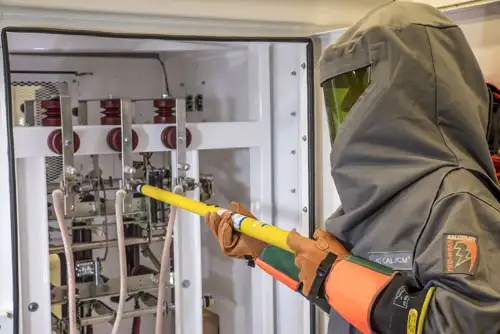
NFPA 70b Training - Electrical Maintenance

Our customized live online or in‑person group training can be delivered to your staff at your location.
  • Live Online
  • 12 hours Instructor-led
  • Group Training Available
Regular Price:
$699
Coupon Price:
$599
Reserve Your Seat Today
Iran Wants to Allay Nuclear Concerns

TEHRAN, Iran -- Iran's president said recently his government will do everything it can to allay concerns about its nuclear program as long as such efforts do not entail a threat to the nation's security.

The International Atomic Energy Agency has given Iran until the end of the month to prove it has no plans to produce nuclear weapons. The U.N. watchdog has also called on Iran to sign an additional protocol to the Nuclear Non-Proliferation Treaty, providing IAEA inspectors with unfettered access to any site.

``We are ready to do everything that does not damage our national security, sovereignty and territorial integrity -- even accepting the additional protocol,'' President Mohammad Khatami told reporters.

He did not explain in which circumstances IAEA access might be limited by national security concerns, and a government spokesman could not be reached for comment.

``We are ready to exert all efforts to ease concerns ... (about) the proliferation of nuclear weapons, which we are sure we are not seeking,'' Khatami said. ``But we expect our right to the peaceful use of nuclear energy to be respected.''

Iran says its nuclear program is strictly for generating electricity, particularly after its oil reserves run out. But the United States strongly suspects that Iran is building atomic bombs, and has urged the IAEA to declare the country in breach of the treaty, which forbids the acquisition of nuclear weapons.

If the IAEA board of directors, which is scheduled to meet in November, is not satisfied by Iran's steps to comply with the Oct. 31 deadline, it is expected to refer the matter to the U.N. Security Council. The Security Council could impose sanctions on Iran.

Khatami did not promise that Iran will meet the deadline and hinted that more time might be needed.

``Still, we have time before the 90th minute,'' Khatami said with a smile, referring to the length of a soccer match and extra time for injuries. ``Sometimes you have five to six minutes of extra time.''

The president said he hoped the IAEA will issue a fair assessment of Iran's attempt to cooperate with the U.N. agency.

``We have implemented a considerable part of the protocol, and our cooperation has been beyond our obligations under Nuclear Non-Proliferation Treaty. I hope, with the grace of God, the cooperation we have extended will lead to a fair report.

``That means the (IAEA) report will not be influenced by pressure,'' Khatami said, making an oblique reference to U.S. claims about Iran's nuclear program.

Khatami added that a majority of Iranians want their country to pursue a peaceful nuclear program.

Earlier this month, Iran's foreign minister said the country would do all it could to prevent the issue from going to the Security Council. But hardline members of the ruling hierarchy have called for a withdrawal from the treaty.

Related News
Nonstop Records For U.S. Natural-Gas-Based Electricity

U.S. Natural Gas Power Demand is surging for electricity generation amid summer heat, with ERCOT, Texas grid reserves tight, EIA reporting coal and nuclear retirements, renewables intermittency, and pipeline expansions supporting combined-cycle capacity and prices.


Key Points

It is rising use of natural gas for power, driven by summer heat, plant retirements, and new combined-cycle capacity.

✅ ERCOT reserve margin 9%, below 14% target in Texas

✅ Gas share of U.S. power near 40-43% this summer

✅ Coal and nuclear retirements shift capacity to combined cycle


As the hot months linger, it will be natural gas that is leaned on most to supply the electricity that we need to run our air conditioning loads on the grid and keep us cool.

And this is surely a great and important thing: "Heat causes most weather-related deaths, National Weather Service says."

Generally, U.S. gas demand for power in summer is 35-40% higher than what it was five years ago, with so much more coming (see Figure).

The good news is regions across the country are expected to have plenty of reserves to keep up with power demand.

The only exception is ERCOT, covering 90% of the electric load in Texas, where a 9% reserve margin is expected, below the desired 14%.

Last summer, however, ERCOT’s reserve margin also was below the desired level, yet the grid operator maintained system reliability with no load curtailments.

Simply put, other states are very lucky that Texas has been able to maintain gas at 50% of its generation, despite being more than justified to drastically increase that.

At about 1,600 Bcf per year, the flatness of gas for power demand in Texas since 2000 has been truly remarkable, especially since Lone Star State production is up 50% since then.

Increasingly, other U.S. states (and even countries) are wanting to import huge amounts of gas from Texas, a state that yields over 25% of all U.S. output.

Yet if Texas justifiably ever wants to utilize more of its own gas, others would be significantly impacted.

At ~480 TWh per year, if Texas was a country, it would be 9th globally for power use, even ahead of Brazil, a fast growing economy with 212 million people, and France, a developed economy with 68 million people.

In the near-term, this explains why a sweltering prolonged heat wave in July in Texas, with a hot Houston summer setting new electricity records, is the critical factor that could push up still very low gas prices.

But for California, our second highest gas using state, above-average snowpack should provide a stronger hydropower for this summer season relative to 2018.

Combined, Texas and California consume about 25% of U.S. gas, with Texas' use double that of California.


Across the U.S., gas could supply a record 40-43% of U.S. electricity this summer even as the EIA expects solar and wind to be larger sources of generation across the mix

Our gas used for power has increased 35-40% over the past five years, and January power generation also jumped on the year, highlighting broad momentum.

Our gas used for power has increased 35-40% over the past five years. DATA SOURCE: EIA; JTC

Indeed, U.S. natural gas for electricity has continued to soar, even as overall electricity consumption has trended lower in some years, at nearly 10,700 Bcf last year, a 16% rise from 2017 and easily the highest ever.

Gas is expected to supply 37% of U.S. power this year, even as coal-fired generation saw a brief uptick in 2021 in EIA data, versus 27% just five years ago (see Figure).

Capacity wise, gas is sure to continue to surge its share 45% share of the U.S. power system.

"More than 60% of electric generating capacity installed in 2018 was fueled by natural gas."

We know that natural gas will continue to be the go-to power source: coal and nuclear plants are retiring, and while growing, wind and solar are too intermittent, geography limited, and transmission short to compensate like natural gas can.

"U.S. coal power capacity has fallen by a third since 2010," and last year "16 gigawatts (16,000 MW) of U.S. coal-fired power plants retired."

This year, some 2,000 MW of coal was retired in February alone, with 7,420 MW expected to be closed in 2019.

Ditto for nuclear.

Nuclear retirements this year include Pilgrim, Massachusetts’s only nuclear plant, and Three Mile Island in Pennsylvania.

This will take a combined ~1,600 MW of nuclear capacity offline.

Another 2,500 MW and 4,300 MW of nuclear are expected to be leaving the U.S. power system in 2020 and 2021, respectively.

As more nuclear plants close, EIA projects that net electricity generation from U.S. nuclear power reactors will fall by 17% by 2025.

From 2019-2025 alone, EIA expects U.S. coal capacity to plummet nearly 25% to 176,000 MW, with nuclear falling 15% to 83,000 MW.

In contrast, new combined cycle gas plants will grow capacity almost 30% to around 310,000 MW.

Lower and lower projected commodity prices for gas encourage this immense gas build-out, not to mention non-stop increases in efficiency for gas-based units.

Remember that these are official U.S. Department of Energy estimates, not coming from the industry itself.

In other words, our Department of Energy concludes that gas is the future.

Our hotter and hotter summers are therefore more and more becoming: "summers for natural gas"

Ultimately, this shows why the anti-pipeline movement is so dangerous.

"Affordable Energy Coalition Highlights Ripple Effect of Natural Gas Moratorium."

In April, President Trump signed two executive orders to promote energy infrastructure by directing federal agencies to remove bottlenecks for gas transport into the Northeast in particular, where New England oil-fired generation has spiked, and to streamline federal reviews of border-crossing pipelines and other infrastructure.

Builders, however, are not relying on outside help: all they know is that more U.S. gas demand is a constant, so more infrastructure is mandatory.

They are moving forward diligently: for example, there are now some 27 pipelines worth $33 billion already in the works in Appalachia.


Related News

View more

National Energy Board hears oral traditional evidence over Manitoba-Minnesota transmission line

Manitoba-Minnesota Transmission Line connects Bipole III to Minnesota, raising export capacity, as NEB hearings weigh Indigenous rights, treaty obligations, environmental assessment, cumulative effects, and cross-border hydroelectric infrastructure impacts, land access, socio-economic concerns, and regulatory review.


Key Points

A cross-border hydro line linking Manitoba to Minnesota under review on Indigenous rights and environment concerns.

✅ Connects Bipole III to Minnesota to boost exports

✅ NEB hearings include Indigenous rights and treaty issues

✅ Environmental and access impacts debated in regulatory review


Concerned Indigenous groups asked the National Energy Board this week to take into consideration existing and future impacts and treaty rights, which have prompted a halt to Site C work elsewhere, when considering whether to OK a new hydro transmission line between Manitoba and Minnesota.

Friday was the last day of the oral traditional evidence hearings in Winnipeg on Manitoba Hydro's Manitoba-Minnesota Transmission project.

The international project will connect Manitoba Hydro's Bipole III transmission line to Minnesota and increase the province's electricity export capacity to 3185 MW from 2300 MW.

#google#

During the hearings Indigenous groups brought forward concerns and evidence of environmental degradation, echoing Site C dam opponents in other regions, and restricted access to traditional lands.

Ramona Neckoway, a member of the Nelson House First Nation, talked about her concern about the scope of Manitoba Hydro's application to the NEB.

"It's only concerned with a narrow 213 km corridor and thus it erases the histories, socio-economic impacts and the environmental degradation attached to this energy source," said Neckoway.

Prior to the hearings the board stated it did not intend to assess the environmental and socio-economic impacts of upstream or downstream facilities associated with electricity production, even as a utilities watchdog on Site C stability raised questions elsewhere.

However, the board did hear evidence from upstream and downstream affected communities despite objection from Manitoba Hydro lawyers.

"Manitoba Hydro objected to us being here, saying that we are irrelevant, but we are not irrelevant," said Elder Tommy Monias from Cross Lake First Nation.

Manitoba Hydro representative Bruce Owen said, "We respect the NEB hearing process and look forward to the input of all interested parties."

The hearings provided a rare opportunity for First Nations communities, similar to Ontario First Nations urging action, to voice their concerns about the line on a federal level.

"One of the hopes is that this project can't be built until a system-wide assessment is made," said Dr. Peter Kulchyski, an expert witness for the southern chiefs organization and professor of Native Studies at the University of Manitoba.


Hearings continue

The line is already under construction on the American side of the border as the NEB public hearings continue until June 22 with cross examinations and final arguments from Manitoba Hydro and intervenor groups.

The NEB's final decision on the Manitoba-Minnesota transmission line, amid an energy board delay recommendation, will be made before March 2019.


Related News

View more

Nuclear Innovation Needed for American Energy, Environmental Future

Advanced Nuclear Technology drives decarbonization through innovation, SMRs, and a stable grid, bolstering U.S. leadership, energy security, and clean power exports under supportive regulation and policy to meet climate goals cost-effectively.


Key Points

Advanced nuclear technology uses SMRs to deliver low-carbon, reliable power and strengthen energy security.

✅ Accelerates decarbonization with firm, low-carbon baseload power

✅ Enhances grid reliability via SMRs and advanced fuel cycles

✅ Supports U.S. leadership through exports, R&D, and modern regulation


The most cost-effective way--indeed the only reasonable way-- to reduce greenhouse gas emissions and foster our national economic and security interests is through innovation, especially next-gen nuclear power innovation. That's from Rep. Greg Walden, R-Oregon, ranking Republican member of the House Energy and Commerce Committee, speaking to a Subcommittee on Energy hearing titled, "Building a 100 Percent Clean Economy: Advanced Nuclear Technology's Role in a Decarbonized Future."

Here are the balance of his remarks.

Encouraging the deployment of atomic energy technology, strengthening our nuclear industrial base, implementing policies that helps reassert U.S. nuclear leadership globally... all provide a promising path to meet both our environmental and energy security priorities. In fact, it's the only way to meet these priorities.

So today can help us focus on what is possible and what is necessary to build on recent policies we've enacted to ensure we have the right regulatory landscape, the right policies to strengthen our domestic civil industry, and the advanced nuclear reactors on the horizon.

U.S. global leadership here is sorely needed. Exporting clean power and clean power technologies will do more to drive down global Co2 emissions on the path to net-zero emissions worldwide than arbitrary caps that countries fail to meet.

In May last year, the International Energy Agency released an informative report on the role of nuclear power in clean energy systems; it did not find current trends encouraging.

The report noted that nuclear and hydropower "form the backbone of low-carbon electricity generation," responsible for three-quarters of global low-carbon generation and the reduction of over 60 gigatons of carbon dioxide emissions over the past 50 years.

Yet IEA found in advanced economies, nuclear power is in decline, with closing plants and little new investment, "just when the world requires more low-carbon electricity."

There are various reasons for this, some relating to cost overruns and delays, others to policies that fail to value the "low-carbon and energy security attributes" of nuclear. In any case, the report found this failure to encourage nuclear will undermine global efforts to develop cleaner electricity systems.

Germany demonstrates the problem. As it chose to shut down its nuclear industry, it has doubled down on expanding renewables like solar and wind. Ironically, to make this work, it also doubled down on coal. This nuclear phase out has cost Germany $12 billion a year, 70% of which is from increased mortality risk from stronger air pollutants (this according to the National Bureau of Economic Research). If other less technologically advanced nations even could match the rate of renewables growth reached by Germany, they would only hit about a fifth of what is necessary to reach climate goals--and with more expensive energy. So, would they then be forced to bring online even more coal-fired sources than Germany?

On the other hand, as outlined by the authors of the pro-nuclear book "A Bright Future," France and Sweden have both demonstrated in the 1970s and 1980s, how to do it. They showed that the build out of nuclear can be done at five times the rate of Germany's experience with renewables, with increased electricity production and relatively lower prices.

I think the answer is obvious about the importance of nuclear. The question will be "can the United States take the lead going forward?"

We can help to do this in Congress if we fully acknowledge what U.S. leadership on nuclear will mean--both for cleaner power and industrial systems beyond electricity, here and abroad--and for the ever-important national security attributes of a strong U.S. industry.

Witnesses have noted in recent hearings that recognizing how U.S. energy and climate policy effects energy and energy technology relationships world-wide is critical to addressing emissions where they are growing the fastest and for strengthening our national security relationships.

Resurrecting technological leadership in nuclear technology around the world will meet our broader national and energy security reasons--much as unleashing U.S. LNG from our shale revolution restored our ability to counter Russia in energy markets, while also driving cleaner technology. Our nuclear energy exports boost our national security priorities.

We on Energy and Commerce have been working, in a bipartisan manner over the past few Congresses to enhance U.S. nuclear policies. There is most certainly more to do. And I think today's hearing will help us explore what can be done, both administratively and legislatively, to pave the way for advanced nuclear energy.

Let me welcome the panel today. Which, I'm pleased to see, represents several important perspectives, including industry, regulatory, safety, and international expertise, to two innovative companies--Terrapower and my home state of Oregon's NuScale. All of these witnesses can speak to what we need to do to build, operate and lead with these new technologies.

We should work to get our nation's nuclear policy in order, learning from global frameworks like the green industrial revolution abroad. Today represents a good step in that effort.


Related News

View more

Electric Motor Testing Training

Electric Motor Testing Training covers on-line and off-line diagnostics, predictive maintenance, condition monitoring, failure analysis, and reliability practices to reduce downtime, optimize energy efficiency, and extend motor life in industrial facilities.


Key Points

An instructor-led course teaching on-line/off-line tests to diagnose failures, improve reliability, and cut downtime.

✅ On-line and off-line test methods and tools

✅ Failure modes, root cause analysis, and KPIs

✅ Predictive maintenance, condition monitoring, ROI


Our 12-Hour Electric Motor Testing Training live online instructor-led course introduces students to the basics of on-line and off-line motor testing techniques, with context from VFD drive training principles applicable to diagnostics.

September 10-11 , 2020 - 10:00 am - 4:30 pm ET

Our course teaches students the leading cause of motor failure. Electric motors fail. That is a certainty. And unexpectded motor failures cost a company hundreds of thousands of dollars. Learn the techniques and obtain valuable information to detect motor problems prior to failure, avoiding costly downtime, with awareness of lightning protection systems training that complements plant surge mitigation. This course focuses electric motor maintence professionals to achieve results from electrical motor testing that will optimize their plant and shop operations.

Our comprehensive Electric Motor Testing course emphasizes basic and advanced information about electric motor testing equipment and procedures, along with grounding practices per NEC 250 for safety and compliance. When completed, students will have the ability to learn electric motor testing techniques that results in increased electric motor reliability. This always leads to an increase in overall plant efficiency while at the same time decreasing costly motor repairs.

Students will also learn how to acquire motor test results that result in fact-based, proper motor maintenance management. Students will understand the reasons that electric motors fail, including grounding deficiencies highlighted in grounding guidelines for disaster prevention, and how to find problems quickly and return motors to service.


COURSE OBJECTIVE:

This course is designed to enable participants to:

  • Describe Various Equipment Used For Motor Testing And Maintenance.
  • Recognize The Cause And Source Of Electric Motor Problems, including storm-related hazards described in electrical safety tips for seasonal preparedness.
  • Explain How To Solve Existing And Potential Motor Problems, integrating substation maintenance practices to reduce upstream disruptions, Thereby Minimizing Equipment Disoperation And Process Downtime.
  • Analyze Types Of Motor Loads And Their Energy Efficiency Considerations, including insights relevant to hydroelectric projects in utility settings.


Complete Course Details Here

https://electricityforum.com/electrical-training/motor-testing-training


Related News

View more

Are we ready for electric tractors?

Electric tractors are surging, with battery-powered models, grid-tethered JD GridCON, and solar-charged designs delivering autonomous guidance, high efficiency, low maintenance, quiet operation, robust PTO compatibility, and durability for sustainable, precision agriculture.


Key Points

Electric tractors use battery or grid power to run implements with high efficiency, low noise, and minimal maintenance.

✅ Battery, grid-tethered, or solar-charged power options

✅ Lower operating costs, reduced noise, fewer moving parts

✅ Autonomous guidance, PTO compatibility, and quick charging


Car and truck manufacturers are falling off the fossil fuel bandwagon in droves and jumping on the electric train.

Now add tractors to that list.

Every month, another e-tractor announcement comes across our desks. Environmental factors drive this trend, along with energy efficiency, lower maintenance, lower noise level and motor longevity, and even autonomous weed-zapping robots are emerging.

Let’s start with the Big Daddy of them all, the 400 horsepower JD GridCON. This tractor is not a hybrid and it has no hassle with batteries. The 300 kilowatts of power come to the GridCON through a 1,000 metre extension cord connected to the grid, including virtual power plants or an off-field generator. A reel on the tractor rolls the cable in and out. The cable is guided by a robotic arm to prevent the tractor from running over it.

It uses a 700 volt DC bus for electric power distribution onboard and for auxiliary implements. It uses a cooling infrastructure for off-board electrical use. Total efficiency of the drive train is around 85 percent. A 100 kilowatt electric motor runs the IVT transmission. There’s an auxiliary outlet for implements powered by an electric motor up to 200 kW.

GridCON autonomously follows prescribed routes in the field at speeds up to 12 m.p.h., leveraging concepts similar to fleet management solutions for coordination. It can also be guided manually with a remote control when manoeuvring the tractor to enter a field. Empty weight is 8.5 tonnes, which is about the same as a 6195R but with double the power. Deere engineers say it will save about 50 percent in operating costs compared to battery powered tractors.

Solectrac
Two California-built all-battery powered tractors are finally in full production. While the biggest is only 40 horsepower, these are serious tractors that may foretell the future of farm equipment.

The all-electric 40 h.p. eUtility tractor is based on a 1950s Ford built in India. Solectrac is able to buy the bare tractor without an engine, so it can create a brand new electric tractor with no used components for North American customers. One tractor has already been sold to a farmer in Ontario. | Solectrac photo
The tractors are built by Solectrac, owned by inventor Steve Heckeroth, who has been doing electric conversions on cars, trucks, race cars and tractors for 25 years. He said there are three main reasons to take electric tractors seriously: simplicity, energy efficiency and longevity.

“The electric motor has only one moving part, unlike small diesel engines, which have over 300 moving parts,” Heckeroth said, adding that Solectrac tractors are not halfway compromise hybrids but true electric machines that get their power from the sun or the grid, particularly in hydro-rich regions like Manitoba where clean electricity is abundant, whichever is closest.

Neither tractor uses hydraulics. Instead, Heckeroth uses electric linear actuators. The ones he installs provide 1,000 pounds of dynamic load and 3,000 lb. static loads. He uses linear actuators because they are 20 times more efficient than hydraulics.

The eUtility and eFarmer are two-wheel drive only, but engineers are working on compact four-wheel drive electric tractors. Each tractor carries a price tag of US$40,000. Because production numbers are still limited, both tractors are available on a first to deposit basis. One e-tractor has already been sold and delivered to a farmer in Ontario.

The eUtility is a 40 h.p. yard tractor that accepts all Category 1, 540 r.p.m. power take-off implements on the rear three-point hitch, except those requiring hydraulics. An optional hydraulic pump can be installed for $3,000 for legacy implements that require hydraulics. For that price, a dedicated electricity believer might instead consider converting the implement to electric.

“The eUtility is actually a converted new 1950s Ford tractor made in a factory in India that was taken over after the British were kicked out in 1948,” Heckeroth said.

“I am able to buy only the parts I need and then add the motor, controller and batteries. I had to go to India because it’s one of the few places that still makes geared transmissions. These transmissions work the best for electric tractors. Gear reduction is necessary to keep the motor in the most efficient range of about 2,000 r.p.m. It has four gears with a high and low range, which covers everything from creep to 25 m.p.h.

On his eUtility, a single 30 kWh onboard battery pack provides five to eight hours of run time, depending on loads. It can carry two battery packs. The Level 2 quick charge gives an 80 percent charge for one pack in three hours. Two packs can receive a full charge overnight with support from home batteries like Powerwall for load management.

The integrated battery management system protects the batteries during charging and discharging, while backup fuel cell chargers can keep storage healthy in remote deployments. Batteries are expected to last about 10 years, depending on the number of operating cycles and depth of discharge.

Exchangeable battery packs are available to keep the tractor running through the full work day. These smaller 20 kWh packs can be mounted on the rear hitch to balance the weight of the optional front loader or carried in the optional front loader to balance the weight of heavy implements mounted on the rear hitch.

The second tractor is the 20 kWh eFarmer, which features high visibility for row crop farms at a fraction of the cost of diesel fuel tractors. The 30 h.p. eFarmer is basically just a tube frame with the necessary components attached. A simple joystick controls steering, speed and brakes.

Harvest
Introduced to the North American public this spring by Motivo Engineering in California, the Harvest tractor is simply a big battery on wheels. The complex electrical system takes power in through a variety of renewable energy sources, such as solar panels with smart solar inverters enabling optimized PV integration, water wheels, wind turbines or even intermittent electrical grids. It stores electrical power on-board and delivers it when and where required, putting power out to a large number of electrical tools and farm implements. It operates in AC or DC modes.


Related News

View more

IEA praises Modi govt for taking electricity to every village; calls India 'star performer'

India Village Electrification hailed by the IEA in World Energy Outlook 2018 showcases rapid energy access progress, universal village power, clean cooking advances via LPG, and Modi-led initiatives, inspiring Indonesia, Bangladesh, and Sub-Saharan Africa.


Key Points

A national push to power every Indian village, praised by the IEA for boosting energy access and clean cooking.

✅ Electrified 597,464 villages ahead of schedule in April 2018.

✅ IEA hails India in World Energy Outlook 2018 as star performer.

✅ LPG connections surge via Ujjwala, aiding clean cooking access.


The global energy watchdog International Energy Agency (IEA) has called India's electrification of every village the greatest success story of 2018. In its latest report, World Energy Outlook 2018, the IEA has called India a "star performer" in terms of achieving the big milestone of the providing power to each village. "In particular, one of the greatest success stories in access to energy in 2018 was India completing the electrification of all of its villages," said the IEA. It added that countries like Indonesia and Bangladesh have also achieved the commendable electrification rate of 95% (up from 50% in 2000), and 80% (up from 20% in 2000), respectively, even as Europe's electrification push continues as part of broader transitions.

This 643-page report by the IEA says over 120 million people worldwide gained access to electricity in 2017 and charts growth in the electric car market as part of broader energy trends. For the first time ever, the total number of people without access fell below 1 billion, it said.  The mega plan of providing electricity to 597,464 villages in India was announced by Prime Minister Narendra Modi during his Independence Day speech in 2015. On April 28, 2018, PM Modi confirmed that India had achieved its goal ahead of schedule. "This is one of the greatest achievements in the history of energy," said the IEA.

Praising the Narendra Modi government for making efforts towards lighting up every village in India, the agency said: "Since 2000 around half a billion people have gained access to electricity in India, with political effort over the last five years significantly accelerating progress."

India's achievement of providing universal household electricity access will improve the lives of over 230 million people, said the IEA, even as analyses like a Swedfund report debate some poverty outcomes in electrified areas. For a start, electric lighting makes the use of candles, kerosene and other polluting fuels for lighting redundant, not only saving money (and providing more light) but also seriously improving health, it said.

Though the global energy agency has called India "a success story", and a "bright spot for energy access", it says huge challenges remain in other regions of the world where over 670 million people still live without electricity access. "90% of these people are concentrated in sub-Saharan Africa, with countries such as Nigeria facing severe shortages," said the report.

Seven decades after independence and nearly three decades after India's economic liberalisation, the Modi government achieved the historic milestone of giving power to every single village of India, 12 days ahead of the deadline set by PM Modi. Leisang in Manipur became the last village to be connected to the grid, while a Delhi energy storage project explores ways to balance supply and demand.

The agency also praised India for tackling a related problem: access to clean cooking facilities. "While an estimated 780 million people in India rely on biomass for cooking, progress is emerging, as India is one of the few countries in the world targeting this "blind spot" of energy policy," it said.

Around 36 million LPG connections have been made since Prime Minister Modi and Minister for Petroleum and Natural Gas, Dharmendra Pradhan, launched the Pradhan Mantri Ujjwala Yojana scheme in May 2016 to provide free connections to families living below the poverty line. In India, around 50 million free LPG stoves and initial refills have been provided to poor households via this scheme since 2015. The government has set a target of providing LPG connections to 80 million households by 2020.


Related News

View more

Sign Up for Electricity Forum’s Newsletter

Stay informed with our FREE Newsletter — get the latest news, breakthrough technologies, and expert insights, delivered straight to your inbox.

Electricity Today T&D Magazine Subscribe for FREE

Stay informed with the latest T&D policies and technologies.
  • Timely insights from industry experts
  • Practical solutions T&D engineers
  • Free access to every issue

Download the 2025 Electrical Training Catalog

Explore 50+ live, expert-led electrical training courses –

  • Interactive
  • Flexible
  • CEU-cerified