Israel, Palestinians pledge energy cooperation

By Reuters


Substation Relay Protection Training

Our customized live online or in‑person group training can be delivered to your staff at your location.

  • Live Online
  • 12 hours Instructor-led
  • Group Training Available
Regular Price:
$699
Coupon Price:
$599
Reserve Your Seat Today
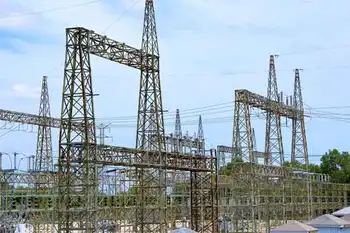
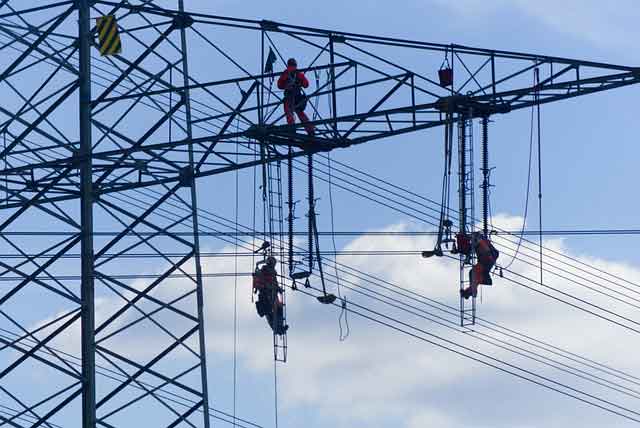
Israel and the Palestinians took a modest step recently toward cooperating on energy projects and sharing gas and electricity supplies in talks hosted by the European Union.

Israeli Energy Minister Joseph Paritzky and his Palestinian counterpart Azzam Shawwa signed an agreement to open talks in August and September, when expert groups will discuss sharing electricity and gas supplies and managing demand.

The deal came two days after visiting Israeli Foreign Minister Silvan Shalom told EU foreign ministers the Jewish state, long hostile to any European political role in the Middle East, wanted the bloc to play a greater part in peacemaking.

The agreement also envisaged the creation of a joint body for energy cooperation, and in the medium term an energy infrastructure development programme which would seek support from international lenders such as the European Investment Bank.

The three sides said they hoped to identify projects of common interest in time for an industrial conference in Brussels in November, which Egypt, Turkey, Jordan, Lebanon and Syria will also attend.

Related News
Enel kicks off 90MW Spanish wind build

Enel Green Power España Aragon wind farms advance Spain's renewable energy transition, with 90MW under construction in Teruel, Endesa investment of €88 million, 25-50MW turbines, and 2017 auction-backed capacity enhancing grid integration and clean power.


Key Points

They are three Teruel wind projects totaling 90MW, part of Endesa's 2017-awarded plan expanding Spain's clean energy.

✅ 90MW across Sierra Costera I, Allueva, and Sierra Pelarda

✅ €88m invested; 14+7+4 turbines; Endesa-led build in Teruel

✅ Part of 2017 tender: 540MW wind, 339MW solar, nationwide


Enel Green Power Espana, part of Enel's wind projects worldwide, has started constructing three wind farms in Aragon, north-east Spain, which are due online by the end of the year.

The projects, all situated in the Teruel province, are worth a total investment of €88 million.

The biggest of the facilities, Sierra Costera I, will have a 50MW and will feature 14 turbines.

The wind farm is spread across the municipalities of Mezquita de Jarque, Fuentes Calientes, Canada Vellida and Rillo.

The Allueva wind facility will feature seven turbines and will exceed 25MW.

Sierra Pelarda, in Fonfria, will have four turbines and a capacity of 15MW, as advances in offshore wind turbine technology continue to push scale elsewhere.

The projects bring the total number of wind farms that Enel Green Power Espana has started building in the Teruel province to six, equal to an overall capacity of 218MW.

Endesa chief executive Jose Bogas said: “These plants mark the acceleration on a new wave of growth in the renewable energy space that Endesa is committed to pursue in the next years, driving the energy transition in Spain.”

The six wind farms under construction in Teruel are part of the 540MW that Enel Green Power Espana was awarded in the Spanish government's renewable energy tender held in May 2017.

In Aragon, the company will invest around €434 million euros, reflecting broader European wind power investment trends in recent years, to build 13 wind farms with a total installed capacity of more than 380MW.

The remaining 160MW of wind capacity will be located in Andalusia, Castile-Leon, Castile La Mancha and Galicia, even as some Spanish turbine factories closed during pandemic restrictions.

Enel Green Power Espana was also awarded 339MW of solar capacity in the Spanish government's auction held in July 2017, while other Spanish developers advance CSP projects abroad in markets like Chile.

Once all wind and solar under the 2017 tender are complete they will boost the company’s capacity by around 52%.


Related News

View more

Trump's Canada Tariff May Spike NY Energy Prices

25% Tariff on Canadian Imports threatens New York energy markets, disrupting hydroelectric power and natural gas supply chains, raising electricity prices, increasing gas costs, and intensifying trade tensions, policy uncertainty, and cross-border logistics risks.


Key Points

A U.S. policy imposing 25% duties on Canadian goods, risking higher New York electricity and natural gas costs.

✅ Hydroelectric and gas imports face costlier cross-border flows

✅ Higher utility bills for NY households and businesses

✅ Supply chain volatility and policy uncertainty increase


President Donald Trump announced the imposition of a 25% tariff on all imports from Canada, citing concerns over drug trafficking and illegal immigration. This decision has raised significant concerns among experts and residents in New York, who warn that the tariff could lead to increased electricity and gas prices in the state.

Impact on New York's Energy Sector

New York relies heavily on energy imports from Canada, particularly electricity and natural gas. Canada is a major supplier of hydroelectric power to the northeastern United States, including New York, with its electricity exports at risk amid trade tensions. The imposition of a 25% tariff on Canadian goods could disrupt this supply chain, leading to higher energy costs for consumers and businesses in New York. Justin Wilcox, an energy analyst, stated, "If the tariff is implemented, it could lead to increased costs for electricity and gas, affecting both consumers and businesses."

Potential Economic Consequences

The increased energy costs could have broader economic implications for New York, and some experts advise against cutting Quebec's exports to avoid exacerbating market volatility. Higher electricity and gas prices may lead to increased operational costs for businesses, potentially resulting in higher prices for goods and services, while tariff threats have boosted support for Canadian energy projects that could reshape regional supply. This could exacerbate the cost-of-living challenges faced by residents and strain the state's economy.

Political and Diplomatic Reactions

The tariff has also sparked political and diplomatic reactions, including threats to cut U.S. electricity exports from Ontario that raised tensions. New York Governor Kathy Hochul expressed concern over the potential economic impact, stating, "We are closely monitoring the situation and are prepared to take necessary actions to protect New York's economy." Additionally, Canadian officials have expressed their disapproval of the tariff, and Ontario Premier Doug Ford's Washington meeting underscored ongoing discussions, emphasizing the importance of the trade relationship between the two countries.

Historical Context

This development is part of a broader pattern of trade tensions between the United States and its neighbors. In 2018, the U.S. imposed tariffs on Canadian steel and aluminum, leading to retaliatory measures from Canada. The current situation underscores the ongoing challenges in international trade relations, where a recent tariff threat delayed Quebec's green energy bill and highlighted the potential domestic impacts of such policies.

The imposition of a 25% tariff on Canadian imports by President Trump has raised significant concerns in New York regarding potential increases in electricity and gas prices. Experts warn that this could lead to higher costs for consumers and businesses, with broader economic implications for the state. As the situation develops, it will be crucial to monitor the responses from both state and federal officials, as well as how Canadians support tariffs on energy and minerals may influence policy, and the potential for diplomatic negotiations to address these trade tensions.


Related News

View more

Ontario Energy Board prohibiting electricity shutoffs during latest stay-at-home order

OEB Disconnection Ban shields Ontario residential customers under the stay-at-home order, pausing electricity distributor shutoffs for non-payment and linking COVID-19 Energy Assistance Program credits for small businesses, charities, and overdue utility bills.


Key Points

A pause on electricity shutoff notices during Ontario's stay-at-home order, with COVID-19 bill credits for customers.

✅ Distributors cannot issue residential disconnection notices.

✅ Applies through the stay-at-home order timeline.

✅ CEAP credits: $750 residential; $1,500 small biz and charities.


With Ontario now into the third province-wide lockdown, the Ontario Energy Board (OEB) has promised residents won't have to worry about their power being shut off.

On April 8, the Province issued the third stay-at-home order in the last 13 months which is scheduled to last for 28 days until at least May 6, as electricity rates and policies continue to shift.

On April 30, the annual winter disconnection ban is set to expire, meaning electricity distributors like Hydro One would normally be permitted to issue disconnection notices for non-payment as early as 14 days before the end of the ban.

However, the OEB has announced changes for electricity consumers that prohibit electricity distributors from issuing disconnection notices to residential customers for the entirety of the stay-at-home order.

Additionally, the COVID-19 Energy Assistance Program is available for residential, small business, and registered charity customers who have overdue amounts on their electricity or gas bills as a result of the pandemic, complementing support for electric bills introduced during COVID-19, and the fixed COVID-19 hydro rate that helped stabilize costs.

Those who meet these criteria are eligible for credits up to a maximum of $750 for residential customers and $1,500 for small businesses and charities, alongside earlier moves to set an off-peak price to ease costs.


Related News

View more

ETP 2017 maps major transformations in energy technologies

Global Energy Electrification drives IEA targets as smart grids, storage, EVs, and demand-side management scale. Paris Agreement-aligned policies and innovation accelerate decarbonization, enabling flexible, low-carbon power systems and net-zero pathways by 2060.


Key Points

A shift to electricity across sectors via smart grids, storage, EVs, and policy to cut CO2 and improve energy security.

✅ Smart grids, storage, DSM enable flexible, resilient power.

✅ Aligns with IEA pathways and Paris Agreement goals.

✅ Drives EV adoption, building efficiency, and net-zero by 2060.


The global energy system is changing, with European electricity market trends highlighting rapid shifts. More people are connecting to the grid as living standards improve around the world. Demand for consumer appliances and electronic devices is rising. New and innovative transportation technologies, such as electric vehicles and autonomous cars are also boosting power demand.

The International Energy Agency's latest report on energy technologies outlines how these and other trends as well as technological advances play out in the next four decades to reshape the global energy sector.

Energy Technology Perspectives 2017 (ETP) highlights that decisive policy actions and market signals will be needed to drive technological development and benefit from higher electrification around the world. Investments in stronger and smarter infrastructure, including transmission capacity, storage capacity and demand side management technologies such as demand response programs are necessary to build efficient, low-carbon, integrated, flexible and robust energy system. 

Still, current government policies are not sufficient to achieve long-term global climate goals, according to the IEA analysis, and warnings about falling global energy investment suggest potential supply risks as well. Only 3 out of 26 assessed technologies remain “on track” to meet climate objectives, according to the ETP’s Tracking Clean Energy Progress report. Where policies have provided clean signals, progress has been substantial. However, many technology areas suffer from inadequate policy support. 

"As costs decline, we will need a sustained focus on all energy technologies to reach long-term climate targets," said IEA Executive Director Dr Fatih Birol. "Some are progressing, but too few are on track, and this puts pressure on others. It is important to remember that speeding the rate of technological progress can help strengthen economies, boost energy security while also improving energy sustainability."

ETP 2017’s base case scenario, known as the Reference Technology Scenario (RTS), takes into account existing energy and climate commitments, including those made under the Paris Agreement. Another scenario, called 2DS, shows a pathway to limit the rise of global temperature to 2ºC, and finds the global power sector could reach net-zero CO2 emissions by 2060.

A second decarbonisation scenario explores how much available technologies and those in the innovation pipeline could be pushed to put the energy sector on a trajectory beyond 2DS. It shows how the energy sector could become carbon neutral by 2060 if known technology innovations were pushed to the limit. But to do so would require an unprecedented level of policy action and effort from all stakeholders.

Looking at specific sectors, ETP 2017 finds that buildings could play a major role in supporting the energy system transformation. High-efficiency lighting, cooling and appliances could save nearly three-quarters of today’s global electricity demand between now and 2030 if deployed quickly. Doing so would allow a greater electrification of the energy system that would not add burdens on the system. In the transportation system, electrification also emerges as a major low-carbon pathway, with clean grids and batteries becoming key areas to watch in deployment.

The report finds that regardless of the pathway chosen, policies to support energy technology innovation at all stages, from research to full deployment, alongside evolving utility trends that operators need to watch, will be critical to reap energy security, environmental and economic benefits of energy system transformations. It also suggests that the most important challenge for energy policy makers will be to move away from a siloed perspective towards one that enables systems integration.


Related News

View more

Ontario energy minister asks for early report exploring a halt to natural gas power generation

Ontario Natural Gas Moratorium gains momentum as IESO weighs energy storage, renewables, and demand management to meet rising electricity demand, ensure grid reliability, and advance zero-emissions goals while long-term capacity procurements proceed.


Key Points

A proposed halt on new gas plants as IESO assesses storage and renewables to maintain reliability and cut emissions.

✅ Minister seeks interim IESO report by Oct. 7

✅ Near-term contracts extend existing gas plants for reliability

✅ Long-term procurements emphasize storage, renewables, conservation


Ontario's energy minister says he doesn't think the province needs any more natural gas generation and has asked the electricity system regulator to speed up a report exploring a moratorium.

Todd Smith had previously asked the Independent Electricity System Operator (IESO) to report back by November on the feasibility of a moratorium and a plan to get to zero emissions in the electricity sector.

He has asked them today for an interim report by Oct. 7 so he can make a decision on a moratorium before the IESO secures contracts over the long term for new power generation.

"I've asked the IESO to speed up that report back to us so that we can get the information from them as to what the results would be for our grid here in Ontario and whether or not we actually need more natural gas," Smith said Tuesday after question period.

"I don't believe that we do."

Smith said that is because of the "huge success" of two updates provided Tuesday by the IESO to its attempts to secure more electricity supply for both the near term and long term. Demand is growing by nearly two per cent a year, while Ontario is set to lose a significant amount of nuclear generation, including the planned shutdown of the Pickering nuclear station over the next few years.

'For the near term, we need them,' regulator says
The regulator today released a list of 55 qualified proponents for those long-term bids and while it says there is a significant amount of proposed energy storage projects on that list, there are some new gas plants on it as well.

Chuck Farmer, the vice-president of planning, conservation and resource adequacy at the IESO, said it's hoped that the minister makes a decision on whether or not to issue a moratorium on new gas generation before the regulator proceeds with a request for proposals for long-term contracts.

The IESO also announced six new contracts — largely natural gas, with a small amount of wind power and storage — to start in the next few years. Farmer noted that these contracts were specifically for existing generators whose contracts were ending, while the province is exploring new nuclear plants for the longer term.

"When you look at the pool of generation resources that were in that situation, the reality is most of them were actually natural gas plants, and that we are relying on the continued use of the natural gas plants in the transition," he said in an interview. 

"So for the near term, we need them for the reliability of the system."

The upcoming request for proposals for more long-term contracts hopes to secure 3,500 megawatts of capacity, as Ontario faces an electricity shortfall in the coming years, and Farmer said the IESO plans to run a series of procurements over the next few years.

Opposition slams reliance on natural gas
The NDP and Greens on Tuesday criticized Ontario's reliance in the near term on natural gas because of its environmental implications.

The IESO has said that due to natural gas, greenhouse gas emissions from the electricity sector are set to increase for the next two decades, but by about 2038 it projects the net reductions from electric vehicles will offset electricity sector emissions.

Green Party Leader Mike Schreiner said it makes no sense to ramp up natural gas, both for the climate and for people's wallets.

"The cost of wind and solar power is much lower than gas," he said.

Ontario quietly revises its plan for hitting climate change targets
"We're in a now-or-never moment to address the climate crisis and the government is failing to meet this moment."

Interim NDP Leader Peter Tabuns said Ontario wouldn't be in as much of a supply crunch if the Progressive Conservative government hadn't cancelled 750 green energy contracts during their first term.

The Tories argued the province didn't need the power and the contracts were driving up costs for ratepayers, amid debate over whether greening the grid would be affordable.

The IESO said it is also proposing expanding conservation and demand management programs, as a "highly cost-effective" way to reduce strain on the system, though it couldn't say exactly what is on the table until the minister accepts the recommendation.


Related News

View more

Top Senate Democrat calls for permanent renewable energy, storage, EV tax credits

Clean Energy Tax Incentives could expand under Democratic proposals, including ITC, PTC, and EV tax credits, boosting renewable energy, energy storage, and grid modernization within a broader infrastructure package influenced by Green New Deal goals.


Key Points

Federal incentives like ITC, PTC, and EV credits that cut costs and speed renewables, storage, and grid upgrades.

✅ Proposes permanence for ITC, PTC, and EV tax credits

✅ Could accelerate solar, wind, storage, and grid upgrades

✅ Passage depends on bipartisan infrastructure compromise


The 115th U.S. Congress has not even adjourned for the winter, and already a newly resurgent Democratic Party is making demands that reflect its majority status in the U.S. House come January.

Climate appears to be near the top of the list. Last Thursday, Senator Chuck Schumer (D-NY), the Democratic Leader in the Senate, sent a letter to President Trump demanding that any infrastructure package taken up in 2019 include “policies and funding to transition to a clean energy economy and mitigate the risks that the United States is already facing due to climate change.”

And in a list of policies that Schumer says should be included, the top item is “permanent tax incentives for domestic production of clean electricity and storage, energy efficient homes and commercial buildings, electric vehicles, and modernizing the electric grid.”

In concrete terms, this could mean an extension of the Investment Tax Credit (ITC) for solar and energy storage, the Production Tax Credit (PTC) for wind and the federal electric vehicle (EV) tax credit program as well.


Pressure from the Left

This strong statement on climate change, clean energy and infrastructure investment comes as at least 30 incoming members of the U.S. House of Representatives have signed onto a call for the creation of a committee to explore a “Green New Deal” and to move the nation to 100% renewable energy by 2030.*

It also comes as Schumer has come under fire by activists for rumors that he plans to replace Senator Maria Cantwell (D-Washington) with coal state Democrat Joe Manchin (D-West Virginia) as the top Democrat on the Senate Energy and Natural Resources Committee.

As such, one possible way to read these moves is that centrist leaders like Schumer are responding to pressure from an energized and newly elected Left wing of the Democratic Party. It is notable that Schumer’s program includes many of the aims of the Green New Deal, while avoiding any explicit use of that phrase.


Implications of a potential ITC extension

The details of levels and timelines are important here, particularly for the ITC.

The ITC was set to expire at the end of 2016, but was extended in legislative horse-trading at the end of 2015 to a schedule where it remains at 30% through the end of 2019 and then steps down for the next three years, and disappears entirely for residential projects. Since that extension the IRS has issued guidance around the use of co-located energy storage, as well as setting a standard under which PV projects can claim the ITC for the year that they begin construction.

This language around construction means that projects can start work in 2019, complete in 2023 and still claim the 30% ITC, and this may be why we at pv magazine USA are seeing an unprecedented boom in project pipelines across the United States.

Of course, if the ITC were to become permanent some of those projects would be pushed out to later years. But as we saw in 2016, despite an extension of the ITC many projects were still completed before the deadline, leading to the largest volume of PV installed in the United States in any one year to date.

This means that if the ITC were extended by the end of 2020, we could see the same thing all over again – a boom in projects created by the expected sunset, and then after a slight lull a continuation of growth.

Or it is possible that a combination of raw economics, increased investor and utility interest, and accelerating renewable energy mandates will cause solar growth rates to continue every year, and that any changes in the ITC will only be a bump against a larger trend.

While the basis for expiration of the EV tax credit is the number of vehicles sold, not any year, both the battery storage and EV industries, which many see at an inflection point, could see similar effects if the ITC and EV tax credits are made permanent.


Will consensus be reached?

It is also unclear that any such infrastructure package will be taken up by Republicans, or that both parties will be able to come to a compromise on this issue. While the U.S. Congress passed an infrastructure bill in 2017, given the sharp and growing differences between the two parties, and divergent trade approaches such as the 100% tariff on Chinese-made EVs, it is not clear that they will be able to come to a meaningful compromise during the next two years.


Related News

View more

Sign Up for Electricity Forum’s Newsletter

Stay informed with our FREE Newsletter — get the latest news, breakthrough technologies, and expert insights, delivered straight to your inbox.

Electricity Today T&D Magazine Subscribe for FREE

Stay informed with the latest T&D policies and technologies.
  • Timely insights from industry experts
  • Practical solutions T&D engineers
  • Free access to every issue

Live Online & In-person Group Training

Advantages To Instructor-Led Training – Instructor-Led Course, Customized Training, Multiple Locations, Economical, CEU Credits, Course Discounts.

Request For Quotation

Whether you would prefer Live Online or In-Person instruction, our electrical training courses can be tailored to meet your company's specific requirements and delivered to your employees in one location or at various locations.