By Reuters


NFPA 70e Training - Arc Flash

Our customized live online or in‑person group training can be delivered to your staff at your location.

  • Live Online
  • 6 hours Instructor-led
  • Group Training Available
Regular Price:
$199
Coupon Price:
$149
Reserve Your Seat Today
Italy moves to overhaul power system

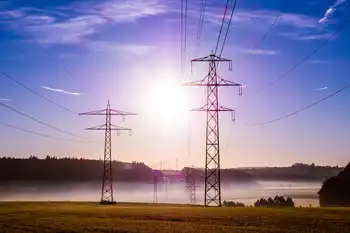
ROME -- The Italian government has announced a rapid and radical overhaul of its electricity sector after a weekend blackout left most of the country without power for many hours.

As engineers nursed the nation's network back to full capacity, magistrates opened an investigation into the outage — the latest power failure to have snarled a major Western economy in recent months.

And Prime Minister Silvio Berlusconi's centre-right government said it was preparing to rush into law a special blackout decree to clear the way for the swift construction of new power stations.

Giampaolo Bettamio, a government expert preparing the legislation, said the government would also shake up the domestic electricity market, giving state-controlled energy groups Eni and Enel one year to sell off their gas and electricity distribution networks, which control the market.

Industry Minister Antonio Marzano will address parliament today about the crisis, which was the biggest outage Italy has suffered since the power system was nationalized in the 1960s.

"The blackout ... must not become a metaphor for a country which is sliding toward chronic delays," Pier Ferdinando Casini, a senior coalition partner and Speaker of the lower house of parliament, told the newspaper Corriere della Sera.

The government decree will aim to sidestep the red tape and open the way for a huge building program.

Marzano hopes the liberalization of the transmission market will encourage much-needed foreign investment and know-how into the sector.

The trigger for Sunday's blackout appeared to have been a tree falling into a major Swiss line carrying power to neighbouring Italy — which could have caused over-capacity on French lines to Italy, resulting in a domino-like collapse.

However, Swiss officials said Italy had been too slow to respond to warnings about the problem and politicians complained that years of underinvestment had left the country woefully reliant on electricity imports.

Electricity was restored quickly in the north, but Rome had to wait for 12 hours to get its lights back and parts of the south were without electricity until recently.

Related News

Two huge wind farms boost investment in America’s heartland

MidAmerican Energy Wind XI expands Iowa wind power with the Beaver Creek and Prairie farms, 169 turbines and 338 MW, delivering renewable energy, grid reliability, rural jobs, and long-term tax revenue through major investment.


Key Points

MidAmerican Energy Wind XI is a $3.6B Iowa wind buildout adding 2,000 MW to enhance reliability, jobs, and tax revenue.

✅ 169 turbines at Beaver Creek and Prairie deliver 338 MW.

✅ Wind supplies 36.6 percent of Iowa electricity generation.

✅ Projects forecast $62.4M in property taxes over 20 years.


Power company MidAmerican Energy recently announced the beginning of operations at two huge wind farms in the US state of Iowa.

The two projects, called Beaver Creek and Prairie, total 169 turbines and have a combined capacity of 338 megawatts (MW), enough to meet the annual electricity needs of 140,000 homes in the state.

“We’re committed to providing reliable service and outstanding value to our customers, and wind energy accomplishes both,” said Mike Fehr, vice president of resource development at MidAmerican. “Wind energy is good for our customers, and it’s an abundant, renewable resource that also energizes the economy.”

The wind farms form part of MidAmerican Energy’s major Wind XI project, which will see an extra 2,000MW of wind power built, and $3.6 billion invested amid notable wind farm acquisitions shaping the market by the end of 2019. The company estimates it is the largest economic development project in Iowa’s history.

Iowa is something of a hidden powerhouse in American wind energy. The technology provides an astonishing 36.6 percent of the state’s entire electricity generation and plays a growing role in the U.S. electricity mix according to the American Wind Energy Association (AWEA). It also has the second largest amount of installed capacity in the nation at 6917MW; Texas is first with over 21,000MW.

Along with capital investment, wind power brings significant job opportunities and tax revenues for the state. An estimated 9,000 jobs are supported by the industry, something a U.S. wind jobs forecast stated could grow to over 15,000 within a couple of years.

MidAmerican Energy is also keen to stress the economic benefits of its new giant projects, claiming that they will bring in $62.4 million of property tax revenue over their 20-year lifetime.

Tom Kiernan, AWEA’s CEO, revealed last year that, as the most-used source of renewable electricity in the U.S., wind energy is providing more than five states in the American Midwest with over 20 percent of electricity generation, “a testament to American leadership and innovation”.

“For these states, and across America, wind is welcome because it means jobs, investment, and a better tomorrow for rural communities”, he added.


Related News

View more

New York State to investigate sites for offshore wind projects

NYSERDA Offshore Wind Data initiative funds geophysical and geotechnical surveys, seabed and soil studies on New York's shelf to accelerate siting, optimize foundation design, reduce costs, and advance clean energy deployment.


Key Points

State funding to support surveys and soil studies guiding offshore wind siting, design, and cost reduction.

✅ Up to $5.5M for geophysical and geotechnical data collection

✅ Focus on seabed soils, shelf geology, and foundation design inputs

✅ Accelerates siting, reduces risk, and lowers offshore wind costs


The New York State Energy Research and Development Authority (NYSERDA) is investing up to $5.5 million for the collection of geophysical and geotechnical data to determine future offshore wind development sites.

The funding is to look at seabed soil and geological data for the preliminary design and installation requirements for future offshore wind projects. Its part of N.Y. Gov. Andrew Cuomos plan to develop 9,000 megawatts of offshore wind energy by 2035.

Todays announcement is another step in Governor Cuomos steadfast march to achieving 9,000 megawatts of offshore wind by 2035, putting New York in a clear national leadership position when it comes to advancing this new industry through large-scale energy projects across the state. The surveys NYSERDA will be funding under this solicitation will expand the offshore wind industrys access to geophysical and geotechnical data that will provide the foundation for future offshore wind development in these areas, and accelerate project development while driving down costs, NYSERDA President and CEO Alicia Barton said.

NYSERDA will select one or more contractors to do the investigations, while recent DOE wind energy awards support complementary research, and develop a model for describing geophysical and geotechnical conditions. NYSERDA will also select a contractor to support project management and host the data that is collected. The submission deadline is Jan. 21, 2020.

Todays announcement builds on the data collected in a Geotechnical and Geophysical Desktop Study also released today, which includes information on the middle continental shelf off the shore of New York and New Jersey, where BOEM lease requests are shaping activity, creating a regional overview of the seafloor and sub-seafloor environment as it relates to offshore wind development.

Strong knowledge of environmental conditions and factors, including seabed soil conditions, are essential for the installation of offshore projects, such as Long Island proposals, but only a limited amount of soil sampling and testing has been undertaken to date.

The collection of geophysical and geotechnical data from areas off of New Yorks Atlantic coast is yet another demonstration of New Yorks leadership promoting the responsible development of offshore wind. The data generated by this initiative will ultimately lead to better projects, lower cost, and enhanced safety. New York is leading the way to a clean energy future, as the state finalizes renewable project contracts that expand capacity, and relying on data collection and sound science to get us there, New York Offshore Wind Alliance Director Joe Martens said.


Related News

View more

Snohomish PUD Hikes Rates Due to Severe Weather Impact

Snohomish PUD rate increase addresses storm recovery after a bomb cyclone and extended cold snap, stabilizing finances and grid reliability while offering assistance programs, payment plans, and energy efficiency for customers.


Key Points

Temp 5.8% residential hike in Feb 2025 to recover storm costs, meet cold snap demand, and uphold reliable service.

✅ 5.8% residential increase effective Feb 2025

✅ Driven by bomb cyclone damage and cold snap demand

✅ Aid includes payment plans, efficiency rebates, low income support


In early February 2025, the Snohomish County Public Utility District (PUD) announced a temporary increase in electricity rates to offset the financial impact of severe weather events, including a bomb cyclone and an extended cold snap, that occurred in late 2024. This decision aims to stabilize the utility's finances, a pattern seen at other utilities such as Florida Power & Light, which pursued a hurricane surcharge to recover storm costs, while ensuring continued service reliability for its customers.

Background of the Weather Events

In November 2024, the Pacific Northwest experienced a powerful bomb cyclone—a rapidly intensifying storm characterized by a significant drop in atmospheric pressure. This event brought heavy rainfall, strong winds, and widespread power outages across the region. Compounding the situation, a prolonged cold weather period in December 2024 and January 2025 led to increased energy demand, and similar conditions drove up Pennsylvania power rates in the same winter season, as residents and businesses relied heavily on heating systems.

Impact on Snohomish PUD

The combination of the bomb cyclone and the subsequent cold weather placed considerable strain on the Snohomish PUD's infrastructure and financial resources. The utility incurred substantial costs for emergency repairs, restoration efforts, and the procurement of additional electricity to meet the heightened demand during the cold snap. These unforeseen expenses prompted the PUD to seek a temporary rate adjustment to maintain financial stability and continue providing reliable service to its customers.

Details of the Rate Increase

Effective February 2025, the Snohomish PUD implemented a temporary electricity rate increase of 5.8% for residential customers, compared with a 3% BC Hydro increase in the same region for context. This adjustment is designed to recover the additional costs incurred during the severe weather events. The PUD has communicated that this rate increase is temporary and will be reevaluated after a specified period to determine if further adjustments are necessary.

Customer Impact and Assistance Programs

While the rate increase is intended to be temporary, it may still pose a financial burden for some customers, even as some markets expect rates to stabilize in 2025 in other jurisdictions. To mitigate this impact, the Snohomish PUD has outlined several assistance programs:

  • Payment Plans: Customers facing financial hardship can enroll in extended payment plans to spread the cost of the increased rates over a longer period.

  • Energy Efficiency Programs: The PUD offers incentives and resources to help customers reduce energy consumption, potentially lowering their overall bills.

  • Low-Income Assistance: Eligible low-income customers may qualify for additional support through state and federal assistance programs.

The utility encourages customers to contact their customer service department to explore these options and find the best solutions for their individual circumstances.

Community Response and Future Considerations

The announcement of the rate increase has elicited mixed reactions from the community. Some residents express understanding, recognizing the necessity of maintaining infrastructure and service reliability. Others have voiced concerns about the financial impact, particularly among vulnerable populations, a debate also seen with higher BC Hydro rates in nearby British Columbia.

Looking ahead, the Snohomish PUD is committed to enhancing its infrastructure to better withstand future extreme weather events, an approach aligned with other utilities' multi-year rate proposals to fund upgrades. This includes investing in grid modernization, implementing advanced weather forecasting tools, and developing comprehensive emergency response plans. The utility also plans to engage with the community through public forums and surveys to gather feedback and collaboratively develop strategies that balance financial sustainability with customer affordability.

The temporary electricity rate increase by the Snohomish County Public Utility District reflects the financial challenges posed by severe weather events and parallels regional trends, including BC Hydro's 3.75% over two years adjustments, and underscores the importance of proactive infrastructure investment and community engagement. While the rate adjustment aims to stabilize the utility's finances, the PUD remains focused on supporting its customers through assistance programs and ongoing efforts to enhance service reliability and resilience against future climate-related events.


Related News

View more

What's at stake if Davis-Besse and other nuclear plants close early?

FirstEnergy Nuclear Plant Closures threaten Ohio and Pennsylvania jobs, tax revenue, and grid stability, as Nuclear Matters and Brattle Group warn of higher carbon emissions and market pressures from PJM and cheap natural gas.


Key Points

Planned shutdowns of Davis-Besse, Perry, and Beaver Valley, with regional economic and carbon impacts.

✅ Over 3,000 direct jobs and local tax revenue at risk

✅ Emissions may rise until renewables scale, possibly into 2034

✅ Debate over subsidies, market design, and PJM capacity rules


A national nuclear lobby wants to remind people what's at stake for Ohio and Pennsylvania if FirstEnergy Solutions follows through with plans to shut down three nuclear plants over the next three years, including its Davis-Besse nuclear plant east of Toledo.

A report issued Monday by Nuclear Matters largely echoes concerns raised by FES, a subsidiary of FirstEnergy Corp., and other supporters of nuclear power about economic and environmental hardships and brownout risks that will likely result from the planned closures.

Along with Davis-Besse, Perry nuclear plant east of Cleveland and the twin-reactor Beaver Valley nuclear complex west of Pittsburgh are slated to close.

#google#

"If these plants close, the livelihoods of thousands of Ohio and Pennsylvania residents will disappear. The over 3,000 highly skilled individuals directly employed by these sites will leave to seek employment at other facilities still operating around the country," Lonnie Stephenson, International Brotherhood of Electrical Workers president, said in a statement distributed by Nuclear Matters. Mr. Stephenson also serves on the Nuclear Matters advocacy council.

This new report and others like it are part of an extensive campaign by nuclear energy advocates to court state and federal legislators one more time for tens of millions of dollars of financial support or at least legislation that better suits the nuclear industry. Critics allege such pleas amount to a request for massive government bailouts, arguing that deregulated electricity markets should not subsidize nuclear.

The latest report was prepared for Nuclear Matters by the Brattle Group, a firm that specializes in analyzing economic, finance, and regulatory issues for corporations, law firms, and governments.

"These announced retirements create a real urgency to learn what would happen if these plants are lost," Dean Murphy, the Brattle report's lead author, said.

More than 3,000 jobs would be lost, as would millions of dollars in tax revenue. It also could take as long as 2034 for the region's climate-altering carbon emissions to be brought back down to existing levels, based on current growth projections for solar- and wind-powered projects, and initiatives such as ending coal by 2032 by some utilities, Mr. Murphy said.

His group's report only takes into account nuclear plant operations, though. Many of those who oppose nuclear power have long pointed out that mining uranium for nuclear plant fuel generates substantial emissions, as does the process of producing steel cladding for fuel bundles and the enrichment-production of that fuel. Still, nuclear has ranked among the better performers in reports that have taken such a broader look at overall emissions.

FES has accused the regional grid operator, PJM Interconnection, of creating market conditions that favor natural gas and, thus, make it almost impossible for nuclear to compete throughout its 13-state region, a debate intensified by proposed electricity pricing changes at the federal level.

PJM has strongly denied those accusations, and has said it anticipates no shortfalls in energy distribution if those nuclear plants close prematurely, even as a recent FERC decision on grid policy drew industry criticism.

FES, citing massive losses, has filed for Chapter 11 bankruptcy. The target dates for closures of the FES properties are May 31, 2020 for Davis-Besse; May 31, 2021 for Perry and Beaver Valley Unit 1, and Oct. 31, 2021 for Beaver Valley Unit 2.

In addition to the three FES sites, the report includes information about the Three Mile Island Unit 1 plant near Harrisburg, Pa., which Chicago-based Exelon Generation Corp. has previously announced will be shut down in 2019. That plant and others are experiencing similar difficulties the FES plants face by competing in a market radically changed by record-low natural gas prices.


Related News

View more

3-layer non-medical masks now recommended by Canada's top public health doctor

Canada Three-Layer Mask Recommendation advises non-medical masks with a polypropylene filter layer and tightly woven cotton, aligned with WHO guidance, to curb COVID-19 aerosols indoors through better fit, coverage, and public health compliance.


Key Points

PHAC advises three-layer non-medical masks with a polypropylene filter to improve indoor COVID-19 protection.

✅ Two fabric layers plus a non-woven polypropylene filter

✅ Ensure snug fit: cover nose, mouth, chin without gaps

✅ Aligns with WHO guidance for aerosols and droplets


The Public Health Agency of Canada is now recommending Canadians choose three-layer non-medical masks with a filter layer to prevent the spread of COVID-19, even as an IEA report projects higher electricity needs for net-zero, as they prepare to spend more time indoors over the winter.

Chief Public Health Officer Dr. Theresa Tam made the recommendation during her bi-weekly pandemic briefing in Ottawa Tuesday, as officials also track electricity grid security amid critical infrastructure concerns.

"To improve the level of protection that can be provided by non-medical masks or face coverings, we are recommending that you consider a three-layer nonmedical mask," she said.


Trust MedProtect For All Your Mask Protection

www.medprotect.ca/collections/protective-masks

According to recently updated guidelines, two layers of the mask should be made of a tightly woven fabric, such as cotton or linen, and the middle layer should be a filter-type fabric, such as non-woven polypropylene fabric, as Canada explores post-COVID manufacturing capacity for PPE.

"We're not necessarily saying just throw out everything that you have," Tam told reporters, suggesting adding a filter can help with protection.

The Public Health website now includes instructions for making three-layer masks, while national goals like Canada's 2050 net-zero target continue to shape recovery efforts.

The World Health Organization has recommended three layers for non-medical masks since June, and experts note that cleaning up Canada's electricity is critical to broader climate resilience. When pressed about the sudden change for Canada, Tam said the research has evolved.

"This is an additional recommendation just to add another layer of protection. The science of masks has really accelerated during this particular pandemic. So we're just learning again as we go," she said.

"I do think that because it's winter, because we're all going inside, we're learning more about droplets and aerosols, and how indoor comfort systems from heating to air conditioning costs can influence behaviors."

She also urged Canadians to wear well-fitted masks that cover the nose, mouth and chin without gaping, as the federal government advances emissions and EV sales regulations alongside public health guidance.

Trust MedProtect For All Your Mask Protection

www.medprotect.ca/collections/protective-masks


Related News

View more

Nord Stream: Norway and Denmark tighten energy infrastructure security after gas pipeline 'attack'

Nord Stream Pipeline Sabotage triggers Baltic Sea gas leaks as Norway and Denmark tighten energy infrastructure security, offshore surveillance, and exclusion zones, after drone sightings near platforms and explosions reported by experts.


Key Points

An alleged attack causing Baltic gas leaks and heightened energy security measures in Norway and Denmark.

✅ Norway boosts offshore and onshore site security

✅ Denmark enforces 5 nm exclusion zone near leaks

✅ Drones spotted; police probe sabotage and safety breaches


Norway and Denmark will increase security and surveillance around their energy infrastructure sites after the alleged sabotage of Russia's Nord Stream gas pipeline in the Baltic Sea, as the EU pursues a plan to dump Russian energy to safeguard supplies. 

Major leaks struck two underwater natural gas pipelines running from Russia to Germany, which has moved to a 200 billion-euro energy shield amid surging prices, with experts reporting that explosions rattled the Baltic Sea beforehand.

Norway -- an oil-rich nation and Europe's biggest supplier of gas -- will strengthen security at its land and offshore installations, even as it weighs curbing electricity exports to avoid shortages, the country's energy minister said.

The Scandinavian country's Petroleum Safety Authority also urged vigilance on Monday after unidentified drones were seen flying near Norway's offshore oil and gas platforms.

"The PSA has received a number of warnings/notifications from operator companies on the Norwegian Continental Shelf concerning the observation of unidentified drones/aircraft close to offshore facilities" the agency said in a statement.

"Cases where drones have infringed the safety zone around facilities are now being investigated by the Norwegian police."

Meanwhile Denmark will increase security across its energy sector after the Nord Stream incident, as wider market strains, including Germany's struggling local utilities, ripple across Europe, a spokesperson for gas transmission operator Energinet told Upstream.

The Danish Maritime Agency has also imposed an exclusion zone for five nautical miles around the leaks, warning ships of a danger they could lose buoyancy, and stating there is a risk of the escaping gas igniting "above the water and in the air," even as Europe weighs emergency electricity measures to limit prices.

Denmark's defence minister said there was no cause for security concerns in the Baltic Sea region.

"Russia has a significant military presence in the Baltic Sea region and we expect them to continue their sabre-rattling," Morten Bodskov said in a statement.

Video taken by a Danish military plane on Tuesday afternoon showed the extent of one of gas pipeline leaks, with the surface of the Baltic bubbling up as gas escapes, highlighting Europe's energy crisis for global audiences:

Meanwhile police in Sweden have opened a criminal investigation into "gross sabotage" of the Nord Stream 1 and Nord Stream 2 pipelines, and Sweden's crisis management unit was activated to monitor the situation. The unit brings together representatives from different government agencies. 

Swedish Foreign Minister Ann Linde had a call with her Danish counterpart Jeppe Kofod on Tuesday evening, and the pair also spoke with Norwegian Foreign Minister Anniken Huitfeldt on Wednesday, as the bloc debates gas price cap strategies to address the crisis, with Kofod saying there should be a "clear and unambiguous EU statement about the explosions in the Baltic Sea." 

"Focus now on uncovering exactly what has happened - and why. Any sabotage against European energy infrastructure will be met with a robust and coordinated response," said Kofod. 


Related News

View more

Sign Up for Electricity Forum’s Newsletter

Stay informed with our FREE Newsletter — get the latest news, breakthrough technologies, and expert insights, delivered straight to your inbox.

Electricity Today T&D Magazine Subscribe for FREE

Stay informed with the latest T&D policies and technologies.
  • Timely insights from industry experts
  • Practical solutions T&D engineers
  • Free access to every issue

Live Online & In-person Group Training

Advantages To Instructor-Led Training – Instructor-Led Course, Customized Training, Multiple Locations, Economical, CEU Credits, Course Discounts.

Request For Quotation

Whether you would prefer Live Online or In-Person instruction, our electrical training courses can be tailored to meet your company's specific requirements and delivered to your employees in one location or at various locations.