Power Plant Construction Hits Record Year

By PR Newswire


Protective Relay Training - Basic

Our customized live online or in‑person group training can be delivered to your staff at your location.

  • Live Online
  • 12 hours Instructor-led
  • Group Training Available
Regular Price:
$699
Coupon Price:
$599
Reserve Your Seat Today
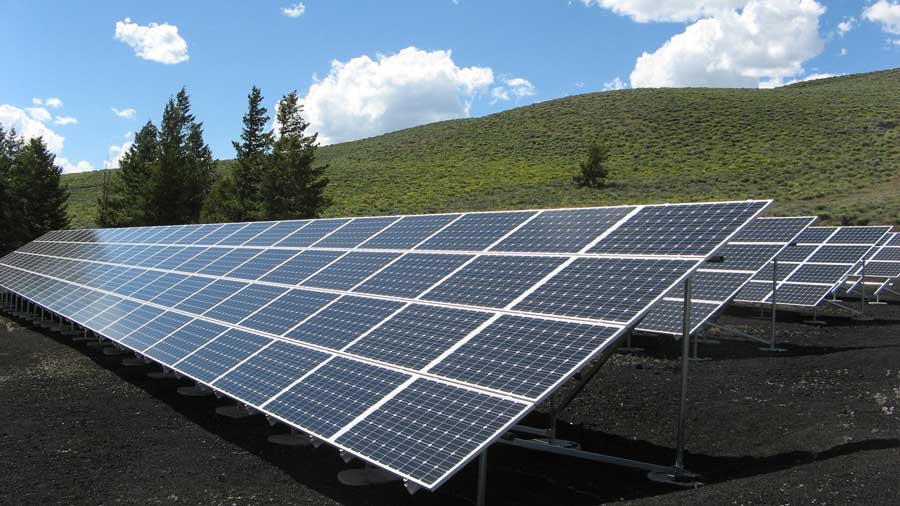
More than 54,000 megawatts of new US power generation were completed in 2002, a record year for construction despite the ongoing financial problems at many energy companies, according to Energy Argus.

The 54,019MW is about three-quarters of the plants expected to come online last year, showing the impact of spending cuts at some utilities. Nearly all of the new plants are fueled by natural gas, which is capturing a growing share of the electric generation fleet.

While electricity demand in 2002 rose 2.8 percent, faster than expected, the growth in new supply was closer to 7 percent. That has led power prices in many regions to drop and power producers and trading firms to struggle.

Related News
Hydro One bends to government demands, caps CEO pay at $1.5M

Hydro One CEO Pay Cap sets executive compensation at $1.5 million under Ontario's provincial directive, linking incentives to transmission and distribution cost reductions, governance improvements, and board pay limits at the electricity utility.


Key Points

The Hydro One CEO Pay Cap limits pay to $1.5M, linking incentives to cost reductions and defined targets.

✅ Base salary set at $500,000 per year.

✅ Incentives capped at $1,000,000, tied to cost cuts.

✅ Board pay capped: chair $120,000; members $80,000.


Hydro One has agreed to cap the annual compensation of its chief executive at $1.5 million, the provincial utility said Friday, acquiescing to the demands of the Progressive Conservative government.

The CEO's base salary will be set at $500,000 per year, while short-term and long-term incentives are limited to $1 million. Performance targets under the pay plan will include the CEO's contributions to reductions in transmission and distribution costs, even as Hydro One has pursued a bill redesign to clarify charges for customers.

The framework represents a notable political victory for Premier Doug Ford, who vowed to fire Hydro One's CEO and board during the campaign and promised to reduce the annual earnings of Hydro One's board members.

In February, the province issued a directive to the board, ordering it to pay the utility's CEO no more than the $1.5 million figure it has now agreed to, as part of a broader push to lower electricity rates across Ontario.

Hydro One and the government had been at loggerheads over executive compensation, with the company refusing repeated requests to slash the CEO pay below $2,775,000. The board argued it would have difficulty recruiting suitable leaders for anything less, even as customers contend with a recovery rate that could raise hydro bills.

Further, the company agreed to pay the board chair no more than $120,000 annually and board members no more than $80,000 — figures Energy Minister Greg Rickford had outlined in his directive last month, amid calls for cleaning up Ontario's hydro mess from policy commentators.

"Hydro One's compliance with this directive allows us to move forward as a province. It sets the company on the right course for the future, proving that it can operate as a top-class electricity utility while reining in executive compensation and increasing public transparency," Rickford said in a statement issued Friday morning.


Related News

View more

Abu Dhabi seeks investors to build hydrogen-export facilities

ADNOC Hydrogen Export Projects target global energy transition, courting investors and equity stakes for blue and green hydrogen, ammonia shipping, CCS at Ruwais, and long-term supply contracts across power, transport, and industrial sectors.


Key Points

ADNOC plans blue and green hydrogen exports, leveraging Ruwais, CCS, and ammonia to secure long-term supply.

✅ Blue hydrogen via gas reforming with CCS; ammonia for shipping.

✅ Green hydrogen from solar-powered electrolysis under development.

✅ Ruwais expansions and Fertiglobe ammonia tie-up target long-term supply.


Abu Dhabi is seeking investors to help build hydrogen-export facilities, as Middle Eastern oil producers plan to adopt cleaner energy solutions, sources told Bloomberg.

Abu Dhabi National Oil Company (ADNOC) is holding talks with energy companies for them to purchase equity stakes in the hydrogen projects, the sources referred, as Germany's hydrogen strategy signals rising import demand.

ADNOC, which already produces hydrogen for its refineries, also aims to enter into long-term supply contracts, as Canada-Germany clean energy cooperation illustrates growing cross-border demand, before making any progress with these investments.

Amid a global push to reduce greenhouse-gas emissions, the state-owned oil companies in the Gulf region seek to turn their expertise in exporting liquid fuel into shipping hydrogen or ammonia across the world for clean and universal electricity needs, transport, and industrial use.

Most of the ADNOC exports are expected to be blue hydrogen, created by converting natural gas and capturing the carbon dioxide by-product that can enable using CO2 to generate electricity approaches, according to Bloomberg.

The sources said that the Abu Dhabi-based company will raise its production of hydrogen by expanding an oil-processing plant and the Borouge petrochemical facility at the Ruwais industrial hub, supporting a sustainable electric planet vision, as the extra hydrogen will be used for an ammonia facility planned with Fertiglobe.

Abu Dhabi also plans to develop green hydrogen, similar to clean hydrogen in Canada initiatives, which is generated from renewable energy such as solar power.

Noteworthy to mention, in May 2021, ADNOC announced that it will construct a world-scale blue ammonia production facility in Ruwais in Abu Dhabi to contribute to the UAE's efforts to create local and international hydrogen value chains.


Related News

View more

Electrifying Manitoba: How hydro power 'absolutely revolutionized' the province

Manitoba Electrification History charts arc lights, hydroelectric dams, Winnipeg utilities, transmission lines, rural electrification, and Manitoba Hydro to today's wind, solar, and EV transition across the provincial power grid, driving modernization and reliability.


Key Points

Manitoba's power evolution from arc lights to hydro and rural electrification, advancing wind and solar on a modern grid.

✅ 1873 Winnipeg arc light predates Edison and Bell.

✅ 1919 Act built transmission lines, rural electrification.

✅ Hydroelectric dams reshaped lands and affected First Nations.


The first electric light in Manitoba was turned on in Winnipeg in 1873, but it was a century ago this year that the switch was flipped on a decision that would bring power to the fingertips of people across the province.

On March 12, 1873, Robert Davis — who owned the Davis House hotel on Main Street, about a block from Portage Avenue — used an electric arc light to illuminate the front of his building, according to A History of Electric Power in Manitoba, published by Manitoba Hydro.

That type of light used an an inert gas in a glass container to create an electric arc between two metal electrodes.

"The lamp in front of the Davis Hotel is quite an institution," a Manitoba Free Press report from the day said. "It looks well and guides the weary traveller to a haven of rest, billiards and hot drinks."

A ladder crew from the Winnipeg Electric Street Railway Company working on an electric trolley line in 1905. (I.F. Allen/Manitoba Hydro archives)

The event took place six years before Thomas Edison's first incandescent lamp was invented and three years before the first complete sentence was spoken over the telephone by Alexander Graham Bell.

"Electrification probably had a bigger influence on the lives of Manitobans than virtually anything else," said Gordon Goldsborough, head researcher with the Manitoba Historical Society.

"It's one of the most significant changes in the lives of Manitobans ever, because basically it transformed so many aspects of their lives. It wasn't just one thing — it touched pretty much every aspect of life."


Winnipeg gets its 1st street lamps

In the pioneer days of lighting and street railway transportation in Winnipeg, multiple companies formed in an effort to take advantage of the new utility: Winnipeg Gas Company, Winnipeg General Power Company, Manitoba Electric and Gas Light Company, and The North West Electric Light and Power Company.

In October 1882, the first four street lamps, using electric arc lights, were turned on along Main Street from Broadway to the CPR crossing over the Assiniboine River.

They were installed privately by P.V. Carroll, who came from New York to establish the Manitoba Electric Light & Power Company and try to win a contract for illuminating the rest of the city's streets.

He didn't get it. Newspaper reports from the time noted many outages and other problems and general disappointment in the quality of the light.

Instead, the North West Electric Light and Power Company won that contract and in June 1883 it lit up the streets.

Workers erect a wooden hydro pole beside the Belmont Hotel in 1936. Belmont is a small community southeast of Brandon. (Manitoba Hydro archives)

Over the years, other companies would bring power to the city as it became more reliable, including the Winnipeg Electric Street Railway Company (WERCo), which built the streetcar system and sold electric heat, light and power.

But it was the Brandon Electric Light Company that first tapped into a new source of power — hydro. In 1900, a dam was built across the Minnedosa River (now known as the Little Saskatchewan River) in western Manitoba, and the province's first hydroelectric generating station was created.

The first transmission line was also built, connecting the station with Brandon.

By 1906, WERCo had taken over the Winnipeg General Power Company and the Manitoba Electric and Gas Light Company, and changed its name to the Winnipeg Electric Railway Company. Later, it became the Winnipeg Electric Company, or WECo.

It also took a cue from Brandon, building a hydroelectric plant to provide more power. The Pinawa dam site operated until 1951 and is now a provincial park.

The Minnedosa River plant was the first hydroelectric generating station in Manitoba. (Manitoba Hydro archives)

The City of Winnipeg Hydroelectric System was also formed in 1906 as a public utility to combat the growing power monopoly held by WECo, and to get cheaper power. The city had been buying its supply from the private company "and the City of Winnipeg didn't quite like that price," said Bruce Owen, spokesman for Manitoba Hydro.

So the city funded and built its own dam and generating station site on the Winnipeg River in Pointe du Bois — about 125 kilometres northeast of Winnipeg — which is still in operation today.

"All of a sudden, not only did we have street lights … businesses had lights, power was supplied to homes, people no longer had to cook on wood stoves or walk around with kerosene lanterns. This city took off," said Owen.

"It helped industry grow in the city of Winnipeg. Within a few short years, a second plant had to be built, at Slave Falls."


Lighting up rural Manitoba

While the province's two biggest cities enjoyed the luxury of electricity and the conveniences it brought, the patchwork of power suppliers had also created a jumble of contracts with differing rates and terms, spurring periodic calls for a western Canadian electricity grid to improve coordination.

Meanwhile, most of rural Manitoba remained in the dark.

The Pinawa Dam was built by the Winnipeg Electric Street Railway Company in 1906 and operated until 1951. (Manitoba Hydro archives)

The Pinawa Dam site now, looking like some old Roman ruins. (Darren Bernhardt/CBC)

That began to change in 1919 when the Manitoba government passed the Electric Power Transmission Act, with the aim of supplying rural Manitoba with electrical power. The act enabled the construction of transmission lines to carry electricity from the Winnipeg River generating stations to communities all over southern Manitoba.

It also created the Manitoba Power Commission, predecessor to today's Manitoba Hydro, to purchase power from the City of Winnipeg — and later WECo — to supply to those other communities.

The first transmission line, a 97-kilometre link between Winnipeg and Portage la Prairie, opened in late 1919, and modern interprovincial projects like Manitoba-Saskatchewan power line funding continue that legacy today. The power came from Pointe du Bois to a Winnipeg converter station that still stands at the corner of Stafford Street and Scotland Avenue, then went on to Portage la Prairie.

"That's the remarkable thing that started in 1919," said Goldsborough.

Every year after that, the list of towns connected to the power grid became longer "and gradually, over the early 20th century, the province became electrified," Goldsborough said.

"You'd see these maps that would spider out across the province showing the [lines] that connected each of these communities — a precursor to ideas like macrogrids — to each other, and it was really quite remarkable."

By 1928, 33 towns were connected to the Manitoba Power Commission grid. That rose to 44 by 1930 and 140 by 1939, according to the Manitoba Historical Society.


Power on the farm

Still, one group who could greatly use electricity for their operations — farmers — were still using lanterns, steam and coal for light, heat and power.

"The power that came to the [nearest] town didn't extend to them," said Goldsborough.

It was during the Second World War, as manual labour was hard to come by on farms, that the Manitoba Power Commission recognized the gap in its grid.

It met with farmers to explain the benefits electricity could bring and surveyed their interest. When the war ended in 1945, the farm electrification process got underway.

Employees, their spouses, and children pose for a photo outside of Great Falls generating station in 1923. (Manitoba Hydro archives)

Farmers were taught wiring techniques and about the use of motors for farm equipment, as well as about electric appliances and other devices to ease the burden of domestic life.

"The electrification of the 1940s and '50s absolutely revolutionized rural life," said Goldsborough.

"Farmers had to provide water for all those animals and in a lot of cases [prior to electrification] they would just use a hand pump, or sometimes they'd have a windmill. But these were devices that weren't especially reliable and they weren't high capacity."

Electric motors changed everything, from pumping water to handling grain, while electric heat provided comfort to both people and animals.

Workers build a hydro transmission line tower in an undated photo from Manitoba Hydro. (Manitoba Hydro archives)

"Now you could have heat lamps for your baby chickens. They would lose a lot of chickens normally, because they would simply be too cold," Goldsborough said.

Keeping things warm was important, but so too was refrigeration. In addition to being able to store meat in summer, it was "something to prolong the life of dairy products, eggs, anything," said Manitoba Hydro's Owen.

"It's all the things we take for granted — a flick of a switch to turn the lights on instead of walking around with a lantern, being able to have maybe a bit longer day to do routine work because you have light."

Agriculture was the backbone of the province but it was limited without electricity, said Owen.

Connecting it to the grid "brought it into the modern age and truly kick-started it to make it a viable part of our economy," he said. "And we still see that today."

In 1954, when the farm electrification program ended, Manitoba was the most wired of the western provinces, with 75 per cent of farms and 100,000 customers connected.

The success of the farm electrification program, combined with the post-war boom, brought new challenges, as the existing power generation could not support the new demand.

The three largest players — City Hydro, WECo and the Manitoba Power Commission, along with the provincial government  — created the Manitoba Hydro-Electric Board in 1949 to co-ordinate generation and distribution of power.

A float in a Second World War victory parade represents a hydroelectric dam and the electricity it generates to power cities. (Manitoba Hydro archives)

More hydroelectric generating stations were built and more reorganizations took place. WECo was absorbed by the board and its assets split into separate companies — Greater Winnipeg Gas and Greater Winnipeg Transit.

Its electricity distribution properties were sold to City Hydro, which became the sole distributor in central Winnipeg. The Manitoba Power Commission became sole distributor of electricity in the suburbs and the rest of Manitoba.


Impacts on First Nations

Even as the lives of many people in the province were made easier by the supply of electricity, many others suffered from negative impacts in the rush of progress.

Many First Nations were displaced by hydro dams, which flooded their ancestral lands and destroyed their traditional ways of life.

"And we hear stories about the potential abuses that occurred," said Goldsborough. "So you know, there are there pluses but there are definitely minuses."

In the late 1950s, the Manitoba Power Commission continued to grow and expand its reach, this time moving into the north by buying up private utilities in The Pas and Cranberry Portage.

In 1961, the provincial government merged the commission with the Manitoba Hydro-Electric Board to create Manitoba Hydro.

In 1973, 100 years after the first light went on at that Main Street hotel, the last of the independent power utilities in the province — the Northern Manitoba Power Company Ltd. — was taken over by Hydro.

Winnipeg Hydro, previously called City Hydro, joined the fold in 2002.

Today, Manitoba Hydro operates 15 generating stations and serves 580,262 electric power customers in the province, as well as 281,990 natural gas customers.


New era

And now, as happened in 1919, a new era in electricity distribution is emerging as alternative sources of power — wind and solar — grow in popularity, and as communities like Fort Frances explore integrated microgrids for resilience.

"There's a bit of a clean energy shift happening," said Owen, adding use of biomass energy — energy production from plant or animal material — is also expanding.

"And there's a technological change going on and that's the electrification of vehicles. There are only really several hundred [electric vehicles] in Manitoba on the streets right now. But we know at some point, with affordability and reliability, there'll be a switch over and the gas-powered internal combustion engine will start to disappear."

'We're just a little behind here': Manitoba electric vehicle owners call for more charging stations

That means electrical utilities around the world are re-examining their capabilities, as climate change increasingly stresses grids, said Owen.

"It's coming [and we need to know], are we in a position to meet it? What will be the demands on the system on a path to a net-zero grid by 2050 nationwide?" he said.

"It may not come in my lifetime, but it is coming."


Related News

View more

27 giant parts from China to be transported to wind farm in Saskatchewan

Port of Vancouver Wind Turbine Blades arrive from China for a Saskatchewan wind farm, showcasing record oversized cargo logistics, tandem crane handling, renewable energy capacity, and North America's longest blades from Goldwind.


Key Points

Record-length blades for a Canadian wind farm, boosting renewable energy and requiring heavy-lift logistics at the port.

✅ 27 blades unloaded via tandem cranes with cage supports

✅ 50 turbines headed to Assiniboia over 21 weeks

✅ Largest 250 ft blades to arrive; reduced CO2 vs coal


A set of 220-foot-long wind turbine blades arrived at the Port of Vancouver from China over the weekend as part a shipment bound for a wind farm in Canada, alongside BC generating stations coming online in the region.

They’re the largest blades ever handled by the port, and this summer, even larger blades will arrive as companies expand production such as GE’s blade factory in France to meet demand — the largest North America has ever seen.

Alex Strogen described the scene as crews used two tandem cranes to unload 27 giant white blades from the MV Star Kilimanjaro, which picked up the wind turbine assemblies in China. They were manufactured by Goldwind Co.

“When you see these things come off and put onto these trailers, it’s exceptional in the sheer length of them,” Strogen said. “It looks as long as an airplane.”

In fact, each blade is about as long as the wingspan of a Boeing 747.

Groups of longshoremen attached the cranes to each blade and hoisted it into the air and onto a waiting truck. Metal cage-like devices on both ends kept the blades from touching the ground. Once loaded onto the trucks, the blades and shaft parts head to a terminal to be unloaded by another group of workers.

Another fleet of trucks will drive the wind turbines, towers and blades to Assiniboia, Saskatchewan, Canada, over the course of 21 weeks. Potentia Renewables of Toronto is erecting the turbines on 34,000 acres of leased agriculture land, amid wind farm expansion in PEI elsewhere in the country, according to a news release from the Port of Vancouver.

Potentia’s project, called the Golden South Wind Project, will generate approximately 900,000 megawatt-hours of electricity. It also has greatly reduced CO2 emissions compared with a coal-fired plant, and complements tidal power in Nova Scotia in Canada’s clean energy mix, according to the news release.

The project is expected to be operating in 2021, similar to major UK offshore wind additions coming online.

The Port of Vancouver will receive 50 full turbines of two models for the project, as Manitoba invests in new turbines across Canada. In August, the larger of the models, with blades measuring 250 feet, will arrive. They’ll be the longest blades ever imported into any port in North America.

“It’s an exciting year for the port,” said Ryan Hart, chief external affairs officer.

The Port of Vancouver is following all the recommended safety precautions during the COVID-19 pandemic, including social distancing and face masks, Strogen said, with support from initiatives like Bruce Power’s PPE donation across Canada.
As for crews onboard the ships, the U.S. Coast Guard is the agency in charge, and it is monitoring the last port-of-call for all vessels seeking to enter the Columbia River, Hart wrote in an email.

Vessel masters on each ship are responsible for monitoring the health of the crew and are required to report sick or ill crew members to the USCG prior to arrival or face fines and potential arrest.


Related News

View more

Fire in manhole leaves thousands of Hydro-Québec customers without power

Montreal Power Outage linked to Hydro-Que9bec infrastructure after an underground explosion and manhole fire in Rosemont–La Petite–Patrie, disrupting the STM Blue Line and forcing strategic, cold-weather grid restoration on Be9langer Street.


Key Points

Outage from an underground blast and manhole fire disrupted STM service; Hydro-Que9bec restored the grid in cold weather.

✅ Peak impact: 41,000 customers; 10,981 still without power by 7:00 p.m.

✅ STM Blue Line restored after afternoon shutdown; Be9langer Street reopened.

✅ Hydro-Que9bec pacing restoration to avoid grid overload in cold weather.


Hydro-Québec says a power outage affecting Montreal is connected to an underground explosion and a fire in a manhole in Rosemont—La Petite–Patrie. 

The fire started in underground pipes belonging to Hydro-Québec on Bélanger Street between Boyer and Saint-André streets, according to Montreal firefighters, who arrived on the scene at 12:18 p.m.

The electricity had to be cut so that firefighters could get into the manhole where the equipment was located.

At the peak of the shutdown, nearly 41,000 customers were without power across Montreal.  As of 7:00 p.m., 10,981 clients still had no power.

In similar storms, Toronto power outages have persisted for hundreds, underscoring restoration challenges.

Hydro-Québec spokesperson Louis-Olivier Batty said the utility is being strategic about how it restores power across the grid. 

Because of the cold, and patterns seen during freezing rain outages, it anticipates that people will crank up the heat as soon as they get their electricity back, and that could trigger an overload somewhere else on the network, Batty said.

The Metro's Blue line was down much of the afternoon, but the STM announced the line was back up and running just after 4:30 p.m.

Bélanger Street was blocked to traffic much of the afternoon, however, it has now been reopened.

Batty said once the smoke clears, Hydro-Québec workers will take a look at the equipment to see what failed. 


Related News

View more

Spent fuel removal at Fukushima nuclear plant delayed up to 5 years

Fukushima Daiichi decommissioning delay highlights TEPCO's revised timeline, spent fuel removal at Units 1 and 2, safety enclosures, decontamination, fuel debris extraction by robot arm, and contaminated water management under stricter radiation control.


Key Points

A government revised schedule pushing back spent fuel removal and decommissioning milestones at Fukushima Daiichi.

✅ TEPCO delays spent fuel removal at Units 1 and 2 for safety.

✅ Enclosures, decontamination, and robotics mitigate radioactive risk.

✅ Contaminated water cut target: 170 tons/day to 100 by 2025.


The Japanese government decided Friday to delay the removal of spent fuel from the Fukushima Daiichi nuclear power plant's Nos. 1 and 2 reactors by as much as five years, casting doubt on whether it can stick to its timeframe for dismantling the crippled complex.

The process of removing the spent fuel from the units' pools had previously been scheduled to begin in the year through March 2024.

In its latest decommissioning plan, the government said the plant's operator, Tokyo Electric Power Company Holdings Inc., will not begin the roughly two-year process (a timeline comparable to major reactor refurbishment programs seen worldwide) at the No. 1 unit at least until the year through March 2028 and may wait until the year through March 2029.

Work at the No. 2 unit is now slated to start between the year through March 2025 and the year through March 2027, it said.

The delay is necessary to take further safety precautions such as the construction of an enclosure around the No. 1 unit to prevent the spread of radioactive dust, and decontamination of the No. 2 unit, even as authorities have begun reopening previously off-limits towns nearby, the government said. It is the fourth time it has revised its schedule for removing the spent fuel rods.

"It's a very difficult process and it's hard to know what to expect. The most important thing is the safety of the workers and the surrounding area," industry minister Hiroshi Kajiyama told a press conference.

The government set a new goal of finishing the removal of the 4,741 spent fuel rods across all six of the plant's reactors by the year through March 2032, amid ongoing debates about the consequences of early nuclear plant closures elsewhere.

Plant operator TEPCO has started the process at the No. 3 unit and already finished at the No. 4 unit, which was off-line for regular maintenance at the time of the disaster. A schedule has yet to be set for the Nos. 5 and 6 reactors.

While the government maintained its overarching timeframe of finishing the decommissioning of the plant 30 to 40 years from the 2011 crisis triggered by a magnitude 9.0 earthquake and tsunami, there may be further delays, even as milestones at other nuclear projects are being reached worldwide.

The government said it will begin removing fuel debris from the three reactors that experienced core meltdowns in the year through March 2022, starting with the No. 2 unit as part of broader reactor decommissioning efforts.

The process, considered the most difficult part of the decommissioning plan, will involve using a robot arm, reflecting progress in advanced reactors technologies, to initially remove small amounts of debris, moving up to larger amounts.

The government also said it will aim to reduce the pace at which contaminated water at the plant increases. Water for cooling the melted cores, mixed with underground water, amounts to around 170 tons a day. That number will be brought down to 100 tons by 2025, it said.

The water is being treated to remove the most radioactive materials and stored in tanks on the plant's grounds, but already more than 1 million tons has been collected and space is expected to run out by the summer of 2022.


Related News

View more

Sign Up for Electricity Forum’s Newsletter

Stay informed with our FREE Newsletter — get the latest news, breakthrough technologies, and expert insights, delivered straight to your inbox.

Electricity Today T&D Magazine Subscribe for FREE

Stay informed with the latest T&D policies and technologies.
  • Timely insights from industry experts
  • Practical solutions T&D engineers
  • Free access to every issue

Download the 2025 Electrical Training Catalog

Explore 50+ live, expert-led electrical training courses –

  • Interactive
  • Flexible
  • CEU-cerified