U.S. Energy Industry Recovering from 2002

By Pittsburgh Post-Gazette


NFPA 70e Training - Arc Flash

Our customized live online or in‑person group training can be delivered to your staff at your location.

  • Live Online
  • 6 hours Instructor-led
  • Group Training Available
Regular Price:
$199
Coupon Price:
$149
Reserve Your Seat Today
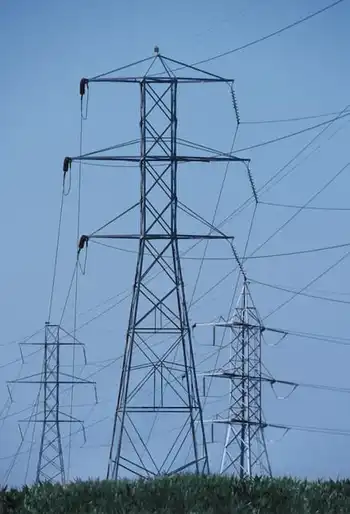
Few industries are as interlaced as coal production and electricity generation.

Coal-fired power plants generate about 60 per cent of the electricity in the United States, and about 90 per cent of the coal produced in the nation is sold to electric generating companies.

With those kinds of numbers, any drop in the demand for electricity is likely to hurt the nation's coal producers -- which explains why "We're all glad to see 2002 go," said Thomas Hoffman, spokesman for Upper St. Clair-based Consol Energy, a major coal and natural gas producer. "It was not a good year for coal."

Indeed, the demand for coal dropped sharply last year, a result of a sluggish US economy and, to a lesser extent, last winter's higher-than-normal temperatures. Consol sold nearly 15 per cent less coal through the year's first nine months than it did during the same period in 2001, leading it to pare production. Its net income plunged during the same period, to $8 million from $139 million the prior year.

No wonder Consol is banking on economists to be right with their predictions of stronger growth this year. For one of Consol's biggest customers, Allegheny Energy Inc., the Hagerstown, Md.-based parent of Allegheny Power, growth may be a necessity.

Allegheny lost $334.4 million during the first nine months of 2002, hurt by the drop in power prices and a collapse in energy trading following Enron Corp.'s bankruptcy in December 2001. The losses and drop in wholesale prices has left it short of cash needed to post collateral on energy trades, forcing it to try to refinance its debt to avert bankruptcy.

As for the region's largest local utility -- DQE Inc.-- last year marked a return to basics, a move it expects to continue this year by completing the divestiture of ancillary units unrelated to its core electric utility businesses. It hopes to soon complete the sale of AquaSource, a water supply and waste-water system it operated in 12 states, and to unveil a plan to provide electric power through the end of the decade even though it no longer generates its own power.

Under Pennsylvania's electric deregulation plan, Duquesne Light remains "the provider of last resort" for customers in its service area who don't chose an alternative supplier. The rates customers pay is capped by the state Public Utility Commission.

The company, which sold its power plants the past few years, has a contract with Reliant Energy to provide power through Dec. 31, 2004 to customers who stick with Duquesne and don't chose another supplier. It has indicated it might seek to sign a contract with more than one power generating company, rather "than putting all our eggs in one basket," as a DQE official put it.

One thing it's not expected to do is to revive plans to build a new power plant -- last year it pitched a $400 million plan to do so, but abandoned it as power prices fell and its own finances suffered.

Related News
Sens. Wyden, Merkley Introduce Bill to Ensure More Wildfire Resilient Power Grid

Wildfire Resilient Power Grid Act proposes DOE grants for utility companies to fund wildfire mitigation, grid resilience upgrades, undergrounding power lines, fast-tripping protection, weather monitoring, and vegetation management, prioritizing rural electric cooperatives.


Key Points

A federal bill funding utility wildfire mitigation and grid hardening via DOE grants, prioritizing rural utilities.

✅ $1B DOE matching grants for grid upgrades and wildfire mitigation.

✅ Prioritizes rural utilities; supports undergrounding and hardening.

✅ Funds fast-tripping protection, weather stations, vegetation management.


U.S. Sens. Ron Wyden and Jeff Merkley today introduced new legislation, amid transmission barriers that persist, to incentivize utility companies to do more to reduce wildfire risks as aging power infrastructure ignite wildfires in Oregon and across the West.

Wyden and Merkley's Wildfire Resilient Power Grid Act of 2020 would ensure power companies do their part to reduce the risk of wildfires through power system upgrades, even as California utility spending crackdown seeks accountability, such as the undergrounding of power lines, fire safety equipment installation and proper vegetation management.

"First and foremost, this is a public safety issue. Fire after fire ignited this summer because the aging power grid could not withstand a major windstorm during the season's hottest and driest days," Wyden said. "Many utility companies are already working to improve the resiliency of their power grid, but the sheer costs of these investments must not come at the expense of equitable regulation for rural utility customers. Congress must do all that it can to stop the catastrophic wildfires decimating the West, and that means improving rural infrastructure. By partnering with utilities around the country, we can increase wildfire mitigation efforts at a modest cost -- a fire prevention investment that will pay dividends by saving lives, homes and businesses."

"When this year's unprecedented wildfire event hit, I drove hundreds of miles across our state to see the damage firsthand and to hear directly from impacted communities, so that I could go back to D.C. and work for the solutions they need," said Merkley. "What I saw was apocalyptic--and we have to do everything we can to reduce the risk of this happening again. That means we have to work with our power companies to get critical upgrades and safety investments into place as quickly as possible."

The Wildfire Resilient Power Grid Act of 2020:

* Establishes a $1 billion-per-year matching grant program for power companies through the Department of Energy, even as ACORE opposed DOE subsidy proposals, to reduce the risk of power lines and grid infrastructure causing wildfires.

* Gives special priority to smaller, rural electric companies to ensure mitigation efforts are targeted to forested rural areas.

* Promotes proven methods for reducing wildfire risks, including undergrounding of lines, installing fast-tripping protection systems, and constructing weather monitoring stations to respond to electrical system fire risks.

* Provides for hardening of overhead power lines and installation of fault location equipment where undergrounding of power lines is not a favorable option.

* Ensures fuels management activities of power companies are carried out in accordance with Federal, State, and local laws and regulations.

* Requires power companies to have "skin in the game" by making the program a 1-to-1 matching grant, with an exception for smaller utilities where the matching requirement is one third of the grant.

* Delivers accountability on the part of utilities and the Department of Energy by generating a report every two years on efforts conducted under the grant program.

Portland General Electric President and CEO Maria Pope: "We appreciate Senator Wyden's and Senator Merkley's leadership in proposing legislation to provide federal funding that will help protect Oregon from devastating wildfires. When passed, this will help make Oregon's electric system safer, faster, without increasing customer prices. That is especially important given the economy and hotter, drier summers and longer wildfire seasons that Oregon will continue to face."

Lane County Commission Chair Heather Butch: " In a matter of hours, the entire Lane County community of Blue River was reduced to ashes by the Holiday Farm Fire. Since the moment I first toured that devastation I've been committed to building it back better. I applaud Senators Wyden and Merkley for drafting the Wildfire Resilient Power Grid Act, as it could well provide the path towards meeting this important goal. Moreover, the resultant programs will better protect rural communities from the increasing dangers of wildfires through a number of preventative measures that would otherwise be difficult to implement."

Linn County Commissioner Roger Nyquist: "This legislation is a smart strategic investment for the future safety of our residents as well as the economic vitality of our community."

Marion County Commissioner Kevin Cameron: "After experiencing a traumatic evacuation during the Beachie Creek and Lion's Head wild fires, I understand the need to strengthen the utility Infrastructure. The improvements resulting from Senator Wyden and Merkley's bill will reduce disasters in the future, but improve everyday reliability for our citizens who live, work and protect the environment in potential wildfire areas."

Edison Electric Institute President Tom Kuhn: "EEI thanks Senator Wyden and Senator Merkley for their leadership in introducing the Wildfire Resilient Power Grid Act. This bill will help support and accelerate projects already planned and underway to enhance energy grid resiliency and mitigate the risk of wildfire damage to power lines. Electric companies across the country are committed to working with our government partners and other stakeholders on preparation and mitigation efforts that combat the wildfire threat and on the rapid deployment of technology solutions, including aggregated DERs at FERC, that address wildfire risks, while still maintaining the safe, reliable, and affordable energy we all need."

Oregon Rural Electric Cooperative Association Executive Director Ted Case: "Oregon's electric cooperatives support the Wildfire Resilient Power Grid Act and appreciate Senator Wyden's and Senator Merkley's leadership and innovative approach to wildfire mitigation, particularly for small, rural utilities. This legislation includes targeted assistance that will help us to continue to provide affordable, reliable and safe electricity to over 500,000 Oregonians."

Sustainable Northwest Director of Government Affairs & Program Strategy Dylan Kruse: "In recent years, the West has seen too many wildfires originate due to poorly maintained or damaged electric utility transmission and distribution infrastructure. This legislation plays an important role to ensure that power lines do not contribute to wildfire starts, while providing safe and reliable power to communities during wildfire events. Utilities must, even as Wyoming clean energy bill proposals emerge, live up to their legal requirements to maintain their infrastructure, but this bill provides welcome resources to expedite and prioritize risk reduction, while preventing cost increases for ratepayers."

Oregon Wild Wilderness Program Manager Erik Fernandez: "2020 taught Oregon the lesson that California learned in the Paradise Fire, and SCE wildfire lawsuits that followed underscore the stakes. Addressing the risk of unnaturally caused powerline fires is an increasingly important critical task. I appreciate Senator Ron Wyden's efforts to protect our homes and communities from powerline fires."


Related News

View more

EasyPower Webinars - August and September Schedule

EasyPower Webinars deliver expert training on electrical power systems, covering arc flash, harmonics, grounding, overcurrent coordination, NEC and IEEE 1584 updates, with on-demand videos and email certificates for continuing education credits.


Key Points

EasyPower Webinars are expert-led power systems trainings with CE credit details and on-demand access.

✅ Arc flash, harmonics, and grounding fundamentals with live demos

✅ NEC 2020 and IEEE 1584 updates for compliance and safety

✅ CE credits with post-webinar email documentation


We've ramped up webinars to help your learning while you might be working from home, and similar live online fire alarm training options are widely available. As usual, you will receive an email the day after the webinar which will include the details most states need for you to earn continuing education credit, amid a broader grid warning during the pandemic from regulators.

EasyPower's well known webinar series covers a variety of topics regarding electrical power systems. Below you will see our webinars scheduled through the next few months, reflecting ongoing sector investments in the future of work across the electricity industry.

In addition, there are more than 150 videos that were recorded from past webinars in our EasyPower Video Library. The topics of these videos include arc flash training, short circuit, protective device coordination, power flow, harmonics, DC systems, grounding, and many others.


AUGUST WEBINARS


Active & Passive Harmonic Filters in EasyPower

By Tao Yang, Ph.D, PE, at EasyPower

In this webinar, Tao Yang, Ph.D, PE, from EasyPower provides a refresher course on fundamental concepts of harmonics study and the EasyPower Harmonics module. He describes the two major harmonics filters, both active and passive, and their implementation in the EasyPower Harmonics module. As passive filters are widely used in the industry, he covers four kinds of typical passive filters: notch, first order, second order, and C-type filters, including their implementation in EasyPower and their tuning processes. He uses live examples to demonstrate the modeling and parameter tuning for both active and passive filters using simple EasyPower cases.

Date: Thursday, August 13, 2020
Time: 10:00 AM - 11:00 AM Pacific
Register: https://attendee.gotowebinar.com/register/1359680676441129997


Cracking the Code for Arc-Flash Mitigation

By Mark Pollock at Littelfuse

The National Electrical Code (NEC) outlines several arc-flash mitigation options, aligning with broader arc flash training insights across the industry. This presentation, given by Mark Pollock at Littelfuse, reviews the arc-flash mitigation options from the NEC 2020, and some updates to the IEEE 1584-2018 standard. In addition to understanding the codes, we’ll discuss the return on investment for the various mitigation options and the importance of arc-flash assessments in your facility. 

Date: Thursday, August 20, 2020
Time: 10:00 AM - 11:00 AM Pacific
Register: https://attendee.gotowebinar.com/register/107117029724512527


Ground Fault Coordination in EasyPower

By Jim Chastain, Support Engineer at EasyPower

The PowerProtector™ module in EasyPower simplifies the process of coordinating protective devices. In this refresher webinar, Jim Chastain demonstrates the procedure to coordinate ground fault protection for both resistance-grounded and hard-grounded systems.

Date: Tuesday, August 25, 2020
Time: 8:00 AM - 8:30 AM Pacific
Register: https://attendee.gotowebinar.com/register/561389055546364429


SEPTEMBER WEBINARS


Overcurrent Coordination and Protection Basics

By James Onsager and Namrata Asarpota at S&C Electric

Coordination of overcurrent protective devices is necessary to limit interruptions to the smallest portion of the power system in the event of an overload or short-circuit. This webinar, given by James Onsager and Namrata Asarpota at S&C Electric, goes over the basics of Time Current Curves (TCCs), types of overcurrent protective devices (for both low-voltage and medium-voltage systems), and how to coordinate between them. Protection of common types of equipment such as transformers, cables and motors according the National Electrical Code (NFPA 70, NEC) is also discussed, alongside related fire alarm training online resources available to practitioners. 

Date: Thursday, September 3, 2020
Time: 10:00 AM -11:00 AM Pacific
Register: https://attendee.gotowebinar.com/register/6345420550218629133


Static Discharge Awareness and Explosion Protection

By Christopher Coughlan at Newson Gale, a Hoerbiger Safety Solutions Company

For any person responsible for the safety of employees, colleagues, plant equipment and plant property, one of the most potentially confusing aspects of providing a safe operating environment is understanding and safeguarding again static discharge, with industry leadership in worker safety highlighting best practices. In this webinar given by Christopher Coughlan at Newson Gale, a Hoerbiger Safety Solutions Company, he discusses how to determine if your site’s manufacturing or handling processes have the potential to discharge static sparks into flammable or combustible atmospheres. 

Date: Thursday, September 17, 2020
Time: 10:00 AM -11:00 AM Pacific
Register: https://attendee.gotowebinar.com/register/7225333317600833296


XGSLab New Feature - Seasonal Analysis For Grounding Systems

By David Lewis, P.E, Electrical Engineer, Grounding and Power Systems at EasyPower

In regions where the frost depth meets or exceeds the depth of a grounding system, the grounding system’s performance may be dramatically reduced, possibly creating hazardous conditions. The latest XGSLab release 9.5 provides a powerful new tool to analyze grounding system performance that considers the seasonal variation in soil characteristics. In this webinar, given by David Lewis, an electrical engineer at EasyPower, we describe the effect that seasonal variation can have on a grounding system and we step you through the use of the Seasonal Analysis tool. 

Date: Tuesday, September 25, 2020
Time: 8:00 AM -8:30 AM Pacific
Register: https://attendee.gotowebinar.com/register/6805488101896212751


Related News

View more

Wyoming wind boost for US utility

Black Hills Energy Corriedale Wind Farm Expansion earns regulatory approval in Wyoming, boosting capacity to over 52MW near Cheyenne with five turbines, supporting Renewable Ready customers and wind power goals under PUC and PSC oversight.


Key Points

An approved Wyoming wind project upgrade to over 52MW, adding five turbines to serve Renewable Ready customers.

✅ Adds 12.5MW via five new wind turbines near Cheyenne

✅ Cost increases to $79m; prior estimate $57m

✅ Approved by SD PUC after Wyoming PSC review


US company Black Hills Energy has received regulatory approval to increase the size of its Corriedale wind farm in Wyoming, where Wyoming wind exports to California are advancing, to over 52MW from 40MW previously.

The South Dakota Public Utilities Commission approved the additional 12.5MW capacity after the Wyoming Public Service Commission determined the boost was within commission rules, as federal initiatives like DOE wind energy awards continue to support the sector.

Black Hills Energy will install five additional turbines, raising the project cost to $79m from $57m, amid growing heartland wind investment across the region.
Corriedale will be built near Cheyenne and is expected to be placed in service in late 2020.

Similar market momentum is seen in Canada, where a Warren Buffett-linked Alberta wind farm is planned to expand capacity across the region.

Black Hills said that during the initial subscription period for its Renewable Ready program, applications of interest from eligible commercial, industrial and governmental agency customers were received in excess of the program's 40MW, underscoring the view that more energy sources can make stronger projects.

Black Hills Corporations chief executive and president Linden Evans said: “We are pleased with the opportunity to expand our Renewable Ready program, allowing us to meet our customers’ interest in renewable wind energy, which co-op members increasingly support.

“This innovative program expands our clean energy portfolio while meeting our customers’ evolving needs, particularly around cleaner and more sustainable energy, as projects like new energy generation coming online demonstrate.”


Related News

View more

Ontario unveils new tax breaks, subsidized hydro plan to spur economic recovery from COVID-19

Ontario COVID-19 Business Tax Relief outlines permanent Employer Health Tax exemptions, lower Business Education Tax rates, optional municipal property tax cuts, and hydro bill subsidies to support small businesses, industrial and commercial recovery.


Key Points

A provincial package of tax breaks and hydro subsidies to help small, industrial, and commercial businesses recover.

✅ Permanent Employer Health Tax exemption to $1M payroll

✅ Lower Business Education Tax rates for 94% of firms

✅ Hydro subsidies cut medium-large rates by 14-16%


The Ontario government's latest plan to help businesses survive and recover from the COVID-19 pandemic includes a suite of new tax breaks for small businesses and $1.3 billion to subsidize electricity bills for industrial and commercial operations.

The new measures were announced Thursday as part of Ontario's 2020 budget, which sets new provincial records for both spending and deficit projections.

The government of Premier Doug Ford says the budget will address barriers impeding long-term growth, ensuring the province forges a path to a full recovery from the pandemic.

"When the pandemic is over, Ontario will come back with a vengeance, stronger and more prosperous than ever before," Ford said at an afternoon news conference.

Small businesses with payrolls under $1 million will no longer have to pay the Employer Health Tax. The province temporarily raised the exemption from $490,000 to $1 million earlier this year, but the government is now making the change permanent.

The higher exemption means that about 90 per cent of Ontario businesses will no longer have to pay the tax, amounting to about $360 million by 2022, according to the province.

"We have heard from employers across Ontario that this measure helped them keep workers on the job during COVID-19," Finance Minister Rod Phillips told the legislature.

The 2020 budget lowers rates for the Business Education Tax (BET), a property tax earmarked for public education. More than 200,000 Ontario businesses, or 94 per cent, will see a lower rate.

"I believe this budget takes some significant initial steps to help stabilize the economy and help businesses, especially small businesses," said Toronto Mayor John Tory in a statement. Tory's office estimates that reductions to the BET will result in $117 million in lower taxes for commercial properties in Canada's largest city.

Municipal governments will also be permitted to reduce property taxes for small businesses, should they choose to do so. The province says it will "consider matching these reductions," which could amount to $385 million in tax relief by 2023.

Finance Minister Rod Phillips tabled the largest spending plan in Ontario history on Thursday afternoon. (Frank Gunn/The Canadian Press)
Municipalities currently have few options to provide targeted relief to local businesses. Guelph Mayor Cam Guthrie, chair of Ontario's Big City Mayors, said the prospect of lowering property taxes will likely be welcomed by local governments across the province.

"I really am looking forward to looking into that because it would give targeted relief to these businesses that have been asking for something from local governments for the past nine months," he said in an interview.

Tax cuts 'won't help a boarded up business,' NDP says
The 2020 budget does not contain any new direct funding for small businesses or their employees. NDP leader Andrea Horwath, who has proposed to make hydro public again, said those types of funding would help businesses more than potential tax reductions.

"A future hydro or tax cut won't help a boarded up business and it certainly won't help the folks that used to work there," Horwath said.

"Those measures are great if you're a company that's doing really well ... but let's face it, main streets across Ontario are crumbling."

Ontario did reveal on Thursday more details about a previously announced $300-million fund to support businesses in Toronto, Ottawa, Peel Region and York Region, which were placed under modified Stage 2 restrictions this fall. The money can be used to cover property taxes and energy bills for eligible businesses.

In a similar move, B.C. provided a three-month break on electricity bills for residents and businesses during the pandemic.

An undetermined amount of the $300 million will also be made available to businesses that are placed under "control" and "lockdown" rules, which are the two most severe restrictions in the province's updated reopening guidelines announced in October.

No regions are currently under these restrictions.

Elsewhere, B.C. saw commercial electricity consumption plummet during the COVID-19 pandemic.

Government to subsidize hydro bills for industrial businesses
The Ford government, which earlier oversaw a Hydro One leadership overhaul, is also taking aim at what it calls "job-killing electricity prices" in Ontario's industrial and commercial sectors.

The budget includes a $1.3 billion investment over three years to subsidize their hydro bills, a move praised by Canadian Manufacturers & Exporters as supportive of industry, which the province says have been inflated due to contracts signed by the previous Liberal government to purchase electricity generated by wind, solar and bioenergy.

"This is the legacy that is making our businesses uncompetitive," Phillips told reporters Thursday afternoon.

Ontario says its $1.3-billion investment to subsidize electricity bills will offset expensive contracts for green energy signed by the previous Liberal government. (Patrick Pleul/dpa via Associated Press)
The investment will lower rates for medium- and large-sized business by between 14 and 16 per cent, and follows an OEB decision on Hydro One rates that affects transmission and distribution costs, according to Ontario's calculations. Phillips said those rates will be among the lowest of any jurisdiction in the Great Lakes region.

The provincial government said the investment is necessary for Ontario to recover from the COVID-19 downturn. The Ford government expects that no further subsidies will be required by around 2040.


Related News

View more

Neste increases the use of wind power at its Finnish production sites to nearly 30%

Neste wind power agreement boosts renewable electricity in Finland, partnering with Ilmatar and Fortum to supply Porvoo and Naantali sites, cutting Scope 2 emissions and advancing a 2035 carbon-neutral production target via long-term PPAs.


Key Points

A PPA to source wind power for sites, cutting Scope 2 emissions and supporting Neste's 2035 carbon-neutral goal.

✅ 10-year PPA with Ilmatar; + Fortum boosts renewable electricity share.

✅ Supplies ~7% of Porvoo-Naantali electricity; capacity >20 MW.

✅ Cuts Scope 2 emissions by ~55 kt CO2e per year toward 2035 neutrality.


Neste is committed to reaching carbon neutral production by 2035, mirroring efforts such as Olympus 100% renewable electricity commitments across industry.

As part of this effort, the company is increasing the use of renewable electricity at its production sites in Finland, reflecting trends such as Ireland's green electricity targets across Europe, and has signed a wind power agreement with Ilmatar, a wind power company. The agreement has been made together with Borealis, Neste's long-term partner in the Kilpilahti area in Porvoo, Finland.

As a result of the agreement with Ilmatar, as well as that signed with Fortum at the end of 2019, and in line with global growth such as Enel's 450 MW wind project in the U.S., nearly 30% of the energy used at Neste's production sites in Porvoo and Naantali will be renewable wind power in 2022.

'Neste's purpose is to create a healthier planet for our children. Our two climate commitments play an important role in living up to this ambition, and one of them is to reach carbon neutral production by 2035. It is an enormous challenge and requires several concrete measures and investments, including innovations like offshore green hydrogen initiatives. Wind power, including advances like UK offshore wind projects, is one of the over 70 measures we have identified to reduce our production's greenhouse gas emissions,' Neste's President and CEO Peter Vanacker says.

With the ten year contract, Neste is committed to purchase about one-third of the production of Ilmatar's two wind farms, reflecting broader market moves such as BC Hydro wind deals in Canada. The total capacity of the agreement is more than 20 MW, and the energy produced will correspond to around 7% of the electricity consumption at Neste's sites in Porvoo and Naantali. The wind power deliveries are expected to begin in 2022.

The two wind power agreements help Neste to reduce the indirect greenhouse gas emissions (Scope 2 emissions defined by the Greenhouse Gas Protocol) of electricity purchases at its Finnish production sites, a trend mirrored by Dutch green electricity growth across Europe, annually by approximately 55 kilotons. 55 kt/a CO2e equals annual carbon footprint of more than 8,500 EU citizens.


Related News

View more

Magnitude 5 quake strikes near Iran nuclear plant

Iran Bushehr Earthquake rattles southern province near the Bushehr nuclear power plant, USGS reports M5.1 at 38 km depth; seismic activity along major fault lines raises safety, damage, and monitoring concerns.


Key Points

A magnitude 5.1 quake near Bushehr nuclear plant at 38 km depth, with no damage reported, per USGS.

✅ USGS lists magnitude 5.1 at 38 km depth

✅ Near Bushehr nuclear power plant; built for stronger quakes

✅ Iran lies on major fault lines; quake risk is frequent


A magnitude 5 earthquake struck southern Iran early Friday near the Islamic Republic's only nuclear power plant. There were no immediate reports of damage or injuries as Iran continues combined-cycle conversions across its power sector.

The quake hit Iran's Bushehr province at 5:23 a.m., according to the U.S. Geological Survey. It put the magnitude at 5.1 and the depth of the earthquake at 38 kilometres (24 miles), in a province tied to efforts to transmit electricity to Europe in coming years.

Iranian state media did not immediately report on the quake. However, the Bushehr nuclear power plant was designed to withstand much stronger earthquakes, a notable consideration as Iraq plans nuclear power plants to address shortages.

A magnitude 5 earthquake can cause considerable damage, including power disruptions that have seen blackouts spark protests in some Iranian cities.

Iran sits on major fault lines and is prone to near-daily earthquakes, yet it remains a key player in regional power, with Iran-Iraq energy cooperation ongoing. In 2003, a 6.6-magnitude quake flattened the historic city of Bam, killing 26,000 people, and today Iran supplies 40% of Iraq's electricity through cross-border power deals. Bam is near the Bushehr nuclear plant, which wasn’t damaged at that time, while more recently Iran finalized deals to rehabilitate Iraq's power grid to improve resilience.


Related News

View more

Sign Up for Electricity Forum’s Newsletter

Stay informed with our FREE Newsletter — get the latest news, breakthrough technologies, and expert insights, delivered straight to your inbox.

Electricity Today T&D Magazine Subscribe for FREE

Stay informed with the latest T&D policies and technologies.
  • Timely insights from industry experts
  • Practical solutions T&D engineers
  • Free access to every issue

Live Online & In-person Group Training

Advantages To Instructor-Led Training – Instructor-Led Course, Customized Training, Multiple Locations, Economical, CEU Credits, Course Discounts.

Request For Quotation

Whether you would prefer Live Online or In-Person instruction, our electrical training courses can be tailored to meet your company's specific requirements and delivered to your employees in one location or at various locations.