Hydrogenics Received Order From Germans

By Hydrogenics Press Release


Protective Relay Training - Basic

Our customized live online or in‑person group training can be delivered to your staff at your location.

  • Live Online
  • 12 hours Instructor-led
  • Group Training Available
Regular Price:
$699
Coupon Price:
$599
Reserve Your Seat Today
Hydrogenics Corporation, a designer and manufacturer of proton exchange membrane (PEM) fuel cell technology, announced that a Hydrogenic test system has been selected by ZSW, a research and development organization working in the field of renewable energies, batteries and fuel cells, to support their expanding fuel cell testing activities.

This initial order is for the delivery of a 100 kW FCATS Series HX fuel cell advanced test station with added custom features. The commitments to this sale were undertaken prior to Hydrogenics' recent acquisition of Greenlight Power Technologies.

ZSW, with extensive experience as an independent test center for batteries, over the last few years has recently expanded into fuel cell testing, and has built up a FC Test and Evaluation Center.

The 100 kW FCATS that is to be delivered for this contract significantly increases the power range that the testing center will be capable of servicing. ZSW is receiving government assistance from Germany's Department of Economic Affairs for this FCATS purchase.

"We are excited to have secured a new key client in Germany. This is a progressive region that is setting the pace for all of Europe in advancing fuel cell technology," said Pierre Rivard, President and CEO of Hydrogenics. "Achieving a first time FCATS sale is always a considerable achievement and we welcome the opportunity to support this new client within the framework of our European operations and to leverage this sale into future opportunities."

The local presence of Hydrogenics GmbH, Hydrogenics' wholly-owned subsidiary based in Gelsenkirchen, Germany, played an important role in securing this contract.

Related News
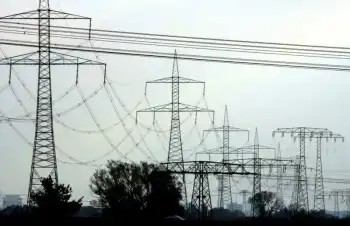
Southern California Edison Faces Lawsuits Over Role in California Wildfires

SCE Wildfire Lawsuits allege utility equipment and power lines sparked deadly Los Angeles blazes; investigations, inverse condemnation, and stricter utility regulations focus on liability, vegetation management, and wildfire safety amid Santa Ana winds.


Key Points

Residents sue SCE, alleging power lines ignited LA wildfires; seeking compensation under inverse condemnation.

✅ Videos cited show sparking lines near alleged ignition points.

✅ SCE denies wrongdoing; probes and inspections ongoing.

✅ Inverse condemnation may apply regardless of negligence.


In the aftermath of devastating wildfires in Los Angeles, residents have initiated legal action, similar to other mega-fire lawsuits underway in California, against Southern California Edison (SCE), alleging that the utility's equipment was responsible for sparking one of the most destructive fires. The fires have resulted in significant loss of life and property, prompting investigations into the causes and accountability of the involved parties.

The Fires and Their Impact

In early January 2025, Los Angeles experienced severe wildfires that ravaged neighborhoods, leading to the loss of at least 29 lives and the destruction of approximately 155 square kilometers of land. Areas such as Pacific Palisades and Altadena were among the hardest hit. The fires were exacerbated by arid conditions and strong Santa Ana winds, which contributed to their rapid spread and intensity.

Allegations Against Southern California Edison

Residents have filed lawsuits against SCE, asserting that the utility's equipment, particularly power lines, ignited the fires. Some plaintiffs have presented videos they claim show sparking power lines in the vicinity of the fire's origin. These legal actions seek to hold SCE accountable for the damages incurred, including property loss, personal injury, and emotional distress.

SCE's Response and Legal Context

Southern California Edison has denied any wrongdoing, stating that it has not detected any anomalies in its equipment that could have led to the fires. The utility has pledged to cooperate fully with investigations to determine the causes of the fires. California's legal framework, particularly the doctrine of "inverse condemnation," allows property owners to seek compensation from utilities for damages caused by public services, even without proof of negligence. This legal principle has been central in previous cases involving utility companies and wildfire damages, and similar allegations have arisen in other jurisdictions, such as an alleged faulty transformer case, highlighting shared risks.

Historical Context and Precedents

This situation is not unprecedented. In 2018, Pacific Gas and Electric (PG&E) faced similar allegations when its equipment was implicated in the Camp Fire, the deadliest wildfire in California's history. PG&E's equipment was found to have ignited the fire, and the company later pleaded guilty in the Camp Fire, leading to extensive litigation and financial repercussions for the company, while its bankruptcy plan won support from wildfire victims during restructuring. The case highlighted the significant risks utilities face regarding wildfire safety and the importance of maintaining infrastructure to prevent such disasters.

Implications for California's Utility Regulations

The current lawsuits against SCE underscore the ongoing challenges California faces in balancing utility operations with wildfire prevention, as regulators face calls for action amid rising electricity bills. The state has implemented stricter regulations and oversight, and lawmakers have moved to crack down on utility spending to mitigate wildfire risks associated with utility infrastructure. Utilities are now required to invest in enhanced safety measures, including equipment inspections, vegetation management, and the implementation of advanced technologies to detect and prevent potential fire hazards. These regulatory changes aim to reduce the incidence of utility-related wildfires and protect communities from future disasters.

The legal actions against Southern California Edison reflect the complex interplay between utility operations, public safety, and environmental stewardship. As investigations continue, the outcomes of these lawsuits may influence future policies and practices concerning utility infrastructure and wildfire prevention in California. The state remains committed to enhancing safety measures to protect its residents and natural resources from the devastating effects of wildfires.


Related News

View more

Extreme Heat Boosts U.S. Electricity Bills

Extreme Heat and Rising Electricity Bills amplify energy costs as climate change drives air conditioning demand, stressing the power grid and energy affordability, with low income households facing outsized burdens during prolonged heat waves.


Key Points

Heat waves from climate change raise AC demand, driving up electricity costs and straining energy affordability.

✅ More AC use spikes electricity demand during heat waves

✅ Low income households face higher energy burden

✅ Grid reliability risks rise with peak cooling loads


Extreme heat waves are not only straining public health systems but also having a significant impact on household finances, particularly through rising electricity bills. According to a recent AP-NORC poll, a growing number of Americans are feeling the financial pinch as soaring temperatures drive up the cost of cooling their homes. This development underscores the broader implications of climate change and its effects on everyday life.

The AP-NORC poll highlights that a majority of Americans are experiencing increased electricity costs as a direct result of extreme heat. As temperatures climb, so does the demand for air conditioning and other cooling systems. This increased energy consumption is contributing to higher utility bills, which can put additional strain on household budgets.

Extreme heat waves have become more frequent and intense due to climate change, which has led to a greater reliance on air conditioning to maintain comfortable indoor environments. Air conditioners and fans work harder during heat waves, and wasteful air conditioning can add around $200 to summer bills, consuming more electricity and consequently driving up energy bills. For many households, particularly those with lower incomes, these increased costs can be a significant burden.

The poll reveals that the impact of rising electricity bills is widespread, affecting a diverse range of Americans. Households across different income levels and geographic regions are feeling the heat, though the extent of the financial strain can vary. Lower-income households are particularly vulnerable, as they often have less flexibility in their budgets to absorb higher utility costs. For these families, the choice between cooling their homes and other essential expenses can be a difficult one.

In addition to financial strain, the poll highlights concerns about energy affordability and access. As electricity bills rise, some Americans may face challenges in paying their bills, leading to potential utility shut-offs or the need to make difficult choices between cooling and other necessities. This situation is exacerbated by the fact that many utility companies do not offer sufficient assistance or relief programs to help low-income households manage their energy costs.

The increasing frequency of extreme heat events and the resulting spike in electricity consumption also have broader implications for the energy infrastructure. Higher demand for electricity can strain power grids, as seen when California narrowly avoided blackouts during extreme heat, potentially leading to outages or reduced reliability. Utilities and energy providers may need to invest in infrastructure upgrades and maintenance to ensure that the grid can handle the increased load during heat waves.

Climate change is a key driver of the rising temperatures that contribute to higher electricity bills. As global temperatures continue to rise, extreme heat events are expected to become more common and severe, and experts warn the US electric grid was not designed to withstand these impacts. This trend underscores the need for comprehensive strategies to address both the causes and consequences of climate change. Efforts to reduce greenhouse gas emissions, improve energy efficiency, and invest in renewable energy sources are critical components of a broader climate action plan.

Energy efficiency measures can play a significant role in mitigating the impact of extreme heat on electricity bills. Upgrading to more efficient cooling systems, improving home insulation, and adopting smart thermostats can help reduce energy consumption and lower utility costs. Additionally, utility companies and government programs can offer incentives and rebates, including ways to tap new funding that help encourage energy-saving practices and support households in managing their energy use.

The poll also suggests that there is a growing awareness among Americans about the connection between climate change and rising energy costs. Many people are becoming more informed about the ways in which extreme weather events and rising temperatures impact their daily lives. This increased awareness can drive demand for policy changes and support for initiatives aimed at addressing climate change and improving energy efficiency, with many willing to contribute income to climate efforts, about the connection between climate change and rising energy costs.

In response to the rising costs and the impact of extreme heat, there are calls for policy interventions and support programs to help manage energy affordability. Proposals include expanding assistance programs for low-income households, investing in infrastructure improvements, and promoting energy efficiency initiatives alongside steps to make electricity systems more resilient to climate risks. By addressing these issues, policymakers can help alleviate the financial burden on households and support a more resilient and sustainable energy system.

Debates over policy impacts on electricity prices continue; in Alberta, federal policies are blamed by some for higher rates, illustrating how regulation can affect affordability.

In conclusion, the AP-NORC poll highlights the growing financial impact of extreme heat on American households, with rising electricity bills being a significant concern for many. The increased demand for cooling during heat waves is straining household budgets and raising broader questions about energy affordability and infrastructure resilience. Addressing these challenges requires a multifaceted approach, including efforts to combat climate change, improve energy efficiency, and provide support for those most affected by rising energy costs. As extreme heat events become more common, finding solutions to manage their impact will be crucial for both individual households and the broader energy system.


Related News

View more

U.S. residential electricity bills increased 5% in 2022, after adjusting for inflation

U.S. Residential Electricity Bills rose on stronger demand, inflation, and fuel costs, with higher retail prices, kWh consumption, and extreme weather driving 2022 spikes; forecasts point to stable summer usage and slight price increases.


Key Points

They are average household power costs shaped by prices, kWh use, weather, and upstream fuel costs.

✅ 2022 bills up 13% nominal, 5% real vs. 2021

✅ Retail price rose 11%; consumption up 2% to 907 kWh

✅ Fuel costs to plants up 34%, pressuring rates


In nominal terms, the average monthly electricity bill for residential customers in the United States increased 13% from 2021 to 2022, rising from $121 a month to $137 a month. After adjusting for inflation—which reached 8% in 2022, a 40-year high—electricity bills increased 5%. Last year had the largest annual increase in average residential electricity spending since we began calculating it in 1984. The increase was driven by a combination of more extreme temperatures, which increased U.S. consumption of electricity for both heating and cooling, and higher fuel costs for power plants, which drove up retail electricity prices nationwide.

Residential electricity customers’ monthly electricity bills are based on the amount of electricity consumed and the retail electricity price. Average U.S. monthly electricity consumption per residential customer increased from 886 kilowatthours (kWh) in 2021 to 907 kWh in 2022, even as U.S. electricity sales have declined over the past seven years. Both a colder winter and a hotter summer contributed to the 2% increase in average monthly electricity consumption per residential customer in 2022 because customers used more space heating during the winter and more air conditioning during the summer, with some states, such as Pennsylvania, facing sharp winter rate increases.

Although we don’t directly collect retail electricity prices, we do collect revenues from electricity providers that allow us to determine prices by dividing by consumption, and industry reports show major utilities spending more on electricity delivery than on power production. In 2022, the average U.S. residential retail electricity price was 15.12 cents/kWh, an 11% increase from 13.66 cents/kWh in 2021. After adjusting for inflation, U.S. residential electricity prices went up by 2.5%.

Higher fuel costs for power plants drove the increase in residential retail electricity prices. The cost of fossil fuels—including natural gas prices, coal, and petroleum—delivered to U.S. power plants increased 34%, from $3.82 per million British thermal units (MMBtu) in 2021 to $5.13/MMBtu in 2022. The higher fuel costs were passed along to residential customers and contributed to higher retail electricity prices, and Germany power prices nearly doubled over a year in a related trend.

In the first three months of 2023, the average U.S. residential monthly electricity bill was $133, or 5% higher than for the same time last year, according to data from our Electric Power Monthly. The increase was driven by a 13% increase in the average U.S. residential retail electricity price, which was partly offset by a 7% decrease in average monthly electricity consumption per residential customer, and industry outlooks also see U.S. power demand sliding 1% on milder weather. This summer, we expect that typical household electricity bills will be similar to last year’s, with customers paying about 2% more on average. The slight increase in electricity costs forecast for this summer stems from higher retail electricity prices but similar consumption levels as last summer.


Related News

View more

A goodwill gesture over electricity sows discord in Lebanon

Lebanon Power Barge Controversy spotlights Karadeniz Energy's Esra Sultan, Lebanon's electricity crisis, prolonged blackouts, and sectarian politics as Amal and Hezbollah clash over Zahrani vs Jiyeh docking and allocation across regions.


Key Points

A political dispute over the Esra Sultan power ship, its docking, and power allocation amid Lebanon's chronic blackouts.

✅ Karadeniz Energy lent a third barge at below-market rates.

✅ Docking disputes: Zahrani refused; Jiyeh limited; Zouq connected.

✅ Amal vs Hezbollah split exposes sectarian energy politics.


It was supposed to be a goodwill gesture from an energy company in Turkey.

This summer, the Karadeniz Energy Group lent Lebanon a floating power station to generate electricity at below-market rates to help ease the strain on the country's woefully undermaintained power sector.

Instead, the barge's arrival opened a Pandora's box of partisan mudslinging in a country hobbled by political sectarianism and dysfunction.

There have been rows over where it should dock, how to allocate its 235 megawatts of power, and even what to call the barge, echoing controversies like the Maine electric line debate that pit local politics against energy needs.

It has even driven a wedge between Lebanon's two dominant parties among Shiite Muslims: Amal and the militant group Hezbollah.

Amal, which has held the parliament speaker's seat since 1992, revealed sensationally last week it had refused to allow the boat to dock in a port in the predominantly Shiite south, even though it is one of the most underserved regions of Lebanon.

Power outages in the south can stretch on for more than 12 hours a day, much like the Gaza electricity crisis, according to regional observers.

Hezbollah, which normally stands pat with Amal in political matters, issued an exceptional statement that it had nothing to do with the matter of the barge at Zahrani port. A Hezbollah lawmaker went further to say his party disagreed on the issue with Amal.

Ali Hassan Khalil, Lebanon's Finance Minister and a leading Amal party member, said southerners wanted a permanent power station, not a stop-gap solution, in an implied dig at the rival Free Patriotic Movement, a Christian party that runs the Energy Ministry.

But critics seized on the statement as confirmation that Amal's leaders were in bed with the operators of private generators, who have been making fortunes selling electricity during blackouts at many times the state price.

"For decades there's been nothing stopping them from building a power plant," said Mohammad Obeid, a former Amal party official, in an interview with Lebanon's Al Jadeed TV station.

"Now there's a barge that's coming for three months to provide a few more hours of electricity -- and that's the issue?"

Hassan Khalil, reached by phone, refused to comment.

Nabih Berri, Amal's chief and Lebanon's parliament speaker, who has long been the subject of critical coverage from Al Jadeed's, sued the TV channel for libel on Wednesday for its reporting.

Energy Minister Cesar Abi Khalil, a Christian, lashed out at Amal, saying the ministry even changed the barge's name from Ayse, Turkish for Aisha, a name associated in Lebanon with Sunnis, to Esra Sultan, which does not carry any Shiite or Sunni connotations, to try to get it to dock in Zahrani.

Karadeniz said the barge was renamed "out of courtesy and respect to local customs and sensitivities."

"Ayse is a very common Turkish name, where such preferences are not as sensitive as in Lebanon," it said in a statement to The Associated Press.

Finally, on July 18, the barge docked in Jiyeh, a harbour south of Beirut but north of Zahrani, and in a religiously mixed Muslim area.

But two weeks later it was unmoored again, after Abi Khalil, the energy minister, said the infrastructure at Jiyeh could only handle 30 megawatts of the Esra Sultan's 235 capacity, and upgrades such as burying subsea cables are expensive.

With Zahrani closed to the Esra Sultan, it could only go to Zouq Mikhael, a port in the Christian-dominated Kesrouan region in the north, where it was plugged to the grid Tuesday night, giving the region almost 24 hours of electricity a day.

Lebanon has been contending with rolling blackouts since the days of its 1975-1990 civil war. Successive governments have failed to agree on a permanent solution for the chronic electricity failures, largely because of profiteering, endemic corruption and lack of political will, despite periodic pushes for electricity sector reform in Lebanon over the years.

In 2013, the Energy Ministry contracted with Karadeniz to buy electricity from a pair of its barges, which are still docked in Jiyeh and Zouq Mikhael.

This summer, Abi Khalil signed a new contract with Karadeniz to keep the barges for another three years. As part of the deal, Karadeniz agreed to lend Lebanon the third barge, the Esra Sultan, to produce electricity for three months at no cost - Lebanon would just have to pay for the fuel.

The company said Lebanon's internal squabbles do not affect how long the Esra Sultan would stay in Lebanon, even amid wider sector volatility and the pandemic's impact highlighted in a recent financial update. It arrived on July 18 and it will leave on Oct. 18, it said.


Related News

View more

National Grid warns of short supply of electricity over next few days

National Grid power supply warning highlights electricity shortage risks amid low wind output, generator outages, and cold weather, reducing capacity margins and grid stability; considering demand response and reserve power to avoid blackout risk.


Key Points

An alert that reduced capacity from low wind and outages requires actions to maintain UK grid stability.

✅ Low wind output and generator outages reduce capacity margins

✅ ESO exploring demand response and reserve generation options

✅ Aim: maintain grid stability and avoid blackout risk


National Grid has warned that Britain’s electricity will be in short supply over the next few days after a string of unplanned power plant outages and unusually low wind speeds this week, as cheap wind power wanes across the system.

The electricity system operator said it will take action to “make sure there is enough generation” during the cold weather spell, including virtual power plants and other demand-side measures, to prevent a second major blackout in as many years.

“Unusually low wind output coinciding with a number of generator outages means the cushion of spare capacity we operate the system with has been reduced,” the company told its Twitter followers.

“We’re exploring measures and actions to make sure there is enough generation available to increase our buffer of capacity.”

A spokeswoman for National Grid said the latest electricity supply squeeze was not expected to be as severe as recorded last month, following reports that the government’s emergency energy plan was not going ahead, and added that the company did not expect to issue an official warning in the next 24 hours.

“We’re monitoring how the situation develops,” she said.

The warning is the second from the electricity system operator in recent weeks. In mid-September the company issued an official warning to the electricity market as peak power prices climbed, that its ‘buffer’ of power reserves had fallen below 500MW and it may need to call on more power plants to help prevent a blackout. The notice was later withdrawn.

Concerns over National Grid’s electricity supplies have been relatively rare in recent years. It was forced in November 2015 to ask businesses to cut their demand as a “last resort” measure to keep the lights on after a string of coal plant breakdowns.

But since then, National Grid’s greater challenge has been an oversupply of electricity, partly due to record wind generation, which has threatened to overwhelm the grid during times of low electricity demand.

National Grid has already spent almost £1bn on extra measures to prevent blackouts over the first half of the year by paying generators to produce less electricity during the coronavirus lockdown, as daily demand fell.

The company paid wind farms to turn off, and EDF Energy to halve the nuclear generation from its Sizewell B nuclear plant, to avoid overwhelming the grid when demand for electricity fell by almost a quarter from last year.

The electricity supply squeeze comes a little over a year after National Grid left large parts of England and Wales without electricity after the biggest blackout in a decade left a million homes in the dark. National Grid blamed a lightning strike for the widespread power failure.

Similar supply strains have recently caused power cuts in China, underscoring how weather and generation mix can trigger blackouts.


Related News

View more

OPG, TVA Partner on New Nuclear Technology Development

OPG-TVA SMR Partnership advances advanced nuclear technology and small modular reactors for 24/7 carbon-free baseload power, enabling net-zero goals, cross-border licensing, and deployment within a North American clean energy hub.


Key Points

A cross-border effort by OPG and TVA to develop, license, and deploy SMRs for reliable, carbon-free baseload power.

✅ Coordinates design, licensing, construction, and operations

✅ Supports 24/7 baseload, net-zero targets, and energy security

✅ Leverages Darlington and Clinch River early site permits


Two of North America's leading nuclear utilities unveiled a pioneering partnership to develop advanced nuclear technology as an integral part of a clean energy future and creating a North American energy hub. Ontario Power Generation, whose OPG's SMR commitment is well established, and the Tennessee Valley Authority will jointly work to help develop small modular reactors as an effective long-term source of 24/7 carbon-free energy in both Canada and the U.S.

The agreement allows the companies to coordinate their explorations into the design, licensing, construction and operation of small modular reactors.

"As leaders in our industry and nations, OPG and TVA share a common goal to decarbonize energy generation while maintaining reliability and low-cost service, which our customers expect and deserve," said Jeff Lyash, TVA President and CEO. "Advanced nuclear technology will not only help us meet our net-zero carbon targets but will also advance North American energy security."

"Nuclear energy has long been key to Ontario's clean electricity grid, and is a crucial part of our net-zero future," said Ken Hartwick, OPG President and CEO. "Working together, OPG and TVA will find efficiencies and share best practices for the long-term supply of the economical, carbon-free, reliable electricity our jurisdictions need, supported by ongoing Pickering life extensions across Ontario's fleet."

OPG and TVA have similar histories and missions. Both are based on public power models that developed from renewable hydroelectric generation before adding nuclear to their generation mixes. Today, nuclear generation accounts for significant portions of their carbon-free energy portfolios, with Ontario advancing the Pickering B refurbishment to sustain capacity.

Both are also actively exploring SMR technologies. OPG is moving forward with plans to deploy an SMR at its Darlington nuclear facility in Clarington, ON, as part of broader Darlington SMR plans now underway. The Darlington site is the only location in Canada licensed for new nuclear with a completed and accepted Environmental Assessment. TVA currently holds the only Nuclear Regulatory Commission Early Site Permit in the U.S. for small modular reactor deployment at its Clinch River site near Oak Ridge, TN.

No exchange of funding is involved. However, the collaboration agreement will help OPG and TVA reduce the financial risk that comes from development of innovative technology, as well as future deployment costs.

"TVA has the most recent experience completing a new nuclear plant in North America at Watts Bar and that knowledge is invaluable to us as we work toward the first SMR groundbreaking at Darlington," said Hartwick. "Likewise, because we are a little further along in our construction timing, TVA will gain the advantage of our experience before they start work at Clinch River."

"It's a win-win agreement that benefits all of those served by both OPG and TVA, as well as our nations," said Lyash. "Moving this technology forward is not only a significant step in advancing a clean energy future and Canada's climate goals, but also in creating a North American energy hub."

"With the demand for clean electricity on the rise around the world, Ontario's momentum is growing. The world is watching Ontario as we advance our work to fully unleash our nuclear advantage, alongside a premiers' SMR initiative that underscores provincial collaboration. I congratulate OPG and TVA – two great industry leaders – for working together to deploy SMRs and showcase and apply Canada's nuclear expertise that will deliver economic, health and environmental benefits for all of us to enjoy," said Todd Smith, Ontario Minister of Energy.

"The changing climate is a global crisis that requires global solutions. The partnership between the Tennessee Valley Authority and Ontario Power Generation to develop and deploy advanced nuclear technology is exactly the kind of innovative collaboration that is needed to quickly bring the next generation of nuclear carbon-free generation to market. I applaud the leadership that both companies are demonstrating to further strengthen our cross-border relationships," said Maria Korsnick, President and CEO, Nuclear Energy Institute.


Related News

View more

Sign Up for Electricity Forum’s Newsletter

Stay informed with our FREE Newsletter — get the latest news, breakthrough technologies, and expert insights, delivered straight to your inbox.

Electricity Today T&D Magazine Subscribe for FREE

Stay informed with the latest T&D policies and technologies.
  • Timely insights from industry experts
  • Practical solutions T&D engineers
  • Free access to every issue

Download the 2025 Electrical Training Catalog

Explore 50+ live, expert-led electrical training courses –

  • Interactive
  • Flexible
  • CEU-cerified