OPG, TransCanada Eye Toronto Generator

By Canadian Press


Substation Relay Protection Training

Our customized live online or in‑person group training can be delivered to your staff at your location.
  • Live Online
  • 12 hours Instructor-led
  • Group Training Available
Regular Price:
$699
Coupon Price:
$599
Reserve Your Seat Today
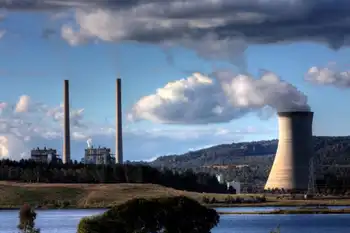
Ontario Power Generation and a unit of TransCanada PipeLines Ltd. have formed a partnership to assess the viability of a natural-gas-fuelled generating station in downtown Toronto.

The 50-50 venture, Portlands Energy Centre LP, envisions a 550-megawatt gas-fired cogeneration facility on part of the site of Ontario Power's former R.L. Hearn generating station in the city's eastern port area.

The plant's heat would provide steam to the heating system of Enwave District Energy Ltd., owned by the city of Toronto and the Ontario Municipal Employees Retirement System.

The partnership will start the environmental assessment process and at the same time finalize financial viability studies, Ontario Power Generation and TransCanada Energy Ltd. said.

The companies said they had been talking for months, and the announcement follows directions Nov. 12 to Ontario Power Generation from Ontario Energy Minister John Baird to speed its redevelopment of the Hearn site through a public-private partnership.

"Our partnership with OPG in the Portlands project fits well with our strategy to grow our power business," stated Hal Kvisle, chief executive at TransCanada.

He added that the Portlands Energy Centre is "the lowest-cost, most efficient and environmentally sound opportunity for new fossil-fuelled power generation in Ontario."

Financial terms of TransCanada's partnership with the generating division of the former Ontario Hydro monopoly were not disclosed.

"Our goal in starting the approvals process is to develop an energy centre that would fit well into the local community setting," stated OPG president Ron Osborne. "At the same time, the additional 550 megawatts of capacity could help improve the security and supply of electricity to meet the growing electricity needs of downtown Toronto."

Related News
Why an energy crisis and $5 gas aren't spurring a green revolution

U.S. Energy Transition Delays stem from grid bottlenecks, permitting red tape, solar tariff uncertainty, supply-chain shocks, and scarce affordable EVs, risking deeper fossil fuel lock-in despite climate targets for renewables, transmission expansion, and decarbonization.


Key Points

Delays driven by grid limits, permitting, and supply shocks that slow renewables, transmission, EVs, and decarbonization.

✅ Grid interconnection and transmission backlogs stall renewables

✅ Tariff probes and supply chains disrupt utility-scale solar

✅ Permitting, policy gaps, and EV costs sustain fossil fuel use


Big solar projects are facing major delays. Plans to adapt the grid to clean energy are confronting mountains of red tape. Affordable electric vehicles are in short supply.

The United States is struggling to squeeze opportunity out of an energy crisis that should have been a catalyst for cleaner, domestically produced power. After decades of putting the climate on the back burner, the country is finding itself unprepared to seize the moment and at risk of emerging from the crisis even more reliant on fossil fuels.

10 steps you can take to lower your carbon footprint
The problem is not entirely unique to the United States. Across the globe, climate leaders are warning that energy shortages including coal and nuclear disruptions prompted by Russia’s unprovoked invasion of Ukraine and high gas prices driven by inflation threaten to make the energy transition an afterthought — potentially thwarting efforts to keep global temperature rise under 1.5 degrees Celsius.

“The energy crisis exacerbated by the war in Ukraine has seen a perilous doubling down on fossil fuels by the major economies,” U.N. Secretary General António Guterres said at a conference in Vienna on Tuesday, according to prepared remarks. He warned governments and investors that a failure to immediately and more aggressively embrace clean energy could be disastrous for the planet.

U.S. climate envoy John F. Kerry suggested that nations are falling prey to a flawed logic that fossil fuels will help them weather this period of instability, undermining U.S. national security and climate goals, which has seen gas prices climb to a record-high national average of $5 per gallon. “You have this new revisionism suggesting that we have to be pumping oil like crazy, and we have to be moving into long-term [fossil fuel] infrastructure building,” he said at the Time100 Summit in New York this month. “We have to push back.”

Climate envoy John F. Kerry attends the Summit of the Americas in Los Angeles on June 8. Kerry has criticized the tendency to turn toward fossil fuels in times of uncertainty. (Apu Gomes/AFP/Getty Images)
In the United States — the world’s second-largest emitter of greenhouse gases after China — the hurdles go beyond the supply-chain crisis and sanctions linked to the war in Ukraine. The country’s lofty goals for all carbon pollution to be gone from the electricity sector by 2035 and for half the cars sold to be electric by 2030 are jeopardized by years of neglect of the electrical grid, regulatory hurdles that have set projects back years, and failures by Congress and policymakers to plan ahead.
The challenges are further compounded by plans to build costly new infrastructure for drilling and exporting natural gas that will make it even harder to transition away from the fossil fuel.

“We are running into structural challenges preventing consumers and businesses from going cleaner, even at this time of high oil and gas prices,” said Paul Bledsoe, a climate adviser in the Clinton administration who now works on strategy at the Progressive Policy Institute, a center-left think tank. “It is a little alarming that even now, Congress is barely talking about clean energy.”

Consumers are eager for more wind and solar. Companies looking to go carbon-neutral are facing growing waitlists for access to green energy, and a Pew Research Center poll in late January found that two-thirds of Americans want the United States to prioritize alternative energy over fossil fuel production.

But lawmakers have balked for more than a decade at making most of the fundamental economic and policy changes such as a clean electricity standard that experts widely agree are crucial to an orderly and accelerated energy transition. The United States does not have a tax on carbon, nor a national cap-and-trade program that would reorient markets toward lowering emissions. The unraveling in Congress of President Biden’s $1.75 trillion Build Back Better plan has added to the head winds that green-energy developers face, even as climate law results remain mixed.

Vice President Harris tours electric school buses at Meridian High School in Falls Church, Va., on May 20. (Mandel Ngan/AFP/Getty Images)
“There is literally nothing pushing this forward in the U.S. beyond the tax code and some state laws,” said Heather Zichal, a former White House climate adviser who is now the chief executive of the American Clean Power Association.

The effects of the U.S. government’s halting approach are being felt by solar-panel installers, who saw the number of projects in the most recent quarter fall to the lowest level since the pandemic began. There was 24 percent less solar installed in the first quarter of 2022 than in the same quarter of 2021.

The holdup largely stems from a Commerce Department investigation into alleged tariff-dodging by Chinese manufacturers. Faced with the potential for steep retroactive penalties, hundreds of industrial-scale solar projects were frozen in early April. Weak federal policies to encourage investment in solar manufacturing left American companies ill-equipped to fill the void.

“We shut down multiple projects and had to lay off dozens of people,” said George Hershman, chief executive of SOLV Energy, which specializes in large solar installations. SOLV, like dozens of other solar companies, is now scrambling to reassemble those projects after the administration announced a pause of the tariffs.

Meanwhile, adding clean electricity to the aging power grid has become an increasingly complicated undertaking, given the failure to plan for adequate transmission lines and long delays connecting viable wind and solar projects to the electricity network.


Related News

View more

Ermineskin First Nation soon to become major electricity generator

Ermineskin First Nation Solar Project delivers a 1 MW distributed generation array with 3,500 panels, selling power to Alberta's grid, driving renewable energy revenue, jobs, and regional economic development with partner SkyFire Energy.


Key Points

A 1 MW, 3,500-panel distributed generation plant selling power to Alberta's grid to support revenue and jobs.

✅ 1 MW array, 3,500 panels; grid-tied distributed generation

✅ Annual revenue projected at $80k-$150k, scalable

✅ Built with SkyFire Energy; expansion planned next summer


The switch will soon be flipped on a solar energy project that will generate tens of thousands of dollars for Ermineskin First Nation, while energizing economic development across Alberta, where selling renewables is emerging as a promising opportunity.

Built on six acres, the one-megawatt generator and its 3,500 solar panels will produce power to be sold into the province’s electrical grid, providing annual revenues for the band of $80,000 to $150,000, depending on energy demand and pricing.

The project cost $2.7 million, including connection costs and background studies, said Sam Minde, chief executive officer of the band-owned Neyaskweyahk Group of Companies Inc.

It was paid for with grants from the Western Economic Diversification Fund and the province’s Climate Leadership Plan, and, amid Ottawa’s green electricity contracting push, is expected to be connected to the grid by mid-December.

“It’s going to be the biggest distributed generation in Alberta,” he said.

Called the Sundancer generator, it was built and will be operated through a partnership with SkyFire Energy, reflecting how renewable power developers design better projects by combining diverse resources.

Minde said the project’s benefits extend beyond Ermineskin First Nation, one of four First Nations at Maskwacis, 20 km north of Ponoka, in a province where renewable energy surge could power thousands of jobs.

“Our nation is looking to do the best it can in business. It’s competitive, but at the same time, what is good for us is good for the region.

“If we’re creating jobs, we’re going to be building up our economy. And if you look at our region right now, we need to continue to create opportunities and jobs.”

Electricity prices are rock bottom right now, in the six to nine cents per kilowatt hour range, with recent Alberta solar contracts coming in below natural gas on cost. During the oilsands boom, when power demand was skyrocketing, the price was in the 16 to 18 cent range.

That means there is a lot of room for bigger returns for Ermineskin in the future, especially if pipelines such as TransMountain get going or the oilsands pick up again, and as Alberta solar growth accelerates in the years ahead.

The band is so confident that Sundancer will prove a success that there are plans to double it in size, a strategy echoed by community-scale efforts such as the Summerside solar project that demonstrate scalability. By next summer, a $1.5-million to $1.7-million project funded by the band will be built on another six acres nearby.

Minde said the project is an example of the community’s connection with the environment being used to create opportunities and embracing technologies that will likely figure large in the world’s energy future.


Related News

View more

Class-action lawsuit: Hydro-Québec overcharged customers up to $1.2B

Hydro-QuE9bec Class-Action Lawsuit alleges overbilling and monopoly abuse, citing RE9gie de l'E9nergie rate increases, Quebec Superior Court filings, and calls for refunds on 2008-2013 electricity bills to residential and business customers.


Key Points

Quebec class action alleging Hydro-QuE9bec overbilled customers in 2008-2013, seeking court-ordered refunds.

✅ Filed in Quebec Superior Court; certification pending.

✅ Alleges up to $1.2B in overcharges from 2008-2013.

✅ Questions RE9gie de l'E9nergie rate approvals and data.


A group representing Hydro-Québec customers has filed a motion for a class-action lawsuit against the public utility, alleging it overcharged customers over a five-year period.

Freddy Molima, one of the representatives of the Coalition Peuple allumé, accuses Hydro-Québec of "abusing its monopoly."

The motion, which was filed in Quebec Superior Court, claims Hydro-Québec customers paid more than they should have for electricity between 2008 and 2013, to the tune of nearly $1.2 billion, even as Hydro-Québec later refunded $535 million to customers in a separate case. 

The coalition has so far recruited nearly 40,000 participants online as part of its plan to sue the public utility.

A lawyer representing the group said Quebec's energy board, the Régie de l'énergie, also recently approved Hydro-Québec rate increases for residential and business customers without knowing all the facts, even as Manitoba Hydro hikes face opposition in regulatory hearings.

"There's certain information provided to the Régie that isn't true," said Bryan Furlong. "Hydro-Québec has not been providing the Régie the proper numbers."

In its motion, the group asks that overcharged clients be retroactively reimbursed.

Hydro-Québec denies allegations

Hydro-Québec, for its part, denies it ever overbilled any of its clients, while other utilities such as Hydro One plan to redesign bills to improve clarity.

"All our efficiencies have been returned to the government through our profits, and to Quebecers we have billed exactly what we agreed to bill," said spokesperson Serge Abergel, adding that the utility won't seek a rate hike next year according to its current plans.

Quebec Energy Minister Pierre Moreau also came to the public utility's defence, saying it has no choice but to comply with the  energy board's regulations, while customer protections are in focus as Hydro One moves to reconnect 1,400 customers in Ontario.

The group says the public utility has overbilled clients by up to $1.2 billion. (Radio-Canada)

It would be "shocking" if customers were charged too much money, he added.

"I know for a fact that Hydro-Québec is respecting the decision of this body," he said.

While the motion has been filed, the group cannot say how much each customer would receive if the class-action lawsuit goes ahead because it all depends on how much electricity was consumed by each client over that five-year period.

The coalition plans to present its motion to a judge next February.


Related News

View more

'Pakistan benefits from nuclear technology'

Pakistan Nuclear Energy advances clean power with IAEA guidance, supporting SDGs via electricity generation, nuclear security, and applications in healthcare, agriculture, and COVID-19 testing, as new 1,100 MW reactors near grid connection.


Key Points

Pakistan Nuclear Energy is the nation's atomic program delivering clean electricity, SDGs gains, and IAEA-guided safety.

✅ Two 1,100 MW reactors nearing grid connection

✅ IAEA-aligned safety and nuclear security regime

✅ Nuclear tech supports healthcare, agriculture, COVID-19 tests


Pakistan is utilising its nuclear technology to achieve its full potential by generating electricity, aligning with China's steady nuclear development trends, and attaining socio-economic development goals outlined by the United Nations Sustainable Development Goals.

This was stated by Pakistan Atomic Energy Commission (PAEC) Chairperson Muhammad Naeem on Tuesday while addressing the 64th International Atomic Energy Agency (IAEA) General Conference (GC) which is being held in Vienna from September 21, a forum taking place amid regional milestones like the UAE's first Arab nuclear plant startup as well.

Regarding nuclear security, the PAEC chief stated that Pakistan considered it as a national responsibility and that it has developed a comprehensive and stringent safety and security regime, echoing IAEA praise for China's nuclear security in the region, which is regularly reviewed and upgraded in accordance with IAEA's guidelines.

Many delegates are attending the event through video link due to the novel coronavirus (Covid-19) pandemic.

On the first day of the conference, IAEA Director General Rafael Mariano Grossi highlighted the role of the nuclear watchdog in the monitoring and verification of nuclear activities across the globe, as seen in Barakah Unit 1 at 100% power milestones reported worldwide.

He also talked about the various steps taken by the IAEA to help member states contain the spread of coronavirus such as providing testing kits etc.

In a recorded video statement, the PAEC chairperson said that Pakistan has a mutually beneficial relationship with IAEA, similar to IAEA assistance to Bangladesh on nuclear power development efforts. He also congratulated Ambassador Azzeddine Farhane on his election to become the President of the 64th GC and assured him of Pakistan's full support and cooperation.

Naeem stated that as a clean, affordable and reliable source, nuclear energy can play a key role, with India's nuclear program moving back on track, in fighting climate change and achieving the Sustainable Development Goals (SDGs).

The PAEC chief informed the audience that two 1,100-megawatt (MW) nuclear power plants are near completion and, like the UAE grid connection milestone, are expected to be connected to the national grid next year.

He also highlighted the role of PAEC in generating electricity through nuclear power plants, while also helping the country achieve the socio-economic development goals outlined under the United Nations SDGs through the application of nuclear technology in diverse fields like agriculture, healthcare, engineering and manufacturing, human resource development and other sectors.


Related News

View more

Federal net-zero electricity regulations will permit some natural gas power generation

Canada Clean Electricity Regulations allow flexible, technology-neutral pathways to a 2035 net-zero grid, permitting limited natural gas with carbon capture, strict emissions standards, and exemptions for emergencies and peak demand across provinces and territories.


Key Points

Federal draft rules for a 2035 net-zero grid, allowing limited gas with CCS under strict performance and compliance standards.

✅ Performance cap: 30 tCO2 per GWh annually for gas plants

✅ CCS must sequester 95% of emissions to comply

✅ Emergency and peak demand exemptions permitted


After facing pushback from Alberta and Saskatchewan, and amid looming power challenges nationwide, Canada's draft net-zero electricity regulations — released today — will permit some natural gas power generation. 

Environment Minister Steven Guilbeault released Ottawa's proposed Clean Electricity Regulations on Thursday.

Provinces and territories will have a minimum 75-day window to comment on the draft regulations. The final rules are intended to pave the way to a net-zero power grid in Canada, aligning with 2035 clean electricity goals established nationally. 

Calling the regulations "technology neutral," Guilbeault said the federal government believes there's enough flexibility to accommodate the different energy needs of Canada's diverse provinces and territories, including how Ontario is embracing clean power in its planning. 

"What we're talking about is not a fossil fuel-free grid by 2035; it's a net zero grid by 2035," Guilbeault said. 

"We understand there will be some fossil fuels remaining … but we're working to minimize those, and the fossil fuels that will be used in 2035 will have to comply with rigorous environmental and emission standards," he added. 

Some analysts argue that scrapping coal-fired electricity can be costly and ineffective, underscoring the trade-offs in transition planning.

While non-emitting sources of electricity — hydroelectricity, wind and solar and nuclear — should not have any issues complying with the regulations, natural gas plants will have to meet specific criteria.

Those operations, the government said, will need to emit the equivalent of 30 tonnes of carbon dioxide per gigawatt hour or less annually to help balance demand and emissions across the grid.

Federal officials said existing natural gas power plants could comply with that performance standard with the help of carbon capture and storage systems, which would be required to sequester 95 per cent of their emissions.

"In other words, it's achievable, and it is achievable by existing technology," said a government official speaking to reporters Thursday on background and not for attribution.

The regulations will also allow a certain level of natural gas power production without the need to capture emissions. Capturing emissions will be exempted during emergencies and peak periods when renewables cannot keep up with demand. 

Some newer plants might not have to comply with the rules until the 2040s, because the regulations apply to plants 20 years after they are commissioned, which dovetails with net-zero by 2050 commitments from electricity associations. 

The two-decade grace period does not apply to plants that open after the regulations are expected to be finalized in 2025.


Related News

View more

France Demonstrates the Role of Nuclear Power Plants

France Nuclear Power Strategy illustrates a low-carbon, reliable baseload complementing renewables in the energy transition, enhancing grid reliability, energy security, and emissions reduction, offering actionable lessons for Germany on infrastructure, policy, and public acceptance.


Key Points

France's nuclear strategy is a low-carbon baseload model supporting renewables, grid reliability, and energy security.

✅ Stable low-carbon baseload complements intermittent renewables

✅ Enhances grid reliability and national energy security

✅ Requires long-term investment, safety, and waste management


In recent months, France has showcased the critical role that nuclear power plants can play in an energy transition, offering valuable lessons for Germany and other countries grappling with their own energy challenges. As Europe continues to navigate its path towards a sustainable and reliable energy system, France's experience with nuclear energy underscores its potential benefits and the complexities involved, including outage risks in France that operators must manage effectively.

France, a long-time proponent of nuclear energy, generates about 70% of its electricity from nuclear power, making it one of the most nuclear-dependent countries in the world. This high reliance on nuclear energy has allowed France to maintain a stable and low-carbon electricity supply, which is increasingly significant as nations aim to reduce greenhouse gas emissions, even as Europe's nuclear capacity declines in several markets, and combat climate change.

Recent events in France have highlighted several key aspects of nuclear power's role in energy transition:

  1. Reliability and Stability: During periods of high renewable energy generation or extreme weather events, nuclear power plants have proven to be a stable and reliable source of electricity. Unlike solar and wind power, which are intermittent and depend on weather conditions, nuclear plants provide a consistent and continuous supply of power. This stability is crucial for maintaining grid reliability and ensuring that energy demand is met even when renewable sources are not producing electricity.

  2. Low Carbon Footprint: France’s commitment to nuclear energy has significantly contributed to its low carbon emissions. By relying heavily on nuclear power, France has managed to reduce its greenhouse gas emissions substantially compared to many other countries. This achievement is particularly relevant as Europe strives to meet ambitious climate targets, with debates over a nuclear option in Germany highlighting climate trade-offs, and reduce overall carbon footprints. The low emissions associated with nuclear power make it an important tool for achieving climate goals and transitioning away from fossil fuels.

  3. Energy Security: Nuclear power has played a vital role in France's energy security. The country’s extensive network of nuclear power plants ensures a stable and secure supply of electricity, reducing its dependency on imported energy sources. This energy security is particularly important in the context of global energy market fluctuations and geopolitical uncertainties. France’s experience demonstrates how nuclear energy can contribute to a nation’s energy independence and resilience.

  4. Economic Benefits: The nuclear industry in France also provides significant economic benefits. It supports thousands of jobs in construction, operation, and maintenance of power plants, as well as in the supply chain for nuclear fuel and waste management. Additionally, the stable and relatively low cost of nuclear-generated electricity can contribute to lower energy prices for consumers and businesses, enhancing economic stability.

Germany, in contrast, has been moving away from nuclear energy, particularly following the Fukushima disaster in 2011. The country has committed to phasing out its nuclear reactors by 2022 and focusing on expanding renewable energy sources such as wind and solar power. While Germany's renewable energy transition has made significant strides, it has also faced challenges related to grid stability, as Germany's energy balancing act illustrates for policymakers, energy storage, and maintaining reliable power supplies during periods of low renewable generation.

France’s experience with nuclear energy offers several lessons for Germany and other nations considering their own energy strategies:

  • Balanced Energy Mix: A diverse energy mix that includes nuclear power alongside renewable sources can help ensure a stable and reliable electricity supply, as ongoing discussions about a nuclear resurgence in Germany emphasize for policymakers today. While renewable energy is essential for reducing carbon emissions, it can be intermittent and may require backup from other sources to maintain grid reliability. Nuclear power can complement renewable energy by providing a steady and consistent supply of electricity.

  • Investment in Infrastructure: To maximize the benefits of nuclear energy, investment in infrastructure is crucial. This includes not only the construction and maintenance of power plants but also the development of waste management systems and safety protocols. France’s experience demonstrates the importance of long-term planning and investment to ensure the safe and effective use of nuclear technology.

  • Public Perception and Policy: Public perception of nuclear energy can significantly impact its adoption and deployment, and ongoing Franco-German nuclear disputes show how politics shape outcomes across borders. Transparent communication, rigorous safety standards, and effective waste management are essential for addressing public concerns and building trust in nuclear technology. France’s successful use of nuclear power is partly due to its emphasis on safety and regulatory compliance.

In conclusion, France's experience with nuclear power provides valuable insights into the role that this technology can play in an energy transition. By offering a stable, low-carbon, and reliable source of electricity, nuclear power complements renewable energy sources and supports overall energy security. As Germany and other countries navigate their energy transitions, France's example underscores the importance of a balanced energy mix, robust infrastructure, and effective public engagement in harnessing the benefits of nuclear power while addressing associated challenges, with industry voices such as Eon boss on nuclear debate underscoring the sensitivity of cross-border critiques.


Related News

View more

Sign Up for Electricity Forum’s Newsletter

Stay informed with our FREE Newsletter — get the latest news, breakthrough technologies, and expert insights, delivered straight to your inbox.

Electricity Today T&D Magazine Subscribe for FREE

Stay informed with the latest T&D policies and technologies.
  • Timely insights from industry experts
  • Practical solutions T&D engineers
  • Free access to every issue

Download the 2025 Electrical Training Catalog

Explore 50+ live, expert-led electrical training courses –

  • Interactive
  • Flexible
  • CEU-cerified