CSA Z462 Arc Flash Training - Electrical Safety Compliance
Our customized live online or in‑person group training can be delivered to your staff at your location.

- Live Online
- 6 hours Instructor-led
- Group Training Available
Regular Price:
$249
Coupon Price:
$199
No more Japanese nuclear reactors need to be closed for inspections, the operators said recently after submitting reports ordered by the government following Japan's deadliest nuclear industry accident recently.
Four workers were killed on Aug. 9 when super-hot non-radioactive steam gushed from a broken pipe at a plant run by Kansai Electric Power at Mihama, in western Japan.
Seven workers were injured in the accident, which heightened public mistrust of Japan's scandal-prone nuclear industry.
A day after the mishap, Kansai Electric said the pipe that burst had not been inspected in 28 years and that no action had been taken even after the company was advised by a sub-contractor that the pipe was potentially dangerous.
The Nuclear and Industrial Safety Agency (NISA), Japan's nuclear watchdog, had told the 10 nuclear power firms to check documentation to ensure that inspections on pipes similar to the one that ruptured at Mihama had been carried out properly.
The agency had told the firms to submit their reports shortly after the incident. If the records had shown that inspections had been neglected, the plants would have had to shut down for checks, an official at Japan's Trade and Industry Ministry said.
Similar checks have been ordered at non-nuclear power plants.
The companies excluding Kansai said their inspections had been carried out properly, although a NISA official said it was premature to say that all was well.
"They're saying there are no problems, but we have to take a good look through the reports and in some cases we may have to tell them to carry out additional checks," he told Reuters.
Kansai Electric has already said it will gradually shut all of its reactors for safety checks.
It said recently it would shut down a third unit at its Takahama plant, in the same prefecture as Mihama recently, a month earlier than planned.
Kansai said it had no plans to restart any idle thermal power plants but would buy electricity from other other utilities to make up shortfalls.
CONFIDENCE LOW
Resource-poor Japan, which has 52 nuclear reactors, relies on atomic energy for more than a third of its electricity needs and ranks 16th in the world in dependence on nuclear power, according to the International Atomic Energy Agency.
France, in comparison, relies on atomic energy for 80 percent of its electricity needs while the United States gets about 20 percent of its power from atomic plants.
The accident at Mihama was another black eye for Japan's nuclear power industry, although accidents are rare.
Data compiled by Japan's Industry Ministry show there were six unplanned stoppages of 51 Japanese reactors in operation in 2001, compared to 161 unplanned stoppages at 56 French reactors.
But public confidence in the industry is low following a string of safety scandals and the industry's reputation for covering up problems.
Tokyo Electric Power Co Ltd., the world's biggest privately owned electric utility, had to temporarily close all 17 of its reactors after revelations in 2002 that it had tampered with safety records.
However, the only previous fatal accident at a nuclear plant in Japan was in 1967, when one person died in a fire at a plant in Ibaraki prefecture just north of Tokyo.
As with the latest incident, there was no radiation leak.
The worst previous accident at any nuclear facility in Japan occurred at a uranium-processing plant in Tokaimura, north of Tokyo, in September 1999, when an uncontrolled nuclear chain reaction was triggered after three poorly trained workers used buckets to mix nuclear fuel in a tub.
The resulting release of radiation killed two workers and forced the evacuation of thousands of nearby residents.
Related News
End of an Era: UK's Last Coal Power Station Goes Offline
UK Coal-Free Energy Transition highlights the West Burton A closure, accelerating renewable energy, wind, solar,…
View more
Rolls-Royce expecting UK approval for mini nuclear reactor by mid-2024
Rolls-Royce SMR UK Approval underscores nuclear innovation as regulators review a 470 MW factory-built modular…
View more

The CIB and private sector partners to invest $1.7 billion in Lake Erie Connector
Lake Erie Connector Investment advances a 1,000 MW HVDC transmission link connecting Ontario to the…
View more
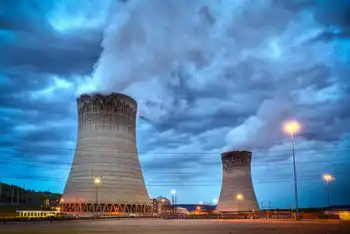
Nuclear plants produce over half of Illinois electricity, almost faced retirement
Illinois Zero Emission Credits support nuclear plants via tradable credits tied to wholesale electricity prices,…
View more

Roads Need More Electricity: They Will Make It Themselves
Electrically Smart Roads integrate solar road surfaces, inductive charging, IoT sensors, AI analytics, and V2X…
View more
America’s Electricity is Safe From the Coronavirus—for Now
US Grid Pandemic Response coordinates control rooms, grid operators, and critical infrastructure, leveraging hydroelectric plants,…
View more
Sign Up for Electricity Forum’s Newsletter
Stay informed with our FREE Newsletter — get the latest news, breakthrough technologies, and expert insights, delivered straight to your inbox.
Electricity Today T&D Magazine Subscribe for FREE

Stay informed with the latest T&D policies and technologies.
- Timely insights from industry experts
- Practical solutions T&D engineers
- Free access to every issue

